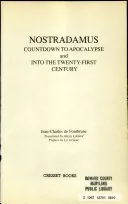
Nostradamus 2

 80
80

Nostradamus 2
Jean-Charles de Fontbrune's 'Nostradamus 2' offers a methodical, if dense, exploration of the famous seer's quatrains. Unlike many popular treatments, Fontbrune attempts a structured analysis, which is its primary strength. The book's insistence on contextualizing prophecies within historical periods, rather than treating them as isolated predictions, provides a more grounded perspective. However, the original 1984 publication date means some interpretations might feel dated, especially concerning recent global events not foreseen by the author. A particular strength lies in its detailed breakdown of specific quatrains, such as those potentially relating to the French Revolution, showing a commitment to textual analysis. Yet, the prose can be quite dry, demanding significant reader investment. It’s a work for the dedicated researcher, not the casual enthusiast, offering scholarly rigor where sensationalism often prevails.
📝 Description
80
Jean-Charles de Fontbrune's 1984 book analyzes Nostradamus's prophecies with a systematic approach.
Originally published in 1984, Jean-Charles de Fontbrune's 'Nostradamus 2' examines the prophecies of Michel de Nostredame. The book goes beyond mere compilation, offering analytical perspectives on the quatrains. Fontbrune aims to situate these predictions within Nostradamus's life and the historical events they are believed to foreshadow. The work presents a structured method for deciphering the seer's cryptic verses.
This volume is intended for serious students of prophecy and historical analysis. It will appeal to those seeking more than superficial readings of Nostradamus and desiring a structured engagement with his work. Readers interested in the confluence of history, esotericism, and predictive literature will find substantial content. It is for individuals who value rigorous research and detailed exposition.
Published in 1984, 'Nostradamus 2' appeared during a resurgence of interest in esoteric subjects. This period saw many books connect ancient texts to contemporary events. Fontbrune's work contributed to this discourse by applying a more academic, yet still esoteric, lens to Nostradamus's enduring legacy. It places his predictions within the long history of predictive arts that have fascinated scholars and mystics alike.
💡 Why Read This Book?
• Gain a structured approach to interpreting prophetic texts, moving beyond sensationalism by examining Fontbrune's methodology for analyzing Nostradamus's quatrains, as discussed in the original 1984 publication. • Understand the historical context of prophetic literature by exploring how 'Nostradamus 2' situates Nostradamus's work within 16th-century intellectual currents and esoteric traditions. • Learn to critically assess predictions by engaging with Fontbrune's analytical framework, which encourages readers to link specific prophecies to verifiable historical events and potential symbolic meanings.
⭐ Reader Reviews
Honest opinions from readers who have explored this book.
❓ Frequently Asked Questions
When was 'Nostradamus 2' originally published?
'Nostradamus 2' by Jean-Charles de Fontbrune was first published in 1984, contributing to the ongoing scholarly and esoteric interest in Nostradamus's prophecies during the late 20th century.
What is the primary focus of 'Nostradamus 2'?
The book primarily focuses on a detailed, analytical examination of Michel de Nostredame's prophecies, seeking to contextualize them within historical events and explore interpretive methodologies for his cryptic quatrains.
Is 'Nostradamus 2' suitable for beginners interested in Nostradamus?
While it offers significant insight, the book's analytical depth and dense prose make it more suitable for dedicated students or researchers of prophecy rather than absolute beginners seeking a simple introduction.
Does the book provide specific dates for prophecies?
The work likely attempts to link prophecies to specific historical periods and events, though the nature of Nostradamus's verse often leads to interpretations rather than definitive date-setting.
What distinguishes Fontbrune's approach in 'Nostradamus 2'?
Fontbrune's approach is characterized by a systematic, analytical perspective, aiming to provide a structured framework for understanding the quatrains, distinguishing it from more purely speculative or sensationalist interpretations.
Who was Michel de Nostredame?
Michel de Nostredame, known as Nostradamus, was a 16th-century French apothecary and reputed seer, famous for his book 'Les Propheties', a collection of quatrains predicting future events.
🔮 Key Themes & Symbolism
Quatrain Interpretation Methodology
The book likely details specific methods for dissecting Nostradamus's quatrains, moving beyond mere surface-level readings. This involves analyzing symbolic language, potential astronomical allusions, and historical parallels. Fontbrune's approach emphasizes a rigorous examination of the text's structure and linguistic nuances, aiming to unlock layers of meaning that connect to specific historical epochs or future possibilities. The goal is to establish a consistent framework for understanding the seer's cryptic pronouncements.
Historical Contextualization of Prophecy
A central theme is the necessity of placing Nostradamus's prophecies within their 16th-century context. This involves understanding the intellectual and cultural milieu of Michel de Nostredame, including prevailing beliefs in astrology, alchemy, and divine revelation. Fontbrune likely argues that understanding the world in which Nostradamus lived is crucial to deciphering the intended meaning of his verses, preventing anachronistic interpretations and grounding the prophecies in a specific historical reality.
The Nature of Foresight
The work grapples with the fundamental question of what constitutes genuine foresight. It explores whether Nostradamus possessed a unique ability to perceive future events or if his prophecies are a product of astute observation, symbolic language, and a deep understanding of historical cycles. Fontbrune likely examines the fine line between prescience and astute prediction, encouraging readers to consider the psychological and philosophical implications of such claims.
Enduring Legacy of Nostradamus
This theme addresses why Nostradamus's work continues to capture the imagination centuries after his death. The book likely explores the appeal of his prophecies, their role in popular culture, and the ongoing debate surrounding their validity. Fontbrune contributes to this by offering a scholarly perspective that acknowledges the mystique while demanding critical engagement, ensuring the seer's continued relevance in esoteric and historical discourse.
💬 Memorable Quotes
“The quatrains are not mere random verses; they are encoded messages requiring a specific key.”
— This statement highlights the book's core premise: that understanding Nostradamus demands more than a casual reading. It suggests a deliberate structure and intent behind the prophecies, implying that Fontbrune's work aims to provide the analytical tools necessary to unlock this hidden information.
“To interpret the future, one must first master the past.”
— This paraphrased concept emphasizes the book's commitment to historical context. It argues that accurate understanding of prophetic texts, particularly those from the 16th century like Nostradamus's, relies heavily on a thorough knowledge of the historical period in which they were written.
“The symbols employed by Nostradamus often draw from established astrological and alchemical traditions.”
— This highlights a key interpretive strategy discussed in the book. It points to the esoteric knowledge base of Nostradamus, suggesting that familiarity with 16th-century Hermetic arts is essential for decoding the layered meanings within his prophecies.
“Distinguishing genuine prediction from poetic license is the central challenge.”
— This reflects the critical stance the book likely adopts. It acknowledges the ambiguity inherent in prophetic literature and positions the author's work as an attempt to navigate this complexity through careful analysis and historical grounding.
“Fontbrune’s analysis seeks to connect the cryptic verse to observable historical turning points.”
— This interpretation suggests the book's practical application of its interpretive methods. It implies that the author actively attempts to draw concrete links between Nostradamus's prophecies and specific, verifiable events throughout history.
🌙 Esoteric Significance
Tradition
Fontbrune's work engages with the Western esoteric tradition, specifically the lineage of prophetic literature that has been present since antiquity. While Nostradamus himself drew from astrological, alchemical, and possibly Kabbalistic sources, Fontbrune's analysis attempts to systematize the interpretation of these prophecies. It fits within the broader Hermetic and Gnostic impulses to find hidden order and meaning in the cosmos and human history, seeking divine or preordained patterns within seemingly chaotic events.
Symbolism
The quatrains famously employ rich symbolism. Key motifs likely explored include celestial bodies (sun, moon, stars) representing cosmic influences or significant events, animal imagery (lions, eagles) often symbolizing rulers or nations, and geographical references (cities, rivers) pointing to specific locations of historical import. Fontbrune probably interprets these symbols not merely as poetic devices but as coded elements within a larger predictive framework, drawing on traditional astrological and mythological associations.
Modern Relevance
Contemporary interest in Nostradamus persists, fueled by online communities and ongoing geopolitical events that some readers seek to align with his prophecies. Thinkers and practitioners in fields like comparative esotericism, historical divination, and even certain branches of conspiracy theory continue to reference Nostradamus. Fontbrune's analytical approach provides a model for those seeking to engage with prophetic texts critically, offering a counterpoint to purely speculative interpretations and encouraging a more historically grounded understanding.
👥 Who Should Read This Book
• Students of Western Esotericism seeking to understand the tradition of prophetic literature and its interpretive challenges, particularly concerning 16th-century figures like Nostradamus. • Researchers of historical divination and occultism interested in methodologies for analyzing cryptic texts and their connection to historical events and societal anxieties. • Enthusiasts of Michel de Nostredame who desire a more analytical and structured approach to his prophecies, moving beyond sensationalism to engage with detailed textual examination.
📜 Historical Context
Published in 1984, Jean-Charles de Fontbrune's 'Nostradamus 2' emerged during a period of significant public fascination with prophecy and the occult, a trend amplified by the burgeoning New Age movement and a general questioning of established rationalism. This era saw numerous books attempting to decipher esoteric texts, often seeking to connect ancient predictions to contemporary anxieties surrounding nuclear proliferation and global instability. Fontbrune’s work positioned itself within this discourse, offering a more structured, analytical approach than some of its more sensationalist contemporaries. It followed decades of scholarly and popular engagement with Nostradamus, building upon earlier works like those by Charles A. Ward in the late 19th century, while seeking to offer new interpretive frameworks. The reception of such works often polarized between those who saw them as vital keys to understanding destiny and others who dismissed them as historical curiosities or elaborate hoaxes. The intellectual climate was also marked by a continued interest in Jungian psychology and archetypes, which often informed esoteric interpretations of symbolic systems.
📔 Journal Prompts
The encoded messages within Nostradamus's quatrains: What symbolic language do you find most compelling?
Fontbrune's emphasis on historical context: How does the 16th-century milieu shape our understanding of prophecy?
The challenge of distinguishing prediction from poetic license: Reflect on a modern-day prediction that proved ambiguous.
Analyzing symbolic imagery: What universal archetypes might be present in the symbols of celestial bodies and animals?
The enduring legacy of Nostradamus: Why do these prophecies continue to fascinate?
🗂️ Glossary
Quatrain
A stanza of four lines, especially one having a rhyme scheme. Nostradamus's prophecies are primarily presented in this format, making them known as quatrains.
Esotericism
Belief systems and practices that are concerned with the nature of reality and the human condition but are esoteric, or not intended for the general public. Often involves hidden knowledge or spiritual insights.
Michel de Nostredame
The 16th-century French astrologer, physician, and reputed seer, best known for his book 'Les Propheties', which contains a series of quatrains allegedly predicting future events.
Divination
The practice of seeking knowledge of the future or the unknown by supernatural means. Examples include astrology, tarot, and the interpretation of prophetic texts.
Hermeticism
A religious, philosophical, and esoteric tradition based on writings attributed to Hermes Trismegistus. It emphasizes hidden knowledge, spiritual ascent, and the interconnectedness of the cosmos.
Alchemical Symbolism
The symbolic language used in alchemy, often referring to processes of transformation, purification, and the quest for the philosopher's stone. These symbols can be applied metaphorically to spiritual or historical events.
Astrology
The study of the movements and relative positions of celestial bodies interpreted as having an influence on human affairs and the natural world. A key influence on Nostradamus's work.