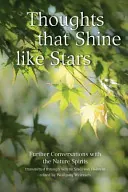
Chang sheng jiu shi

 76
76

Chang sheng jiu shi
Derun Yu's *Chang sheng jiu shi* offers a rare glimpse into the practical application of Taoist internal alchemy, moving beyond mere theoretical exposition. The strength of the work lies in its meticulous detailing of exercises, particularly those concerning the circulation of Qi and the refinement of the Dan Tian. The chapter on the Three Treasures (*Jing*, *Qi*, *Shen*) is especially lucid, providing a framework for understanding the interconnectedness of physical essence, vital energy, and consciousness. However, the text's density can be a significant hurdle. While aiming for comprehensive instruction, it sometimes assumes a level of prior knowledge that might leave newcomers feeling adrift. A more explicit discussion of common pitfalls encountered during Neidan practice, beyond the general admonishment to cultivate patience, would have been beneficial. The section on transforming *Jing* into *Qi* is illustrative, but its practical execution requires careful, perhaps supervised, attention. Ultimately, *Chang sheng jiu shi* is an invaluable, albeit demanding, resource for dedicated practitioners of Chinese esoteric arts.
📝 Description
76
Derun Yu's Chang sheng jiu shi, published in 2010, details Taoist alchemy and internal cultivation.
Published in 2010, Derun Yu's Chang sheng jiu shi serves as an instructional guide to ancient Chinese practices for longevity and spiritual development. The book moves beyond a simple historical overview, instead focusing on practical methods derived from Taoist alchemy, Qigong, and internal cultivation. It outlines specific exercises, meditative practices, and the philosophical principles necessary for practitioners aiming to unify their body, mind, and spirit.
This text is suited for dedicated students of Chinese internal arts and esoteric traditions who possess a basic understanding of concepts like Qi and the Taoist cosmology. Those who practice Qigong, Tai Chi, and Neidan will find techniques and theoretical explanations that can enhance their training. Scholars of comparative religion and esoteric studies interested in the practical aspects of ancient Chinese spiritual disciplines will also find it valuable.
The methods in Chang sheng jiu shi draw from a Taoist lineage with roots stretching back centuries. Practices like Neidan, internal alchemy focused on transforming vital energies, were formalized in texts from the 4th and 5th centuries CE, such as the Zhen gao. The pursuit of extended life through cultivated internal states echoes a long-standing Taoist aim, visible in alchemical traditions from the Han Dynasty. Derun Yu situates these historical practices within a contemporary framework.
💡 Why Read This Book?
• Gain specific techniques for cultivating and circulating Qi, as detailed in the chapter on the Three Treasures, offering a practical method for enhancing vital energy beyond general wellness practices. • Understand the Taoist concept of the Dan Tian as a central energy nexus, providing a concrete physiological and energetic map for internal cultivation that differs from Western anatomical models. • Learn about the principles of Neidan, or internal alchemy, as described in the text, offering a sophisticated approach to spiritual development rooted in ancient Chinese practices dating back centuries.
⭐ Reader Reviews
Honest opinions from readers who have explored this book.
❓ Frequently Asked Questions
What is the primary focus of Chang sheng jiu shi?
The book primarily focuses on Taoist esoteric practices for longevity and spiritual refinement, detailing methods of internal alchemy (Neidan), Qigong, and energy cultivation.
Who is Derun Yu?
Derun Yu is the author of Chang sheng jiu shi, first published in 2010, who presents detailed instructional content on Chinese esoteric arts.
What are the 'Three Treasures' mentioned in the book?
The Three Treasures in Taoist practice are Jing (essence), Qi (vital energy), and Shen (spirit). The book explains how to cultivate and transform these for longevity and spiritual growth.
Is Chang sheng jiu shi suitable for beginners?
While offering valuable insights, the book is best suited for those with a foundational understanding of esoteric Chinese concepts, as it assumes some prior knowledge.
What is Neidan?
Neidan, or internal alchemy, is a core focus of the book. It refers to Taoist practices that use the body's own energies and substances to achieve spiritual transformation and longevity.
When was Chang sheng jiu shi first published?
Chang sheng jiu shi was first published in 2010, making it a relatively modern presentation of ancient esoteric traditions.
🔮 Key Themes & Symbolism
Qi Cultivation and Circulation
The book emphasizes the paramount importance of cultivating and harmonizing Qi, the vital life force. It details specific breathing techniques, postural alignments, and meditative states designed to gather Qi in the Dan Tian and facilitate its circulation through the body's energetic pathways. This process is presented not merely as a health practice but as foundational for spiritual development, aiming to transform coarser energies into refined spiritual essence.
Internal Alchemy (Neidan)
Chang sheng jiu shi explores the principles and practices of Neidan, the internal alchemy of Taoism. This involves using the body's inherent energies—Jing, Qi, and Shen—as the 'ingredients' for a transformative process. The goal is to refine these elements, leading to a state of energetic purity, spiritual clarity, and potentially extended life or even spiritual immortality, moving beyond the external alchemy of metals.
The Three Treasures
A central concept explored is the interrelation of Jing (essence), Qi (vital energy), and Shen (spirit). The text outlines how these three are fundamental to life and how their balance and transformation are key to achieving the goals of longevity and enlightenment. It details methods for conserving Jing, gathering and circulating Qi, and ultimately elevating Shen to higher states of consciousness.
Harmony with the Tao
The underlying philosophy stresses aligning oneself with the natural flow of the Tao. This involves cultivating a state of effortless action (Wu Wei) in one's spiritual practice and daily life. By understanding and embodying the principles of Yin and Yang, and by fostering inner stillness, the practitioner seeks to achieve a profound harmony with the cosmic order, facilitating natural growth and spiritual evolution.
💬 Memorable Quotes
Direct passages from the work, attributed to the author.
“The body is a vessel for Qi, the Qi is the vehicle for Shen.”
— This statement captures the hierarchical relationship of the Three Treasures. It suggests that the physical form is essential for containing energy, which in turn is necessary for the manifestation and elevation of consciousness or spirit.
“Stillness in motion, motion in stillness.”
— This paradoxical phrase points to the core of dynamic balance in Taoist practice. It suggests that true cultivation involves finding the quiescent center within activity and recognizing the inherent movement within profound stillness, a principle vital for Qi circulation.
“Transform Jing into Qi, transform Qi into Shen, transform Shen into the Void.”
— This represents the progressive stages of internal alchemy. It outlines a path of refinement, where fundamental life force is transmuted into higher energetic and spiritual states, ultimately leading to a dissolution of egoic boundaries into a state of pure awareness.
“The Dan Tian is the root of the hundred spirits.”
— This highlights the profound importance of the lower elixir field. It is presented as the origin point and primary energetic center from which the vitality and consciousness of the entire being emerge and are nurtured.
“Cultivate the root, and the branches will flourish naturally.”
— This aphorism emphasizes the importance of foundational work in spiritual practice. By focusing on cultivating the inner energetic 'root' (like Qi and Jing), the outer manifestations of spiritual growth and well-being will spontaneously arise without forced effort.
🌙 Esoteric Significance
Tradition
This work firmly belongs to the Taoist esoteric tradition, specifically focusing on the lineage of Neidan (internal alchemy). It departs from earlier, more cryptic texts by offering a more systematized, instructional approach suitable for contemporary practitioners. While ancient Taoism encompassed various schools, this book leans towards those emphasizing the cultivation of Qi and the transformation of the Three Treasures for spiritual attainment and longevity, aligning with the 'Xiantian' (Pre-celestial) phase of development.
Symbolism
Central symbols include the *Dan Tian*, understood not just as a physical location but as a crucible for energetic transformation, often depicted as a 'cinnabar field.' The *Jing*, *Qi*, and *Shen* are themselves potent symbols representing the fundamental constituents of life that undergo refinement. The cyclical nature of Yin and Yang is also a pervasive symbolic motif, guiding the understanding of energetic balance and the processes of transformation within the body.
Modern Relevance
Contemporary practices in Qigong, Tai Chi, and various forms of medical and spiritual Taoism draw heavily on the principles outlined in works like *Chang sheng jiu shi*. Thinkers and practitioners interested in somatic spiritual development, energy work, and the integration of mind-body practices find its detailed methodologies relevant. It serves as a bridge between ancient philosophical Taoism and modern embodied spiritual exploration.
👥 Who Should Read This Book
• Dedicated students of Taoism and Chinese esoteric traditions seeking practical instruction in Neidan and Qi cultivation beyond introductory texts. • Practitioners of Qigong and Tai Chi who wish to deepen their understanding of the energetic principles underpinning their movements and develop more advanced internal techniques. • Researchers and practitioners of comparative religion and esoteric studies interested in the practical, applied aspects of ancient Chinese spiritual disciplines for longevity and consciousness development.
📜 Historical Context
Derun Yu's *Chang sheng jiu shi* emerges from the rich tradition of Taoist esoteric practices, particularly Neidan (internal alchemy), which saw significant development from the Tang Dynasty (618–907 CE) onwards. This period witnessed a flourishing of alchemical texts and lineages seeking longevity and spiritual transcendence. Key figures like Ge Hong in the 4th century CE, with his text *Baopuzi*, laid early groundwork for the pursuit of immortality through physical and spiritual disciplines. The intellectual currents of the time were deeply influenced by a desire to harmonize human life with cosmic principles, often drawing on cosmological frameworks like the *Yijing* (Book of Changes). While external alchemy, focused on elixirs, was prevalent, internal alchemy offered a more accessible, non-toxic path. Contemporary scholars like Joseph Needham extensively documented these practices in the 20th century, bringing global attention to their complexity. *Chang sheng jiu shi* continues this lineage, presenting these ancient methods for a modern audience, though its reception within specific academic circles remains to be fully cataloged.
📔 Journal Prompts
The concept of the Dan Tian as a crucible for transformation.
Reflections on the dynamic interplay between Jing, Qi, and Shen.
The principle of Wu Wei in energetic cultivation.
Personal experience with stillness and movement in practice.
How the circulation of Qi aligns with personal energetic states.
🗂️ Glossary
Qi (氣)
Vital energy or life force that animates all living things. In Taoist practice, it is cultivated and circulated for health, longevity, and spiritual development.
Jing (精)
Essence; the fundamental generative and physical energy of the body. It is considered the most material of the Three Treasures and is conserved and transformed into Qi.
Shen (神)
Spirit or consciousness; the most subtle of the Three Treasures. It is nurtured by Qi and represents higher awareness and mental clarity.
Dan Tian (丹田)
Literally 'cinnabar field'; a key energetic center in the body, typically located below the navel, where Qi is stored, cultivated, and transformed.
Neidan (內丹)
Internal alchemy; Taoist practices that use the body's own energies and substances to achieve spiritual transformation and longevity, as opposed to external alchemy.
Wu Wei (無為)
Non-action or effortless action; a core Taoist principle advocating acting in accordance with the natural flow of the Tao, without force or artificiality.
Yin and Yang (陰陽)
The fundamental dualistic forces in Chinese philosophy representing complementary opposites (e.g., dark/light, passive/active). Their balance is crucial for health and harmony.
🔮 Readers Also Liked
Browse all →






More Free Occult Philosophy Books
View all →