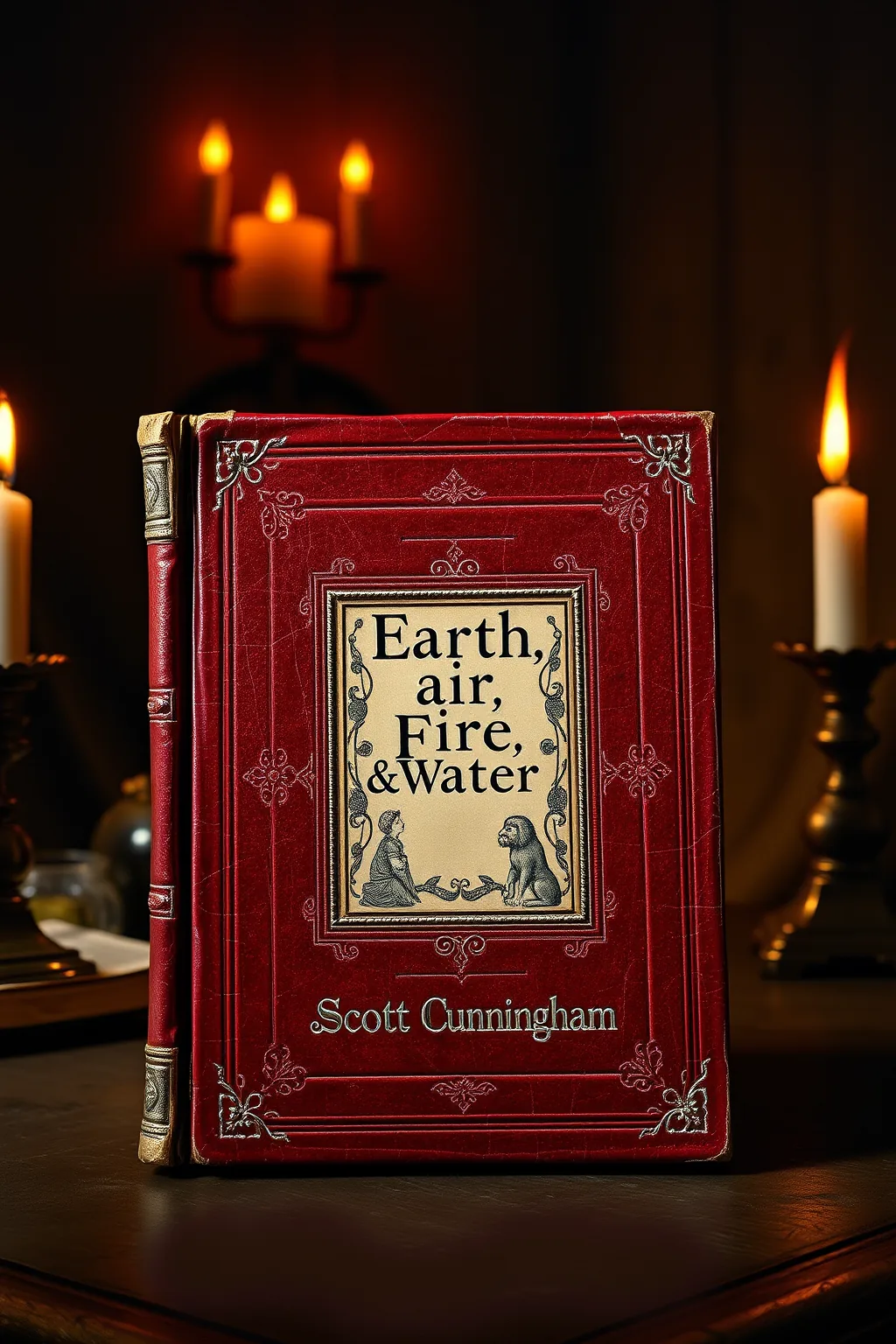
Earth, air, fire & water
 81
81

Earth, air, fire & water
Scott Cunningham's "Earth, Air, Fire & Water" presents a clear, if somewhat simplified, framework for understanding the four classical elements within an esoteric context. Its primary strength lies in its accessibility; Cunningham avoids overly arcane language, making complex symbolic systems approachable for novices. The chapter on the element of Water, for instance, offers a refreshingly direct explanation of its association with emotion and intuition. However, the book’s limitation is its lack of depth for more advanced practitioners. While useful as an introduction, it doesn't significantly expand upon the foundational concepts that scholars of Hermeticism or comparative religion might expect. A passage discussing the pentagram's use to invoke or banish elements, while correct in principle, could benefit from more detailed ritualistic examples. Nevertheless, for its intended audience, it serves as a competent and gentle entry point into elemental symbolism.
📝 Description
81
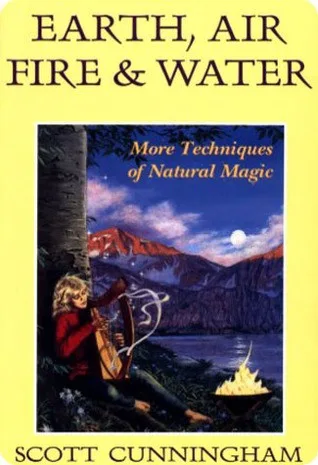
Published in 2002, Scott Cunningham's Earth, Air, Fire & Water explains the classical elements in Western esoteric traditions.
This book serves as an introduction to the four classical elements – Earth, Air, Fire, and Water – as they are understood within Western esoteric practices. Scott Cunningham breaks down their symbolic meanings, correspondences, and practical applications for those new to witchcraft, ritual magic, or nature-based spirituality. He details how these elements relate to directions, seasons, colors, tools, and even personality traits. The work also touches on the concept of Spirit or Aether as a unifying force. Cunningham's aim is to help readers integrate elemental understanding into their daily lives and ritual work, making complex concepts accessible. The book speaks to aspiring practitioners of Wicca and ceremonial magic, as well as anyone interested in the symbolic frameworks found in many spiritual traditions. It provides a clear entry point for understanding archetypal forces that influence human experience.
Cunningham wrote this book during a time of growing interest in paganism and esoteric studies, following the cultural shifts of the late 20th century. It draws on ancient Greek philosophy, specifically the ideas of Empedocles, and subsequent Hermetic and alchemical thought. The text offers a simpler alternative to more academic or dense magical texts. Its focus is on the personal experience and practical use of elemental correspondences, encouraging a hands-on approach rather than purely theoretical study. The book is designed for those starting their journey into these subjects, offering a clear and direct guide.
Earth, Air, Fire & Water is situated within the Neopagan and Western Esoteric traditions. It engages with the concept of the four classical elements, a theory originating with ancient Greek philosophers like Empedocles and later integrated into Hermeticism, alchemy, and various forms of magical practice. Cunningham's interpretation is particularly aimed at modern practitioners of witchcraft and Wicca, offering a simplified framework for understanding elemental symbolism and its use in ritual and personal spiritual development. The book bridges ancient philosophical ideas with contemporary spiritual interests, making elemental theory accessible to a broad audience.
💡 Why Read This Book?
• Gain a foundational understanding of the four classical elements and their symbolic roles, as explored in the "Key Concepts" section, which details their correspondences in direction, color, and tools. • Learn practical methods for integrating elemental energies into personal practice, inspired by Cunningham's approach to ritual and daily life evident throughout the text. • Discover the esoteric significance of each element, moving beyond simple definitions to appreciate their archetypal power as presented in the book's accessible style.
⭐ Reader Reviews
Honest opinions from readers who have explored this book.
❓ Frequently Asked Questions
When was Scott Cunningham's "Earth, Air, Fire & Water" first published?
Scott Cunningham's "Earth, Air, Fire & Water" was first published in 2002, marking its entry into the esoteric literature landscape during a period of burgeoning interest in nature-based spiritualities.
What are the primary elements discussed in Cunningham's book?
The book primarily discusses the four classical elements: Earth, Air, Fire, and Water. It also touches upon the concept of Spirit or Aether as a unifying force.
Is this book suitable for beginners in esotericism?
Yes, "Earth, Air, Fire & Water" is highly suitable for beginners. Its clear language and straightforward explanations make complex esoteric concepts accessible to those new to the subject.
What kind of esoteric traditions does this book relate to?
The book relates to Western esoteric traditions, including Wicca, nature-based spirituality, ritual magic, and draws inspiration from ancient Greek philosophy and Hermeticism.
Does the book offer practical exercises for working with the elements?
While focusing on foundational understanding, the book implies practical application by detailing correspondences and encouraging personal integration of elemental energies into daily life and ritual.
Who is Scott Cunningham?
Scott Cunningham was a prolific author known for his accessible writings on Wicca, witchcraft, and alternative spirituality, emphasizing a gentle, nature-focused approach.
🔮 Key Themes & Symbolism
Elemental Correspondences
The core of Cunningham's work lies in mapping the correspondences of Earth, Air, Fire, and Water. This extends beyond basic definitions to include their associations with cardinal directions, seasons, colors, tools used in ritual (like the athame for Fire or the pentacle for Earth), and even temperaments. Understanding these links allows practitioners to imbue their rituals and meditations with specific energies, creating a more focused and potent magical practice. The book presents these connections in a systematic way, serving as a reference for those building their understanding of Western esoteric systems.
Ritualistic Application
Beyond theoretical knowledge, "Earth, Air, Fire & Water" guides readers toward practical application. Cunningham emphasizes how understanding the elements can enhance personal rituals, whether for spellcasting, meditation, or simply connecting with nature. He suggests methods for invoking and banishing elemental forces, often referencing the use of symbolic tools and gestures. This focus on tangible practice makes the abstract concepts of elemental magic accessible and actionable for individuals seeking to incorporate these energies into their spiritual lives.
Personal Integration
A key tenet of Cunningham's philosophy, echoed in this work, is the importance of integrating esoteric knowledge into one's personal life. He encourages readers not just to study the elements but to perceive them within themselves and their environment. This perspective transforms elemental study from an academic pursuit into a means of self-discovery and deeper connection with the natural world. The book advocates for a balanced relationship with each element, recognizing their presence in both the external landscape and the internal psyche.
The Fifth Element: Spirit
While focusing on the four classical elements, Cunningham also acknowledges the concept of Spirit or Aether. This fifth element is often presented as the unifying principle that binds the other four, representing consciousness, the divine, or the space in which all existence manifests. Its inclusion elevates the discussion beyond mere material correspondences, hinting at the interconnectedness of all things within the esoteric worldview. This concept provides a bridge to understanding more complex metaphysical frameworks.
💬 Memorable Quotes
Direct passages from the work, attributed to the author.
“Earth is the element of the physical body, the senses, and the material world.”
— This statement highlights the tangible nature of Earth, grounding esoteric concepts in physical reality and sensory experience, a core principle in Cunningham's accessible approach.
“Fire represents energy, passion, and transformation.”
— This interpretation emphasizes Fire's dynamic qualities, linking it to potent forces like willpower, change, and spiritual illumination within esoteric practice.
“Water is the element of emotions, intuition, and healing.”
— This accurately reflects Water's connection to the subconscious and emotional realms, vital for understanding its influence on psychic abilities and inner well-being.
“The elements are not just outside us; they are within us.”
— This interpretive quote expresses Cunningham's philosophy of personal integration, suggesting that understanding the external elements leads to self-knowledge and inner balance.
💡 Key Ideas
Editorial paraphrase of the work's core concepts — not direct quotes.
Air corresponds to the mind, intellect, and communication.
This paraphrase captures the essence of Air's association with thought and expression, crucial for understanding its role in mental clarity and magical communication.
🌙 Esoteric Significance
Tradition
This work aligns with the Western esoteric tradition, particularly its Neopagan and Wiccan branches, which heavily utilize elemental symbolism. It draws inspiration from ancient Greek philosophy (Empedocles, Plato) and Hermeticism, where the four elements form a fundamental cosmological structure. Cunningham simplifies these concepts, presenting them not as abstract philosophical tenets but as practical forces to be understood and worked with in ritual and personal development, departing from more complex alchemical or Kabbalistic interpretations.
Symbolism
The primary symbols are the four classical elements: Earth (grounding, stability, the physical), Air (intellect, communication, the mind), Fire (passion, transformation, the spirit), and Water (emotion, intuition, the soul). Cunningham assigns them specific directions (North for Earth, East for Air, South for Fire, West for Water) and associates them with various tools and energies, providing a symbolic language for ritual practitioners to invoke or balance these fundamental forces.
Modern Relevance
Cunningham's accessible approach to elemental symbolism continues to influence contemporary spiritual practitioners, particularly within modern witchcraft and nature-based paths. His work serves as a foundational text for many seeking to understand the energetic correspondences that underpin various magical systems. Thinkers and practitioners focused on practical spirituality and personal empowerment often reference his elemental frameworks when developing rituals or exploring self-awareness.
👥 Who Should Read This Book
• Aspiring practitioners of Wicca and modern witchcraft seeking a clear introduction to elemental correspondences and their use in ritual. • Individuals interested in comparative religion and mythology who want to understand the foundational role of the four elements in Western esoteric thought. • Beginners exploring nature-based spirituality and looking for practical ways to connect with and apply archetypal energies in their daily lives.
📜 Historical Context
Published in 2002, Scott Cunningham's "Earth, Air, Fire & Water" arrived as Western esotericism was experiencing a significant resurgence in popularity. Building on the foundations laid by earlier authors like Gerald Gardner in the mid-20th century who popularized Wicca, Cunningham offered a more streamlined and accessible entry point. His work emerged in contrast to the denser, more academically rigorous or initiatory traditions, such as those found in some ceremonial magic orders. While contemporary authors like Doreen Virtue were popularizing angelology, Cunningham focused on the ancient elemental framework, drawing from traditions that trace back to pre-Socratic philosophers and were later synthesized within Hermeticism and Renaissance occultism. The book's reception was largely positive among a growing audience seeking practical spiritual tools outside mainstream religion.
📔 Journal Prompts
Reflect on the element of Earth and its presence in your immediate environment.
Consider the symbolic associations of Air with communication and intellect.
Explore your personal relationship with the transformative power of Fire.
Meditate on the intuitive wisdom associated with the element of Water.
How does the concept of Spirit, as the unifying element, manifest in your life?
🗂️ Glossary
Elemental Correspondences
The system of associating specific qualities, directions, colors, tools, and energies with the classical elements of Earth, Air, Fire, and Water.
Ritual
A set of actions performed according to a prescribed order, often for religious or magical purposes, used here to invoke or balance elemental energies.
Invocation
The act of calling upon or inviting a spiritual force or energy, such as an element, to be present and active.
Banishment
The act of sending away or dispelling a spiritual force or energy, often used to clear a space or end a ritual.
Aether/Spirit
Often considered the fifth element, representing the primordial substance, consciousness, or unifying principle from which the other four elements arise.
Wicca
A modern Pagan religion that emphasizes reverence for nature and the use of magic, often incorporating elemental symbolism and ritual practices.
Hermeticism
A philosophical and religious tradition based on writings attributed to Hermes Trismegistus, deeply influential in Western esotericism and cosmology, including elemental theory.
🔮 Readers Also Liked
Browse all →









More by Scott Cunningham
All books →


More Free Occult Philosophy Books
View all →

![Serrano Miguel Adolf Hitler The Ultimate Avatar [ 2000]](/img/thumb/serrano-miguel-adolf-hitler-the-ultimate-avatar-2000.webp)