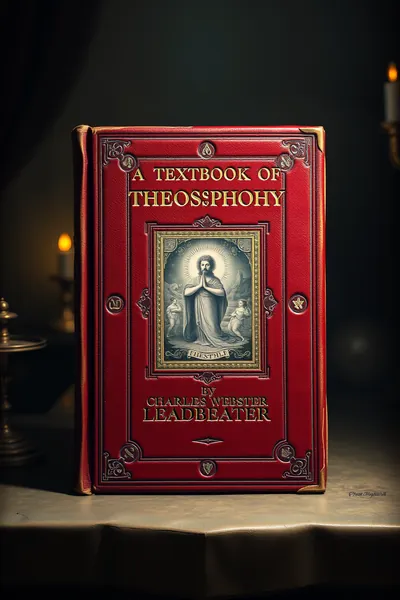
Clairvoyance

 82
82

Clairvoyance
Leadbeater's *Clairvoyance* is a fascinating, if occasionally dense, exploration of psychic perception from a distinctly Theosophical viewpoint. Its strength lies in the sheer detail with which Leadbeater attempts to map the unseen realms and the mechanisms of clairvoyance. He meticulously describes the colors associated with different emotions and thoughts, presenting a complex system for interpreting psychic impressions. However, the work's primary limitation is its inherent subjectivity and the lack of empirical verification for its elaborate claims. The section discussing the 'astral body' and its potential for travel, while intriguing, relies entirely on esoteric doctrine rather than observable phenomena. Despite these reservations, *Clairvoyance* provides invaluable insight into early 20th-century esoteric thought and the Theosophical interpretation of consciousness. It serves as a significant historical document for anyone studying the development of occult psychology.
📝 Description
82
Charles Webster Leadbeater's *Clairvoyance*, published in 1918, details how to develop extrasensory perception.
First released in 1918, *Clairvoyance* by Charles Webster Leadbeater presents a systematic approach to understanding and cultivating psychic abilities. The book posits that extrasensory perception is not an extraordinary gift but a potential human faculty, achievable through specific mental discipline and theoretical knowledge. Leadbeater outlines the structure of subtle bodies, including the etheric, astral, and causal bodies, and their interaction with the physical world. He aims to demystify these concepts for students of esoteric philosophy.
The work serves as a guide for individuals interested in the Theosophical view of consciousness. It covers the nature of thought-forms and different planes of existence. Leadbeater also describes methods for developing clairvoyant sight, emphasizing practices like meditation and visualization. The book is written for those seeking a framework to understand psychic phenomena beyond conventional materialism.
Emerging from the Theosophical movement of the early 20th century, *Clairvoyance* reflects a period of intense interest in spiritualism and psychic research. Leadbeater, a significant figure in Theosophy, built upon Helena Blavatsky's teachings. The book attempts to provide a structured, non-materialist system for understanding unseen realities, aligning with a broader esoteric effort to map consciousness beyond the physical senses. This work was part of a larger discourse that sought to integrate Eastern philosophies with Western occult traditions.
✍️ Author
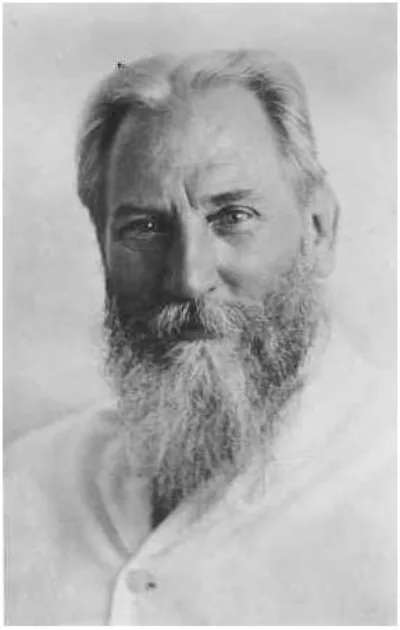
Charles Webster Leadbeater
Charles Webster Leadbeater was a British occultist and prominent member of the Theosophical Society.
Theosophist
💡 Why Read This Book?
• Understand the Theosophical model of subtle bodies, including the etheric, astral, and causal bodies, as explained in Leadbeater's detailed descriptions, offering a unique framework for consciousness. • Learn about the specific practices and mental disciplines Leadbeater outlines for developing clairvoyant perception, moving beyond theoretical discussions to actionable techniques. • Gain insight into the historical context of early 20th-century occultism, specifically the Theosophical Society's influence and Leadbeater's role in popularizing concepts of psychic ability.
⭐ Reader Reviews
Honest opinions from readers who have explored this book.
❓ Frequently Asked Questions
What is the primary focus of Charles Webster Leadbeater's 'Clairvoyance'?
The book's primary focus is on the nature, development, and mechanics of clairvoyant abilities, detailing psychic perception and the subtle bodies from a Theosophical perspective.
When was Charles Webster Leadbeater's 'Clairvoyance' first published?
'Clairvoyance' by Charles Webster Leadbeater was first published in 1918.
What is the 'astral body' according to Leadbeater in 'Clairvoyance'?
Leadbeater describes the astral body as a subtle vehicle of consciousness, distinct from the physical body, which is active during sleep and capable of traversing the astral plane.
Does 'Clairvoyance' provide practical exercises for developing psychic abilities?
Yes, the book offers guidance on practices such as meditation, visualization, and mental discipline, intended to cultivate and refine clairvoyant faculties.
What is the connection between 'Clairvoyance' and Theosophy?
The book is a significant work within Theosophical literature, written by a prominent member, Charles Webster Leadbeater, and explaining psychic phenomena through the lens of Theosophical cosmology and philosophy.
Is 'Clairvoyance' based on scientific evidence?
The work is based on esoteric teachings and the author's own alleged experiences and interpretations, rather than empirical scientific evidence as understood in the conventional sense.
🔮 Key Themes & Symbolism
Subtle Bodies and Planes
Leadbeater meticulously details the existence and function of the etheric, astral, and causal bodies, positing them as essential components of human consciousness beyond the physical form. He describes the astral plane as a distinct realm of existence populated by various entities and energies, accessible through the astral body. This framework is central to understanding how clairvoyance operates, allowing perception beyond the ordinary senses by interacting with these subtle vehicles and planes.
Development of Psychic Faculty
The book functions as a practical guide for cultivating clairvoyant abilities. Leadbeater emphasizes that these powers are not innate gifts for a select few but latent human faculties that require dedicated training. He outlines specific methods involving focused attention, the purification of thought and emotion, and the careful observation of psychic phenomena. The work stresses the importance of ethical development alongside psychic growth to ensure responsible use of such faculties.
Theosophical Cosmology
As a key text emerging from the Theosophical movement, 'Clairvoyance' is deeply embedded within its unique cosmological system. It elaborates on concepts such as reincarnation, karma, and the evolutionary path of consciousness as understood by Helena Blavatsky and her followers. The descriptions of spiritual hierarchies, thought-forms, and the nature of the divine within humanity are all presented through this specific esoteric lens.
Thought-Forms and Astral Phenomena
A significant portion of the book is dedicated to the nature of thought-forms – quasi-physical manifestations of mental energy. Leadbeater explains how thoughts and emotions create distinct shapes and colors in the astral realm, influencing both the thinker and their environment. This concept is crucial for understanding the mechanics of psychic interaction and the subjective experience of clairvoyance, where these forms are perceived.
💬 Memorable Quotes
“The astral body is the vehicle of desire and emotion.”
— This statement encapsulates Leadbeater's view of the astral body as the primary instrument through which human beings experience feelings and impulses, and through which they interact with the astral plane.
“Clairvoyance is the power to see things that are not perceptible to the physical eye.”
— This defines the core subject of the book, establishing clairvoyance as a faculty of expanded perception, capable of apprehending realities beyond the limitations of ordinary human senses.
“Thought-forms are real entities on the astral plane.”
— This highlights the book's assertion that mental energies, when projected, coalesce into tangible forms within the astral realm, influencing the psychic environment and potentially interacting with observers.
“The colors seen by the clairvoyant often correspond to specific emotions or qualities.”
— This refers to Leadbeater's detailed system of interpreting psychic impressions, where specific hues perceived by a clairvoyant are linked directly to particular emotional states or character traits.
“Development of the causal body is linked to spiritual evolution.”
— This suggests that the highest subtle body, the causal body, is not merely a vessel but an indicator of spiritual progress and is intimately connected to the long-term evolutionary journey of the soul.
🌙 Esoteric Significance
Tradition
This work is firmly rooted in the Theosophical tradition, a syncretic spiritual movement that sought to establish a 'universal brotherhood' and explore the ancient wisdom underlying all religions. Leadbeater's book fits within this lineage by offering a systematic, detailed explanation of psychic faculties and the unseen worlds, drawing heavily on Blavatsky's foundational texts but also adding his own extensive descriptive elaborations.
Symbolism
The book utilizes the symbolism of color extensively, associating specific hues with distinct emotions, qualities, and even stages of spiritual development within the subtle bodies. For instance, certain shades of blue might represent devotion, while fiery reds could indicate passion or anger. The concept of 'thought-forms' also carries symbolic weight, representing the tangible manifestation of mental energy and intention in the non-physical realms.
Modern Relevance
Contemporary esoteric practitioners, particularly those within Neo-Theosophical and related New Age movements, continue to reference Leadbeater's descriptions of subtle anatomy and psychic perception. His work informs modern discussions on energy healing, aura reading, and astral projection, serving as a foundational text for understanding these phenomena from an early 20th-century esoteric perspective.
👥 Who Should Read This Book
["• Students of Theosophy: Those seeking to deepen their understanding of CW Leadbeater's contributions to Theosophical literature and his detailed explanations of psychic phenomena and subtle bodies.", '• Esoteric Philosophy Enthusiasts: Individuals interested in exploring early 20th-century occult psychology, the nature of consciousness beyond the physical, and the mechanics of extrasensory perception.', '• Comparative Mysticism Researchers: Scholars or practitioners who wish to examine specific doctrines and descriptive frameworks for psychic abilities within the context of esoteric movements.']
📜 Historical Context
Charles Webster Leadbeater's *Clairvoyance*, published in 1918, emerged during a period of intense spiritual and intellectual ferment. The Theosophical Society, co-founded by Helena Blavatsky, was at its zenith, promoting a synthesis of Eastern and Western esoteric traditions. Leadbeater, a key figure, sought to systematize and explain psychic phenomena within this framework. This era also saw the rise of spiritualism and parapsychology, though often viewed with skepticism by mainstream science. Competing schools of thought included the Hermetic Order of the Golden Dawn, which also explored psychic development, albeit with different methods. While not subject to widespread censorship, Theosophical teachings, including Leadbeater's works, were often met with criticism for their esoteric claims and perceived departure from traditional religious or scientific doctrines. The book's detailed descriptions of astral phenomena and subtle anatomy were part of a broader effort to provide a coherent, if unconventional, map of consciousness.
📔 Journal Prompts
The astral body's role in desire and emotion.
Interpreting the colors associated with thought-forms.
The practice of focused attention for psychic development.
The relationship between the physical and etheric bodies.
The concept of the causal body and spiritual evolution.
🗂️ Glossary
Astral Body
A subtle vehicle of consciousness, distinct from the physical body, believed to be the seat of emotions and desires, and capable of traversing the astral plane.
Causal Body
The highest of the subtle bodies, associated with the intellect, memory, and the permanent individuality or soul, considered to be the seat of higher consciousness.
Etheric Body
A subtle energetic layer closely associated with the physical body, believed to be the vehicle for life force (prana) and involved in physical health and vitality.
Thought-form
A quasi-physical manifestation created by focused thought or emotion on the astral plane, possessing a distinct form, color, and energy.
Astral Plane
A non-physical realm of existence, considered to be the plane of emotions, desires, and subjective experience, accessible via the astral body.
Clairvoyance
The faculty of perceiving things or events through means beyond the normal senses, often involving psychic sight or awareness of subtle realms.
Prana
The vital life force or energy that permeates the universe, believed to be distributed throughout the body via the etheric vehicle.