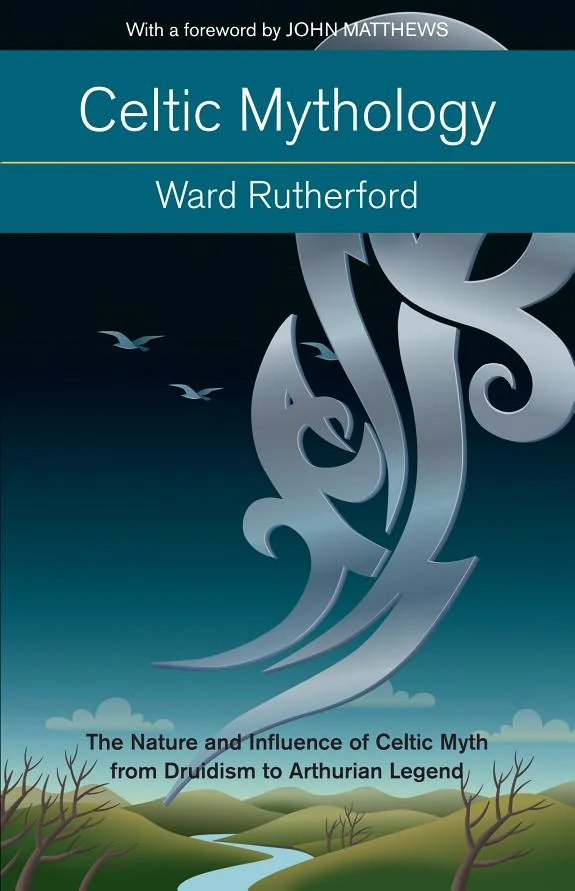
Celtic Mythology
 72
72

Celtic Mythology
Rutherford's "Celtic Mythology" succeeds in presenting a structured overview of a complex subject. The clear demarcation between the historical context of the Celts and the analysis of their myths is a significant strength. A particularly illuminating section details the distinctions in mythic expression between Ireland and Britain, moving beyond generalized narratives. However, the book occasionally feels more like a catalogue of myths than a deep interpretive dive; the emphasis on social structure, while informative, sometimes overshadows the more purely mythological elements. The exploration of the supernatural topography, while present, could have been expanded to better illustrate the pervasive animism in Celtic belief. Nevertheless, for its clarity and historical grounding, Rutherford's work serves as a solid introduction to the subject.
📝 Description
72
Ward Rutherford's 1992 book traces Celtic myths from 1000 B.C. to their cultural impact.
Ward Rutherford's "Celtic Mythology" examines the ancient Celtic world, beginning its origins around 1000 B.C. The book details their social structures and the myths that formed their worldview. Rutherford distinguishes between the mythic traditions of Britain and Ireland, noting their similarities and differences.
This work is suitable for students of comparative mythology, cultural historians, and anyone interested in European folklore. It offers a scholarly yet accessible look at pre-Christian European beliefs. Readers drawn to ancient lore and supernatural depictions will find much of value here.
The book places Celtic mythology in its historical context, starting with the Iron Age Celts. It contrasts mythic development in different regions, a key point for understanding its varied forms. Rutherford also considers their social structures and the geography of their supernatural beliefs.
This book engages with the study of Celtic mythology from a perspective that acknowledges its role in pre-Christian European spiritual traditions. It looks at the pantheon, heroic sagas, and the concept of the Otherworld not just as historical narratives but as expressions of a distinct worldview. Rutherford's work connects these ancient beliefs to their later manifestations in folklore and culture, placing it within a tradition of scholarship that sees pagan European cultures as having unique spiritual systems.
💡 Why Read This Book?
• Gain a foundational understanding of Celtic origins, dating back to the emergence of identifiable Celtic peoples around 1000 B.C., a specific historical anchor that differentiates this text from more generalized myth collections. • Learn about the specific differences and similarities in Celtic myths across Britain and Ireland, offering concrete regional variations not always detailed in broader surveys. • Comprehend the described topography of the Celtic supernatural world, providing a tangible framework for understanding their cosmology and spiritual geography.
⭐ Reader Reviews
Honest opinions from readers who have explored this book.
❓ Frequently Asked Questions
When did the Celts first emerge as an identifiable people according to the book?
Ward Rutherford's "Celtic Mythology" places the emergence of the Celts as an identifiable people around 1000 B.C., during the Iron Age, providing a specific historical starting point for the study.
What is the primary focus of Ward Rutherford's "Celtic Mythology"?
The book focuses on the world of Celtic myth and its significant role in the development of Western culture, exploring their historical overview, social structure, and mythological contents.
Does the book differentiate between British and Irish Celtic myths?
Yes, the work explicitly explores the differences and similarities between the manifestation of Celtic myths in Britain and Ireland, offering a nuanced regional perspective.
What aspects of Celtic society are discussed?
The book covers an historical overview of the Celts from their emergence, and provides an exploration of their social structure, offering context for their mythological narratives.
What is the "topography of the supernatural world" mentioned in the blurb?
This refers to the structured exploration of the spiritual landscape and realms inhabited by deities and spirits within Celtic belief systems, as depicted in their myths.
What is the first publication date of Ward Rutherford's "Celtic Mythology"?
The first publication date for Ward Rutherford's "Celtic Mythology" is May 1, 2015.
🔮 Key Themes & Symbolism
Celtic Social Structures
The work examines the historical development of Celtic societies, tracing their emergence around 1000 B.C. Rutherford details their social hierarchies, the roles of various classes, and how these structures informed their worldview and mythic narratives. Understanding the societal framework is presented as key to interpreting the myths, highlighting the interconnectedness of daily life and spiritual belief in ancient Celtic cultures.
Mythic Topography
A significant focus is placed on the 'topography of the supernatural world' within Celtic mythology. This involves mapping the various realms, sacred sites, and otherworldly landscapes that feature prominently in their stories. Rutherford explores how these conceptual geographies shaped beliefs about the divine, the dead, and the boundaries between worlds, providing a framework for understanding their cosmology.
Regional Mythic Variations
The book critically analyzes the distinct yet related mythic traditions found in different Celtic regions, particularly Britain and Ireland. By highlighting the differences and similarities, Rutherford offers a nuanced perspective on how geography and local history influenced the evolution and expression of core Celtic myths, moving beyond monolithic interpretations.
Cultural Impact of Celtic Myth
Rutherford underscores the lasting influence of Celtic mythology on the broader development of Western culture. The work positions these ancient narratives not merely as historical artifacts but as foundational elements that have permeated art, literature, and philosophical thought, shaping cultural identities across centuries.
💬 Memorable Quotes
“The emergence of the Celts as an identifiable people around 1000 B.C.”
— This factual anchor establishes the historical timeline Rutherford uses, providing a concrete starting point for understanding Celtic civilization and its mythic traditions before they were widely recorded.
“Differences and similarities between their manifestation in Britain and Ireland.”
— This highlights the comparative approach Rutherford takes, emphasizing that Celtic mythology was not uniform but evolved distinct characteristics across different geographical and cultural landscapes.
“Exploration of their social structure.”
— This indicates the book's commitment to contextualizing myth within the lived realities of the people, suggesting that societal organization played a crucial role in shaping their spiritual beliefs and narratives.
“The topography of the supernatural world of Celtic”
— This points to a detailed examination of Celtic cosmology, focusing on the spiritual geography and the realms that constituted their understanding of the divine and the afterlife.
“A lively and absorbing account of the world of Celtic myth”
— This phrase suggests Rutherford's writing style is engaging and accessible, aiming to draw the reader into the subject matter rather than presenting a dry academic treatise.
🌙 Esoteric Significance
Tradition
While not strictly adhering to a single esoteric lineage like Hermeticism or Theosophy, "Celtic Mythology" taps into the broader Western esoteric tradition's fascination with ancient European paganism. It serves as a foundational text for those exploring nature-based spiritualities and ancestral reverence. The work aligns with a neo-pagan interest in reclaiming and understanding pre-Christian European mythologies as sources of wisdom and spiritual connection, departing from purely academic or religious interpretations.
Symbolism
Key symbols explored include the ubiquitous Celtic knotwork, representing interconnectedness and eternity, and the sacred tree, often symbolizing the connection between the earthly and supernatural realms. The concept of the Otherworld, a distinct spiritual dimension, is central, reflecting a worldview where the boundaries between life, death, and the divine were fluid and permeable, a common theme in many shamanistic and animistic traditions.
Modern Relevance
Contemporary neo-pagan practitioners, Celtic Reconstructionists, and those interested in earth-centered spirituality frequently draw upon works like Rutherford's. Modern thinkers exploring folklore, comparative mythology, and the psychological archetypes within ancient narratives find value in its clear presentation. The book's focus on the historical context and regional variations of Celtic myth provides a solid basis for modern interpretations and practices seeking to reconnect with ancient European spiritual roots.
👥 Who Should Read This Book
• Students of comparative mythology and folklore seeking a structured overview of Celtic narratives and their historical origins. • Individuals interested in pre-Christian European belief systems and their influence on Western culture, looking for concrete examples of social structure and mythic expression. • Readers exploring nature-based or ancestral spiritual paths who wish to understand the foundational myths and symbolism of Celtic traditions.
📜 Historical Context
Ward Rutherford's "Celtic Mythology" emerged in 2015, a period marked by continued academic and popular interest in ancient European cultures. The intellectual currents surrounding its publication included a growing appreciation for pre-Christian European belief systems and a desire to understand their influence on modern Western identity. While not a groundbreaking academic text in the vein of scholars like Miranda Green, who published extensively on Celtic religion and society from the late 20th century onwards, Rutherford's work offers a more accessible entry point. It situates itself within a tradition of popular scholarship that seeks to connect ancient mythologies with contemporary cultural understanding, largely avoiding the more speculative theories of earlier esoteric writers. The book's approach is largely descriptive and comparative, focusing on the historical emergence of Celtic peoples around 1000 B.C. and the varied expressions of their myths.
📔 Journal Prompts
The emergence of Celtic peoples around 1000 B.C. as a point of origin.
The differences and similarities in Celtic myths across Britain and Ireland.
The described topography of the Celtic supernatural world.
Celtic social structure and its connection to myth.
The role of Celtic myth in the development of Western culture.
🗂️ Glossary
Celts
An ancient Indo-European people who inhabited large parts of Europe, particularly from the Iron Age (around 1000 B.C.) onwards, known for their distinct languages and cultural practices.
Mythology
A collection of myths, especially one belonging to a particular religious or cultural tradition; the body of myths that exist collectively for a particular culture.
Social Structure
The patterned social arrangements in society that emerge from and determine the actions of individuals and groups, in this context referring to Celtic societal organization.
Supernatural World
The realm or dimension inhabited by deities, spirits, and other non-physical entities, as conceptualized within a specific mythology or belief system.
Western Culture
The shared heritage, cultural traditions, and social norms that originated in Europe and have spread globally, influenced by various historical and mythological sources.
Iron Age
A prehistoric period characterized by the widespread use of iron for tools and weapons, which for Europe generally began around 1200-800 B.C., overlapping with the emergence of Celtic peoples.
Britain and Ireland
Geographical regions where distinct but related Celtic cultures and mythologies developed, exhibiting both commonalities and unique characteristics explored in the book.