Bible prophecy 101
 81
81

Bible prophecy 101
Bible Prophecy 101 by Bickel and Jantz offers a straightforward entry point into a subject often fraught with complexity and, at times, sensationalism. The authors succeed in presenting a digestible overview of eschatological themes, avoiding overly academic jargon. Their discussion of the historical development of prophetic interpretation, particularly referencing dispensationalist ideas that became prominent in the 20th century, provides valuable context. However, the book’s primary limitation lies in its adherence to a singular, often presupposed, interpretive lens. While it aims for clarity, it offers little engagement with alternative or critical theological perspectives on prophecy, which could limit its appeal to a broader audience seeking comparative understanding. The section explaining the concept of the Rapture, while clear within its framework, could benefit from acknowledging the diverse theological stances on this doctrine. Ultimately, Bible Prophecy 101 serves as a competent, if somewhat narrow, primer for those seeking an initial orientation within a specific prophetic tradition.
📝 Description
81
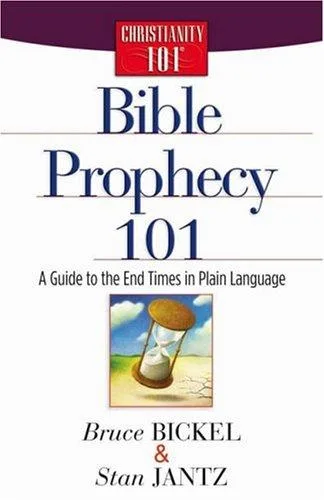
Published in 2004, Bible Prophecy 101 by Bruce Bickel and Stan Jantz structured an introduction to Christian prophetic texts.
This book offers a clear entry point for understanding biblical prophecy within the Christian faith. Authors Bruce Bickel and Stan Jantz aimed to simplify complex scriptural passages and theological ideas about future events. It is designed as a basic guide for individuals new to eschatology, the study of end times, or those wanting a general overview of how these prophecies are commonly interpreted. The book is primarily for Christian lay readers who want to engage with prophecy but do not have extensive theological backgrounds. It is useful for anyone considering end-times theology, looking for clarification on biblical predictions, or interested in how prophetic interpretation has developed over time. It is not written for seasoned theologians or those already involved in detailed debates about eschatology.
The text addresses a long tradition of Christian thought on future events, which grew notably in the 19th century with figures like John Nelson Darby and the rise of dispensationalism. Published in the early 21st century, this work appeared during a time of public fascination with biblical prophecy, often influenced by cultural concerns and media portrayals of apocalyptic themes. The authors' method aligns with a common evangelical approach to understanding prophetic scripture, especially passages in Daniel and Revelation.
Bible Prophecy 101 engages with a specific branch of Christian eschatology, a field concerned with end-times events and their interpretation through biblical prophecy. This tradition has a long history, with significant developments in the 19th century through figures like John Nelson Darby and the formulation of dispensationalism. The book reflects a common evangelical perspective on understanding prophetic texts, particularly those found in Daniel and Revelation, and addresses concepts like the Rapture and the Second Coming of Christ. It situates itself within a discourse that seeks to interpret scripture regarding future events, often drawing on specific hermeneutical approaches.
💡 Why Read This Book?
• Understand the foundational concepts of biblical prophecy, including the Rapture and Tribulation, as presented in the book's structured approach to eschatology. • Gain insight into the historical development of prophetic interpretation, recognizing the influence of 19th-century figures like John Nelson Darby on modern evangelical views. • Learn basic methods for analyzing prophetic texts, enabling a more informed personal engagement with scripture, as guided by the book's interpretive framework.
⭐ Reader Reviews
Honest opinions from readers who have explored this book.
❓ Frequently Asked Questions
What is the primary goal of Bible Prophecy 101?
The book's primary goal is to provide a clear and accessible introduction to biblical prophecy and eschatology for readers new to the subject. It aims to demystify complex prophetic texts and theological concepts prevalent in Christian tradition.
When was Bible Prophecy 101 first published?
Bible Prophecy 101 was first published in 2004, reflecting a period of continued public interest in end-times interpretations of biblical texts.
Who are the authors of Bible Prophecy 101?
The authors are Bruce Bickel and Stan Jantz. They collaborated to present a foundational overview of biblical prophecy.
What kind of interpretive approach does the book generally follow?
The book generally follows a dispensationalist approach, which became prominent in the 19th century and is common in many evangelical circles for interpreting prophetic scripture.
Does the book discuss specific end-times events?
Yes, the book discusses key end-times events such as the Rapture, the Tribulation, and the Second Coming of Christ, providing explanations within its prophetic framework.
Is Bible Prophecy 101 suitable for advanced theologians?
No, it is primarily designed for lay readers and beginners in the study of prophecy. Advanced theologians might find its scope and depth limited compared to specialized academic works.
🔮 Key Themes & Symbolism
Eschatological Frameworks
The book systematically outlines various frameworks for understanding biblical prophecy, particularly focusing on eschatological timelines and events. It introduces concepts like the Millennium, the Rapture, and the Great Tribulation, presenting them within a coherent, often dispensationalist, interpretive model. The work aims to equip readers with a structured understanding of how these future events are believed to unfold according to scripture, offering a lens through which to view historical and contemporary events in light of prophetic fulfillment.
Interpretation of Scripture
A central theme is the methodology for interpreting prophetic passages, especially those in Daniel and Revelation. Bible Prophecy 101 addresses the tension between literal and symbolic readings, guiding readers on how to approach texts that describe future occurrences. It explores the importance of context, historical understanding, and theological consistency in deciphering scriptural predictions, providing tools to differentiate between genuine prophecy and speculative interpretation.
Key Prophetic Figures and Events
The work details significant figures and events central to Christian eschatology. This includes discussions on the Antichrist, the role of Israel in end-times prophecy, and the ultimate consummation of God's plan. By examining these elements, the book seeks to provide a comprehensive overview of the narrative arc of biblical prophecy, from initial predictions to the final establishment of a new heaven and earth.
Theological Implications
Bible Prophecy 101 explores the broader theological implications of believing in and studying biblical prophecy. It touches upon themes of divine sovereignty, human responsibility, hope, and the call to righteous living in light of future certainty. The book encourages readers to consider how an understanding of prophecy impacts their faith, worldview, and daily conduct, framing eschatology not merely as speculative prediction but as a vital aspect of Christian doctrine.
💬 Memorable Quotes
Direct passages from the work, attributed to the author.
“Understanding biblical prophecy provides a framework for interpreting history and anticipating the future.”
— This sentiment underscores the book's premise: that prophetic scripture is not just a collection of predictions, but a divinely ordained lens through which to view the unfolding of time and God's plan.
“The Book of Revelation is often seen as the capstone of biblical prophecy.”
— This highlights the unique and often complex position of Revelation in the prophetic canon, suggesting it synthesizes and fulfills many earlier prophetic themes and predictions.
“Dispensationalism offers a structured approach to understanding biblical history and future events.”
— This points to a specific theological system that the authors likely employ, which divides history into distinct periods or 'dispensations' to interpret scripture, particularly prophecy.
“Distinguishing between literal and symbolic language is crucial for accurate prophetic interpretation.”
— This emphasizes a key hermeneutical challenge addressed by the book: the need for careful discernment when analyzing prophetic texts to avoid misinterpretations.
“Prophecy assures believers of God's ultimate control and redemptive purpose.”
— This conveys the pastoral and theological function of prophecy within the text, suggesting it serves to strengthen faith by confirming God's sovereignty and ultimate plan for salvation.
🌙 Esoteric Significance
Tradition
While not strictly 'esoteric' in the Hermetic or Gnostic sense, Bible Prophecy 101 engages with a specific branch of Christian eschatology that functions as a form of theological mysticism for its adherents. This tradition within evangelical Christianity interprets biblical prophecy as revealing hidden divine plans and future realities. It shares with esoteric traditions a focus on deciphering coded messages and understanding a grand, unfolding cosmic narrative, albeit within a strictly biblical and often literalist framework, departing from more mystical or Gnostic interpretations.
Symbolism
The book engages with potent biblical symbols central to prophetic literature. Key among these are the 'beast' and 'dragon' motifs, often interpreted as representations of adversarial forces or specific political/religious entities opposing God's will, particularly in the Book of Revelation. Another significant symbol is the 'New Jerusalem,' representing the ultimate eschatological dwelling place of God's people, symbolizing perfection, divine presence, and the culmination of God's redemptive plan.
Modern Relevance
Contemporary evangelical and fundamentalist Christian communities continue to draw heavily on the interpretive methods and conclusions presented in works like Bible Prophecy 101. Thinkers and ministries focused on end-times theology, apologetics, and Bible prophecy conferences frequently reference the concepts and frameworks popularized by this genre. Its influence is visible in online prophecy ministries, popular Christian media, and within churches that emphasize a literal interpretation of prophetic scripture, maintaining its relevance for adherents of this specific theological school.
👥 Who Should Read This Book
• Individuals new to Christian eschatology seeking a foundational understanding of biblical prophecy and end-times events. • Church leaders and Sunday school teachers who need a clear, accessible resource to explain prophetic concepts to their congregations. • Lay Christians interested in understanding how specific scriptural passages relate to future events and God's overarching plan.
📜 Historical Context
Published in 2004, Bible Prophecy 101 emerged from a fertile ground of popular eschatological interest in the late 20th and early 21st centuries, significantly amplified by figures like Hal Lindsey whose 1970 work *The Late, Great Planet Earth* had already popularized dispensationalist views. The book’s approach aligns with a broad evangelical tradition that found renewed vigor in interpreting biblical prophecy, particularly after key dates like 1948 (founding of Israel) and 1967 (Six-Day War) were seen by many as prophetic signposts. This period also saw a resurgence of interest in premillennialism, a key component of dispensational thought, contrasting with amillennial or postmillennial perspectives that held sway in other theological streams. While not a direct engagement, the book operates within an intellectual climate shaped by scholars like John Nelson Darby, whose 19th-century articulation of dispensationalism and the Rapture heavily influenced subsequent interpretations. The reception of such works was generally positive within evangelical circles, though often met with skepticism or critique from more liberal theological academics who questioned the literalist approach to prophecy.
📔 Journal Prompts
The concept of the Rapture: Reflect on the scriptural basis presented for this event.
The Book of Daniel's prophetic visions: How do these ancient prophecies inform an understanding of contemporary geopolitical events?
Interpretive methods: Compare the book's approach to literal interpretation with symbolic readings of prophecy.
The Antichrist: Analyze the characteristics attributed to this figure and their potential manifestations.
The New Jerusalem: Consider the symbolic meaning of this ultimate dwelling place for believers.
🗂️ Glossary
Eschatology
The theological study of 'last things,' including death, judgment, the end of the world, and the ultimate destiny of humanity and the cosmos, as understood within Christian theology.
Dispensationalism
A theological system that divides history into distinct periods or 'dispensations,' each marked by a different way God deals with humanity. It often emphasizes a literal interpretation of prophecy and a distinction between Israel and the Church.
Rapture
In dispensational premillennialism, the belief that believers alive at Christ's second coming will be suddenly 'caught up' to meet Him in the air before a period of tribulation.
Tribulation
A future period of intense suffering and divine judgment on earth, often understood as lasting seven years, preceding Christ's second coming.
Millennium
A literal 1,000-year reign of Christ on earth, often associated with the binding of Satan and a period of peace and righteousness, as described in Revelation 20.
Premillennialism
The belief that Christ will return to earth *before* establishing a 1,000-year reign (the Millennium).
Antichrist
A figure or force prophesied in scripture (particularly in the New Testament) that opposes Christ and His followers, often seen as a key individual who will arise before the end times.
🔮 Readers Also Liked
Browse all →









More by Bruce Bickel, Stan Jantz
All books →
More Free Occult Philosophy Books
View all →