Beginners Guide-Nostradamus

 81
81

Beginners Guide-Nostradamus
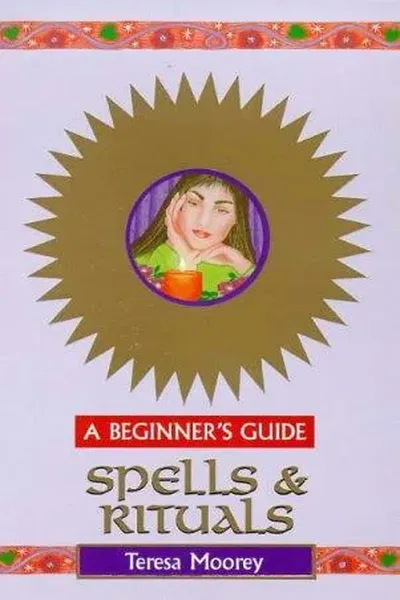
Teresa Moorey's *Beginners Guide-Nostradamus* sidesteps the sensationalism that often clouds discussions of the 16th-century seer. The book’s strength lies in its methodical approach, presenting Nostradamus’s quatrains not as infallible prophecies, but as historical artifacts ripe for interpretation. Moorey’s analysis of the astrological underpinnings of the *Centuries*, particularly how planetary alignments were believed to influence world events, is a clear highlight. However, the guide’s primary limitation is its brevity; while excellent for absolute novices, readers with even a rudimentary familiarity with Nostradamus might find the explanations somewhat superficial. The section on the quatrain concerning the "Great King of Angolmois" offers a solid, if brief, example of how historical context informs interpretation. Ultimately, this work serves its purpose as a clear, introductory primer, though it leaves deeper engagement for further study.
📝 Description
81
Teresa Moorey's 2000 guide demystifies Nostradamus's quatrains for new students.
Beginners Guide-Nostradamus by Teresa Moorey offers a structured entry into the prophetic writings of Michel de Nostredame. Published in 2000, this guide aims to clarify the quatrains, presenting them in a manner accessible to those unfamiliar with their historical context and interpretive challenges. It functions as an introductory manual, focusing on fundamental knowledge rather than advanced exegetical techniques. The book is designed for newcomers to Nostradamus studies. Individuals curious about prophecy, historical prediction, and the enduring fascination with Nostradamus's 16th-century prophecies will find it a suitable starting point. It caters to readers seeking a clear explanation of the quatrains' origins and common interpretations, without requiring prior esoteric knowledge.
Moorey situates Nostradamus within his historical milieu, the 16th century, a period marked by significant religious and political upheaval in Europe. The work touches upon his life and the context in which his *Centuries* were first published in 1555. Moorey's approach acknowledges the ongoing scholarly debate surrounding the authenticity and interpretation of Nostradamus's predictions, a discourse that has persisted since his lifetime and intensified in subsequent centuries.
The guide unpacks several core concepts for understanding Nostradamus. These include the structure of his quatrains, the role of astrological references, and common methods employed by interpreters to link predictions to historical events. The book addresses the challenges inherent in translating and deciphering texts written in a complex mix of French, Latin, and Greek, often employing obscure allegories and anagrams.
This book engages with the tradition of prophetic interpretation, specifically focusing on the quatrains of Michel de Nostredame. It approaches the subject from a historical and textual perspective, aiming to provide a clear understanding of how these 16th-century verses have been interpreted over centuries. The work acknowledges the ongoing discussions regarding the nature and application of Nostradamus's predictions, placing it within the broader study of historical divination and its reception.
💡 Why Read This Book?
• Gain a foundational understanding of Nostradamus's quatrain structure and the astrological elements Moorey explains, offering a specific entry point into 16th-century prophetic traditions. • Learn about the challenges of interpreting texts from 1555, including linguistic nuances and historical context, directly addressing the difficulties encountered when engaging with the *Centuries*. • Discover common interpretive methods used to connect Nostradamus's predictions to world events, providing concrete techniques discussed within the book's explanatory framework.
⭐ Reader Reviews
Honest opinions from readers who have explored this book.
❓ Frequently Asked Questions
When were Nostradamus's prophecies first published?
The prophecies of Nostradamus, known as the *Centuries*, were first published in their entirety in 1555. This initial publication laid the groundwork for centuries of interpretation and fascination with his work.
What is the primary language used in Nostradamus's quatrains?
Nostradamus wrote his quatrains primarily in a mix of 16th-century French, Latin, and Greek, often employing anagrams and obscure allegorical language that complicates translation and interpretation.
Does this guide explain how to interpret Nostradamus's predictions?
Yes, *Beginners Guide-Nostradamus* outlines common interpretive methods and discusses the challenges involved in linking the quatrains to historical events, providing a foundational approach for new readers.
Who was Michel de Nostredame?
Michel de Nostredame, known as Nostradamus, was a French astrologer and physician who lived from 1503 to 1566. He is famous for his book *Les Propheties*, first published in 1555.
Is Teresa Moorey's book suitable for advanced students of prophecy?
While Moorey's guide is excellent for beginners, its focus is on foundational knowledge. Advanced students of prophecy might find it offers a useful overview but may require more specialized texts for deeper study.
What historical period does the book place Nostradamus within?
The book situates Nostradamus within the tumultuous 16th century, a time of significant religious and political change in Europe, which influenced his worldview and the context of his prophecies.
🔮 Key Themes & Symbolism
Quatrain Structure and Language
The book dissects the four-line poetic structure, or quatrain, that forms the backbone of Nostradamus's *Centuries*. It highlights the linguistic complexity, noting the intermingling of French, Latin, and Greek, alongside anagrams and neologisms. This section emphasizes how the very construction of the verses, often cryptic and allegorical, necessitates specific interpretive frameworks to even begin deciphering potential meanings. Understanding this foundational element is presented as crucial for any serious engagement with the text.
Astrological Determinism
A core theme explored is Nostradamus's reliance on astrological configurations to frame his predictions. Moorey explains how the 16th-century belief in celestial influence on earthly events permeates the quatrains. The book details how specific planetary alignments, conjunctions, and celestial phenomena were believed by Nostradamus to herald significant historical occurrences, offering readers insight into the worldview that informed his prophetic visions.
Historical Event Correlation
This theme addresses the common practice of matching Nostradamus's verses to documented historical events. The guide discusses the methodologies, and inherent challenges, of this comparative approach. It illustrates how interpreters have historically sought to align specific quatrains with figures like Napoleon or Hitler, or events such as World Wars, demonstrating the ongoing effort to validate Nostradamus's foresight through historical evidence.
The Interpreter's Role
Moorey underscores the significant role of the interpreter in unlocking the meaning of Nostradamus's cryptic verses. The book implicitly argues that the ambiguity and layered language of the *Centuries* invite multiple readings. This theme highlights that interpretation is not a passive reception of truth but an active engagement requiring historical knowledge, linguistic skill, and an understanding of astrological symbolism, positioning the reader as a potential co-creator of meaning.
💬 Memorable Quotes
“The quatrains are often multi-layered, allowing for various interpretations across different historical epochs.”
— This highlights the inherent ambiguity in Nostradamus's work, suggesting that his predictions are not fixed but can be reinterpreted to fit new contexts, a key aspect of their enduring appeal.
“Astrology played a significant role in shaping Nostradamus's understanding of future events.”
— This emphasizes the importance of celestial mechanics and the belief in planetary influence on human affairs within the 16th-century mindset that informed Nostradamus's prophetic system.
“Translating the obscure language and mixed-linguistic elements presents a substantial challenge.”
— This points to the linguistic hurdles faced by anyone attempting to understand the *Centuries*, underscoring the need for philological skill and contextual knowledge.
“Many historical figures and events have been linked to specific quatrains over centuries.”
— This acknowledges the long tradition of applying Nostradamus's verses retrospectively, illustrating the practice of historical correlation that forms a major part of his legacy.
“The guide aims to provide a clear entry point for those new to Nostradamus's work.”
— This statement defines the book's primary purpose: to demystify the subject for beginners, offering accessible explanations of complex concepts without overwhelming the reader.
🌙 Esoteric Significance
Tradition
This work engages with the Western esoteric tradition, specifically the lineage of prophetic literature and astrological divination that has roots in classical antiquity and flourished during the Renaissance. While not strictly Hermetic or Kabbalistic, Nostradamus's method of cryptic, symbolic prediction through astrological observation aligns with a broader interest in hidden knowledge and divine communication prevalent in these traditions. Moorey's guide places Nostradamus within this historical stream of seeking cosmic order and foreknowledge.
Symbolism
Central to Nostradamus's symbolism is the celestial map; planetary positions and conjunctions are not mere astronomical data but potent indicators of future terrestrial events. Another key motif is the allegorical figure, often a "Great King" or "Antichrist," representing archetypal forces or historical paradigms rather than specific individuals. The quatrain itself, as a compressed poetic form, becomes a symbolic vessel designed to contain and transmit layers of meaning, often obscured by deliberate linguistic artifice.
Modern Relevance
Contemporary interest in Nostradamus, as facilitated by guides like Moorey's, continues to fuel discussions in fringe history, New Age spirituality, and online esoteric communities. Thinkers and practitioners who explore predictive astrology, historical cycles, or the nature of prophecy often reference Nostradamus as a touchstone. His work remains a popular subject for comparative analysis against modern geopolitical events and for those seeking validation of apocalyptic narratives or cyclical theories of history.
👥 Who Should Read This Book
• Beginning students of Western prophecy and esoteric history seeking an accessible introduction to Nostradamus's quatrains and their historical context. • Comparative religion researchers interested in the role of prophecy and divination in pre-modern European thought and its subsequent reception. • Individuals curious about historical predictive systems who wish to understand the basic principles and interpretive challenges associated with Nostradamus's 16th-century work.
📜 Historical Context
Teresa Moorey's *Beginners Guide-Nostradamus* emerges from a long lineage of engagement with Michel de Nostredame's prophetic works, which first appeared in 1555. The 16th century, Nostradamus's era, was a period rife with religious schism, political intrigue, and widespread belief in astrology and divine revelation. In this climate, his *Centuries* gained immediate attention, appealing to those seeking guidance or confirmation amidst uncertainty. The book implicitly addresses the enduring fascination that places Nostradamus in conversation with figures like John Dee, an English occultist and mathematician who also sought hidden knowledge, though through different means. Moorey's work, published in 2000, arrives centuries after initial reception, during a period of renewed interest in esoteric studies and conspiracy theories, positioning it as a modern primer on a historical phenomenon that has continually sparked debate and attracted both believers and skeptics.
📔 Journal Prompts
The linguistic ambiguity of a specific quatrain regarding the "Great King of Angolmois".
The role of planetary conjunctions in framing Nostradamus's predictions.
The process of correlating a historical event with a cryptic verse.
Your personal interpretation of a chosen Nostradamus quatrain.
The challenges of translating 16th-century prophecy into modern understanding.
🗂️ Glossary
Quatrain
A stanza consisting of four lines of verse, the form used by Nostradamus for his prophecies. These verses are often cryptic and require significant interpretation.
Centuries
The collection of Nostradamus's prophecies, organized into groups of one hundred quatrains. The first edition was published in 1555.
Astrology
The study of the movements and relative positions of celestial bodies interpreted as having an influence on human affairs and the natural world.
Anagram
A word or phrase formed by rearranging the letters of a different word or phrase, often used by Nostradamus to obscure meaning.
Divination
The practice of seeking knowledge of the future or the unknown by supernatural means. Nostradamus's work is a form of this.
Renaissance Humanism
An intellectual movement that emphasized the study of classical antiquity, human potential, and reason, which influenced the intellectual climate of Nostradamus's era.
Physician
A medical practitioner; Nostradamus was trained as a physician, a profession that informed his worldview and his understanding of natural phenomena.