Amulets and superstitions

 73
73

Amulets and superstitions
Wallis Budge's extensive cataloging of amulets and superstitions presents a formidable breadth of material, particularly concerning ancient Egypt and Mesopotamia. His meticulous descriptions of specific charms, their materials, and intended purposes are invaluable for understanding historical belief systems. However, the work occasionally suffers from a certain academic detachment, sometimes failing to fully capture the lived experience or nuanced psychological drivers behind these practices. A notable strength is the detailed explication of the Book of the Dead and its associated funerary amulets, offering a concrete example of the intersection between religious ritual and protective magic. The limitation lies in its sometimes encyclopedic, rather than deeply interpretive, approach to the subject matter. For those seeking a foundational reference on ancient apotropaic practices, this book is a significant, albeit dense, resource.
📝 Description
73
E. A. Wallis Budge's 1992 book examines ancient protective charms and superstitions.
Amulets and Superstitions, first published in 1992, analyzes the historical use of charms and popular beliefs across ancient cultures. E. A. Wallis Budge gathered extensive research on objects meant to protect against evil, illness, and misfortune. He drew upon archaeological discoveries and written records to detail these practices.
The work is suited for students of ancient history, religious studies, and anthropology. It will also interest occult practitioners looking into the origins of magical techniques. Those curious about comparative mythology and how belief systems change will find it informative. The book reflects the intense study of Egyptology and Assyriology from the late 19th and early 20th centuries, a period of major finds and academic work.
This book emerges from the scholarly environment of late 19th and early 20th-century Egyptology and Assyriology. Budge, a figure at the British Museum, was engaged with contemporary scholars like Sir James Frazer. The work addresses the belief that objects and actions could influence distant events through mystical connections, a core concept in many esoteric traditions. It details specific materials, inscriptions, and rituals used in amuletic practices, showing a worldview where the sacred and everyday were closely tied.
💡 Why Read This Book?
• Gain a concrete understanding of apotropaic practices from ancient Egypt and Mesopotamia, as detailed in Budge's extensive research into specific amulet types and their inscriptions. • Explore the historical evolution of sympathetic magic, learning how ancient peoples believed objects and rituals could influence unseen forces, a concept central to the book's analysis. • Discover the scholarly context of early 20th-century occult and religious studies, understanding how Budge’s work fit within the academic discourse of his time, referencing figures like Sir James Frazer.
⭐ Reader Reviews
Honest opinions from readers who have explored this book.
❓ Frequently Asked Questions
What cultures does E. A. Wallis Budge focus on in Amulets and Superstitions?
The book primarily concentrates on ancient Egypt and Mesopotamia, drawing extensively from hieroglyphic texts, archaeological finds, and religious rituals documented from these civilizations.
When was Amulets and Superstitions first published?
Amulets and Superstitions was first published in 1992, though it compiles research from E. A. Wallis Budge's earlier extensive studies.
What is sympathetic magic as discussed in the book?
Sympathetic magic is a core concept, referring to the belief that like affects like or that a person/thing can be influenced by a distant object or action that resembles it.
Are there discussions of specific deities related to protection?
Yes, the work frequently references deities associated with protection, such as Isis and Thoth in Egyptian lore, and their roles in bestowing blessings or warding off malevolent forces through amulets.
What kind of evidence does Budge use?
Budge utilizes a combination of archaeological artifacts, museum collections, ancient inscriptions, papyri, and religious texts, particularly from Egyptian and Mesopotamian cultures.
Is this book suitable for beginners in occult studies?
While comprehensive, the book is scholarly and dense, making it more suitable for serious students of ancient history, religious studies, or comparative mythology rather than absolute beginners.
🔮 Key Themes & Symbolism
Amuletic Power
The book meticulously details the function and form of amulets across ancient civilizations, particularly Egypt and Mesopotamia. It explores how specific materials, shapes, and inscribed symbols were believed to imbue objects with protective qualities. Budge examines the divine associations of these charms, linking them to deities like Thoth and Isis, and how their presence was thought to ward off illness, curses, and malevolent spirits, acting as tangible conduits of supernatural defense.
Sympathetic Causation
A central tenet explored is the principle of sympathetic magic, the idea that connections exist between objects that resemble each other or have been in contact. Budge illustrates how this belief manifested in the creation and use of amulets, where a representation of a protective animal or a sacred symbol was thought to exert its influence directly upon the wearer. This concept underscores a worldview where the perceived order of the universe was accessible and manipulable through specific ritualistic actions and objects.
The Nature of Superstition
Budge’s work provides a historical lens on what societies have deemed 'superstitious' beliefs and practices. He documents a wide array of popular customs and folk magic aimed at averting misfortune, from specific incantations to the use of talismans for luck. By presenting these phenomena within their cultural contexts, the book encourages an understanding of these practices not as mere irrationality, but as integral components of ancient peoples' attempts to understand and control their environment.
Ritual and Divine Intervention
The book highlights the intimate relationship between ritual practice and the invocation of divine power for protection. It details the specific ceremonies and spells employed in the creation and consecration of amulets, often involving prayers to deities or the recitation of sacred texts like the Book of the Dead. This demonstrates a sophisticated understanding of the need for intermediary objects and prescribed actions to secure divine favor and safeguard against the perils of existence.
💬 Memorable Quotes
Direct passages from the work, attributed to the author.
“The belief in the efficacy of amulets was deeply ingrained in the fabric of ancient societies.”
— This statement captures the pervasiveness of apotropaic practices, suggesting that charms and talismans were not fringe beliefs but fundamental elements woven into daily life and religious observance across diverse cultures.
“Many amulets bore inscriptions intended to invoke the protection of specific gods.”
— This highlights the theological dimension of amulet use, indicating that their power was often seen as derived from divine authority, requiring specific deities like Isis or Thoth to be invoked for their protective benefits.
“The principle of 'like affects like' underpinned much of ancient magical thinking.”
— This succinctly explains the core concept of sympathetic magic, a foundational idea in many ancient belief systems where resemblance or association was believed to create a direct causal link.
“Fear of the unknown and unseen forces drove the widespread use of protective charms.”
— This interpretation points to the psychological underpinnings of amuletic practices, suggesting that a fundamental human desire for security against perceived threats was a primary motivator for their creation and use.
“The Book of the Dead contains numerous spells and formulae for safeguarding the deceased.”
— This references a specific ancient text and its function, illustrating how religious literature itself served as a source for protective magic, particularly in the context of funerary rituals and the afterlife.
🌙 Esoteric Significance
Tradition
While Budge’s primary lens was academic Egyptology and Assyriology, his compilation of amulets and superstitions deeply informs the Western Esoteric Tradition, particularly movements like Theosophy and later occult revivalism. It provides source material for understanding ancient magical practices that were reinterpreted and integrated into Hermetic, Kabbalistic, and ceremonial magic systems. The book serves as a bridge, offering empirical details about historical practices that esotericists sought to understand and potentially revive or adapt.
Symbolism
Key symbols include the Ankh, representing life, and the Udjat (Eye of Horus), a potent symbol of protection, healing, and royal power. The Scarab beetle, associated with rebirth and the sun god Ra, also features prominently as an amulet for regeneration. Budge details how these symbols, when inscribed on amulets, were believed to channel the inherent energies and divine associations of the represented concepts to the wearer or object.
Modern Relevance
Contemporary practitioners of modern witchcraft, neo-paganism, and psychological astrology frequently reference Budge's research when exploring historical protective symbols and practices. His work provides foundational knowledge for understanding the archetypal significance of ancient talismans and charms, informing contemporary amulet-making and ritual design. Thinkers interested in comparative mythology and the enduring human need for magical solutions continue to draw upon his extensive documentation.
👥 Who Should Read This Book
• Students of ancient Egyptian and Mesopotamian religions: Gain a comprehensive overview of the material culture and beliefs surrounding protective charms, drawing on extensive textual and archaeological evidence. • Comparative religion scholars: Understand the historical development and cross-cultural prevalence of apotropaic practices, examining how different societies sought to ward off misfortune. • Practitioners of Western Esotericism: Access foundational research on historical magical objects and symbolism, providing context for contemporary ritual practices and amuletic traditions.
📜 Historical Context
E. A. Wallis Budge's work emerges from the late Victorian and Edwardian era's intense scholarly focus on ancient Near Eastern civilizations, particularly Egyptology and Assyriology. This period, roughly from the late 19th century through the early 20th century, was characterized by major archaeological expeditions and the establishment of vast museum collections, like the British Museum where Budge was a prominent curator. His research often engaged with contemporary anthropological theories, such as those proposed by Sir James Frazer in *The Golden Bough*, regarding magic, religion, and myth. While celebrated for his detailed compilations, Budge's work also represented a particular scholarly approach, sometimes criticized for its emphasis on cataloging over nuanced cultural interpretation compared to later scholarship. Reception was generally strong within academic circles interested in ancient religions and material culture, though debates existed regarding the theoretical frameworks applied to the evidence.
📔 Journal Prompts
The function of the Udjat eye as depicted in Egyptian amulets.
The sympathetic principles behind the use of animal-shaped charms.
How ancient peoples perceived divine intervention through talismans.
The perceived difference between 'magic' and 'religion' in ancient belief systems.
The role of specific deities like Thoth in protective rituals.
🗂️ Glossary
Amulet
An object worn or carried by a person, believed to possess supernatural powers to protect its owner from evil, harm, or misfortune.
Apollonian
Relating to the Greek god Apollo; often used in contrast to Dionysian, representing order, reason, and harmony, though in this context, it might relate to divine protection.
Sympathetic Magic
A form of magic based on the principle that like affects like, or that a person or thing can be magically influenced by means of something with which it has a similarity or affinity.
Talisman
An object believed to have magical properties, often inscribed with symbols or words, intended to bring good luck or protection.
Udjat
The Eye of Horus, an ancient Egyptian symbol of protection, royal power, and good health, frequently used in amulets.
Book of the Dead
An ancient Egyptian funerary text, containing spells intended to assist a dead person's journey through the Duat (underworld) and into the afterlife.
Hieroglyphs
The formal writing system used in ancient Egypt, combining logographic, syllabic, and alphabetic elements.
🔮 Readers Also Liked
Browse all →









More by E. A. Wallis Budge
All books →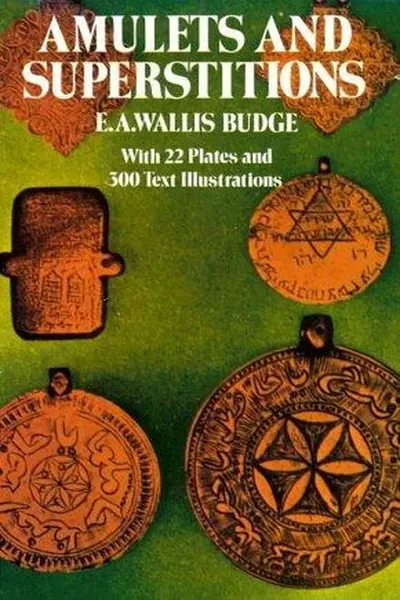



More Free Occult Philosophy Books
View all →