Aftermath

 80
80

Aftermath
James George Frazer's 'Aftermath' offers a dense, yet invaluable, compendium of magical practices that underpins much of early anthropological thought. Its strength lies in the sheer breadth of documented rituals, meticulously gathered from global sources. The work's detailed examination of sympathetic magic, particularly the Laws of Similarity and Contagion, remains a foundational concept for understanding pre-modern belief systems. However, the text's analytical framework, while groundbreaking for its time (late 19th/early 20th century), can feel anachronistic to contemporary readers, often imposing a teleological view of human intellectual development from magic to science. A particular passage detailing the elaborate sympathetic magic employed in ancient agricultural rites offers a vivid glimpse into the anxieties and hopes of early societies. Despite its dated theoretical lens, 'Aftermath' serves as an indispensable reference for the empirical data it presents on the history of magic and religion. It is a crucial, if sometimes challenging, resource for understanding the roots of human ritual.
📝 Description
80
James George Frazer's 'Aftermath' (1901) meticulously catalogs primitive magic and ritual across cultures.
Published in 1901, 'Aftermath' is a scholarly examination of magic and religion, drawing heavily on anthropological fieldwork and historical accounts. Frazer structures his analysis around the principles of sympathetic magic, detailing how ancient peoples perceived cause and effect. The book presents a careful catalog of ritual practices and belief systems observed in various societies. It shows how people used ritual actions to influence natural events or human destiny. This volume is for serious students of anthropology, comparative religion, and the history of magic. Scholars and researchers looking for detailed ethnographic data on pre-modern belief systems will find it valuable. Individuals interested in the origins of religious thought and the psychological roots of ritual will discover substantial material. It is especially relevant for those studying the development of human understanding of the cosmos and humanity's place in it, before widespread scientific rationalism took hold.
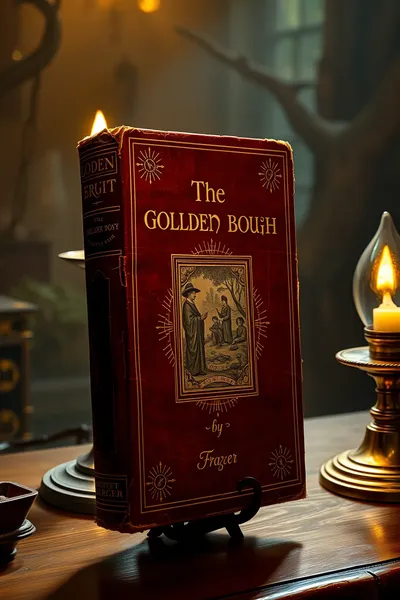
Frazer's work emerged during a period of intense anthropological and sociological interest. The late 19th and early 20th centuries saw a drive to document and understand non-Western cultures. 'Aftermath' is part of his larger study, *The Golden Bough*, which attempted to trace a universal progression of human thought from magic through religion to science. While influential, Frazer's evolutionary assumptions and decontextualized analysis of rituals have been debated by later scholars. His approach engaged with contemporary intellectual currents, seeking to map the development of human understanding.
💡 Why Read This Book?
• Gain a foundational understanding of sympathetic magic, as detailed in the work's exploration of the Laws of Similarity and Contagion, providing insight into how early cultures perceived cause and effect. • Learn about the diverse applications of ritualistic practices across global cultures, as documented through Frazer's extensive ethnographic research conducted during the late 19th and early 20th centuries. • Explore the concept of taboo and its societal functions within primitive belief systems, offering a concrete understanding of social control mechanisms predating modern legal structures.
⭐ Reader Reviews
Honest opinions from readers who have explored this book.
❓ Frequently Asked Questions
What is the primary focus of James George Frazer's 'Aftermath' concerning primitive belief systems?
The primary focus is the meticulous cataloging and analysis of primitive magic and religion, particularly examining the principles of sympathetic magic and its manifestations across various cultures.
When was the research for 'Aftermath' primarily conducted and published?
The research and original publication of Frazer's related works, including the concepts explored in 'Aftermath', took place during the late 19th and early 20th centuries.
What are the two fundamental laws of magic as described by Frazer in this work?
Frazer describes the Law of Similarity (like produces like) and the Law of Contagion (things once in contact continue to act on each other at a distance).
Who would benefit most from reading 'Aftermath'?
Students of anthropology, comparative religion, and the history of magic, as well as scholars and researchers interested in detailed ethnographic accounts of pre-modern belief systems.
Does 'Aftermath' present a modern anthropological perspective on magic?
No, 'Aftermath' reflects the intellectual currents and anthropological methodologies of the late 19th and early 20th centuries, which differ from contemporary approaches.
What specific concept does Frazer explore regarding social order in primitive societies?
Frazer explores the concept of taboo and its role in maintaining social order and spiritual purity within these belief systems.
🔮 Key Themes & Symbolism
Sympathetic Magic Principles
The work meticulously dissects the two core tenets of sympathetic magic: the Law of Similarity and the Law of Contagion. Frazer illustrates how these perceived natural laws formed the bedrock of countless rituals, from healing ceremonies designed to mend bodies by mimicking wholeness, to imprecations intended to harm enemies by acting upon their effigies or possessions. The detailed examples provide a concrete look into how ancient peoples conceptualized causality and sought to manipulate their environment and fate through ritualistic means, underscoring a profound belief in interconnectedness.
Ritual and Belief Systems
'Aftermath' presents a vast array of rituals observed across diverse cultures, serving as a comparative study of human belief. Frazer documents practices related to fertility, agriculture, warfare, and healing, demonstrating the pervasive role of magic in daily life and societal concerns. The analysis connects these rituals to underlying cosmological views and the human desire to control unpredictable forces. This theme highlights the psychological and social functions of these practices, offering insights into the collective psyche of pre-modern societies.
Taboo and Social Order
Beyond direct magical operations, the text examines the concept of taboo as a crucial element in maintaining social structure and spiritual purity. Frazer details how prohibitions, often linked to sacred individuals, places, or objects, served to prevent spiritual contamination and uphold societal norms. This exploration reveals how fear of the sacred and the profane, managed through strict adherence to taboos, contributed to the stability and order of communities, functioning as an informal system of social control.
Evolution of Thought
A significant underlying theme, characteristic of Frazer's era, is the progression of human thought from magic to religion to science. 'Aftermath' implicitly frames the documented magical practices as an early stage in this intellectual evolution. While this perspective is now seen as overly simplistic, it provides historical context for Frazer's analysis, showing his attempt to map a universal trajectory of human understanding and societal development based on the prevalence of magical thinking.
💬 Memorable Quotes
Direct passages from the work, attributed to the author.
“Things which have been in contact once, continue to act on each other during the absence of an intermediary.”
— This succinctly explains the Law of Contagion, another fundamental concept in sympathetic magic. It posits that a magical link persists even after physical separation, enabling rituals involving personal items like hair or nails to influence the individual.
“The practice of magic is not merely a set of superstitious beliefs but an attempt to understand and control the forces of nature.”
— This interpretation emphasizes Frazer's view that magic represented an early, albeit flawed, scientific or rationalistic endeavor by humans to impose order and predictability upon a seemingly chaotic world through ritualistic means.
“Taboo functions as a mechanism to preserve the sacred and prevent spiritual pollution within a community.”
— This highlights the sociological aspect of taboo, as presented by Frazer, suggesting its role in defining boundaries, protecting individuals or objects deemed holy, and maintaining the integrity of the spiritual and social order.
💡 Key Ideas
Editorial paraphrase of the work's core concepts — not direct quotes.
The Law of Similarity states that the resemblance of things implies the realization of a magical bond between them.
This paraphrase captures Frazer's core principle of sympathetic magic, where likeness is believed to confer a direct, magical connection, allowing actions performed on an image or representation to affect the actual subject.
The transition from magic to religion often involves a shift in perceived agency from human ritual to divine intervention.
This paraphrased concept reflects Frazer's evolutionary model, suggesting that as societies developed, they moved from believing they could directly control events through magic to appealing to supernatural beings or deities for assistance.
🌙 Esoteric Significance
Tradition
While Frazer's work is primarily anthropological, its deep dive into magic places it tangentially within the broader study of esoteric traditions. It provides empirical data and theoretical frameworks (like sympathetic magic) that later esoteric scholars and practitioners would engage with, either to validate or critique their own practices. It doesn't belong to a specific lineage like Hermeticism or Kabbalah but serves as a historical-anthropological reference point for understanding the universal human impulse towards ritual and belief that underlies many esoteric paths.
Symbolism
The core symbols and motifs explored are the effigy and the personal relic, central to sympathetic magic. The effigy, representing a person or animal, becomes a conduit for magical influence via the Law of Similarity. Personal items like hair, nails, or clothing, imbued with the essence of the individual, serve as focal points for the Law of Contagion. These symbols represent the perceived energetic connections and the power of representation in early belief systems, highlighting a worldview where the symbolic and the material were deeply intertwined.
Modern Relevance
Contemporary practitioners of folk magic, neopaganism, and certain forms of ritualistic witchcraft often reference Frazer's work, albeit with a critical eye, for its documentation of historical practices. His concepts of sympathetic magic continue to inform magical theory and practice, providing a vocabulary and conceptual basis for understanding how rituals are believed to function. Modern thinkers in ritual studies and the psychology of belief also engage with Frazer's foundational, though debated, theories on the universality of magical thinking and its role in human development.
👥 Who Should Read This Book
• Anthropologists and historians of religion seeking primary source material and theoretical frameworks on pre-modern belief systems. • Students of comparative mythology and folklore interested in the global prevalence of magical thinking and ritualistic practices. • Occultists and practitioners of esoteric arts looking to understand the historical and theoretical underpinnings of sympathetic magic and ritual efficacy.
📜 Historical Context
The intellectual milieu surrounding James George Frazer's work in the late 19th and early 20th centuries was one of intense anthropological exploration and classification. As a key figure in the 'evolutionary' school of anthropology, Frazer sought to chart the progression of human thought from 'savage' magic through religion to modern science. His major work, *The Golden Bough*, first published in 1890, drew upon a vast compilation of ethnographic data, often uncritically. This period saw contemporaries like Émile Durkheim developing sociological theories of religion, offering a different lens on collective beliefs. Frazer's work was widely read and debated, though later anthropologists like Bronisław Malinowski would criticize his armchair methodology and tendency to decontextualize rituals. Despite these critiques, Frazer's exhaustive cataloging of magical practices significantly influenced subsequent studies in folklore and comparative religion.
📔 Journal Prompts
The Law of Similarity as applied to personal talismans.
Analyze a personal ritual through the lens of the Law of Contagion.
Reflect on the concept of taboo in contemporary social norms.
Compare the perceived agency in magical versus religious belief systems.
Evaluate the historical context of Frazer's 'evolution of thought' model.
🗂️ Glossary
Sympathetic Magic
A form of magic based on the belief that like produces like (Law of Similarity) and that things once in contact can affect each other at a distance (Law of Contagion).
Law of Similarity
The principle that magic can be worked by mimicking the desired effect; for example, making an effigy of an enemy to harm them.
Law of Contagion
The principle that objects or substances that have been in contact with a person or object can still exert influence on that person or object, even when separated.
Taboo
A prohibition or restriction on social interaction, speech, or behavior, often associated with sacredness or impurity, designed to prevent harm or maintain order.
Effigy
A representation or image of a person, typically one used in a hostile or magical context, such as to inflict harm upon the person represented.
Primitive Magic
Refers to magical beliefs and practices observed in pre-modern or non-Western societies, as documented by early anthropologists like Frazer.
Anthropology
The scientific study of human society and culture and their development, often involving ethnographic fieldwork and comparative analysis.
🔮 Readers Also Liked
Browse all →









More by James George Frazer
All books →


More Free Occult Philosophy Books
View all →