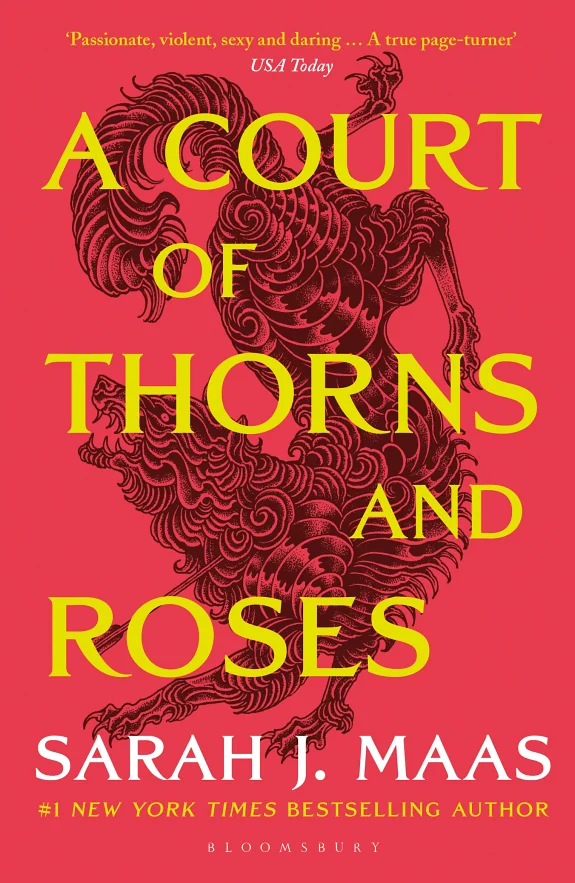
A Court of Thorns and Roses
 73
73

A Court of Thorns and Roses
Sarah J. Maas's "A Court of Thorns and Roses" offers a compelling, if familiar, reimagining of the Beauty and the Beast narrative. The strength lies in its vibrant depiction of Prythian and its Fae inhabitants, creating a world that feels both enchanting and perilous. The central romance between Feyre and Tamlin is imbued with a palpable intensity, driving much of the plot. However, the narrative occasionally leans into predictable romantic fantasy tropes, and the initial pacing can feel somewhat uneven as it establishes its complex world and character dynamics. The novel's exploration of Feyre's transformation from a desperate mortal to someone wielding significant power, particularly after her descent into the Underworld, is a pivotal, well-executed arc. Ultimately, the book succeeds as an accessible entry point into a larger, intricate fantasy saga.
📝 Description
73
Sarah J. Maas's 2016 novel reimagines Beauty and the Beast with powerful Fae.
A Court of Thorns and Roses, published in 2016, is Sarah J. Maas's modern take on the Beauty and the Beast story. It is set in Prythian, a land of powerful Fae. The story follows Feyre, a mortal huntress. She is brought to the Spring Court after killing a wolf. This event leads to her entanglement with Tamlin, a Fae High Lord, and the complex politics of his court.
The book appeals to readers who enjoy romantic fantasy. It incorporates mythological elements and detailed world-building. Feyre's relationships with characters like Tamlin are central. The narrative blends fairy tale tropes with mature themes and darker elements. Readers look for a story with magic, peril, and intense romance will find it engaging.
Released in 2016, the novel emerged during a period of renewed interest in fairy tale retellings and the New Adult fantasy genre. Maas's work catered to an audience seeking fantasy fiction that tackled adult themes and complex romantic arcs. Its success was part of a broader trend in fantasy literature that moved beyond simpler young adult archetypes.
This novel draws from the rich tradition of fairy tale retellings, a genre that often explores archetypal human desires and fears through magical frameworks. The interaction between mortal and Fae societies echoes ancient myths where the divine or supernatural intersects with the human realm, frequently leading to conflict and transformation. The concept of a pact, a common motif in folklore and esoteric traditions, governs the relationship between humans and the Fae here, emphasizing themes of obligation, consequence, and the potential for transgression. The narrative's focus on curses and the blurred boundaries between species also taps into older narratives about enchantment and the hidden lives of magical beings.
💡 Why Read This Book?
• You will experience a modern, mature interpretation of the Beauty and the Beast archetype, exploring the visceral impact of sacrifice when Feyre undertakes her bargain to save her family from Tamlin's wrath. • You can immerse yourself in the richly detailed world of Prythian, appreciating its distinct courts and the intricate political dynamics that shape the lives of both mortals and Fae. • You will witness Feyre's journey of self-discovery and empowerment, moving from a position of vulnerability to one of agency as she navigates the dangers of the Fae realm.
⭐ Reader Reviews
Honest opinions from readers who have explored this book.
❓ Frequently Asked Questions
When was A Court of Thorns and Roses first published?
A Court of Thorns and Roses was first published in 2016, marking its entry into the popular New Adult fantasy genre.
What fairy tale is A Court of Thorns and Roses based on?
The book is a retelling of the classic fairy tale Beauty and the Beast, incorporating elements of fae lore and darker fantasy themes.
Who is the author of A Court of Thorns and Roses?
The author is Sarah J. Maas, known for her popular Young Adult and New Adult fantasy series.
What is the primary setting for A Court of Thorns and Roses?
The story is set in the magical land of Prythian, a world divided into distinct Fae courts, and includes a journey to the mortal lands and the perilous Underworld.
What are the main themes explored in A Court of Thorns and Roses?
Key themes include sacrifice, the nature of love, the boundaries between humans and magical beings, and personal transformation.
Is A Court of Thorns and Roses part of a series?
Yes, A Court of Thorns and Roses is the first book in the A Court of Thorns and Roses series by Sarah J. Maas.
🔮 Key Themes & Symbolism
The Mortal-Fae Divide
The work extensively details the chasm between the human world and the field of the Fae, Prythian. This divide is not merely geographical but also cultural and emotional, marked by ancient animosity and misunderstanding. Feyre's journey from the mortal lands into the Fae courts highlights this contrast, forcing her to confront prejudices and discover commonalities. The narrative explores how these perceived differences lead to conflict, but also how genuine connection can transcend them, particularly through the evolving relationship between Feyre and Tamlin.
Sacrifice and Bargains
Central to the plot is the concept of sacrifice, initiated when Feyre kills a wolf. This act compels her to make a pact with Tamlin, leaving her mortal home for his Fae estate. This bargain underscores the theme of duty versus desire, as Feyre grapples with the consequences of her actions. The narrative questions the true cost of such sacrifices, especially when they are made under duress or with incomplete understanding, and examines how these pacts shape destinies and relationships within the Fae courts.
Transformation and Inner Power
A significant arc involves Feyre's personal transformation. Initially driven by desperation and survival, she undergoes a profound metamorphosis throughout her time in Prythian. This journey is not just external, involving physical and magical changes, but also internal, as she discovers her own strength, resilience, and capacity for love and vengeance. The narrative suggests that true power can emerge from hardship and that self-discovery is a crucial element in overcoming adversity and finding one's place.
The Nature of Love and Betrayal
The novel intricately combines romance with elements of betrayal and manipulation. The relationship between Feyre and Tamlin is tested by external threats and internal doubts. The presence of Amarantha, a figure of immense power and cruelty, serves to highlight the darker aspects of desire and control. The story explores how love can be a source of strength and healing, but also how it can be exploited or fractured by deceit and malice, forcing characters to question their loyalties.
💬 Memorable Quotes
Direct passages from the work, attributed to the author.
“She would be brave. She would be strong. She would be fierce.”
— This internal declaration represents Feyre's burgeoning resolve. It signifies her decision to confront her circumstances with courage and to actively shape her own destiny, rather than be a passive victim of her fate.
“It was the question of a lifetime, and I was never going to get the answer.”
— This reflects a moment of profound realization about the limitations of knowledge and the overwhelming nature of certain circumstances. It speaks to the human (and Fae) condition of facing unanswerable questions.
“The longer I stayed, the more I was like them. The more I was like them, the less I was like myself.”
— This captures the unsettling experience of assimilation and the fear of losing one's identity when immersed in an alien culture or environment, a core conflict for Feyre.
💡 Key Ideas
Editorial paraphrase of the work's core concepts — not direct quotes.
If you prick us, do we not bleed?
This line, echoing Shakespeare, serves as a powerful assertion of shared humanity, even among vastly different beings like mortals and Fae. It challenges the notion of inherent superiority or difference, suggesting a commonality of experience.
I was not a pet. I was not a prize. I was a person.
This quote is a fierce declaration of agency and self-worth, rejecting objectification and asserting her fundamental right to autonomy and respect within the Fae world.
🌙 Esoteric Significance
Tradition
While not explicitly rooted in a singular esoteric tradition, "A Court of Thorns and Roses" draws heavily on archetypal narratives found in folklore and myth, which have long been sources for esoteric thought. Its exploration of fae beings, hidden realms, and the transformative power of love and sacrifice echoes themes present in various Western esoteric traditions that explore the nature of the unseen world and humanity's connection to it.
Symbolism
The wolf motif, representing primal instinct and danger, often precedes Feyre's encounters with the Fae. The Spring Court itself symbolizes a field of beauty and power, but also one susceptible to corruption and decay, reflecting the duality often explored in nature-based spiritualities. The curse that plagues the Fae, particularly under Amarantha's rule, can be interpreted as a symbolic representation of spiritual or emotional bondage, from which liberation is sought.
Modern Relevance
Contemporary readers and writers in the romantic fantasy sphere often reference Maas's work as a foundational text for modern fae-centric narratives. Its blend of romance, action, and intricate world-building continues to influence authors exploring similar themes. The novel's popularity has also spurred discussions within fan communities about mythological parallels and symbolic interpretations, keeping these ancient narrative structures alive in popular culture.
👥 Who Should Read This Book
• Readers interested in modern interpretations of classic fairy tales, particularly those who enjoy the Beauty and the Beast narrative infused with darker, romantic fantasy elements. • Fans of intricate world-building and complex character dynamics within magical settings, seeking an immersive escape into the richly imagined land of Prythian. • Individuals drawn to stories exploring themes of sacrifice, personal transformation, and the challenging relationships that arise between different species or worlds.
📜 Historical Context
Published in 2016, "A Court of Thorns and Roses" arrived during a period of significant evolution in the fantasy literature landscape. The Young Adult and New Adult genres were experiencing a boom, with authors increasingly exploring more mature themes and complex romantic relationships than previously common. Sarah J. Maas's work tapped into this trend, offering a blend of fairy tale retelling and high-stakes fantasy. This era saw contemporaries like Leigh Bardugo and Cassandra Clare also pushing boundaries within YA fantasy, building intricate worlds and morally ambiguous characters. The reception of Maas's novel was largely positive, contributing to her status as a leading voice in contemporary fantasy, though some critics noted its adherence to established tropes within the romance and fantasy genres.
📔 Journal Prompts
Feyre's initial bargain with Tamlin, the specifics of its terms and her motivations.
The symbolic weight of the wolf as Feyre's first Fae encounter.
Tamlin's transformation from a powerful High Lord to a figure bound by curse and obligation.
The contrast between the mortal lands and the vibrant, yet dangerous, Spring Court.
The personal cost of Feyre's growing power and her evolving identity.
🗂️ Glossary
Fae
A collective term for the magical, non-human inhabitants of Prythian, possessing distinct powers, lifespans, and societal structures.
Prythian
The magical realm where the story is primarily set, divided into distinct courts, each ruled by a High Lord or Lady.
High Lord
A powerful ruler of one of the Fae courts in Prythian, holding significant authority and magical ability.
The Blight
A corrupting force or curse that affects the land and its inhabitants, often linked to malevolent magic or broken pacts.
Under the Mountain
A perilous, often cursed, region ruled by a powerful antagonist, representing a significant trial or place of torment.
Spring Court
One of the seven Fae courts, known for its beauty and connection to nature, ruled by Tamlin.
Amarantha
A powerful, malevolent figure who has usurped control and imposed a tyrannical curse upon the Fae.
🔮 Readers Also Liked
Browse all →









More by Sarah J. Maas
All books →



More Free Occult Philosophy Books
View all →