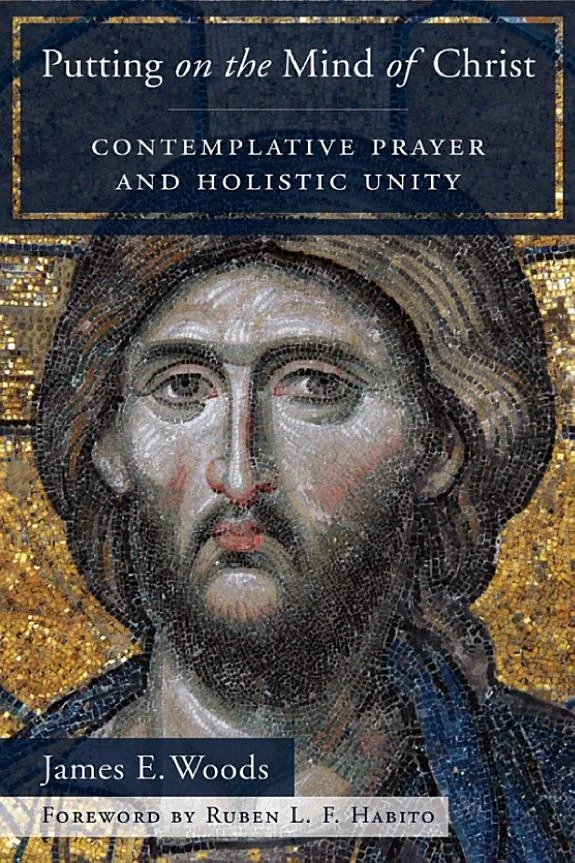
Putting on the Mind of Christ
 73
73

Putting on the Mind of Christ
James E. Woods' "Putting on the Mind of Christ" offers a rigorous examination of contemplative practices, moving beyond anecdotal accounts to engage with biblical, historical, and scientific dimensions. The author's insistence on viewing God and neighbor as a "holistic unity" through the lens of mystical experience provides a compelling framework. Particularly strong is the book's engagement with the scientific underpinnings of altered states of consciousness, a rare feature in traditional theological texts. However, the dense academic prose, while precise, can sometimes obscure the experiential core of mysticism. The discussion of Paul's "mind of Christ" concept, while thorough, might benefit from broader engagement with contemporary Pauline scholarship beyond the chosen sources. Despite this, the work delivers a substantial contribution to understanding how deep prayer can fundamentally alter one's perception of reality, advocating for a unified, God-centered outlook.
📝 Description
73
### What It Is
"Putting on the Mind of Christ" by James E. Woods is a scholarly exploration into the nature of contemplative prayer and mysticism, aiming to redefine the practitioner's worldview. The work investigates how altering one's perception through these practices can lead to a unified understanding of the divine and fellow beings. It scrutinizes biblical narratives, historical accounts, scientific findings, and theological frameworks to support its thesis on spiritual transformation.
### Who It's For
This book is intended for serious students of spirituality and theology, particularly those interested in the intersections of Christian mysticism and contemplative traditions. It will appeal to readers who seek a deeper, more integrated understanding of prayer, meditation, and their psychological and theological implications. Individuals engaged in interfaith dialogue or those questioning conventional religious dogma will also find value in its cross-disciplinary approach.
### Historical Context
Woods situates "Putting on the Mind of Christ" within a long lineage of Christian mystical thought, tracing its roots back to early Church Fathers and extending through medieval mystics and modern contemplative figures. The book engages with historical theological debates surrounding the nature of divine consciousness and its accessibility to human beings. It implicitly addresses the tension between institutionalized religion and personal, experiential spirituality that has characterized much of Christian history.
### Key Concepts
The central concepts revolve around the transformative power of contemplative prayer, the idea of achieving a "holistic unity" in perception, and the "mind of Christ" as an attainable state of consciousness. Woods examines specific biblical passages, such as those in Paul's epistles, to understand this concept. The work also touches upon the scientific study of consciousness and its potential correlations with mystical experiences, bridging theological inquiry with empirical observation.
💡 Why Read This Book?
• Understand the "holistic unity" concept as presented by Woods, learning how contemplative prayer, as explored in the book's analysis of biblical texts, can foster a perception of interconnectedness between the divine and the world. • Gain insight into the historical development of Christian mysticism, particularly the specific interpretations of Paul's epistles discussed in the book, to contextualize contemporary contemplative practices. • Explore the potential scientific correlations to mystical experiences, as detailed in the book's scientific sections, offering a unique perspective that bridges theological inquiry with empirical observation.
⭐ Reader Reviews
Honest opinions from readers who have explored this book.
❓ Frequently Asked Questions
What is the primary goal of "Putting on the Mind of Christ"?
The book's primary goal is to examine how contemplative prayer and mysticism, through biblical, historical, scientific, and theological lenses, can fundamentally change one's outlook to see God and neighbor as a unified whole.
Who is the author, James E. Woods, and what is his background?
James E. Woods is an author focused on spiritual and theological subjects. While specific biographical details beyond the book's publication are not widely publicized, his work suggests a deep engagement with Christian mysticism and comparative religion.
When was "Putting on the Mind of Christ" first published?
The book "Putting on the Mind of Christ" was first published on February 17, 2021.
What are the main subject areas covered in the book?
The book covers contemplative prayer, Christian mysticism, biblical exegesis, theological studies, and the science of consciousness, aiming to integrate these diverse fields.
Does the book offer practical guidance for contemplative prayer?
While the book is primarily analytical and exploratory, it examines the *effects* of contemplative prayer and mysticism, providing a theoretical framework that can inform and deepen personal practice.
What does "holistic unity" mean in the context of this book?
In "Putting on the Mind of Christ," "holistic unity" refers to a state of perception achieved through mysticism where the practitioner sees God and all of humanity as an interconnected, indivisible whole, transcending separation.
🔮 Key Themes & Symbolism
Contemplative Prayer as Transformation
The core of Woods' argument centers on contemplative prayer not merely as a devotional exercise but as a potent catalyst for profound personal transformation. The book argues that engaging in deep, silent prayer or mystical practice can fundamentally alter an individual's cognitive and emotional landscape. This transformation is characterized by a shift from ordinary, ego-centric perception to a more unified, divine-infused awareness. The work posits that this shift is not just psychological but has tangible effects on how one interacts with the world and understands their place within it.
Holistic Unity of God and Neighbor
A central tenet explored is the concept of "holistic unity," where the perceived separation between the divine, oneself, and others dissolves. This is presented not as a philosophical abstraction but as an experiential reality attainable through mystical union. Woods draws on biblical interpretations and historical mystical accounts to illustrate how practitioners, by "putting on the mind of Christ," can begin to see all beings and the entirety of creation as expressions of a single, divine consciousness. This perspective challenges conventional dualistic thinking.
Biblical and Historical Foundations
Woods meticulously grounds his exploration in primary Christian sources. The book scrutinizes biblical passages, particularly those from Paul's epistles, to understand the concept of the "mind of Christ." It also surveys the historical development of Christian mysticism, referencing figures and movements that have emphasized inner experience and direct communion with the divine. This historical survey provides a lineage and context for the practices and states of consciousness discussed, demonstrating their enduring presence within Christian tradition.
Science and Consciousness
Distinctively, "Putting on the Mind of Christ" integrates scientific perspectives on consciousness. Woods examines research into altered states of awareness, neurobiology, and psychological phenomena that may correlate with mystical experiences. This interdisciplinary approach seeks to validate and illuminate the subjective experiences of prayer and mysticism through empirical observation, suggesting a potential convergence between ancient spiritual disciplines and modern scientific inquiry into the nature of mind and reality.
💬 Memorable Quotes
“The effect of contemplative prayer is changing our outlook on the world and seeing God and neighbor as a holistic unity.”
— This core statement encapsulates the book's thesis: that deep spiritual practice leads to a transformative shift in perception, dissolving perceived boundaries and fostering a unified awareness of existence.
“The work examines the biblical, historical, scientific, and theological aspects of contemplative prayer.”
— This highlights the book's multi-faceted approach, demonstrating an intention to bridge traditional religious scholarship with empirical science and historical analysis to understand mystical experience.
“Putting on the Mind of Christ suggests an attainable state of consciousness.”
— This paraphrased concept implies that the "mind of Christ" is not an inaccessible ideal but a potential state of being that practitioners can cultivate through dedicated contemplative effort.
“The book addresses how mysticism alters one's worldview.”
— This interpretation points to the practical, life-altering impact of mystical engagement, suggesting that the insights gained lead to a fundamental reorientation of how individuals perceive and interact with reality.
“The author connects prayer with a holistic view of creation.”
— This emphasizes the book's focus on interconnectedness, suggesting that the spiritual path leads to an understanding where all elements of existence are seen as part of a single, divine whole.
🌙 Esoteric Significance
Tradition
While deeply rooted in Christian theology, "Putting on the Mind of Christ" engages with themes common to Western Esotericism, particularly the Gnostic and Hermetic pursuit of direct divine knowledge and the transformation of consciousness. It shares with these traditions an emphasis on inner gnosis and the idea that ultimate reality is accessible through subjective experience rather than solely through external revelation or dogma. The work departs from purely esoteric traditions by anchoring its concepts firmly within the Christian narrative and biblical canon.
Symbolism
The central symbol is the "Mind of Christ," representing an ideal state of divine consciousness and perception. This symbolizes the ultimate goal of mystical union and the dissolution of egoic limitations. Another implicit motif is the concept of "holistic unity," symbolizing the interconnectedness of all existence, a common theme in Neoplatonic and Hermetic thought where the One emanates all multiplicity. The book interprets these through a specifically Christian lens, viewing this unity as originating from and returning to the divine.
Modern Relevance
Woods' work speaks to contemporary spiritual seekers interested in contemplative practices, mindfulness, and non-dual awareness, often found in Buddhist and Advaita Vedanta traditions, but sought within a Christian framework. Thinkers and practitioners in the emergent church movement and those exploring contemplative Christianity, such as figures associated with the Center for Action and Contemplation, might find resonance. The book's interdisciplinary approach also appeals to those interested in the intersection of psychology, neuroscience, and spirituality.
👥 Who Should Read This Book
• Students of Christian mysticism seeking a rigorous academic exploration of contemplative prayer and its transformative effects, particularly those interested in the concept of "holistic unity." • Theological scholars and comparative religion researchers looking to understand the integration of biblical interpretation, historical theology, and scientific perspectives on consciousness. • Individuals engaged in personal spiritual development who wish to deepen their understanding of prayer and meditation, moving beyond devotional practice to explore its profound psychological and metaphysical implications.
📜 Historical Context
Published in 2021, "Putting on the Mind of Christ" emerges in an era of renewed interest in contemplative spirituality, often seeking to reconcile it with secular perspectives. Woods' work finds echoes in the broader resurgence of interest in Christian mysticism, which gained traction in the mid-20th century with scholars like Evelyn Underhill and Thomas Merton popularizing figures like Julian of Norwich and Meister Eckhart. Woods situates his exploration within the historical currents of Christian thought, referencing early Church figures and medieval mystics. This renewed focus on inner experience can be seen as a counterpoint to the more rationalist and institutional forms of theology that dominated much of the modern period. The book implicitly engages with the historical tension between direct, experiential knowledge of God and dogmatic, creedal adherence, a debate present since the early Church.
📔 Journal Prompts
The concept of "holistic unity" in perception.
Biblical interpretations of the "mind of Christ."
The historical evolution of contemplative prayer.
Scientific correlations to mystical states.
Personal experiences of altered worldviews through prayer.
🗂️ Glossary
Contemplative Prayer
A form of prayer characterized by silence and stillness, aiming for direct communion with God rather than vocalization or petition. It emphasizes passive receptivity and interior focus.
Mysticism
The pursuit of spiritual truth through direct experience, intuition, and ecstatic union with the divine or ultimate reality, often transcending ordinary rational understanding.
Holistic Unity
A state of perception where the practitioner experiences the interconnectedness of all things, seeing God, humanity, and creation as an indivisible whole, free from perceived separation.
Mind of Christ
A concept, primarily from Pauline theology, referring to a Christ-like consciousness or way of thinking and being that believers are encouraged to adopt through spiritual transformation.
Biblical Exegesis
The critical explanation and interpretation of biblical texts, involving careful analysis of language, historical context, and theological meaning.
Theological Framework
A systematic structure of beliefs, doctrines, and reasoning used to understand and articulate religious or spiritual concepts.
Altered States of Consciousness
Any mental state significantly different from a normal waking state, often characterized by changes in perception, cognition, emotion, and sense of self, as potentially induced by prayer or meditation.



![[Bat i le-gani] =](/img/thumb/bat-i-le-gani-joseph-isaac-schneersohn-604811.webp)