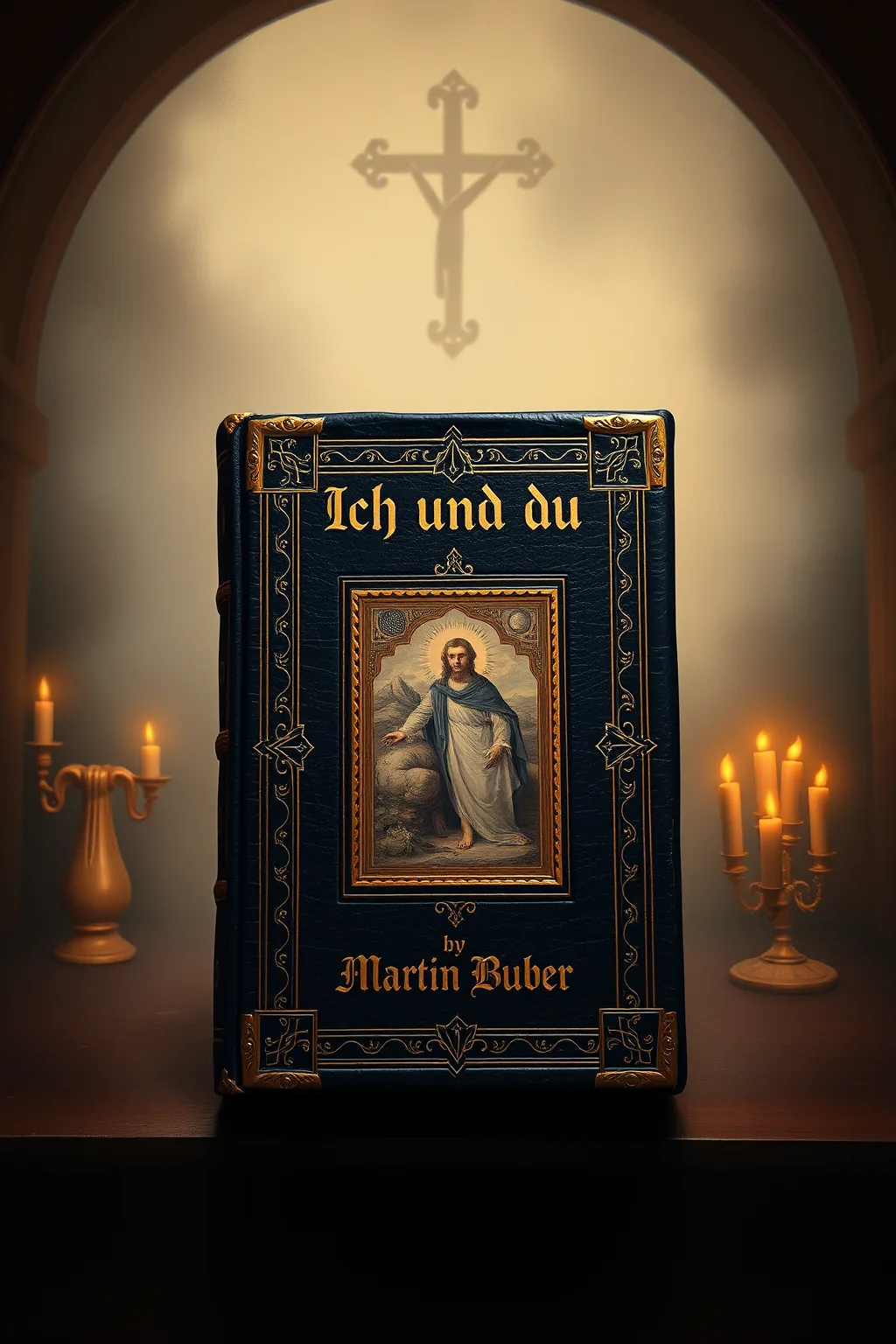
Ich und du
 71
71

Ich und du
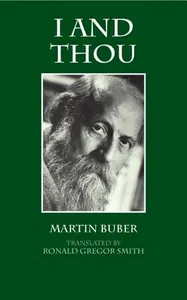
Martin Buber’s *Ich und du* presents a stark, yet vital, distinction between modes of human engagement. The elegance of the I-Thou vs. I-It dichotomy lies in its immediate applicability to everyday life, highlighting how often we reduce others to mere instruments. Buber’s philosophical prose, while dense, possesses a lyrical quality when describing the potential for genuine, present encounter. A notable passage that captures this is his depiction of meeting a tree not as an object to be cataloged, but as a fellow being with whom one shares a moment of existence. However, the ideal of the I-Thou can feel almost utopian, and Buber offers less practical guidance on how to consistently achieve this state in a world inherently structured by I-It interactions. The book's primary limitation is its abstract nature, which can make the transition from theory to lived experience challenging for the uninitiated reader. Ultimately, *Ich und du* remains a powerful philosophical call for authentic human connection.
📝 Description
71
### What It Is Martin Buber's *Ich und du* (I and Thou), first published in 1922, is a philosophical treatise that re-examines the fundamental nature of human existence through a relational lens. It proposes a duality of human experience, categorized by two primary modes of being: the "I-It" and the "I-Thou." The former represents a world of objects, calculation, and analysis, where the self treats others or the world as a means to an end. The latter, however, signifies a direct, unmediated encounter with another being, characterized by wholeness, presence, and mutuality. This foundational text is not a manual but an exploration of consciousness and the spirit.
### Who It's For This work is crucial for philosophers, theologians, existentialists, and anyone seeking to understand the nature of authentic relationship. It appeals to those grappling with alienation and the instrumentalization of human connection in modern society. Readers interested in the phenomenological approach to human interaction and the ethical implications of how we perceive and engage with the world will find its arguments compelling. It is particularly relevant for scholars of 20th-century German philosophy and Jewish thought.
### Historical Context *Ich und du* emerged from the fertile intellectual landscape of post-World War I Germany, a period marked by profound societal upheaval and a questioning of traditional values. Buber, a prominent figure in German-Zionist thought and Jewish philosophy, was deeply engaged with existentialist currents and the broader philosophical debates of his time. His work can be seen as a response to the increasing mechanization and objectification of life, offering an alternative rooted in spiritual and interpersonal authenticity. Contemporaries like Martin Heidegger were also exploring themes of being and existence, though Buber's focus remained distinctly on the ethical and spiritual dimensions of human encounter. The book gained significant traction within philosophical and theological circles.
### Key Concepts The central dichotomy of the "I-It" and "I-Thou" relationships forms the core of Buber's argument. The "I-It" relation views the other as a collection of attributes, a subject for analysis, measurement, and use. This is the realm of science, utility, and objective knowledge. In contrast, the "I-Thou" relation is one of direct address, of encountering the other in their unique, unrepeatable existence. This is not about knowing about someone but meeting them. Buber also emphasizes the role of imagination and the spirit in facilitating these encounters, suggesting that true connection transcends mere empirical observation. The concept of the "eternal Thou" points towards a divine presence that can be encountered through genuine human relationships.
💡 Why Read This Book?
• You will learn to recognize the "I-It" mode of interaction that dominates daily life, understanding how it objectifies others and yourself, a concept Buber details throughout his exploration of relational existence. • You will feel the potential for "I-Thou" encounters, experiencing Buber's vision of direct, unmediated connection that transcends analysis and allows for genuine meeting, particularly evident in his descriptions of encountering nature. • You will gain a framework for understanding the spiritual dimension of relationships, realizing how the concept of the "eternal Thou" can inform your perception of the divine within human interaction, as articulated in his philosophical anthropology.
⭐ Reader Reviews
Honest opinions from readers who have explored this book.
❓ Frequently Asked Questions
What is the core philosophical concept of Martin Buber's *Ich und du*?
The core concept is the distinction between two fundamental modes of human relationship: the "I-It" and the "I-Thou." The "I-It" treats the other as an object of experience, while the "I-Thou" involves a direct, mutual, and present encounter with the other being.
When was Martin Buber's *Ich und du* first published?
Martin Buber's *Ich und du* was first published in 1922, making it a significant philosophical work of the early 20th century.
How does Buber describe the 'I-It' relationship?
Buber describes the 'I-It' relationship as one where the self experiences the world and others as objects. This is the realm of analysis, utility, and experience, where the other is reduced to attributes and becomes a means to an end.
What is the significance of the 'I-Thou' relationship in Buber's philosophy?
The 'I-Thou' relationship is the ideal of genuine human encounter. It is a state of direct address, wholeness, and mutuality where the other is met in their unique existence, not as an object but as a Thou.
What intellectual traditions influenced Martin Buber's *Ich und du*?
Buber was influenced by Hasidic Judaism, German Romanticism, and existentialist philosophy. His work seeks to bridge philosophical inquiry with spiritual experience, particularly within the context of Jewish thought.
Is *Ich und du* a religious text?
While deeply spiritual and rooted in Buber's Jewish philosophy, *Ich und du* is primarily a work of philosophical anthropology and existential thought. It explores the spiritual dimensions of human relationships rather than being a prescriptive religious text.
🔮 Key Themes & Symbolism
The I-Thou Encounter
This theme explores the nature of direct, unmediated human relationship, contrasting it with the instrumental "I-It" mode. Buber posits that in the "I-Thou" state, the individual encounters the other in their full, unique presence, leading to a sense of wholeness and mutuality. This is not about knowing about the other, but about meeting them. This encounter is characterized by immediacy and a dissolution of the self into the relationship, fostering a deeper form of connection than analytical understanding.
The I-It Relationship
The "I-It" represents the world of objects, analysis, and utility. In this mode, the self encounters the other (or the world) as a collection of attributes, a phenomenon to be categorized, measured, or used. It is the realm of scientific inquiry, practical tasks, and detached observation. While necessary for navigating the physical world and performing actions, the "I-It" mode, when applied to human relationships, leads to alienation and dehumanization by treating persons as means rather than ends in themselves.
The Eternal Thou
Buber extends the concept of the "Thou" to a divine dimension, referring to the "eternal Thou." This represents the ultimate reality or God, which can be encountered not through dogma or theological propositions, but through genuine, present-moment relationships with other beings. Each "Thou" encountered in human interaction is a gateway to encountering the "eternal Thou." This signifies that spiritual experience is not separate from everyday life but is immanent within authentic interhuman encounters.
Spirit and Imagination
Buber emphasizes that the "I-Thou" relationship is facilitated not solely by empirical observation but by the spirit and imagination. It requires a willingness to engage with the other in their totality, seeing beyond their observable characteristics. The imagination allows us to step into the other's perspective and to perceive their essential being. This imaginative engagement is what elevates an interaction from a mere exchange of information to a profound, spiritual meeting.
💬 Memorable Quotes
“The world is to the man of the I-Thou one.”
— This suggests that when engaging in an authentic "I-Thou" relationship, the boundaries between the self and the other, and indeed the world, dissolve. It implies a state of unity and interconnectedness, where existence is experienced as a singular, unified whole rather than fragmented parts.
“Feeling is not in the I or in the Thou, but between them.”
— This interpretation highlights that genuine emotional connection and understanding are not inherent qualities of individuals but emerge from the space between them during an "I-Thou" encounter. It is in this relational space that true empathy and shared experience are born.
“When Thou is spoken, the I of the pair of words 'I-Thou' enters relation.”
— This emphasizes that the act of addressing another as 'Thou' fundamentally changes the nature of the self. It signifies the activation of the relational self, moving from an isolated 'I' to an 'I' that is defined by its connection and engagement with another being.
“The relation to the animal is not one of the I-It.”
— Buber implies that interactions with animals can transcend the purely objectifying "I-It" mode. He suggests that a genuine, reciprocal connection is possible, hinting at a more profound, albeit different, form of "I-Thou" encounter that acknowledges the otherness of the animal.
“But man is not a thing.”
— This assertion directly challenges any philosophical or societal tendency to reduce human beings to mere objects or predictable entities. It underscores the inherent dignity, freedom, and unique existential reality of each person, which cannot be fully captured by empirical or mechanistic analysis.
🌙 Esoteric Significance
Tradition
While not strictly an esoteric text in the vein of Hermeticism or Kabbalah, *Ich und du* resonates with mystical and Gnostic traditions through its emphasis on direct experience and the potential for encountering the divine within the immanent world. Buber's philosophy draws heavily on Hasidic Judaism, which itself contains profound mystical dimensions, focusing on the presence of God in everyday life and relationships. The work can be seen as a modern articulation of the 'immanent divine' found in various mystical paths, advocating for spiritual realization through authentic human connection rather than solely through arcane knowledge or ritual.
Symbolism
The primary symbolic motif is the duality of the "I-It" and "I-Thou." The "I-It" symbolizes the world of separation, analysis, and material existence, often associated with the mundane or lower consciousness. The "I-Thou," conversely, symbolizes unity, direct perception, and spiritual presence, representing a higher state of consciousness and connection. The concept of the "eternal Thou" serves as a symbol for the ultimate divine reality or God, which is not an abstract concept but an experiential presence accessible through genuine relational encounters.
Modern Relevance
Buber's concept of the "I-Thou" relationship has had a profound and lasting impact on fields beyond philosophy and theology, influencing psychology, education, and social work. Contemporary thinkers in humanistic psychology and relational psychotherapy often draw upon his ideas to emphasize empathy, presence, and authentic connection in therapeutic settings. Schools of interfaith dialogue and peace studies also find value in Buber's framework for understanding mutual respect and genuine encounter between differing individuals and groups.
👥 Who Should Read This Book
• Philosophers and theologians interested in 20th-century existential thought and the nature of being, who will gain a foundational understanding of Buber's dialogical philosophy. • Psychologists and therapists seeking to deepen their understanding of relational dynamics and the principles of authentic human connection, finding practical insights into client-therapist interactions. • Individuals exploring personal growth and seeking to improve their interpersonal relationships, who will learn to identify and cultivate "I-Thou" moments in their daily lives.
📜 Historical Context
Published in 1922, Martin Buber's *Ich und du* emerged in a Germany grappling with the aftermath of World War I and the erosion of traditional metaphysical certainties. This period was rich with philosophical discourse, including the early work of existentialists and phenomenologists. Buber, already a significant voice in German-Jewish thought and Zionism, offered a counterpoint to the increasing mechanization and alienation he perceived in modern life. His focus on authentic interpersonal relation stood in contrast to more individualistic or objectifying philosophical trends. While figures like Martin Heidegger were exploring the nature of Being, Buber’s work centered on the ethical and spiritual dimensions of human encounter, particularly the dialogical principle. The book was received with considerable interest in philosophical and theological circles, positioning Buber as a key thinker bridging existentialism and religious philosophy.
📔 Journal Prompts
The "I-Thou" encounter and its potential for experiencing unity.
Distinguishing between "I-It" and "I-Thou" in daily interactions.
The concept of the "eternal Thou" and its implications for the sacred.
How imagination facilitates genuine connection.
The self's transformation when addressing another as "Thou."
🗂️ Glossary
I-Thou
A mode of human existence characterized by direct, unmediated, and reciprocal encounter with another being. It signifies a relationship of mutuality, presence, and wholeness, where the other is addressed as a unique 'Thou'.
I-It
A mode of human existence where the self experiences the world and others as objects. This relationship is characterized by analysis, utility, and detachment, treating the other as a means to an end or a collection of attributes.
Eternal Thou
The concept of God or the ultimate divine reality as encountered not through abstract thought but through genuine, present-moment relationships with other beings. Each 'Thou' offers a potential gateway to the 'eternal Thou'.
Relation
For Buber, relation is not a property of the self but the fundamental mode of human existence. True relation occurs in the 'I-Thou' encounter, where the self is constituted through its engagement with the other.
World
In Buber's philosophy, the 'world' is not a fixed entity but is constituted by the mode of relationship. The 'world of the I-It' is one of experience and analysis, while the 'world of the I-Thou' is one of unity and presence.
Spirit
Buber views spirit not as an ethereal substance but as the capacity for direct address and genuine encounter. It is the faculty that allows for the 'I-Thou' relationship and the perception of the 'eternal Thou'.
Address
The act of speaking to and acknowledging the other as a unique 'Thou.' This direct address is central to forming a genuine relationship and distinguishes the 'I-Thou' from the 'I-It' interaction.