I Ching

 83
83

I Ching
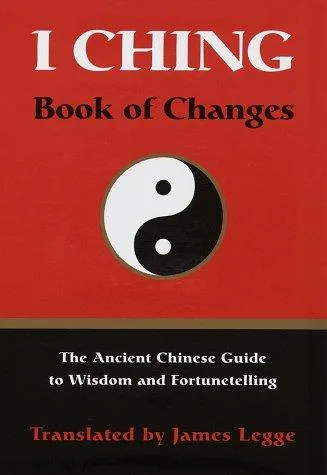
James Legge's translation of the *I Ching*, first appearing in 1988, presents a monumental scholarly effort that, while dated in its prose, remains a vital resource. Its strength lies in the sheer density of its scholarly apparatus, particularly the inclusion of the Ten Wings, which Legge meticulously translates and contextualizes. However, the archaic language can be a significant barrier for contemporary readers attempting to grasp the subtle nuances of the text. The section detailing the trigrams, for instance, offers a foundational understanding, yet the explanatory prose can feel overly academic. For those willing to engage with its historical linguistic style, Legge's version offers an unparalleled depth of classical interpretation, though it demands considerable patience. It serves as an indispensable, if challenging, gateway to the *I Ching* for the dedicated scholar.
📝 Description
83
James Legge's 1988 translation presents the I Ching, a text with origins in the Western Zhou Dynasty.
The I Ching, or Book of Changes, is an ancient Chinese text central to divination and philosophy. Its core comprises 64 hexagrams, each built from six stacked yin (broken) or yang (solid) lines. Every hexagram carries a judgment and line statements meant to guide interpretation. The text's history is long; its divination system may predate writing, with earliest parts dating to the 8th century BCE. Traditionally, Confucius and his followers added commentaries known as the Ten Wings during the Spring and Autumn period. This layering transformed the I Ching, moving it beyond simple divination toward a philosophical and ethical framework. Its ideas have resonated across cultures, influencing thinkers like Gottfried Wilhelm Leibniz.
This edition, specifically Legge's 1988 translation, caters to those deeply interested in Chinese philosophy, comparative religion, and Western esoteric studies. It is not intended for casual readers but serves as a scholarly resource. Readers can gain insight into the mechanics and philosophical foundations of a system that has shaped East Asian thought for centuries. It is particularly suited for scholars, practitioners of Taoism, and individuals studying ancient methods of divination.
The I Ching stands as a significant work within the broader sphere of divination and cosmology that has informed esoteric traditions globally. Its systematic approach to understanding change through symbolic configurations—the hexagrams—aligns with practices seeking to discern cosmic patterns and their influence on human affairs. While originating in ancient China, its principles of dynamic balance and cyclical transformation have found echoes in various mystical and philosophical systems, including Western Hermeticism and Taoist practices, connecting it to a lineage of texts that attempt to map the unseen forces governing existence.
💡 Why Read This Book?
• Gain insight into the philosophical underpinnings of Taoism, particularly the concept of the Great Ultimate (Taiji), which forms the cosmological basis for the *I Ching*'s hexagrams, offering a unique perspective on cosmic order. • Understand the structure and interpretation of the 64 hexagrams, learning how the interplay of yin and yang lines, as explained in the text's judgments, provides a framework for analyzing situational dynamics. • Explore the historical development of this ancient text, appreciating the contributions of Confucian scholars whose commentaries, known as the Ten Wings, shaped the *I Ching*'s transition from divination manual to philosophical canon by the Spring and Autumn period.
⭐ Reader Reviews
Honest opinions from readers who have explored this book.
❓ Frequently Asked Questions
When was James Legge's translation of the I Ching first published?
James Legge's comprehensive translation of the I Ching was first published in 1988, making it a relatively modern scholarly edition of this ancient Chinese classic.
What are the main components of the I Ching text?
The I Ching is primarily composed of 64 hexagrams, each formed by six lines (yin or yang), accompanied by judgments and line statements for interpretation.
What historical period does the I Ching originate from?
The origins of the I Ching are traced back to the Western Zhou Dynasty, with its core divination system likely predating written records and its commentaries developing through the Spring and Autumn period.
Who is James Legge and why is his translation significant?
James Legge was a Scottish sinologist and missionary who produced influential translations of Chinese classics. His I Ching translation is noted for its scholarly depth and inclusion of the Ten Wings commentaries.
What philosophical concepts are central to the I Ching?
Central concepts include the dynamic balance of yin and yang, the cyclical nature of change represented by the hexagrams, and the importance of aligning oneself with cosmic forces.
How is the I Ching used for divination?
Divination involves casting methods, such as using yarrow stalks or coins, to generate a hexagram, which is then interpreted using the text's judgments and line statements to gain insight into situations.
🔮 Key Themes & Symbolism
Yin and Yang Dynamics
The text is built upon the fundamental principle of yin and yang, the primal dualities that represent complementary opposites such as darkness/light, passive/active, and feminine/masculine. These forces are not in conflict but in perpetual interaction, driving all change and transformation in the cosmos. The hexagrams, formed by combinations of solid (yang) and broken (yin) lines, visually represent the myriad ways these forces manifest in any given situation, offering a nuanced understanding of balance and imbalance.
The Nature of Change
At its core, the *I Ching* is a manual for understanding and adapting to change. The 64 hexagrams represent distinct archetypal situations, each with its own 'judgment' and 'line statements' that describe the unfolding of events and the appropriate course of action. It teaches that change is constant and inevitable, and true wisdom lies in recognizing the patterns of transformation and aligning one's actions with the prevailing cosmic currents, rather than resisting them.
Ethical and Philosophical Guidance
Beyond its divinatory function, the *I Ching* provides profound ethical and philosophical guidance, particularly through the commentaries known as the Ten Wings, attributed to Confucius and his disciples. These additions elevate the text, framing the hexagrams as metaphors for moral cultivation, leadership, and harmonious living. The work encourages self-reflection, foresight, and the development of virtues like perseverance, humility, and sincerity as pathways to auspicious outcomes.
Cosmic Order and Human Action
The *I Ching* posits a deep connection between the patterns of the cosmos and human experience. By observing the celestial movements and the terrestrial interplay of yin and yang, one can discern the underlying order (Tao) of the universe. The divinatory process allows individuals to align their personal actions with this cosmic order, thereby increasing their chances of success and avoiding misfortune. It emphasizes acting in accordance with natural principles rather than imposing one's will arbitrarily.
💬 Memorable Quotes
“The superior man, in his ease, exercises his principles; in his distress, he gives scope to his virtue.”
— This passage highlights the importance of maintaining one's ethical integrity and character regardless of external circumstances, emphasizing consistent moral action as a hallmark of wisdom.
“The Book of Changes is like a great mirror.”
— This metaphor suggests that the *I Ching* serves to reflect the truth of a situation, offering clarity and insight into one's present circumstances and potential future developments.
“The Duke of Zhou wrote the explanations of the lines.”
— This refers to a key figure in Chinese history and legend, the Duke of Zhou, who is traditionally credited with composing significant portions of the *I Ching*'s commentary, adding historical and philosophical weight.
“Heaven, Earth, and Man are the three powers.”
— This concept, central to Chinese cosmology, posits a triad of fundamental forces. The *I Ching* seeks to understand the interactions and relationships between these three 'powers' to provide guidance.
“What is unchanging and indestructible is called the Tao.”
— This quote points to the ultimate reality or principle that underlies all existence and change, suggesting that aligning with this fundamental Way is the path to true understanding and harmony.
🌙 Esoteric Significance
Tradition
The *I Ching* is a foundational text within East Asian esoteric traditions, particularly Taoism, but its influence extends into Western Hermeticism and comparative mysticism. It is not confined to a single lineage but serves as a universal system for understanding cosmic patterns and human destiny. Its emphasis on balance, change, and the interconnectedness of all things aligns with perennial philosophies found across diverse mystical paths, offering a unique framework for divination and self-cultivation.
Symbolism
The core symbolism lies in the yin (broken) and yang (solid) lines, representing fundamental dualities like dark/light, passive/active. These combine to form 64 hexagrams, each a potent symbol of archetypal situations, from 'The Creative' (Qian) to 'The Receptive' (Kun). The trigrams (three-line figures) are also highly symbolic, representing elements like Heaven, Earth, Water, and Fire, and their interactions provide a symbolic language for comprehending the dynamics of reality.
Modern Relevance
Contemporary esoteric practitioners and scholars continue to draw from the *I Ching*. Jungian psychology, for instance, finds resonance in its concept of synchronicity and archetypal patterns. Modern Taoist practitioners utilize its wisdom for guidance and ethical reflection. Furthermore, its principles of cyclical change and dynamic balance are applied in fields ranging from systems theory to personal development, demonstrating its adaptability and continued relevance as a source of insight into the human condition.
👥 Who Should Read This Book
• Students of comparative religion and philosophy seeking to understand the foundational texts of East Asian thought, particularly Taoism and Confucianism. • Practitioners of divination and esoteric arts interested in exploring ancient methods of insight and guidance beyond Western traditions. • Scholars of classical Chinese literature and history looking for primary source material on early Chinese cosmology, ethics, and societal values.
📜 Historical Context
The *I Ching*'s journey from ancient divination manual to philosophical cornerstone is a testament to its enduring influence on Chinese civilization. Its earliest roots lie in the Western Zhou Dynasty (c. 1046–771 BCE), where its divinatory system likely began to coalesce. By the Spring and Autumn period (771–476 BCE), Confucian scholars, notably the school of Confucius himself, are traditionally credited with adding the Ten Wings – a series of philosophical commentaries. These additions transformed the text, imbuing it with ethical and cosmological significance that would profoundly shape Neo-Confucianism. The *I Ching* was thus debated and reinterpreted for centuries, distinguishing itself from purely mystical or shamanistic traditions by its integration into the Confucian ethical framework. Its reception was generally reverent, becoming one of the Five Classics of Chinese literature. Later thinkers, like Gottfried Wilhelm Leibniz in the 17th century, even found parallels between its binary principles and his own mathematical innovations, demonstrating its cross-cultural intellectual reach.
📔 Journal Prompts
The concept of the Great Ultimate (Taiji) and its manifestation through yin and yang.
Reflect on a situation where you experienced the dynamic interplay of the 'Creative' (Qian) and 'Receptive' (Kun) forces.
Analyze a hexagram's judgment and line statements from a past personal experience.
Consider the Duke of Zhou's role in shaping the ethical interpretations of the *I Ching*.
How does the symbolism of the trigrams relate to elemental forces in your environment?
🗂️ Glossary
Hexagram
A figure composed of six stacked horizontal lines, each either solid (yang) or broken (yin). There are 64 unique hexagrams, representing fundamental archetypal situations and processes.
Yin
The principle of passivity, darkness, receptivity, and the feminine. Represented by a broken line (--) in the hexagrams.
Yang
The principle of activity, light, creativity, and the masculine. Represented by a solid line (—) in the hexagrams.
Trigram
A figure composed of three stacked horizontal lines (yin or yang). There are eight basic trigrams, which form the building blocks for the 64 hexagrams.
Ten Wings
A collection of ten commentaries traditionally attributed to Confucius and his followers, which interpret the *I Ching*'s philosophical and ethical dimensions.
Judgment (Gua Ci)
The overall statement or prediction associated with a specific hexagram, offering guidance on the situation it represents.
Line Statement (Yao Ci)
Specific commentary attached to each individual line within a hexagram, providing nuanced advice or describing the unfolding of events at that particular stage.