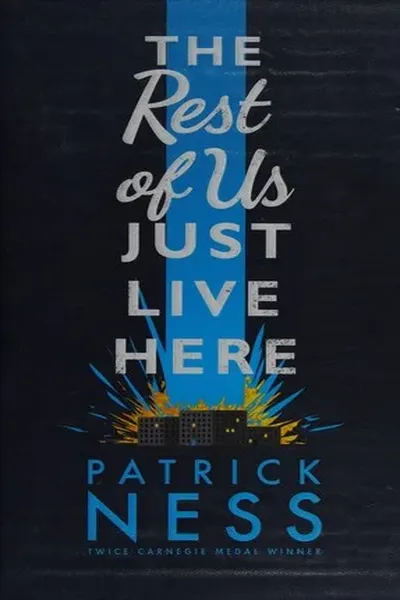
The rest of us just live here

 83
83

The rest of us just live here
Patrick Ness’s "The Rest of Us Just Live Here" is a clever, if occasionally uneven, dissection of YA fantasy. Its central conceit—that the supporting characters in a world of chosen ones have their own, often more relatable, struggles—is brilliantly executed. The narrative’s strength lies in its wry humor and its genuine empathy for the characters who are not destined for greatness. The author excels at capturing the awkwardness of teenage life, particularly the pain of feeling overlooked. However, the constant meta-commentary, while the book’s hook, sometimes pulls focus from the emotional core. The passages detailing Mikey’s struggles with his sexuality and his unrequited love for Nathan feel particularly poignant, yet they occasionally get overshadowed by the narrative’s self-awareness about its own construction. The book ultimately succeeds by reminding us that every life, no matter how seemingly ordinary, is the center of its own universe.
📝 Description
83
### What It Is Patrick Ness’s "The Rest of Us Just Live Here," first published in 2016, presents a meta-fictional narrative that subverts typical young adult fantasy tropes. It centers on Mikey, a teenage boy in a world where his friends are the chosen ones, destined to fight evil overlords and ancient gods. While they battle dragons and demons, Mikey and his non-supernatural peers are left to deal with the mundane realities of adolescence – friendships, romance, and identity, all while their friends are off saving the world.
### Who It's For This novel is best suited for readers who appreciate a deconstructive approach to genre fiction, particularly those who have grown weary of predictable fantasy plots. It appeals to an audience seeking stories that acknowledge the experiences of those who are not the central heroes, the background players whose lives are nonetheless significant. It’s for readers who enjoy humor that arises from the absurd juxtaposition of the epic and the ordinary.
### Historical Context Published in 2016, "The Rest of Us Just Live Here" emerged during a period of significant self-awareness and critique within the young adult fantasy genre. Authors like John Green had already paved the way for more character-driven, introspective narratives that grappled with real-world issues, even within fantastical settings. Ness’s work can be seen as a direct engagement with the established tropes of portal fantasies and chosen-one narratives, offering a counterpoint to the dominant trends exemplified by series like "The Hunger Games" or "Divergent," which often placed protagonists in extraordinary circumstances.
### Key Concepts The novel hinges on the concept of the 'mundane' versus the 'epic.' It explores how ordinary lives continue alongside extraordinary events, suggesting that the experiences of those not directly involved in world-saving quests are equally valid and complex. The 'sleeping gods' and 'demons' serve as background elements, highlighting the characters' detachment from the grand narrative. The story interrogates the nature of heroism and the societal tendency to only recognize or value those who fit a heroic archetype, leaving others feeling invisible or irrelevant.
💡 Why Read This Book?
• Gain insight into the 'supporting character' experience, understanding how ordinary lives persist alongside epic events, as seen in Mikey's perspective on his friends' dragon-slaying adventures. • Appreciate a meta-fictional approach that critiques common YA fantasy tropes, offering a fresh narrative angle absent in more conventional portal fantasies. • Explore themes of identity and belonging from the viewpoint of those outside the 'chosen one' narrative, a perspective often sidelined in stories like those found in the "Hunger Games" series.
⭐ Reader Reviews
Honest opinions from readers who have explored this book.
❓ Frequently Asked Questions
What is the main premise of "The Rest of Us Just Live Here"?
The book follows Mikey, a teenager whose friends are the heroes destined to fight demons and gods, while he and his non-supernatural peers must navigate normal teenage life, proving that ordinary lives are significant too.
What genre does "The Rest of Us Just Live Here" belong to?
It's a young adult novel that blends contemporary fiction with meta-fictional elements, deconstructing traditional fantasy tropes rather than being a straightforward fantasy.
Who are the main characters in the book?
The central character is Mikey, a gay teenager dealing with unrequited love and the feeling of being ordinary. His friends, who are the 'heroes,' include Emma, Finn, and Nathan, though their heroic deeds are largely background events.
What makes this book different from other YA fantasy novels?
Unlike many YA fantasies focusing on a chosen one, this book deliberately sidelines the epic quests. It centers the 'normal' characters, exploring their relationships and internal struggles while the 'heroic' plot unfolds around them.
What year was "The Rest of Us Just Live Here" published?
The novel was first published in 2016, positioning it within a wave of YA literature that began critically examining genre conventions.
Does the book have any supernatural elements?
While the main characters are ordinary, the world they inhabit features background supernatural elements like demons and gods, which their 'hero' friends are meant to fight, though these are often less important than the mundane struggles.
🔮 Key Themes & Symbolism
The Ordinary Amidst the Epic
The novel masterfully contrasts the 'epic' narrative of chosen ones battling demons and gods with the 'ordinary' lives of those who are not heroes. Mikey and his friends grapple with everyday concerns like friendships, family, and romantic love, demonstrating that these experiences are as significant as any world-saving quest. The presence of background supernatural threats, like the 'sleeping gods,' serves to highlight the characters' detachment and the validity of their non-heroic existence. This theme challenges the reader to consider the value and complexity of lives lived outside the spotlight of grand narratives.
Subverting Chosen One Tropes
Ness directly engages with and subverts the ubiquitous 'chosen one' trope prevalent in young adult literature. Instead of focusing on the prophesied hero, the narrative centers on those who are merely 'the rest of us.' This meta-commentary deconstructs the typical fantasy structure, questioning why the epic narrative always takes precedence and whose stories get told. By shifting the focus, the book explores the psychological impact of being a bystander in a world defined by extraordinary conflict, offering a critique of genre conventions that emerged significantly in the early 2010s.
Identity and Belonging
Central to the story is Mikey's exploration of his identity, particularly his sexuality and his unrequited love for his friend Nathan. His struggle to find his place in a world where his friends are destined for greatness, while he feels ordinary, mirrors the broader search for belonging. The novel posits that finding one's own narrative and accepting one's own path, even if it doesn't involve fighting dragons, is a crucial aspect of self-discovery. This theme resonates with the broader discourse on representation and authentic selfhood in contemporary YA fiction.
The Nature of Reality and Narrative
The book plays with the very nature of reality and storytelling, blurring the lines between the fictional world and the reader's perception. The meta-fictional elements prompt questions about whose stories are considered important and how narratives are constructed. By acknowledging its own fictional status and the conventions it employs, "The Rest of Us Just Live Here" encourages a critical engagement with literature itself. It suggests that even within a fictional framework, the 'mundane' experiences and internal lives of characters deserve as much attention as the plot's external conflicts.
💬 Memorable Quotes
“The world is not ending. It has not ended. It will not end.”
— This statement encapsulates the novel's core theme: the persistence of ordinary life even in the face of perceived or actual extraordinary events. It highlights the characters' grounding in reality, distinct from the apocalyptic narratives their friends are involved in.
“You don’t get to be a hero. You get to be the rest of us.”
— This quote directly addresses the subversion of the 'chosen one' trope. It validates the experiences of characters who are not destined for epic deeds, suggesting that their lives and struggles are equally important and complex.
“Maybe the most important thing is not to be the hero, but to be there for the people who are.”
— This interpretation of the book's sentiment emphasizes the value of support and connection. It suggests that even without a heroic role, an individual's presence and emotional support can be profoundly impactful.
“The demons were real, the gods were real, the dragons were real. It was the people who weren't.”
— This interpretation underscores the novel's focus on human experience over fantastical elements. It suggests that the true substance of the story lies in the characters' internal lives and relationships, rather than the external, supernatural conflicts.
“We’re the ones who have to deal with the mess the heroes leave behind.”
— This concept points to the practical consequences and the often-unseen labor involved in the aftermath of heroic actions. It highlights the perspective of those who experience the fallout, emphasizing their often-overlooked reality.
🌙 Esoteric Significance
Tradition
While "The Rest of Us Just Live Here" is not explicitly aligned with a single esoteric tradition, its meta-fictional approach and deconstruction of archetypes can be seen as resonating with Gnostic themes of hidden realities and the critique of dominant, often illusory, cosmic narratives. The idea of a 'real' world operating beneath a surface-level epic conflict mirrors Gnostic notions of a flawed demiurge creating a material world that obscures a higher truth. The focus on the 'ordinary' individual's experience, separate from the grand cosmic drama, can be interpreted as a search for authentic selfhood outside the imposed structures of the 'heroic' path.
Symbolism
The 'sleeping gods' and 'demons' function as symbolic representations of the overwhelming, often unseen forces that shape existence, which the 'heroes' are tasked with confronting. However, for the protagonists like Mikey, these forces are more of a background hum, a symbolic weight that creates a sense of existential unease rather than an immediate threat. The mundane objects and social rituals of adolescence—school, parties, friendships—become symbolic anchors to a perceived 'real' world, representing the search for meaning and connection within the tangible, everyday experience, away from abstract, world-altering conflicts.
Modern Relevance
Contemporary thinkers exploring narrative theory, media studies, and the psychology of fandom often cite "The Rest of Us Just Live Here" as an example of literature that consciously interrogates its own genre. Its exploration of how individuals find meaning outside of dominant, often externally imposed, narratives is relevant to current discussions on identity formation in a hyper-mediated world. The book's approach to deconstructing archetypes also finds echoes in modern critical theory and in practices that encourage individuals to write their own life stories, moving beyond prescribed roles and expectations.
👥 Who Should Read This Book
• Readers interested in meta-fiction and narrative deconstruction, who want to explore how established genre tropes can be subverted and re-examined. • Young adults and adults grappling with feelings of not fitting in or being overlooked, seeking validation for their own 'ordinary' experiences amidst grander societal narratives. • Literary critics and students of contemporary YA fiction looking for examples of novels that critically engage with genre conventions and explore complex themes of identity and belonging.
📜 Historical Context
Patrick Ness’s "The Rest of Us Just Live Here," published in 2016, arrived in a literary landscape saturated with young adult fantasy, particularly the 'chosen one' narrative. The early to mid-2010s saw a surge in dystopian and high-fantasy series that dominated bestseller lists, exemplified by authors like Suzanne Collins and Veronica Roth. Ness’s work functions as a critical response to this trend, deliberately shifting focus from the epic to the mundane. It engages with the intellectual current of meta-fiction and deconstruction that had been present in literature for decades, applying it to the YA sphere. While not directly engaging in public debate with a specific contemporary author, its very premise serves as a counter-argument to the prevailing heroic narratives. The book’s reception was largely positive, noted for its originality and emotional depth, distinguishing itself from more formulaic genre entries.
📔 Journal Prompts
Mikey's experience of feeling ordinary while his friends are heroes.
The symbolic weight of the 'sleeping gods' versus everyday reality.
How the novel presents the 'mess' left by heroes.
The contrast between epic quests and mundane adolescent concerns.
Your own perspective on being a 'supporting character' in life's narratives.
🗂️ Glossary
Chosen One
A common archetype in fantasy literature, referring to a protagonist destined by prophecy or fate to achieve a great deed, often saving the world. This book deliberately sidelines this trope.
Meta-fiction
Fiction that self-consciously draws attention to its status as a work of fiction, often by commenting on or analyzing its own narrative conventions and devices.
Deconstruction
In a literary context, the analysis and dismantling of established structures, assumptions, and meanings within a text or genre to reveal underlying complexities or contradictions.
Mundane
Characterized by the ordinary, commonplace, or everyday; lacking the extraordinary or exciting elements often found in fantasy narratives.
Archetype
A recurring symbol, character type, or motif that is universally understood across cultures and literature, such as the hero, the mentor, or the trickster.
Sleeping Gods
A concept within the book representing dormant, ancient, powerful beings whose potential return or influence is a background threat, contrasting with the protagonists' immediate concerns.
Genre Tropes
Recurring conventions, patterns, or devices that are characteristic of a particular literary genre, such as the 'quest' or 'magic system' in fantasy.