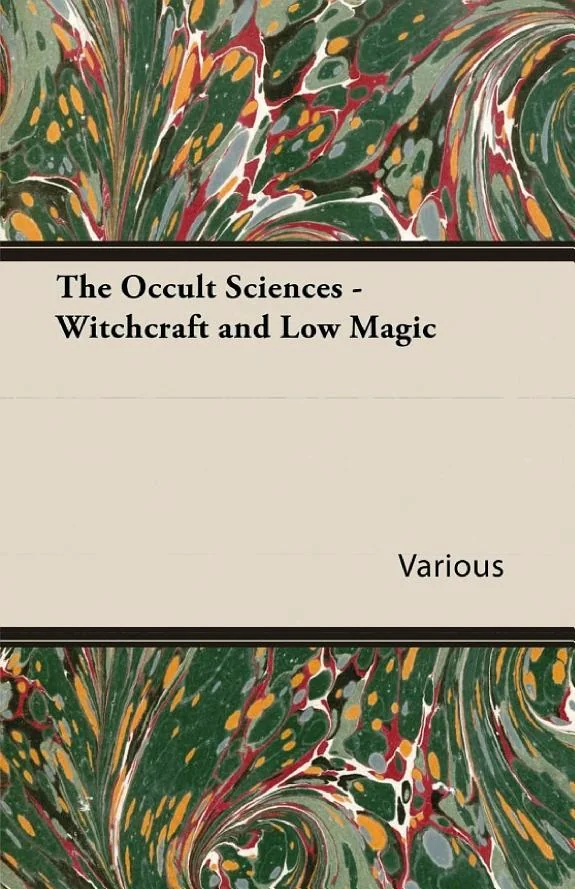
The Occult Sciences - Witchcraft and Low Magic
 76
76

The Occult Sciences - Witchcraft and Low Magic
The republication of "The Occult Sciences - Witchcraft and Low Magic" by Wyrd Books offers a direct conduit to early 20th-century occult discourse. Its strength lies in its unvarnished presentation of historical witchcraft and low magic, eschewing modern reinterpretation for a glimpse into the source material. The section detailing "spells - luck - symbolism" is particularly illuminating, showcasing a worldview where these elements were systematically studied. However, the language and perspectives are undeniably of their time, which can present challenges for contemporary readers accustomed to more nuanced psychological or sociological analyses. A passage detailing "modern magic" as understood by its original authors, for instance, highlights a significant gap between historical practices and current understanding. Despite its dated framing, the book serves as a valuable, if somewhat dry, historical document.
📝 Description
76
### What It Is
The Occult Sciences - Witchcraft and Low Magic, a republication from Wyrd Books, presents an early 20th-century exploration of witchcraft and lesser magical practices. This edition brings to light historical perspectives on a subject often shrouded in myth and misunderstanding. The text meticulously details various facets of witchcraft, moving beyond sensationalism to examine its recorded history and practices.
### Who It's For
This volume is suited for historians of esotericism, students of folklore, and practitioners interested in the historical underpinnings of magical traditions. It appeals to those who seek original source material rather than modern interpretations. Readers looking for a factual, albeit dated, account of early 20th-century occult studies will find substantial content here.
### Historical Context
Published in the early 1900s, this work emerges from a period of intense interest in spiritualism, occultism, and comparative religion. It reflects the academic and popular engagement with magical traditions prevalent at the time, often influenced by figures like Eliphas Lévi and the burgeoning Theosophical Society. The book's approach to witchcraft likely mirrors the scholarly yet often sensationalized treatments of the occult common in European intellectual circles of that era.
### Key Concepts
The book covers a broad spectrum of occult phenomena, including the historical records of witchcraft, the mechanics of spellcasting, the role of luck in magical outcomes, and the symbolic language employed in these practices. It also touches upon more contemporary (for its time) developments in magic and the practices associated with spirit calling, offering a snapshot of occult thought at the turn of the 20th century.
💡 Why Read This Book?
• Gain direct insight into early 1900s occult scholarship by examining the book's detailed records of witchcraft, offering a historical perspective untainted by modern reinterpretation. • Understand the historical conceptualization of "luck" and "symbolism" in magical practice, as presented in the text, to contextualize its era's approach to causality. • Explore the specific methods described for "spirit calling," providing concrete examples of historical occult techniques that differ from contemporary practices.
⭐ Reader Reviews
Honest opinions from readers who have explored this book.
❓ Frequently Asked Questions
What historical period does 'The Occult Sciences - Witchcraft and Low Magic' primarily cover?
The book republication dates to 2024, but its content originates from the early 1900s. It reflects the occult studies and perceptions of witchcraft prevalent during that specific turn-of-the-century era.
Does the book focus on ceremonial magic or folk magic traditions?
The blurb indicates coverage of "all aspects of witchcraft and low magic," suggesting an interest in both folk traditions and potentially lesser-known magical practices, rather than solely high ceremonial magic.
Are there illustrations in this edition?
Yes, the original blurb states that the "illustrated contents include Witchcraft and its records." This suggests that the republication retains or reproduces the original illustrations.
What is 'low magic' as discussed in the book?
'Low magic' typically refers to practical, often mundane, magical applications like charms, curses, or spells for personal gain or influence, as opposed to the more ritualistic or spiritual 'high magic'.
Who is the author of the original work?
The original work was published in the early 1900s, but this specific republication is attributed to Wyrd Books, first published in 2024. The original author is not explicitly named in the provided information.
What kind of spells are discussed?
The book discusses spells in the context of historical witchcraft, covering aspects like luck, spirit calling, and general magical applications as understood in the early 20th century.
🔮 Key Themes & Symbolism
Historical Witchcraft Records
The work meticulously examines the historical documentation and records pertaining to witchcraft as understood in the early 20th century. It aims to present a factual account, moving beyond mere folklore to catalog observed practices and beliefs. This includes discussions on the societal perceptions and recorded instances of witchcraft, offering a scholarly perspective on its place in history.
Practical Magic and Spellcraft
A significant focus is placed on the practical application of magic, particularly 'low magic.' This encompasses the mechanics and intent behind spells, exploring how they were believed to influence outcomes related to luck, personal affairs, and interactions with unseen forces. The text delves into the construction and execution of these magical acts.
Symbolism and Underlying Principles
The book recognizes the importance of symbolism as a key component of magical practice. It explores the symbolic language and motifs used within witchcraft and low magic, suggesting that understanding these symbols is crucial to comprehending the efficacy and meaning of various occult operations and beliefs.
Spirit Calling and Modern Magic
Addressing phenomena beyond simple spellcasting, the work investigates practices related to spirit calling. It also touches upon what was considered 'modern magic' during its original publication period, reflecting the evolving discourse and new developments within occult studies at the turn of the 20th century.
💬 Memorable Quotes
“The contents include Witchcraft and its records - spells - luck - symbolism - modern magic - spirit calling etc.”
— This direct statement from the original blurb outlines the core subjects covered, acting as a table of contents for the book's historical and practical explorations of occult themes.
“A republication of an early 1900's book dealing with all aspects of witchcraft and low magic.”
— This highlights the book's historical origin and its comprehensive scope, positioning it as a primary source for understanding past occult beliefs and practices.
“Illustrated contents”
— This phrase suggests that the book is not purely text-based, implying the presence of visual elements that likely aid in understanding the historical context and symbolic aspects of witchcraft and magic.
“dealing with all aspects of witchcraft and low magic”
— This indicates the book's broad approach, aiming to cover the full spectrum of its subject matter from historical accounts to practical applications, as perceived in its original time.
“early 1900's book”
— Pinpoints the historical era of the original publication, crucial for understanding the intellectual and cultural context in which these ideas about witchcraft and magic were formulated and disseminated.
🌙 Esoteric Significance
Tradition
The work aligns with the broader Western Esoteric Tradition, specifically drawing from the historical study of folk magic and witchcraft that gained academic and occultist attention in the late 19th and early 20th centuries. It situates itself within the lineage of occult scholarship that sought to codify and understand magical practices, often bridging the gap between historical accounts and contemporary occult interests.
Symbolism
Key symbols likely explored include those associated with witchcraft, such as the pentagram, herbs used in spells, or lunar symbolism, all of which carried specific meanings within the occult traditions of the era. The text would interpret these symbols not merely as decorative but as active components within magical operations, linked to natural forces and spiritual entities.
Modern Relevance
Contemporary practitioners of witchcraft, particularly those interested in historical reconstruction or comparative magical studies, might reference this work. It also serves as a resource for scholars studying the evolution of occultism and the historical perception of witchcraft, informing modern discussions on paganism and magical theory.
👥 Who Should Read This Book
• Students of Western Esotericism seeking primary source material on early 20th-century views of witchcraft and folk magic. • Researchers in comparative religion or folklore interested in historical magical practices and beliefs. • Practitioners of modern witchcraft looking to understand the historical context and evolution of their craft's roots.
📜 Historical Context
This work emerges from the fertile ground of early 20th-century occult revivalism, a period marked by widespread fascination with spiritualism, psychical research, and esoteric traditions. Contemporaries like Arthur Conan Doyle were exploring spiritualism, while figures such as Aleister Crowley were developing their own unique magical systems. The book reflects a scholarly yet accessible approach to witchcraft and 'low magic,' seeking to document and understand these practices within a framework that was both academic and sympathetic to the occult. It stands in contrast to purely folkloric or demonological accounts, aiming for a more systematic study. The era saw a surge in publications dedicated to these subjects, often circulating within specific societies or clubs, and this book likely contributed to that burgeoning literature.
📔 Journal Prompts
The historical records of witchcraft discussed in the book: what common threads emerge?
Reflect on the concept of 'luck' as presented in the text and its role in spells.
Analyze the symbolism of a specific magical element mentioned in the book.
Consider the early 1900s perspective on 'spirit calling' and its implications.
How does the book's treatment of 'modern magic' differ from contemporary understandings?
🗂️ Glossary
Low Magic
Refers to practical, often utilitarian, magical practices focused on tangible results, such as charms, healing, or influencing personal circumstances, as distinguished from high magic's focus on spiritual attainment.
Witchcraft
In the context of the early 1900s, this term encompassed a range of beliefs and practices attributed to individuals accused or identifying as witches, often including folk remedies, curses, and pacts with supernatural entities.
Spells
Formulated magical words, actions, or rituals intended to produce a specific effect, often relying on sympathetic principles or invoked spiritual forces.
Luck
The perceived influence of chance or fate, often seen in early occult studies as a force that could be manipulated or influenced through magical means.
Symbolism
The use of signs, images, or objects to represent abstract ideas or qualities, crucial in magical practice for conveying intent and connecting with spiritual or natural energies.
Spirit Calling
A practice within occultism involving the invocation or summoning of spirits or entities, often for communication, guidance, or assistance.
Modern Magic
Refers to magical practices and theories that were considered contemporary or innovative during the original publication period (early 1900s), distinct from older traditions.