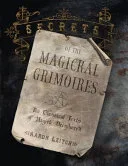
Secrets of the Magickal Grimoires
 82
82

Secrets of the Magickal Grimoires
Aaron Leitch’s "Secrets of the Magickal Grimoires" offers a scholarly examination of the textual lineage underpinning Western ceremonial magic. The book’s strength lies in its direct engagement with the grimoires themselves, treating them as primary source material rather than mere historical curiosities. Leitch effectively contextualizes these texts within medieval Europe, moving past romanticized notions of witchcraft to explore the practical, often angelic, magic being practiced. A particular point of value is the breakdown of specific rituals and the spiritual entities involved, such as the detailed descriptions related to the "Grimorium Verum." However, the dense academic style, while appropriate for the subject, might prove challenging for readers seeking purely practical spellcasting advice without historical depth. The work could benefit from more visual aids or diagrams to illustrate complex ritual structures. Despite this, Leitch provides a solid, fact-based foundation for understanding the grimoires. It serves as an indispensable guide for those serious about the historical roots of their magical practice.
📝 Description
82
Aaron Leitch's 2007 book traces the medieval European grimoires that form the bedrock of modern ceremonial magic.
Aaron Leitch's "Secrets of the Magickal Grimoires" examines the medieval European occult texts that continue to influence contemporary ceremonial magic. The book argues that a deep understanding of these grimoires—collections of spells, angelic summonings, and spirit conjurations—is necessary for serious practitioners. It is written for students of esotericism who want a thorough, academic perspective on magical history and practice, moving past shallow interpretations to engage with the historical and textual roots of Western esoteric traditions.
Leitch explores the period between 476 and 1453 C.E. in Europe, a time when magical ideas flourished and were kept alive through manuscript grimoires. He carefully investigates the environment that produced these texts, linking them to the intellectual and spiritual trends of the time. The book dissects crucial elements within these older writings, such as the structure of spirits, the creation of ritual implements, and the particular spells and workings described. The emphasis is on the practical use and theoretical structure presented in the grimoires themselves.
This work is situated within the study of Western esotericism, specifically focusing on the lineage of ceremonial magic. It connects modern practices back to their medieval European origins, treating the grimoires not as mere historical curiosities but as active sources of magical theory and practice. The book engages with the historical transmission of occult knowledge, highlighting the textual and intellectual currents that shaped these magical systems and their subsequent adoption and adaptation.
💡 Why Read This Book?
• Gain a precise understanding of the historical trajectory of ceremonial magick from its medieval European origins, citing the period between 476 to 1453 C.E. as foundational. • Learn about the specific nature of grimoires as repositories of knowledge, including their content on angelic workings and spirit conjuration, as detailed in specific chapter analyses. • Understand the methodologies and esoteric knowledge present in medieval grimoires, moving beyond generalized occult theories to focus on the practical instructions within texts like the "Grimorium Verum."
⭐ Reader Reviews
Honest opinions from readers who have explored this book.
❓ Frequently Asked Questions
What specific historical period does "Secrets of the Magickal Grimoires" focus on?
The book concentrates on medieval Europe, specifically the era between 476 and 1453 C.E., identifying this period as the genesis of many modern ceremonial magick practices and texts.
What are grimoires, according to Aaron Leitch?
Leitch defines grimoires as primary repositories of magickal knowledge from medieval Europe, containing detailed instructions for spells, incantations, and rituals for working with angels and conjuring spirits.
Who is Aaron Leitch and what is his background?
Aaron Leitch is presented as a scholar and magician, bringing both academic rigor and practical understanding to his examination of historical magickal texts and traditions.
What kind of spirits are typically discussed in the grimoires examined?
The grimoires discussed often detail methods for working with angelic entities and conjuring various types of spirits, outlining hierarchies and operational procedures.
Does the book provide practical spells for modern use?
While rooted in historical practice and explaining the methods found in grimoires, the book's primary focus is on understanding the historical context and textual content, rather than providing a modern spellbook.
What is the connection between medieval grimoires and modern ceremonial magick?
Leitch argues that these medieval texts form the 'ancestral backbone' of modern ceremonial magick, making their study essential for comprehending contemporary practices.
🔮 Key Themes & Symbolism
The Grimoire Tradition
This work positions the grimoires not as singular magical artifacts, but as a continuous tradition of esoteric literature originating in medieval Europe. Leitch emphasizes their role as practical manuals for communicating with angelic beings and conjuring spirits, forming the bedrock of what would evolve into later ceremonial magick systems. Understanding the structure, intent, and historical context of these texts is presented as paramount.
Angelic and Spirit Operations
A central theme is the practical application of magickal arts as described in the grimoires, with a particular focus on working with angelic hierarchies and other spiritual intelligences. Leitch elucidates the specific methods, incantations, and ritualistic requirements detailed in these historical documents for achieving desired outcomes through such interactions.
Medieval Esoteric Landscape
The book situates the creation and use of these grimoires within the specific socio-historical and intellectual milieu of medieval Europe (476-1453 C.E.). It moves beyond mythologizing to explore the lived reality and textual output of magicians during this era, highlighting the transmission of knowledge through these crucial manuscripts.
The Foundation of Modern Magick
Leitch's thesis posits that the knowledge contained within medieval grimoires serves as the essential historical and practical foundation for much of contemporary ceremonial magick. The book aims to demonstrate this lineage, showing how understanding these earlier systems is critical for a complete grasp of modern occult practices.
💬 Memorable Quotes
Direct passages from the work, attributed to the author.
“The magickal methods and esoteric knowledge of medieval Europe... form the ancestral backbone of modern ceremonial magick.”
— This statement captures the book's core argument: that contemporary ceremonial magic is not an isolated phenomenon but has deep, traceable roots in the practices and texts of the European Middle Ages.
“To understand medieval magick, it's necessary to know the primary repositories of this knowledge--the grimoires.”
— This highlights the central role of the grimoires as the essential source material for any serious study of medieval magic, positioning them as indispensable guides to the era's esoteric practices.
“And to understand the grimoires, you must explore the life and times of the magicians who wrote them.”
— This emphasizes that a contextual understanding of the grimoires requires exploring the historical circumstances and personal experiences of their creators and users.
“Understanding the grimoires is key to understanding the lineage of ceremonial magic.”
— This concise interpretation reinforces the book's central thesis regarding the direct line of descent from medieval magical texts to current ceremonial practices.
💡 Key Ideas
Editorial paraphrase of the work's core concepts — not direct quotes.
The work explores the practical application of rituals for working with angels and conjuring spirits.
This paraphrased concept points to the book's focus on the operational aspects of magickal texts, detailing specific procedures for interacting with spiritual entities as described in the source material.
🌙 Esoteric Significance
Tradition
This work is deeply situated within the Western Esoteric Tradition, specifically focusing on the lineage of ceremonial magic that traces its roots through medieval European grimoires. It bridges the gap between classical hermeticism and later developments, emphasizing the practical, operational aspects of magic that were codified during the Middle Ages.
Symbolism
Key symbols explored include the magical circle, often depicted as a protective space for conjuration; the pentagram and hexagram, used for invocation and banishing; and specific sigils associated with angels and spirits, which function as keys to their identity and power in the operational context of the grimoires.
Modern Relevance
Contemporary practitioners of Western ceremonial magic, particularly those interested in the historical accuracy and textual integrity of their practices, draw heavily on Leitch's scholarship. Thinkers in traditions like the Golden Dawn lineage and independent ceremonial magicians often reference his work to ground their understanding in the primary sources of medieval magic.
👥 Who Should Read This Book
• Students of Western Esotericism: Individuals seeking a rigorous, text-based understanding of the historical development of ceremonial magick, particularly its medieval European antecedents. • Ceremonial Magicians: Practitioners aiming to deepen their knowledge of the source materials and historical context behind their craft, moving beyond modern interpretations to engage with original grimoire traditions. • Comparative Religion Scholars: Researchers interested in the intersection of folklore, theology, and practical magic in medieval Europe, and how these elements were preserved in esoteric manuscripts.
📜 Historical Context
The period in Europe between the fall of the Western Roman Empire (476 C.E.) and the Renaissance was a critical incubator for esoteric traditions, largely preserved through the clandestine circulation of grimoires. Aaron Leitch's "Secrets of the Magickal Grimoires" places these texts squarely within this medieval milieu, a time when Christian theology often coexisted with, and sometimes actively suppressed, older pagan and hermetic influences. Unlike the later, more systematized Kabbalah of the Renaissance, medieval magic was often a more eclectic blend, drawing on Solomonic legends, folk beliefs, and Neoplatonic ideas. Leitch examines this context, showing how magicians operated within a world where spirits, angels, and demons were considered active forces. The reception of such texts was often fraught; while some scholars and practitioners secretly studied them, wider public knowledge could lead to accusations of heresy. This book argues for the grimoires' direct impact on subsequent magical theory and practice, a lineage often overlooked in broader historical surveys of Western esotericism.
📔 Journal Prompts
The ancestral backbone of modern ceremonial magick: how does this concept reshape your understanding of current practices?
Analysis of the "Grimorium Verum": what specific operational details stand out as crucial for its effectiveness?
The role of angelic hierarchies in medieval grimoires: how were these understood and utilized by practitioners?
Medieval European magicians: what challenges did they face in acquiring and using magickal knowledge?
The grimoires as primary repositories: reflect on the implications of their textual content for understanding historical magic.
🗂️ Glossary
Grimoire
A textbook of magic, typically containing instructions for spells, incantations, rituals, and the conjuration of spirits or angels, particularly those originating from medieval and early modern Europe.
Ceremonial Magick
A structured system of ritualistic magic, often involving elaborate preparations, specific tools, invocations, and the evocation of spiritual entities, with roots in ancient and medieval traditions.
Angel
In the context of grimoires, celestial beings often invoked or commanded through specific rituals and incantations to provide assistance, knowledge, or perform tasks for the magician.
Spirit Conjuration
The ritualistic process of calling forth and commanding non-physical entities, often with the aim of obtaining information, assistance, or for other magical purposes, as detailed in grimoires.
Medieval Europe
The historical period spanning roughly from the 5th to the 15th century, during which many of the foundational grimoires and magical texts discussed in the book were created or circulated.
Esoteric Knowledge
Information or understanding concerning arcane, secret, or mysterious subjects, typically reserved for or of interest to a select group of initiates or scholars.
Incantation
A series of words said in a ritualistic or magical way, believed to have the power to create a specific effect or summon spiritual forces.