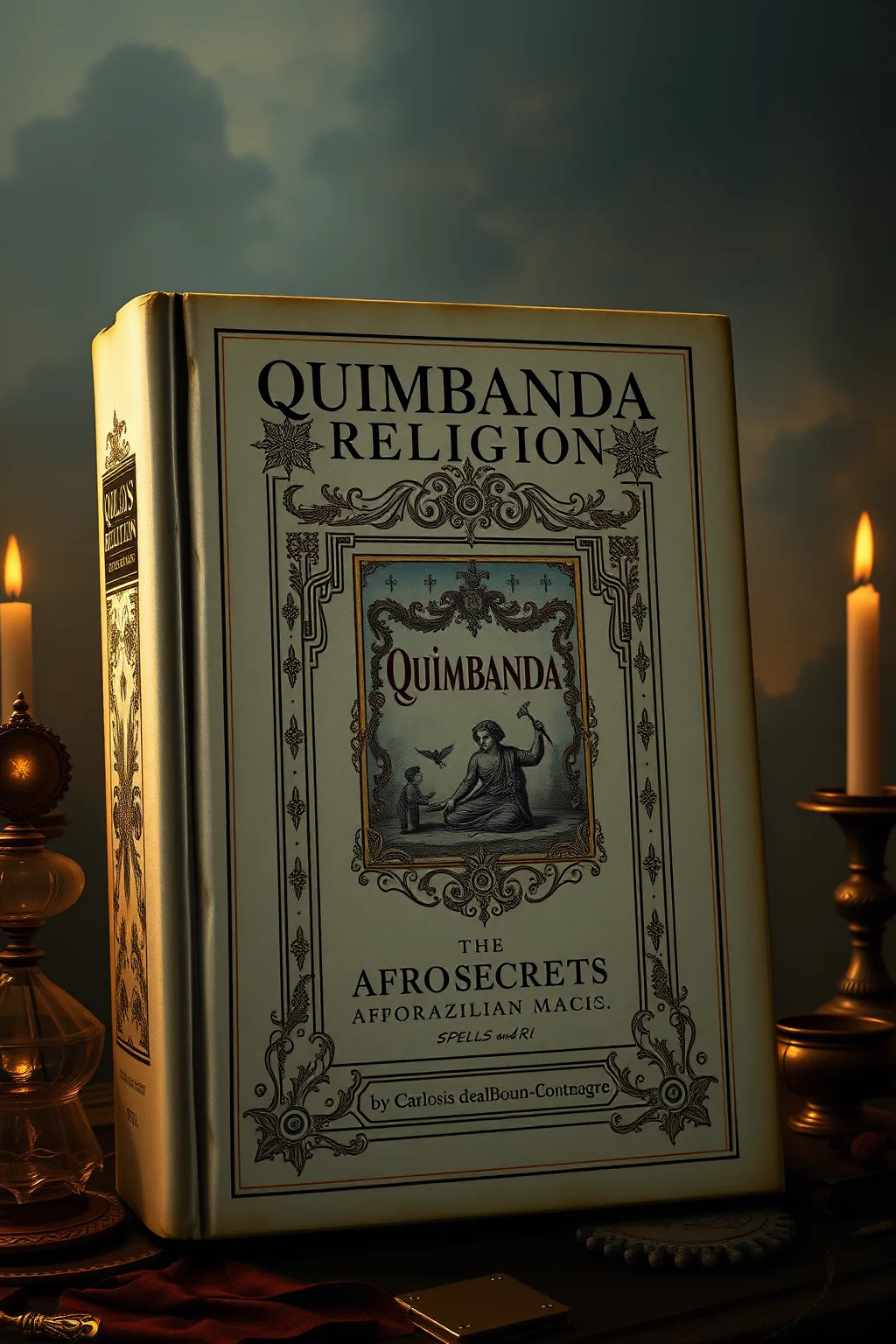
QUIMBANDA RELIGION, the SECRETS of AFRO-BRAZILIAN MAGIC, SPELLS and RITUALS
 61
61

QUIMBANDA RELIGION, the SECRETS of AFRO-BRAZILIAN MAGIC, SPELLS and RITUALS


Silas Hawthorne (Hermetic Studies Editor) — Carlos Antonio de Bourbon-Galdião-Montenegro's "Quimbanda Religion" is a monumental achievement, offering an authoritative and deeply insightful exploration of this complex Afro-Brazilian magical system. The author masterfully demystifies the often-misunderstood practices, revealing the sophisticated cosmology and ethical framework underlying Quimbanda's potent spells and rituals. This text is essential for anyone seeking to understand the authentic roots and esoteric dimensions of Brazilian magic. It is a vital resource for serious students of occultism and comparative religion, bridging academic rigor with a profound respect for the living tradition. A truly illuminating work.
📝 Description
61
Step into the veiled sanctuaries of Quimbanda, an Afro-Brazilian spiritual tradition steeped in ancient mysteries and potent magic. This seminal work by Carlos Antonio de Bourbon-Galdião-Montenegro unveils the profound secrets of Quimbanda, a path often misunderstood but central to the spiritual landscape of Brazil. Explore the intricate tapestry of its deities, the potent symbolism woven into its rituals, and the arcane knowledge that empowers its practitioners. The book meticulously details the spells, invocations, and ceremonies that form the heart of this vibrant religion, offering a rare glimpse into its hidden dimensions. For the dedicated seeker, the curious scholar, or the seasoned practitioner, this text serves as an indispensable guide, illuminating the philosophical underpinnings and practical applications of Quimbanda's powerful magic. Prepare to encounter a world where the veil between the material and spiritual realms is thin, and where ancient forces are invoked for transformation and manifestation. This is not merely a study; it is an invitation to understand the very essence of Afro-Brazilian spiritual power.
✍️ Author
Carlos Anotnio DE BOURBON-GALDIANO-MONTENEGRO
Classic literature author · Public Domain
💡 Why Read This Book?
Uncover the profound spiritual power and intricate magic of Quimbanda, a vital Afro-Brazilian tradition. This book offers direct access to authentic spells, rituals, and the esoteric philosophy that guides its adherents. Ideal for seekers of hidden knowledge, scholars of comparative religion, and practitioners looking to deepen their understanding of powerful, transformative magical systems.
⭐ Reader Reviews
Honest opinions from readers who have explored this book.
❓ Frequently Asked Questions
What is Quimbanda?
Quimbanda is a complex Afro-Brazilian spiritual tradition, distinct from Candomblé and Umbanda, that focuses on the invocation of spirits known as Exus and Pomba Giras to facilitate spiritual work, protection, and manifestation.
Is Quimbanda considered 'black magic'?
The term 'black magic' is often a mischaracterization. Quimbanda, like many spiritual paths, utilizes powerful energies that can be directed for various purposes, both constructive and challenging, depending on the practitioner's intent and ethical framework.
Who are Exus and Pomba Giras?
Exus and Pomba Giras are powerful spiritual entities within Quimbanda, often seen as intermediaries between the human and spiritual realms, guardians of crossroads, and agents of change and transformation.
What kind of rituals are described?
The book details various rituals, including invocations, offerings, spellcraft, and ceremonies designed for protection, prosperity, love, and spiritual development, often involving specific herbs, candles, and symbolic objects.
Is prior knowledge of Afro-Brazilian religions necessary?
While prior knowledge is beneficial, this book is structured to provide a comprehensive introduction, making it accessible to newcomers interested in understanding the core principles and practices of Quimbanda.
🔮 Key Themes & Symbolism
The Power of the Crossroads
Central to Quimbanda is the concept of the crossroads, a liminal space where the material and spiritual worlds intersect. This theme explores how Exus and Pomba Giras, the entities associated with these spaces, act as gatekeepers and facilitators of spiritual energy. The book delves into the symbolic significance of crossroads in rituals, their role in facilitating communication with the spirit world, and their application in spells for transition, opportunity, and confronting challenges. Understanding this fundamental concept is key to grasping the dynamic forces at play within Quimbanda.
Esoteric Symbolism and Iconography
Quimbanda is rich with a complex system of symbolism, from the colors of candles and clothing to the specific objects used in ceremonies. This section illuminates the deeper meanings behind these visual and material elements. The text will dissect the iconography of key entities, the significance of sigils, and the spiritual resonance of various offerings. It provides practitioners and scholars with the keys to decode the visual language of Quimbanda, enhancing comprehension of its spiritual messages and the energetic configurations within its rituals.
The Art of Spiritual Correspondence
This theme focuses on the intricate art of spiritual correspondence as practiced in Quimbanda. It examines how practitioners align themselves with specific spiritual forces, elements, and planetary influences to achieve desired outcomes. The book will explore the principles of sympathetic magic, the use of correspondences in spellcasting, and the ethical considerations involved in harnessing these energies. Understanding these correspondences is crucial for anyone wishing to engage with Quimbanda's practical magic in a meaningful and effective way.
💬 Memorable Quotes
“The crossroads are not merely paths, but portals.”
— This quote highlights the profound spiritual significance of crossroads in Quimbanda, viewing them as dynamic points of intersection between the mundane and the divine, rather than mere physical locations.
“Each color whispers a forgotten language of power.”
— This emphasizes the deeply symbolic nature of color within Quimbanda rituals, suggesting that specific hues carry potent, ancient energies and spiritual communications waiting to be understood.
“The true magic lies in the heart's intent.”
— This quote underscores the ethical and motivational core of Quimbanda practice, asserting that the efficacy of any spell or ritual is fundamentally tied to the purity and focus of the practitioner's inner desires.
“Embrace the shadows to find your light.”
— This speaks to the Quimbanda philosophy of confronting and integrating all aspects of existence, including darker energies, to achieve holistic spiritual growth and illumination.
“The ancestors' whispers guide the present steps.”
— This highlights the vital role of ancestral veneration and wisdom in Quimbanda, suggesting that the guidance of those who came before is essential for navigating contemporary spiritual journeys.
🌙 Esoteric Significance
Tradition
Quimbanda stands as a distinct esoteric tradition within the broader spectrum of Afro-Brazilian religions. It is characterized by its focus on the invocation of Exus and Pomba Giras, entities that embody primal forces and act as intermediaries. Unlike syncretic paths that might emphasize benevolent spirits, Quimbanda directly engages with powerful, often challenging energies, viewing them as essential for transformation, protection, and the manifestation of desires. Its esoteric teachings delve into the dynamics of spiritual exchange, the power of the spoken word, and the manipulation of energetic currents for practical magical ends.
Symbolism
The symbolism in Quimbanda is rich and multifaceted, often drawing from natural elements, colors, and specific artifacts. The crossroads, as mentioned, are paramount, representing liminality and transition. Red and black are dominant colors, symbolizing passion, power, and the integration of opposing forces. The trident (or garfo), the saber, and specific symbolic offerings like cigars, cachaça, and red peppers are imbued with deep meaning related to warding off negativity, opening paths, and invoking the powers of the entities. Each element serves as a conduit for spiritual energy and symbolic communication.
Modern Relevance
In contemporary society, Quimbanda offers a potent framework for individuals seeking to navigate the complexities of modern life with spiritual agency. Its emphasis on personal power, direct engagement with spiritual forces, and practical problem-solving resonates deeply. For those feeling disempowered or disconnected, Quimbanda provides tools for reclaiming one's destiny, fostering resilience, and forging a tangible connection with the spiritual world. Its rituals offer a means to address contemporary challenges, from personal growth and career advancement to protection against societal pressures, making its ancient wisdom remarkably relevant today.
👥 Who Should Read This Book
This book is an essential read for seekers of esoteric knowledge interested in authentic Afro-Brazilian magic. Scholars of comparative religion and anthropology will find it an invaluable resource for understanding a complex and often misunderstood spiritual system. Practitioners of various magical traditions seeking to expand their repertoire and deepen their understanding of spiritual correspondence and entity work will greatly benefit. Beginners curious about the power and philosophy of Quimbanda will find a clear, respectful, and comprehensive introduction, while experienced practitioners will appreciate the depth and nuance of the presented material.
📜 Historical Context
Emerging from the crucible of Afro-Brazilian history, Quimbanda's roots are deeply entwined with the transatlantic slave trade and the syncretic blending of West African spiritual traditions with Catholicism and Indigenous beliefs. Developed primarily in urban centers like Rio de Janeiro and São Paulo, it flourished in the late 19th and early 20th centuries, a period marked by significant social and cultural upheaval. While often marginalized or demonized by dominant religious institutions, Quimbanda persisted as a vibrant, resilient spiritual path. Its development reflects a complex interplay of resistance, adaptation, and the enduring human need for connection to the divine and ancestral realms. This era saw the formalization of many rituals and the codification of its unique cosmology, making it a potent force in the spiritual landscape of Brazil.
📔 Journal Prompts
Reflect on a personal crossroads you are currently facing. How might the principles of Quimbanda offer a new perspective on navigating this transition?
Consider the symbolic colors red and black. What dualities or powerful energies do these colors represent in your own life or understanding of the world?
Imagine an offering you could make to an Exu or Pomba Gira that symbolically represents a desire for transformation or protection. Describe its components and intention.
How does the concept of 'spiritual correspondence' apply to everyday choices you make? Can you identify mundane actions that hold deeper, symbolic meaning?
Meditate on the idea of confronting 'shadows' for personal growth. What aspects of yourself or your experiences do you tend to avoid, and how might embracing them lead to illumination?
🗂️ Glossary
Exu
Powerful spiritual entities in Quimbanda, often considered messengers and guardians of the crossroads. They are invoked for protection, opening paths, and facilitating spiritual work.
Pomba Gira
Feminine spirits within Quimbanda, associated with feminine power, sensuality, and transformation. They are invoked for matters of love, prosperity, and overcoming obstacles.
Axé
A fundamental concept in Afro-Brazilian religions, representing life force, spiritual energy, and divine power. It is invoked and cultivated through rituals and offerings.
Ponto Riscado
Symbolic diagrams or sigils drawn on the ground or other surfaces during rituals, representing the spiritual entities being invoked and the energetic patterns of the work.
Despacho
An offering made to spiritual entities, typically composed of food, drink, candles, and other symbolic items, presented at specific locations like crossroads or cemeteries.