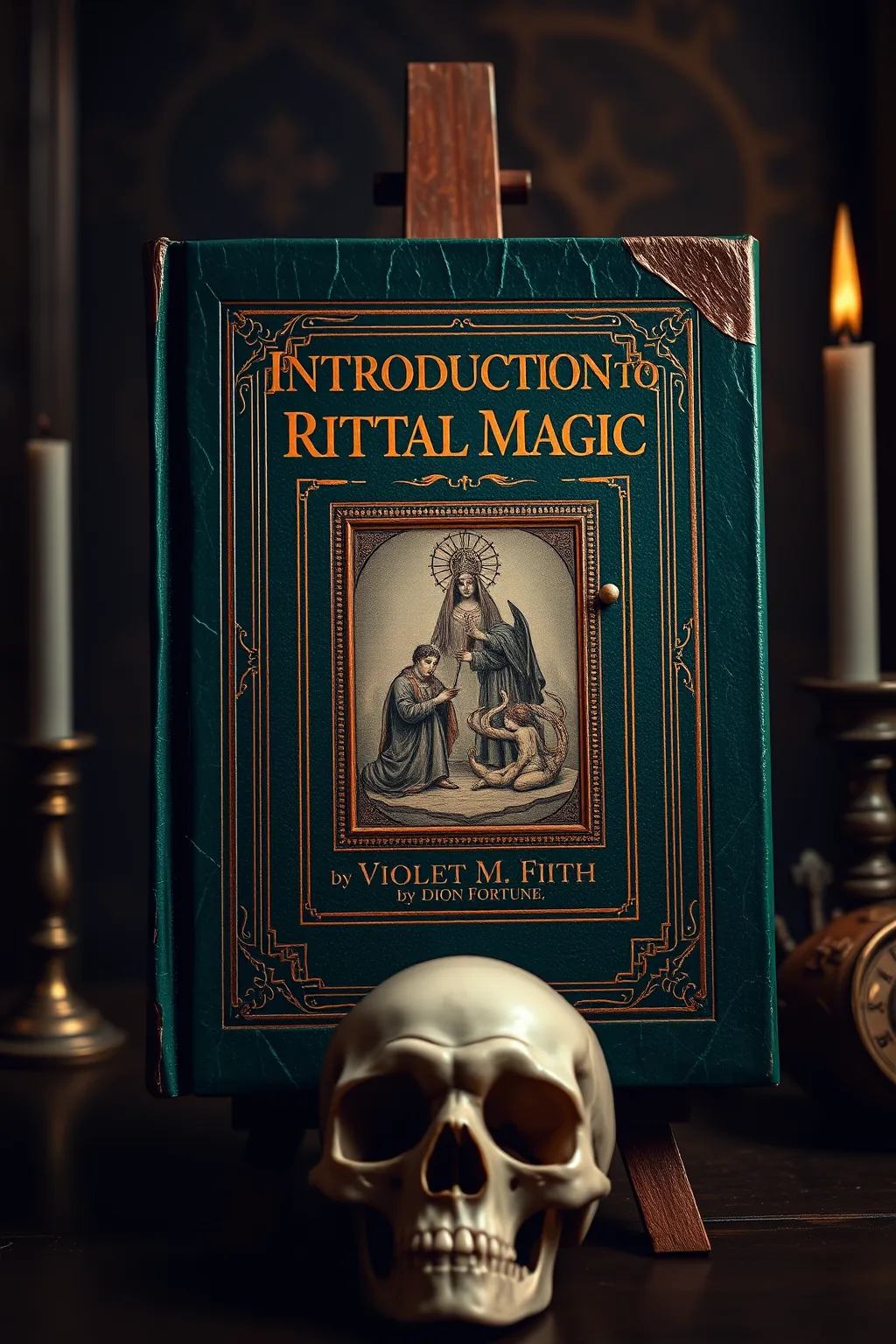
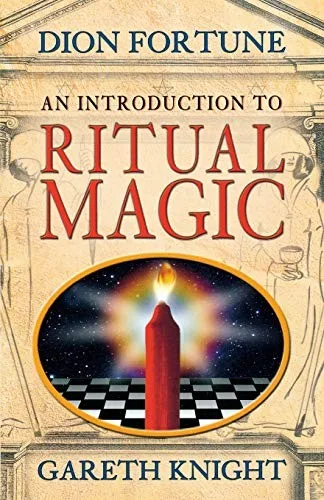
Introduction to Ritual Magic
 80
80

Introduction to Ritual Magic
Violet M. Firth's "Introduction to Ritual Magic" presents a remarkably clear articulation of ceremonial magic, especially considering the often-obscure nature of its subject matter. The strength lies in Fortune's ability to demystify complex concepts, presenting them with a logical, almost academic rigor. Her explanation of the psychic self-defense, for instance, is exceptionally well-articulated, providing practical guidance that feels grounded rather than purely speculative. However, the book's primary limitation is its inherent reliance on a specific, early 20th-century esoteric framework, which may feel dated or overly dogmatic to modern practitioners seeking broader or more eclectic approaches. A passage detailing the necessity of a consecrated space before commencing any ritual work underscores this methodical, almost architectural approach to magic that is both a strength and a potential barrier for those accustomed to more fluid practices.
It offers a solid, if traditional, entry point into ritualistic practice.
📝 Description
80
Violet M. Firth's Introduction to Ritual Magic, published in 1997, explains ceremonial magic.
This book presents a structured method for understanding magical theory and its practical use. It is aimed at dedicated students of the occult and esoteric philosophy who want a thorough look at ritualistic practices. Those interested in Western magical traditions and the psychological aspects of ritual will find it especially useful. The material can be dense for newcomers to magic, but diligent study makes it rewarding.
Dion Fortune, the author, was a notable figure in occult communities. Her work often connects magical events with psychological interpretations, a viewpoint that set her apart from others at the time. The text covers topics such as psychic self-defense, comprehending elemental forces, and using willpower in ritual. It includes instructions for setting up sacred spaces, employing symbols, and calling upon various forces. The importance of personal preparation and the methodical growth of magical skills is stressed.
Written by Violet M. Firth (Dion Fortune), this book stems from the Western Esotericism lineage, particularly the revival of magic in the late 19th and early 20th centuries. Fortune was active in occult groups, including the Hermetic Order of the Golden Dawn. Her writing frequently examined magical phenomena through a psychological lens, a distinctive approach among her peers.
💡 Why Read This Book?
• Gain a structured understanding of ritual mechanics, including the consecration of space and the function of the magical circle, a core concept first explored in depth by figures like Aleister Crowley in the early 20th century. • Learn about the principles of psychic self-defense, a practical application of magical theory that Fortune emphasizes as crucial for any serious student. • Grasp the psychological underpinnings of magical operations, moving beyond superstition to a more reasoned approach to will and consciousness, as articulated in her 1930s writings.
⭐ Reader Reviews
Honest opinions from readers who have explored this book.
❓ Frequently Asked Questions
When was Introduction to Ritual Magic first published?
Introduction to Ritual Magic by Violet M. Firth (Dion Fortune) was first published in 1997, though its teachings are rooted in earlier esoteric traditions.
What is psychic self-defense in the context of this book?
Psychic self-defense, as explained by Dion Fortune, refers to techniques and understanding employed to protect one's consciousness and energy field from unwanted psychic influences or intrusions.
Who was Dion Fortune?
Dion Fortune was the pseudonym of Violet M. Firth, a prominent British occultist, ceremonial magician, and novelist active in the early 20th century, known for her contributions to Western Esotericism.
Is this book suitable for absolute beginners in magic?
While it provides a foundational overview, the book assumes a certain level of intellectual engagement with esoteric concepts. Beginners may find it dense but it offers a comprehensive theoretical basis.
What are some key elements of ritual discussed in the book?
The book details essential ritual elements such as the construction of the temple, the use of specific symbols, the importance of visualization, and the invocation of elemental forces.
Does the book discuss specific magical traditions?
Yes, it draws heavily from Western Hermetic traditions and the practices associated with organizations like the Hermetic Order of the Golden Dawn, which were influential in the late 19th and early 20th centuries.
🔮 Key Themes & Symbolism
The Mechanics of Ritual
This work meticulously outlines the structure and components of ritual magic, emphasizing practical application. It covers the creation of sacred space, the use of the magical circle as a protective and focusing boundary, and the importance of precise gestures and words of power. Fortune stresses that ritual is not mere symbolism but a practical science for manipulating subtle energies, a view consistent with the broader Hermetic tradition of the time.
Psychic Self-Defense
A core part of Fortune's teachings, psychic self-defense is presented as a vital prerequisite for any serious magical work. The book explains how to fortify one's auric field and maintain mental equilibrium against potentially harmful external influences, whether accidental or deliberate. This concept reflects the growing awareness in early 20th-century occultism of the psychological and energetic vulnerabilities inherent in magical practice.
The Role of Will and Imagination
Fortune places significant emphasis on the directed power of the will and the faculty of imagination as the primary tools in ritual magic. The book explores how these internal faculties, when properly trained and focused through ritual, can be used to effect change in both the inner and outer worlds. This aligns with psychological interpretations of magic that gained traction during her era.
Elemental and Planetary Forces
The work studies the invocation and understanding of elemental forces (Earth, Air, Fire, Water) and their connection to planetary energies. It explains how these forces are not merely abstract concepts but dynamic powers that can be harnessed and directed through ritualistic techniques for specific magical purposes, a common theme in Western ceremonial magic.
💬 Memorable Quotes
Direct passages from the work, attributed to the author.
“The ritual is the machinery of the Great Work.”
— This statement highlights Fortune's view that ritual is not merely symbolic but the essential operational framework and mechanism through which magical transformation and achievement are accomplished.
“We must learn to control our thought-forms.”
— This emphasizes the importance of mental discipline and the conscious creation and direction of one's thoughts and mental constructs, crucial for effective magical practice and psychic defense.
“The astral body is the vehicle of consciousness.”
— Interpretation: Fortune posits that the subtle body, or astral form, serves as the primary means by which consciousness navigates and experiences realms beyond the physical, a concept central to many esoteric traditions.
“Adequate protection must be thrown around the magician.”
— This refers to the necessity of establishing psychic boundaries and defenses before engaging in magical operations, ensuring the practitioner's safety and the integrity of the ritual space.
“The Great Work involves the purification of the lower vehicles.”
— Interpretation: This points to the alchemical and magical concept of refining one's physical, emotional, and mental bodies to achieve a higher state of spiritual being, a core aspect of esoteric development.
🌙 Esoteric Significance
Tradition
This work is firmly rooted in the Western Hermetic tradition, drawing heavily on Kabbalistic principles, ceremonial magic practices reminiscent of the Hermetic Order of the Golden Dawn, and an early 20th-century psychological interpretation of occult phenomena. Fortune sought to systematize magical knowledge, making it accessible while maintaining its esoteric integrity, fitting within the lineage of authors like Eliphas Lévi and Papus.
Symbolism
Key symbols include the magical circle, representing divine protection and the defined space for operation; the wand and dagger, symbolizing will and the active/receptive principles; and elemental symbols, representing the fundamental forces of nature that practitioners learn to invoke and control through ritual. These symbols are presented not as mere decorative elements but as active conduits for magical energy.
Modern Relevance
Contemporary practitioners of Western Esotericism, particularly those involved in solitary magical practice or study groups, continue to reference Fortune's work. Her emphasis on psychological integration and psychic hygiene remains relevant for modern occultists, witchcraft practitioners, and those interested in the intersection of consciousness studies and spirituality.
👥 Who Should Read This Book
• Aspiring ceremonial magicians seeking a structured introduction to ritual practices and theoretical underpinnings. • Students of Western Esotericism interested in the psychological and practical aspects of magic as developed in the early 20th century. • Individuals exploring techniques for mental discipline and psychic self-protection within a spiritual or magical framework.
📜 Historical Context
Written by Violet M. Firth under her well-known pseudonym Dion Fortune, "Introduction to Ritual Magic" emerged from the fertile ground of early 20th-century Western Esotericism. This period saw a resurgence of interest in occultism, partly fueled by the Theosophical Society and the Hermetic Order of the Golden Dawn, of which Fortune was a member. Her work, first published in 1997 but reflecting earlier writings, distinguished itself by integrating psychological theory with practical ceremonial magic, a perspective that contrasted with more purely spiritual or mystical approaches. While figures like Aleister Crowley were also active, Fortune's focus was often on a more ordered, therapeutic, and psychologically grounded application of magic. The book's methodical presentation of ritual structure and psychic defense provided a coherent system for practitioners navigating a complex spiritual landscape, influencing generations of occult students.
📔 Journal Prompts
The consecration of a magical temple: what elements are essential?
Your personal understanding of psychic self-defense.
The symbolic meaning of the magical circle in your practice.
How can the directed use of will enhance daily life?
Reflecting on the elemental forces and their presence.
🗂️ Glossary
Psychic Self-Defense
Techniques and awareness employed to protect one's mind and energetic field from unwanted external psychic influences or intrusions, crucial for magical practitioners.
Consecration
The act of formally dedicating or setting apart a space, object, or person for a sacred or magical purpose, often involving ritual purification and invocation.
Magical Circle
A circular area ritually defined and consecrated to serve as a protected space for magical operations, symbolizing containment, focus, and divine presence.
Will
In magic, the focused intent and directed mental energy used to manifest desired outcomes or influence subtle forces.
Elemental Forces
The fundamental energies of Earth, Air, Fire, and Water, understood in esoteric traditions as building blocks of the manifest world and powers to be invoked or worked with.
Astral Body
A subtle energetic body, often considered the vehicle of consciousness, emotion, and imagination, which can operate independently of the physical body in certain states.
Thought-form
A distinct energetic construct created by focused thought or emotion, believed to have a semi-independent existence and potential influence.
🔮 Readers Also Liked
Browse all →






More by Violet M. Firth (Dion Fortune)
All books →



More Free Magic & Ritual Books
View all →