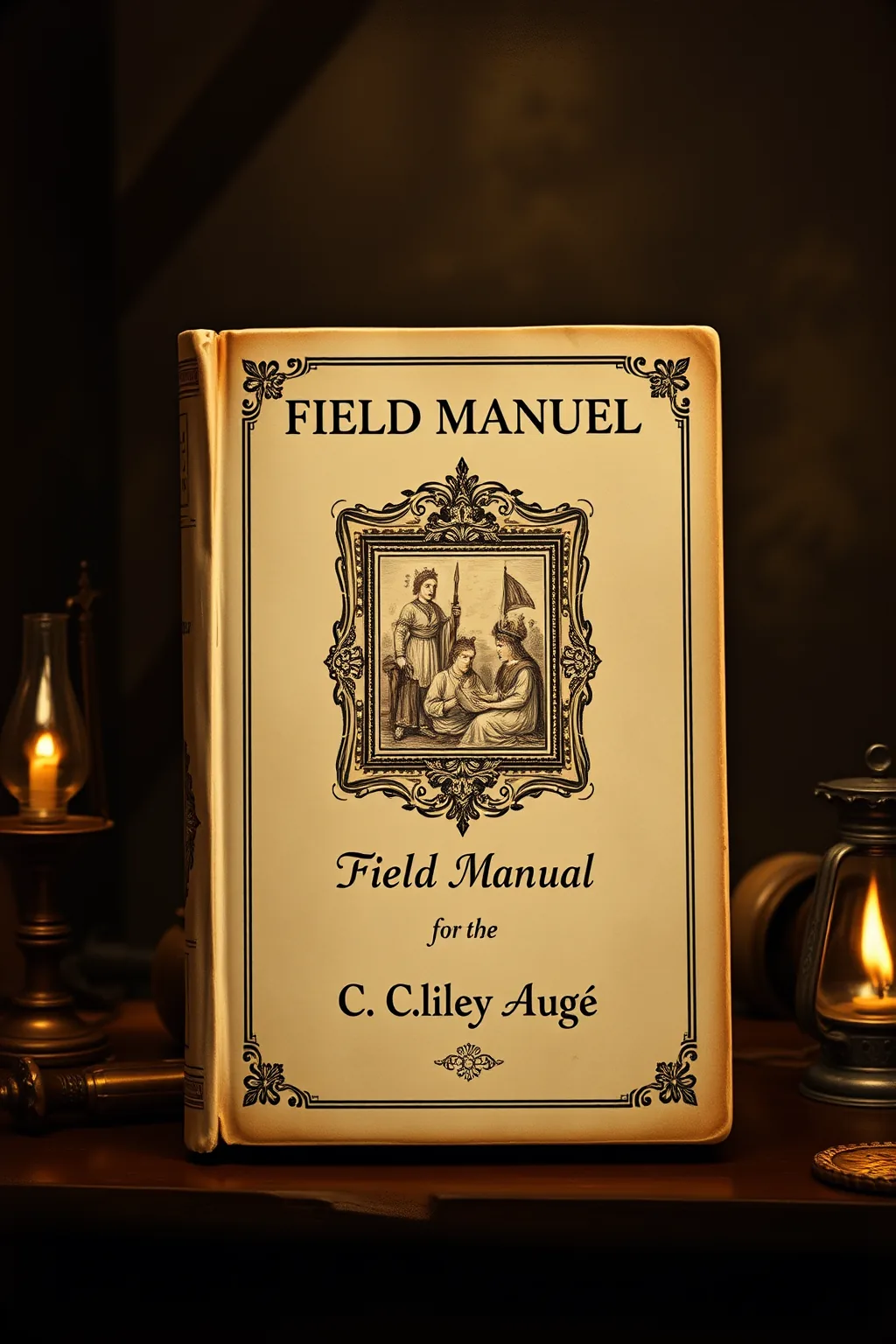
Field Manual for the Archaeology of Ritual, Religion, and Magic
 61
61

Field Manual for the Archaeology of Ritual, Religion, and Magic


Silas Hawthorne (Hermetic Studies Editor) — C. Riley Augé's 'Field Manual' is a revelation for anyone serious about the practical and theoretical dimensions of ritual and magical studies. Augé masterfully bridges the gap between academic rigor and esoteric insight, offering a framework for understanding the deep currents of spiritual expression. The book's strength lies in its ability to decode the symbolic language of ancient practices, revealing their psychological and metaphysical underpinnings. It is an indispensable tool for practitioners seeking to ground their work in historical context and for scholars eager to move beyond superficial analysis. A truly illuminating work for the dedicated student of the hidden.
📝 Description
61
Venture into the veiled corridors of human spiritual and magical history with C. Riley Augé's 'Field Manual for the Archaeology of Ritual, Religion, and Magic.' This is not a mere academic treatise, but a profound excavation of the sacred, the arcane, and the deeply symbolic. Augé invites the dedicated seeker and the discerning scholar to unearth the foundational stones of ritual, the resonant frequencies of forgotten faiths, and the intricate tapestries of magical practice that have shaped consciousness across millennia. The book breathes with the dust of ages, revealing hidden patterns and illuminating the universal human impulse to connect with the transcendent. It is a meticulously crafted guide for those who yearn to understand not just what was believed, but how it was *felt*, experienced, and enacted. Prepare to decipher the silent language of ancient altars, the potent symbolism etched into sacred artifacts, and the enduring power of ritual as the very architecture of spiritual meaning. This manual is a compass for navigating the labyrinthine landscapes of the human soul's eternal quest for the divine and the extraordinary.
✍️ Author
💡 Why Read This Book?
Unearth the forgotten languages of the sacred and the magical. This manual offers a unique lens to understand the deep roots of ritual and belief, moving beyond dogma to explore the lived experience of spiritual practice. Ideal for seekers, practitioners, and scholars who wish to connect with the profound undercurrents of human spiritual evolution and the enduring power of symbolic action.
⭐ Reader Reviews
Honest opinions from readers who have explored this book.
❓ Frequently Asked Questions
What is the primary goal of this field manual?
The primary goal is to provide a comprehensive methodology for studying and understanding the archaeological evidence of ritual, religion, and magic, encouraging a holistic and interpretive approach to historical sacred practices.
Who is the intended audience for this book?
The book is designed for a diverse audience, including archaeologists, anthropologists, historians of religion and magic, occult practitioners, and anyone with a serious academic or personal interest in the material and symbolic dimensions of ancient spiritual and magical traditions.
Does the book focus on specific traditions or offer a general framework?
It offers a general framework applicable across various cultures and historical periods, providing tools and concepts that can be adapted to the study of diverse religious, magical, and ritualistic phenomena.
What kind of 'archaeology' does it explore?
It explores the 'archaeology' of the intangible – the material remains that speak to belief systems, ritualistic actions, magical practices, and the deeply felt spiritual experiences of past peoples.
Is prior knowledge of archaeology or occultism required to read this book?
While prior knowledge can enhance understanding, the manual is written to be accessible. It introduces concepts and methodologies in a clear manner, aiming to guide both novice and experienced readers through its intricate subject matter.
🔮 Key Themes & Symbolism
The Materiality of the Sacred
This theme delves into how physical objects, sites, and structures serve as tangible conduits for spiritual power and belief. It explores the archaeological interpretation of altars, votive offerings, amulets, and sacred landscapes as gateways to understanding ancient ritualistic practices and the lived experience of the divine. Augé guides readers to see beyond mere artifacts, recognizing them as imbued with potent symbolism and charged with the intentions of their creators and users, revealing the profound interplay between the physical world and the unseen realms of magic and devotion.
Deciphering Symbolic Languages
At its core, this manual is a key to unlocking the symbolic lexicons of ancient cultures. It emphasizes that ritual, religion, and magic are not merely collections of actions but intricate systems of meaning conveyed through symbols, gestures, and narratives. Augé provides methodologies for interpreting these symbolic languages, from the geometric patterns found on sacred pottery to the choreographed movements in ceremonial dances, highlighting how these elements served to structure reality, communicate with the divine, and enact transformation.
The Archaeology of Experience
Augé pushes the boundaries of traditional archaeology by advocating for an 'archaeology of experience.' This involves reconstructing not just the physical actions of past peoples but their subjective, embodied, and often ecstatic experiences within ritual contexts. The book encourages an empathetic and imaginative approach, using archaeological evidence to infer the psychological states, emotional resonances, and transformative potentials inherent in ancient religious and magical practices, offering a pathway to connect with the visceral reality of these historical engagements with the numinous.
💬 Memorable Quotes
“The echo of a whispered spell lingers in the dust of forgotten temples.”
— This quote evokes the enduring power of magical intention and ritualistic utterance, suggesting that even after millennia, the energy and meaning of such acts can be perceived through careful study of their material remnants.
“Sacred space is not found, but made through intention and action.”
— This highlights the active, performative nature of creating sacredness, emphasizing that it is a conscious process of imbuing a location with spiritual significance through ritual and focused intent.
“Every artifact is a key to a forgotten door within the human psyche.”
— This suggests that archaeological finds are not just historical objects but possess psychological and symbolic resonance, acting as triggers for understanding deeper aspects of human consciousness and spiritual development.
“The patterns of the stars are mirrored in the patterns of devotion.”
— This draws a connection between cosmic order and human spiritual practice, implying that ancient religions and magical systems often sought to align earthly rituals with celestial phenomena.
“To excavate is to listen to the silent prayers of ages past.”
— This poetic phrase frames archaeological work as an act of deep listening and reverence, where the unearthed objects become voices from history, conveying the spiritual aspirations of those who came before.
🌙 Esoteric Significance
Tradition
This work draws implicitly from hermetic, alchemical, and shamanic traditions by focusing on the transformative power of ritual, the symbolic language of the universe, and the direct experience of the sacred. It aligns with esoteric thought that views material reality as a reflection of spiritual principles and that seeks to understand the mechanisms by which humans interact with and influence these principles through symbolic action and focused consciousness.
Symbolism
The book's core lies in its decoding of symbolism, viewing it not as mere decoration but as potent carriers of meaning and power. It explores how symbols in artifacts, gestures, and sites were used to represent archetypal forces, cosmic laws, and spiritual states, acting as catalysts for transformation and as maps for navigating the spiritual landscape. Understanding these symbolic languages is presented as crucial for unlocking the true nature of ancient religious and magical practices.
Modern Relevance
In an age often characterized by spiritual fragmentation and disconnection, this manual offers a powerful reminder of the enduring human need for ritual and symbolic engagement. It provides a framework for practitioners and scholars to critically examine contemporary spiritual trends, to ground their own practices in historical and psychological understanding, and to recognize the universal archetypes that continue to shape our quest for meaning and transcendence.
👥 Who Should Read This Book
This manual is an essential companion for the dedicated spiritual seeker yearning for deeper context and understanding of ancient practices. Scholars of religion, anthropology, and archaeology will find it an invaluable methodological guide, pushing the boundaries of their disciplines. Practitioners of magic, paganism, and other esoteric paths will discover a rich resource for grounding their work in historical precedent and symbolic depth. For anyone fascinated by the hidden currents of human history and the enduring power of ritual and belief, this book offers a profound and illuminating journey.
📜 Historical Context
Published in an era marked by growing interest in the intersection of anthropology, religious studies, and alternative spiritualities, 'Field Manual for the Archaeology of Ritual, Religion, and Magic' emerged as a vital text for those seeking to move beyond purely secular interpretations of the past. The late 20th and early 21st centuries saw a burgeoning academic and popular fascination with pre-Christian European cultures, indigenous spiritualities, and the historical practice of magic. This book arrived as a sophisticated tool for interrogating the material evidence of these practices, offering a nuanced framework that acknowledged the subjective and experiential dimensions often overlooked in traditional archaeological approaches. It resonated with a generation looking to understand the deep roots of human spiritual expression and the enduring power of ritual and magic in shaping human history and consciousness.
📔 Journal Prompts
Reflect on a personal ritual or spiritual practice. What material objects or symbolic gestures are central to its efficacy? How might these be interpreted archaeologically?
Consider a historical artifact you find compelling. What 'silent prayers' or intentions do you imagine it carries?
Explore the concept of 'sacred space' in your own life. Where do you create it, and what actions or intentions define it?
If you were to excavate a site related to your own spiritual beliefs, what would you hope to find, and what would it reveal about the 'experience' of those who worshipped there?
How does the symbolic language of the natural world (e.g., celestial bodies, natural formations) resonate with your own spiritual understanding or practices?
🗂️ Glossary
Votive Offering
An object or gift offered to a deity or supernatural power as an act of devotion, supplication, or fulfillment of a vow, often left at sacred sites.
Archetype
A universal, archaic pattern or image that is part of the collective unconscious, often manifesting in myths, dreams, and symbols across cultures.
Numinous
Describing an experience of awe, mystery, and fascination in the presence of the divine or the sacred; a sense of the 'wholly other'.
Symbolic Lexicon
The specific system of symbols, signs, and their associated meanings used within a particular culture, religion, or magical tradition.
Material Culture
The physical objects, resources, and spaces that people use to define and describe their culture, often providing tangible evidence of beliefs, practices, and social structures.






![The Tempest: The Works of William Shakespeare [Cambridge Edition] [9 vols.]](/img/thumb/the-tempest-the-works-of-william-shakespeare-cambridge-edition-9-vols-shakespeare-william.webp)