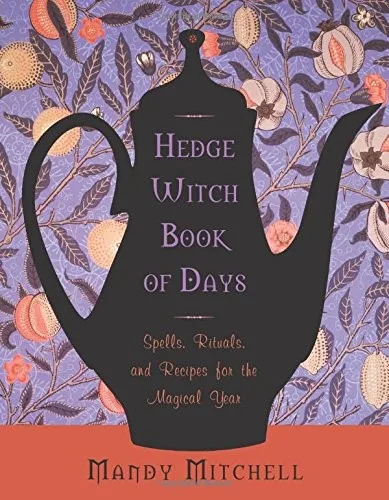
Etruscan magic & occult remedies

 81
81

Etruscan magic & occult remedies
Charles Godfrey Leland's "Etruscan Magic & Occult Remedies" offers a fascinating, if somewhat unsystematic, compilation of Etruscan magical practices. Leland's strength lies in his dedication to gathering obscure lore, particularly from what he perceived as surviving folk traditions in Tuscany. He presents incantations and remedies with an earnestness that suggests a genuine belief in their efficacy. However, the work suffers from Leland's idiosyncratic approach; his connections between Etruscan practices and later European magic, while intriguing, are often speculative and lack rigorous academic substantiation. A particularly striking section details the use of specific herbs and gestures for warding off illness, illustrating the practical, earthbound nature of much of this ancient magic. While not a definitive academic study, it provides rich material for those exploring the fringes of ancient belief systems.
📝 Description
81
Charles Godfrey Leland's 1963 book compiles Etruscan magical lore and healing practices.
Charles Godfrey Leland gathered Etruscan magical beliefs and healing practices for his book, Etruscan Magic & Occult Remedies. The work details lore, incantations, and rituals, showing how the Etruscans, who lived in Italy before Roman rule, viewed the world through magic. Leland focused on how these practices were used in everyday life, especially for folk medicine. He also sought connections between these ancient Etruscan traditions and later European occult practices.
This book is for anyone interested in Western esotericism, comparative mythology, or old European folk customs. It appeals to those curious about the origins of magic, herbal remedies, and the blend of religion and daily life in pre-Roman Italy. Students of folklore and ancient history will find it a useful, though sometimes peculiar, collection of source material.
Published in 1963, this book arrived during a time when interest in occult studies and ancient European cultures was growing. Leland's research reflects his deep study of oral traditions and written sources from the late 19th and early 20th centuries. The Etruscans, a civilization known for its mysterious language and early advancements, have long drawn the attention of both academic researchers and those interested in the occult. Their spiritual and magical systems, which were partly influenced by their neighbors, form an important, though not fully understood, part of ancient Mediterranean belief.
💡 Why Read This Book?
• Gain insight into pre-Roman Italian folk magic, learning about specific Etruscan incantations and remedies for ailments, a practice detailed through Leland's research. • Understand the proposed links between ancient Etruscan traditions and later European occult practices, as explored in the book's comparative analysis. • Discover the Etruscan perspective on spirits and natural elements in healing, examining how they utilized these forces in their remedies.
⭐ Reader Reviews
Honest opinions from readers who have explored this book.
❓ Frequently Asked Questions
What is the primary focus of "Etruscan Magic & Occult Remedies"?
The book focuses on the magical beliefs, healing practices, and folk remedies of the ancient Etruscans, aiming to reconstruct their occult traditions and their potential influence on later European magic.
Who was Charles Godfrey Leland and when did he research this topic?
Charles Godfrey Leland was an American folklorist and writer active in the late 19th and early 20th centuries. His research for this book involved extensive fieldwork and compilation of lore, which was first published in 1963.
Are the remedies in the book safe to try today?
The book presents historical remedies and incantations as documented by Leland. They are intended for academic and historical study, not as modern medical advice. Attempting these practices without understanding their historical context or potential risks is not advised.
What makes Etruscan magic distinct from Roman or Greek magic?
Leland suggests Etruscan magic retained unique elements rooted in their distinct language and pre-Indo-European cultural substratum, emphasizing a more animistic and chthonic connection to nature than often seen in Greek or Roman formalized pantheons.
Does the book contain actual Etruscan texts?
While Leland references Etruscan inscriptions and language where possible, the book primarily compiles lore and magical formulas believed to be of Etruscan origin, often transmitted through later folk traditions rather than direct textual preservation.
How does "Etruscan Magic & Occult Remedies" relate to other esoteric traditions?
Leland posits connections to broader European folk magic, witchcraft traditions, and even elements of Hermeticism, suggesting the Etruscans contributed a foundational layer to Western occultism.
🔮 Key Themes & Symbolism
Folk Magic & Healing
The work meticulously documents a spectrum of folk magical practices attributed to the Etruscans, focusing heavily on their application as remedies for physical and spiritual ailments. Leland presents incantations, gestures, and the use of specific natural elements—herbs, stones, water—as integral components of these healing rituals. This theme emphasizes the practical, everyday engagement with the supernatural for maintaining well-being in ancient Italy, offering a counterpoint to more formalized religious structures and revealing a deep connection between the mundane and the magical.
Spirituality & The Afterlife
A significant aspect explored is the Etruscan conception of spirits, both ancestral and elemental, and their perceived influence on the living world. Leland touches upon divination practices and rituals aimed at appeasing or warding off these entities. The text implicitly suggests an Etruscan worldview where the veil between the physical and spiritual realms was permeable, and that understanding and interacting with these unseen forces was crucial for societal harmony and individual protection. This perspective offers insight into pre-Roman animistic beliefs.
Legacy and Transmission
Leland's central argument involves tracing the potential survival and transmission of Etruscan magical knowledge into later European occult traditions. He suggests that elements of Etruscan sorcery, healing arts, and symbolic language may have been absorbed and transformed by subsequent cultures, including medieval European witchcraft and Renaissance occultism. This theme highlights the book's role in connecting ancient Mediterranean esotericism with the development of Western magical systems, positing the Etruscans as a foundational, albeit often overlooked, influence.
💬 Memorable Quotes
Direct passages from the work, attributed to the author.
“The magic of the Etruscans was deeply interwoven with their daily life and natural surroundings.”
— This highlights the practical, earth-bound nature of Etruscan magic as presented by Leland, suggesting it was not an abstract system but a lived reality tied to remedies, protection, and communication with the immediate environment.
“Charms and incantations were potent tools for warding off illness and malevolent influences.”
— This points to the belief in the power of spoken word and ritualistic formula within Etruscan culture, indicating a worldview where verbal magic played an important role in maintaining health and security against unseen threats.
“Leland sought to identify surviving fragments of Etruscan occult lore in Italian folk traditions.”
— This interpretation underscores Leland's methodology: his work is less about direct ancient texts and more about his compilation and interpretation of what he believed were continuations of Etruscan practices in later folklore.
“The Etruscan pharmacopoeia included specific herbs, stones, and symbolic gestures.”
— This emphasizes the tangible elements involved in Etruscan remedies, suggesting a sophisticated understanding of natural materials and symbolic actions used for therapeutic and magical purposes.
“The book suggests a continuity from Etruria to later European magical practices.”
— This interpretation captures the book's ambitious thesis regarding the historical influence of Etruscan occultism, positioning it as a precursor or contributor to the broader development of Western esoteric traditions.
🌙 Esoteric Significance
Tradition
Leland's work taps into the Western Esoteric Tradition, particularly its interest in pre-Christian European folk magic and shamanic roots. It attempts to connect a specific ancient civilization, the Etruscans, to a lineage of occult knowledge that predates and potentially informs later Hermeticism and Renaissance magic. It departs from purely classical interpretations by focusing on what Leland perceived as a distinct, indigenous magical system that might have influenced later European occult practices.
Symbolism
The text implicitly references Etruscan symbolism related to nature, such as the significance of specific herbs used in remedies (e.g., for warding off fever or evil eye) and the symbolic power attributed to water or certain stones in purification and protection rituals. Leland also discusses gestures and incantations as symbolic acts intended to manipulate spiritual forces, reflecting a worldview where cosmic order was maintained through ritualistic engagement.
Modern Relevance
Contemporary practitioners and scholars of folk magic, ancestral veneration, and Western esotericism may find value in Leland's compilation as a source of historical inspiration. His attempt to reconstruct and link ancient practices to modern ones can inform neopagan traditions or those interested in the historical evolution of magical techniques and belief systems in the Mediterranean basin and Europe.
👥 Who Should Read This Book
• Students of comparative mythology and ancient European religions seeking to understand pre-Roman Italian spiritual practices beyond standard Greco-Roman narratives. • Folklorists and researchers of Western esotericism interested in the documented origins and potential continuities of magical spells, charms, and healing remedies. • Occult practitioners looking for historical context and inspiration from older, less commonly studied magical traditions of the Mediterranean.
📜 Historical Context
Charles Godfrey Leland's research into Etruscan magic, culminating in this work first published in 1963, sits within a broader late 19th and early 20th-century fascination with ancient Mediterranean cultures and esoteric traditions. While Leland was active earlier, the book’s compilation reflects his deep engagement with folklore and occultism. The Etruscans, a civilization that flourished in Italy from the 8th to 3rd centuries BCE before Roman assimilation, left behind an enigmatic language and rich material culture, making them fertile ground for speculative historical and occult inquiry. Leland's work emerged in an era where figures like Helena Blavatsky and the Theosophical Society were popularizing ancient wisdom. His approach, however, diverged from academic archaeology, focusing instead on perceived continuities in folk magic. Reception was mixed; while appreciated by occult circles for its lore, it was often viewed by mainstream scholars as lacking rigorous philological and archaeological evidence, particularly when compared to the more established classical scholarship on Greece and Rome.
📔 Journal Prompts
Etruscan remedies for illness, as documented by Leland, prompt reflection on the placebo effect and ancient healing paradigms.
The Etruscan concept of spirits influencing daily life invites contemplation on personal energetic boundaries.
Reflect on the practice of word-magic and incantations in ancient traditions and their potential psychological impact.
Consider the role of natural elements (herbs, stones) in Etruscan healing and compare with modern herbalism.
Analyze Leland's methodology in connecting Etruscan lore to later European magic; what are the strengths and weaknesses?
🗂️ Glossary
Aruspicy
An ancient Etruscan and Roman practice of divination by examining the entrails of sacrificed animals, believed to reveal the will of the gods.
Incantation
A spoken charm or spell, often recited in a rhythmic or musical manner, intended to produce a magical effect or invoke supernatural powers.
Folk Magic
Magical beliefs and practices originating from traditional, often rural, communities, typically passed down orally and integrated into daily life.
Chthonic
Relating to the underworld or the deities associated with it; often implying an earth-centered or subterranean spiritual focus.
Pharmacopoeia
A body of traditional or officially recognized remedies and their preparation, in this context referring to ancient Etruscan healing substances and methods.
Animism
The belief that natural objects, phenomena, and the universe itself possess souls or consciousness.
Lore
A body of traditions and knowledge on a subject or held by a particular group, typically passed from person to person by word of mouth.
🔮 Readers Also Liked
Browse all →







More by Charles Godfrey Leland
All books →





More Free Magic & Ritual Books
View all →