Age of swords
 76
76

Age of swords
Sullivan's "Age of Swords" presents a compelling narrative framework, particularly in its exploration of how past decisions cast long shadows over present generations. The character of Raithe, burdened by a lineage he neither chose nor fully understands, serves as a strong focal point for the novel's thematic concerns regarding duty and identity. While the pacing generally serves the plot well, certain subplots occasionally feel less developed, leaving the reader wanting more depth in their resolution. A particularly effective sequence occurs during the council meeting in Oakhaven, where the conflicting interests of various factions are laid bare, illustrating the intricate political web Sullivan has constructed. The book’s strength lies in its grounded approach to fantasy, focusing on human (or near-human) struggles within a grander conflict. Overall, "Age of Swords" delivers a solid fantasy experience with thematic weight, though it occasionally falters in balancing its expansive world with the intimacy of individual character arcs.
📝 Description
76
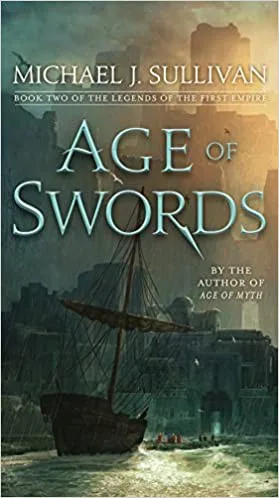
Michael J. Sullivan published "Age of Swords" in 2017, a fantasy novel that examines societal upheaval and the nature of power.
Published in 2017, Michael J. Sullivan's "Age of Swords" is a fantasy novel that grapples with societal upheaval, the nature of power, and the weight of leadership. The story unfolds in a world where ancient prophecies intersect with current conflicts, forcing characters to make difficult decisions. A central group of individuals finds themselves in circumstances far beyond their initial understanding, and the narrative traces their development and struggles within a carefully constructed political system.
This work appeals to readers who appreciate character-focused fantasy narratives with a strong plot and detailed world-building. Those interested in stories that explore the repercussions of war, the ethics of command, and the tension between tradition and necessity will find much to engage with. It suits readers looking for a well-paced adventure that does not shy away from moral complexity. The novel's intricate lore and developing mythology will also attract those who enjoy such elements.
While "Age of Swords" is set within the contemporary epic fantasy genre, it reflects a trend away from simple good versus evil narratives. Released in 2017, it engages with complex societal structures and ethical dilemmas, aligning with an increasing interest in nuanced world-building. Sullivan's work shares common ground with authors who focus on intricate magic systems and the consequences of leadership, placing it within a tradition of fantasy that explores more mature thematic territory.
💡 Why Read This Book?
• Gain insight into the burdens of leadership through the character Raithe, whose struggles with inherited duty in the face of impending conflict offer a unique perspective on command. • Understand the concept of societal inertia versus progress as ancient traditions clash with urgent needs, as depicted in the political maneuvering within the novel's world. • Experience the dynamic interplay of destiny and personal choice, particularly how characters like Raithe grapple with predetermined paths versus their own agency in shaping events.
⭐ Reader Reviews
Honest opinions from readers who have explored this book.
❓ Frequently Asked Questions
What is the primary conflict in Michael J. Sullivan's "Age of Swords"?
The primary conflict revolves around the escalating tensions and potential war between various factions, complicated by ancient prophecies and the personal struggles of characters like Raithe who must navigate these dangers.
When was "Age of Swords" by Michael J. Sullivan originally published?
Michael J. Sullivan's "Age of Swords" was first published in 2017.
Does "Age of Swords" feature magic systems?
While the book is grounded in character and plot, elements of the supernatural and potentially magical forces are woven into the narrative, influencing events and character motivations.
What kind of world does "Age of Swords" inhabit?
The novel is set in a fantasy world characterized by political intrigue, historical legacies, and the looming threat of large-scale conflict, demanding difficult choices from its inhabitants.
Are there specific historical inspirations for "Age of Swords"?
The book draws on general themes found in historical epics—leadership, war, societal change—rather than specific historical events, allowing for a unique fantasy setting.
Who is the author of "Age of Swords"?
The author of "Age of Swords" is Michael J. Sullivan, who first published the work in 2017.
🔮 Key Themes & Symbolism
Inherited Responsibility
The novel heavily explores the concept of responsibility passed down through generations. Characters like Raithe are often defined and constrained by the actions and reputations of their ancestors, forcing them to confront legacies they did not create. This theme questions the extent to which individuals are free agents or merely inheritors of past destinies. The narrative examines how societal structures and personal identities are shaped by these inherited burdens, presenting a complex picture of duty versus personal will.
Fragility of Peace
Sullivan depicts a world where peace is a precarious state, constantly threatened by internal strife and external pressures. The narrative illustrates how easily alliances can crumble and how quickly simmering tensions can erupt into open conflict. This theme highlights the constant vigilance required to maintain order and the devastating consequences when that vigilance fails. The characters must constantly make choices that balance the desire for stability with the realities of an unstable world.
Destiny vs. Agency
A central tension in "Age of Swords" lies in the conflict between predetermined fate and individual free will. Characters often find themselves grappling with prophecies or expectations that seem to dictate their path. However, the story also emphasizes the power of choice and the ability of individuals to alter their course, even in the face of overwhelming odds. This exploration explores philosophical questions about determinism and the human capacity to forge one's own future.
Societal Evolution
The book touches upon how societies adapt, or fail to adapt, to changing circumstances. Long-held traditions and beliefs are challenged by new threats and evolving needs. Characters must decide whether to cling to the past or embrace necessary change, a process that often leads to conflict. This theme examines the dynamic nature of civilization and the difficult transitions societies undergo when confronted with the imperative to evolve or face collapse.
💬 Memorable Quotes
Direct passages from the work, attributed to the author.
“The weight of a crown is not in its gold, but in the lives it commands.”
— This statement underscores the heavy burden of leadership. It suggests that true power lies not in material wealth or status, but in the responsibility for the well-being and decisions affecting countless individuals.
“Peace is merely the interval between wars.”
— This cynical observation reflects the pervasive instability within the novel's world. It implies that true, lasting peace is elusive, and periods of calm are simply temporary respites before inevitable conflict resumes.
“A legacy is not what you inherit, but what you build upon it.”
— This interpretation of legacy emphasizes agency. It argues that while one may receive a past reputation or set of circumstances, true legacy is forged through subsequent actions and accomplishments.
💡 Key Ideas
Editorial paraphrase of the work's core concepts — not direct quotes.
Some paths are chosen for us before we are even born.
This quote directly addresses the theme of destiny. It posits that certain aspects of our lives, our roles, or our challenges may be predetermined, irrespective of our personal desires or efforts.
The greatest battles are fought within the mind.
This quote highlights the internal struggles characters face. It suggests that psychological and moral conflicts—doubt, fear, ethical dilemmas—are often more challenging and significant than external confrontations.
🌙 Esoteric Significance
Tradition
While "Age of Swords" is primarily a fantasy novel, its exploration of inherited burdens, destiny, and the cyclical nature of conflict touches upon themes resonant within various esoteric traditions. It engages with archetypal narratives found in Gnostic thought regarding predetermined fates and the struggle for self-awareness against external forces. The cyclical view of history and the weight of past actions also echo certain Hermetic principles concerning cause and effect across time, though not explicitly framed within a formal esoteric system.
Symbolism
The concept of the 'sword' itself functions as a potent symbol, representing not just warfare but also inherited power, responsibility, and the burden of judgment. Ancient prophecies can be seen as symbols of the collective unconscious or the inescapable patterns of history that characters must confront. The political machinations between factions symbolize the ongoing struggle between order and chaos, tradition and change, mirroring macrocosmic tensions played out on a societal scale.
Modern Relevance
Contemporary fantasy authors and readers continue to explore themes of inherited trauma, societal cycles, and the tension between fate and free will, making "Age of Swords" relevant. Its grounded approach to character struggles within epic conflicts speaks to modern audiences seeking relatable human drama amidst grand narratives. Thinkers in psychology and philosophy might find parallels in its depiction of how past events shape present decisions and identities, a topic of enduring interest.
👥 Who Should Read This Book
• Readers interested in character-driven epic fantasy who appreciate narratives exploring the consequences of leadership and the weight of inherited legacies. • Fans of authors like Brandon Sanderson or George R.R. Martin seeking complex world-building and morally nuanced characters within a developing saga. • Individuals drawn to stories that examine the interplay between destiny, personal choice, and the cyclical nature of conflict and peace.
📜 Historical Context
Michael J. Sullivan's "Age of Swords," published in 2017, arrived during a vibrant period for epic fantasy. The genre in the mid-2010s saw a continued exploration of complex world-building and morally gray characters, moving away from simpler heroic archetypes. While Sullivan's work doesn't align with a specific historical literary movement, it fits within the broader trend of intricate, character-focused fantasy narratives that gained prominence following the success of authors like George R.R. Martin and Brandon Sanderson. The year 2017 itself was notable for a surge in fantasy releases, with "Age of Swords" contributing to the genre's expansive landscape. The reception was generally positive among fantasy readers, appreciating Sullivan's accessible prose and engaging plot, placing it alongside other popular contemporary fantasy authors.
📔 Journal Prompts
Raithe's inherited duty and its impact on his personal desires.
The cyclical nature of conflict as depicted in the world of "Age of Swords".
Moments where characters actively choose their path despite predetermined expectations.
The symbolic weight of the 'swords' and their connection to power and responsibility.
How societal traditions hinder or aid characters facing urgent crises.
🗂️ Glossary
Raithe
A central character in "Age of Swords," often depicted as bearing significant inherited responsibilities and facing difficult choices related to his lineage and the ongoing conflicts.
Legacy
In the context of the book, legacy refers to the inherited reputation, burdens, or responsibilities passed down from ancestors, significantly influencing the present actions and identities of characters.
Prophecy
Ancient predictions or foretellings that play a role in shaping characters' understanding of their world and their place within it, often creating tension between fate and free will.
Faction
Distinct groups or parties within the novel's world, often with competing interests and goals, contributing to the political landscape and driving conflict.
Destiny
The concept that events are predetermined and inevitable, a theme explored through characters' struggles against or acceptance of what appears to be their fate.
Agency
The capacity of individuals to act independently and make their own free choices, often contrasted with the influence of destiny or external pressures within the narrative.
Oakhaven
A significant location within the novel, likely a place of political importance or council meetings where the differing interests of various factions are debated.
🔮 Readers Also Liked
Browse all →








More by Michael J. Sullivan
All books →
More Free Magic & Ritual Books
View all →