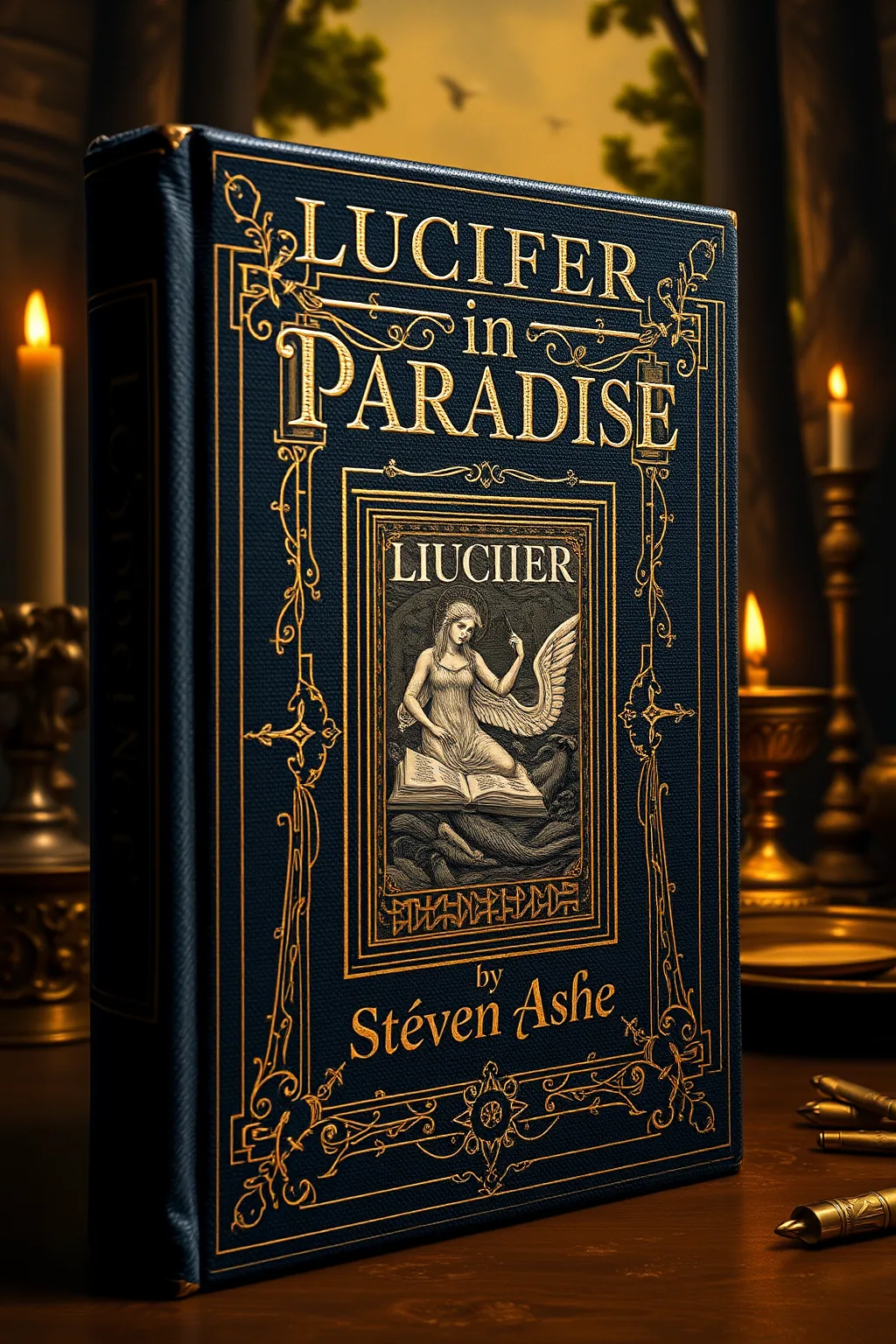
Lucifer in Paradise
 61
61

Lucifer in Paradise


Ophelia Vance, Mystical Literature Reviewer — Steven Ashe’s "Lucifer in Paradise" offers a breathtakingly original exploration of Kabbalistic thought, reimagining ancient narratives through a potent blend of philosophical depth and imaginative storytelling. Ashe masterfully deciphers the esoteric currents within Jewish mysticism, presenting complex concepts with startling clarity and evocative imagery. The narrative’s strength lies in its ability to transform abstract spiritual principles into tangible, character-driven struggles. This book is a must-read for serious students of Kabbalah, Gnosticism, and comparative mysticism, as well as for fiction readers seeking a truly profound and intellectually stimulating journey. It challenges conventional interpretations and invites a deeper contemplation of Lucifer's multifaceted role within the divine order.
📝 Description
61
Steven Ashe's "Lucifer in Paradise" unfurls a tapestry woven with the threads of Kabbalistic cosmology and profound metaphysical inquiry. This is not merely a story, but an odyssey into the concealed chambers of the soul, where the archetypal figures of myth confront their deepest existential truths. Delve into a world where the divine emanates from the primordial void, and the Tree of Life branches into realms of both illuminating wisdom and shadowed temptation. Ashe masterfully navigates the complex symbolism of Jewish mysticism, inviting readers to explore the intricate pathways of creation, consciousness, and the eternal dance between light and shadow. The narrative atmosphere is rich with ancient resonance, evoking the sacred groves and celestial spheres that have long captivated the minds of mystics and philosophers. This work is crafted for the earnest seeker, the scholar of arcane lore, and anyone drawn to the profound philosophical questions that lie at the heart of existence. It offers a unique lens through which to contemplate the nature of free will, the origins of suffering, and the ultimate potential for divine union, making it an indispensable addition to the esoteric library.
✍️ Author
Steven Ashe
Mandrake of Oxford is a specialist independent publisher based in Oxford, England, primarily known for the publication of "hands-on" books for occult practitioners. The company was started in 1986 under the name Golden Dawn Publications, but changed its nam…
💡 Why Read This Book?
Embark on a profound journey into the heart of Kabbalistic wisdom. "Lucifer in Paradise" offers a unique, fictionalized exploration of esoteric Jewish teachings, unveiling hidden meanings within ancient archetypes. Ideal for seekers of spiritual truth, scholars of mysticism, and practitioners of contemplative arts who desire to deepen their understanding of creation, consciousness, and the intricate interplay of light and shadow.
⭐ Reader Reviews
Honest opinions from readers who have explored this book.
❓ Frequently Asked Questions
What is the primary esoteric tradition explored in "Lucifer in Paradise"?
The primary esoteric tradition explored is Kabbalah, specifically its mystical and cosmological dimensions. The book delves into concepts like the Sefirot, the Tree of Life, and the nature of divine emanation as understood within Jewish mysticism.
Is this book suitable for beginners in Kabbalah?
While rich in depth, the book is accessible to those with a nascent interest in esoteric philosophy. Its narrative structure can serve as an engaging gateway, though readers may find deeper appreciation with some foundational knowledge of Kabbalistic principles.
What is the role of Lucifer in this narrative?
Lucifer is portrayed not as a simple antagonist, but as a complex archetypal figure grappling with themes of free will, knowledge, and the consequences of divine rebellion within a Kabbalistic framework. His journey reflects a profound spiritual crisis.
Does the book contain actual Kabbalistic texts or interpretations?
The book is a fictional work inspired by Kabbalistic concepts and symbolism. It does not present literal interpretations of specific texts but rather uses the framework of Kabbalah to build its narrative and philosophical explorations.
What kind of philosophical themes are addressed?
The book addresses profound philosophical themes including the nature of good and evil, the origins of suffering, the concept of divine duality, the struggle for self-awareness, and the potential for spiritual redemption and transformation.
🔮 Key Themes & Symbolism
The Kabbalistic Framework of Creation
The narrative is deeply rooted in the Kabbalistic understanding of creation ex nihilo, exploring the divine emanations that form the cosmos. It illustrates the intricate architecture of the Tree of Life, detailing the descent of divinity into manifestation and the interconnectedness of all existence through the ten Sefirot. The book invites readers to contemplate the energetic pathways and symbolic language that govern the universe, revealing the hidden order behind apparent chaos and the profound spiritual blueprint that underlies reality.
The Archetype of Lucifer and the Nature of Shadow
Steven Ashe re-examines the archetype of Lucifer, moving beyond simplistic portrayals of evil. Within the Kabbalistic context, this figure becomes a catalyst for understanding the necessary interplay of light and shadow, knowledge and ignorance, and the profound role of free will in spiritual evolution. The narrative explores the temptations and challenges that confront the soul, framing them not as external forces of malevolence, but as internal trials that forge consciousness and illuminate the path toward self-realization.
The Quest for Divine Knowledge and Self-Realization
At its core, 'Lucifer in Paradise' is a profound exploration of the human yearning for divine knowledge and ultimate self-realization. The story traces the spiritual journey of its characters as they grapple with existential questions, seeking to understand their place within the cosmic order. It highlights the arduous but ultimately rewarding path of spiritual ascent, emphasizing the importance of introspection, the integration of opposing forces, and the transformative power of confronting one's own inner darkness to find the light.
💬 Memorable Quotes
“From the void, the first whisper of being.”
— This quote evokes the Kabbalistic concept of Keter (the Crown) and the primordial state of Ein Sof (The Infinite), suggesting the genesis of existence from absolute nothingness and the subtle beginnings of divine consciousness.
“The Tree of Life bears fruit of both dust and stars.”
— Symbolizing the dualistic nature of existence, this quote speaks to the interconnectedness of the material and spiritual realms, and the potential for both earthly struggle and celestial transcendence within the Kabbalistic cosmology.
“Shadow is but light in its nascent form.”
— This profound statement challenges conventional perceptions of darkness, suggesting that what appears as shadow is merely an unmanifested or distorted aspect of the divine light, a necessary component in the spectrum of existence.
“To know the self is to glimpse the divine.”
— This encapsulates the Gnostic and Kabbalistic principle of 'Know Thyself,' emphasizing that introspection and self-awareness are direct pathways to understanding the divine nature and one's own inherent spiritual essence.
“The serpent's coil is the spiral of ascent.”
— This quote reinterprets the serpent, often associated with temptation, as a symbol of evolutionary ascent and spiritual awakening, likening its coiled form to the spiraling journey of consciousness towards higher states of being.
🌙 Esoteric Significance
Tradition
This work is deeply embedded in the esoteric tradition of Kabbalah, specifically its Lurianic and Zoharic interpretations. It explores concepts such as the shattering of the vessels (Shevirat HaKelim), the rectification of the world (Tikkun Olam), and the intricate interplay of the ten Sefirot as divine emanations. The narrative delves into the mystical pathways of the soul's journey, the nature of divine concealment, and the hidden meanings within biblical narratives, offering a unique fictional lens into this profound Jewish mystical system.
Symbolism
The book masterfully employs Kabbalistic symbolism, including the iconic Tree of Life (Etz Chaim) as a map of consciousness and divine manifestation. The Sefirot – Keter, Chokmah, Binah, Chesed, Gevurah, Tiferet, Netzach, Hod, Yesod, and Malkuth – are not merely conceptual but are woven into the fabric of the narrative. The archetypal figures, such as Lucifer, are reinterpreted through the lens of divine duality and the necessary role of challenge in spiritual growth, offering a rich tapestry of symbolic meaning for the discerning reader.
Modern Relevance
In a world grappling with existential questions of purpose, suffering, and the nature of reality, "Lucifer in Paradise" offers a timeless perspective. Its exploration of free will, divine order, and the integration of shadow aspects resonates deeply with contemporary spiritual seekers. The book provides a framework for understanding personal challenges as opportunities for growth and for perceiving a deeper, interconnected reality, making Kabbalistic wisdom accessible and relevant to the modern human experience.
👥 Who Should Read This Book
This profound work is ideally suited for several discerning audiences. Scholars of comparative religion and mysticism will find a rich tapestry of Kabbalistic concepts woven into a compelling narrative. Spiritual seekers and practitioners of esoteric traditions will discover new perspectives on ancient archetypes and the journey of consciousness. Readers interested in philosophical fiction that delves into the nature of good and evil, free will, and the divine order will be deeply rewarded. While accessible to those new to Kabbalah, its depth will particularly captivate those already familiar with its symbolic language and mystical teachings.
📜 Historical Context
Steven Ashe's "Lucifer in Paradise" emerges from a rich tradition of esoteric thought, drawing heavily on the mystagogical currents of Kabbalah, which flourished in medieval Spain and later in Safed. The intellectual climate of the Renaissance and the subsequent Enlightenment, with its renewed interest in Hermeticism, Gnosticism, and Neoplatonism, provided fertile ground for exploring alternative cosmologies and the nature of consciousness. The enduring fascination with figures like Lucifer, particularly in relation to themes of rebellion, knowledge, and divine order, can be traced through centuries of theological and philosophical debate, finding new expression in contemporary literature that seeks to reconcile ancient wisdom with modern existential concerns. This work stands as a testament to the persistent human quest for hidden knowledge and the profound mysteries of existence.
📔 Journal Prompts
Reflect on the concept of 'divine concealment' presented in the narrative. How does it relate to your own experiences of perceived absence or mystery?
Consider the reinterpretation of Lucifer's role. In what ways can perceived 'negative' forces serve as catalysts for spiritual growth in your own life?
Map your personal 'Tree of Life' based on the qualities and experiences you associate with each Sefirah. How does this personal mapping reveal your spiritual journey?
Explore the idea of 'Tikkun Olam' (rectification of the world) as presented in the book. What small actions can you take to contribute to the rectification of your immediate environment?
How does the narrative's portrayal of knowledge and temptation challenge your own understanding of wisdom and its acquisition?
🗂️ Glossary
Ein Sof
The Kabbalistic concept of the Infinite, the unknowable, unmanifest Godhead that exists beyond all conception or description, the primordial void from which all existence emanates.
Sefirot
The ten divine emanations or attributes through which God creates and sustains the universe, forming the structure of the Kabbalistic Tree of Life and representing stages of divine manifestation and consciousness.
Tzimtzum
The Kabbalistic concept of divine contraction or self-limitation, a necessary 'space' created by God to allow for the existence of the created universe and free will within it.
Shevirat HaKelim
The 'Shattering of the Vessels,' a pivotal Kabbalistic myth describing the catastrophic breaking of the divine vessels during the emanation of the lower Sefirot, scattering divine sparks into the material world and creating the root of evil and suffering.
Tikkun Olam
A Hebrew phrase meaning 'repair of the world.' In Kabbalah, it refers to the cosmic process of spiritual rectification, the gathering of divine sparks, and the restoration of harmony through human action and spiritual striving.













![EBOOK COLLECTION ( PART 8) [ CSI][h 33t]](/img/thumb/ebook-collection-part-8-csi-h-33t.webp)