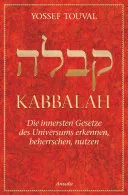
Kabbalah
 83
83

Kabbalah
Yossef Cohen Touval’s “Kabbalah” attempts to distill the dense mysticism of the Kabbalistic tradition into actionable principles for modern life. The book’s strength lies in its directness; it avoids the overly academic or inaccessible language that often shrouds esoteric subjects. Touval’s central thesis—that individuals can harness cosmic laws to become architects of their own reality—is compellingly presented, drawing parallels to contemporary self-empowerment narratives. However, the work's ambition to simplify such a vast and intricate system inevitably leads to some oversimplification. The exploration of concepts like the Sefirot, while present, feels somewhat abridged, perhaps to maintain accessibility. A passage discussing the application of divine energy to overcome daily obstacles, while conceptually sound within the Kabbalistic framework, could have benefited from more concrete, illustrative examples beyond general principles. Ultimately, “Kabbalah” serves as an accessible, albeit brief, primer for those curious about applying esoteric wisdom to personal agency.
📝 Description
83
### What It Is
"Kabbalah" by Yossef Cohen Touval presents a framework for understanding and applying the fundamental principles of Kabbalistic thought to daily life. It posits that human experience is governed by cosmic laws and energies, and that a conscious awareness and application of these principles can shift individuals from passive recipients of fate to active creators of their reality. The work draws directly from the mystical tradition of Judaism, often referred to as the Kabbalah, offering interpretations relevant to contemporary seekers. It aims to demystify complex esoteric concepts, making them accessible for personal growth and empowerment.
### Who It's For
This book is intended for individuals who feel disconnected from their own power or who seek a deeper understanding of the underlying forces shaping their lives. It appeals to those drawn to spiritual traditions that offer practical guidance beyond mere dogma. Readers interested in the philosophical underpinnings of popular spiritual figures, such as Madonna and other celebrities who have publicly embraced Kabbalistic teachings, will find this text offers insight into the core tenets that attract such adherents. It is for the seeker ready to explore the relationship between the material and the metaphysical.
### Historical Context
The Kabbalah, as a mystical interpretive tradition within Judaism, has a lineage stretching back centuries, with significant developments in medieval Spain and Safed. While its roots are ancient, its popularization in recent decades owes much to figures and movements that brought its esoteric wisdom into broader public discourse. Touval’s work, first published in 2011, arrives in an era where interest in spirituality, self-help, and ancient wisdom traditions has surged globally. It follows a period where Kabbalah, in various interpretations, gained traction in Western popular culture, often detached from its original religious context.
### Key Concepts
The central argument of Touval’s "Kabbalah" revolves around the concept of cosmic laws and energies influencing everyday existence. It introduces the idea that understanding and utilizing these forces empowers individuals to shape their reality, moving beyond a victim mentality. The work explores the Kabbalistic perspective that the universe operates on principles of divine order and interconnectedness, and that human consciousness plays a crucial role in manifesting desired outcomes. It seeks to bridge the gap between abstract spiritual teachings and tangible, personal transformation.
💡 Why Read This Book?
• Learn how to shift from a passive victim mindset to an active creator by understanding the cosmic laws and energies discussed in Touval's work, drawing on Kabbalistic principles first published in 2011. • Discover practical methods for applying esoteric wisdom to everyday challenges, moving beyond abstract theory to tangible personal empowerment as presented in the book's core teachings. • Gain insight into the popular appeal of Kabbalah, as exemplified by figures like Madonna, by exploring the foundational concepts that transcend mere religious observance and speak to universal desires for meaning and control.
⭐ Reader Reviews
Honest opinions from readers who have explored this book.
❓ Frequently Asked Questions
What is the core message of Yossef Cohen Touval's "Kabbalah"?
The core message is that by understanding and applying the cosmic laws and energies described in Kabbalah, individuals can move from feeling like victims of their reality to becoming its active creators. The book aims to make these esoteric principles accessible for personal empowerment.
Who popularized Kabbalah, according to the book's context?
The book references the popularity of Kabbalah among celebrities such as Madonna and other prominent figures, suggesting their adherence is due to the profound teachings that extend beyond conventional religious systems.
When was Yossef Cohen Touval's "Kabbalah" first published?
Yossef Cohen Touval's "Kabbalah" was first published on May 23, 2011, positioning it within a contemporary resurgence of interest in esoteric and spiritual traditions.
What does the book suggest about human potential?
The book suggests that humans possess a greater potential to shape their reality than they often realize. It posits that awareness and application of Kabbalistic principles unlock this latent ability to influence circumstances.
Is this book a purely religious text?
No, while it draws from the Kabbalah, the mystical tradition of Judaism, the book presents it as a system of cosmic laws and energies applicable to everyday life, extending beyond strict religious dogma for personal growth.
What is the main criticism of those who don't apply Kabbalistic laws?
The book's viewpoint is that individuals often feel like victims because they are unaware of or fail to apply the governing cosmic laws and energies that Kabbalah seeks to elucidate.
🔮 Key Themes & Symbolism
Conscious Creation of Reality
The work emphasizes that individuals are not merely subject to fate but possess the inherent ability to shape their experiences. By understanding and consciously applying the cosmic laws and energies discussed, readers are encouraged to move beyond a victim mentality. This theme posits a direct link between internal awareness, guided by Kabbalistic principles, and the manifestation of external circumstances. It’s about recognizing one's role as a co-creator in the unfolding of life, a concept central to the esoteric tradition.
Universal Cosmic Laws
Central to Touval's interpretation is the idea that the universe operates according to fundamental, discoverable laws and energetic flows, much like physical laws govern the material world. These are not arbitrary rules but intrinsic aspects of existence derived from the Kabbalistic worldview. The book seeks to demystify these principles, making them comprehensible and actionable for the average person, thereby bridging the gap between the esoteric and the everyday.
Empowerment Through Knowledge
The book presents knowledge of Kabbalistic principles as a direct path to personal empowerment. It argues that ignorance of these cosmic dynamics leaves individuals feeling powerless and reactive. Conversely, embracing this wisdom equips them with tools and perspectives to navigate life's challenges more effectively and to proactively influence outcomes. This theme underscores the transformative potential inherent in esoteric study when applied practically.
Bridging Esotericism and Daily Life
A significant aim of the text is to make the profound teachings of Kabbalah relevant and applicable to contemporary, mundane existence. It challenges the notion that spiritual or mystical knowledge is confined to abstract philosophy or religious ritual. Instead, Touval illustrates how these ancient insights can inform daily decisions, relationships, and personal goals, offering a practical guide for integrating esoteric wisdom into the fabric of everyday life.
💬 Memorable Quotes
“Many people still feel more like victims than creators of their reality.”
— This opening statement sets the stage for the book's central thesis: that a lack of awareness regarding cosmic laws is the root cause of feelings of powerlessness, and Kabbalah offers the antidote.
“Kabbalah goes far beyond what a religious system can offer.”
— This highlights the expansive nature of Kabbalistic study, suggesting it provides a comprehensive framework for understanding existence that transcends the limitations of conventional religious structures.
“Understanding and applying cosmic laws allows one to become a creator of their reality.”
— This paraphrased concept encapsulates the core promise of the book: that knowledge derived from Kabbalah is not merely theoretical but offers practical agency in shaping one's life circumstances.
“Celebrities like Madonna are convinced adherents for good reason.”
— This points to the practical efficacy and profound appeal of Kabbalah, using well-known figures as examples to illustrate that its benefits are tangible and have attracted widespread attention beyond traditional academic or religious circles.
“The work explores the relationship between the material and the metaphysical.”
— This interpretation suggests the book bridges the gap between the observable, physical world and the underlying spiritual or energetic dimensions, offering a unified perspective on existence.
🌙 Esoteric Significance
Tradition
This work is situated within the broad sphere of Western Esotericism, specifically drawing upon the Kabbalah, the mystical tradition originating within Judaism. It departs from strictly Orthodox interpretations by focusing on the universal application of its principles for personal empowerment and reality creation, aligning with contemporary esoteric aims of integrating spiritual knowledge into daily life. It engages with Kabbalistic concepts without necessarily demanding adherence to traditional religious observance, a common characteristic of modern esoteric adaptations.
Symbolism
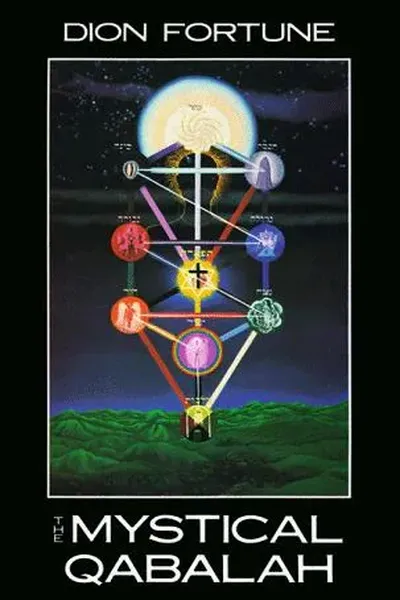
The work likely engages with core Kabbalistic symbolism, such as the Tree of Life (Etz Chaim), representing the structure of the cosmos and the divine emanations (Sefirot). It may also touch upon the Hebrew alphabet, understood not just as letters but as fundamental building blocks of reality. These symbols serve as conceptual maps for understanding divine principles and their manifestation in the human experience, offering a visual and conceptual language for esoteric exploration.
Modern Relevance
Touval's approach resonates with contemporary spiritual seekers and practitioners interested in mind-body-spirit integration and conscious manifestation. Thinkers and communities focused on positive psychology, law of attraction principles, and secularized spiritual practices often find echoes of their own work in Kabbalistic concepts of divine order and personal agency. The book contributes to a modern esoteric discourse that seeks practical, empowering wisdom from ancient traditions for navigating the complexities of 21st-century life.
👥 Who Should Read This Book
['• Seekers of spiritual growth interested in practical applications of esoteric wisdom: Individuals looking to move beyond theoretical spirituality and learn how ancient concepts can be applied to improve their daily lives and sense of agency.', '• Students of comparative mysticism: Those studying various spiritual traditions who wish to understand a modern, accessible interpretation of Kabbalah and its place within the broader landscape of esoteric thought.', "• Individuals feeling disempowered by circumstances: Readers who resonate with the feeling of being a 'victim of reality' and are searching for frameworks and tools to cultivate a greater sense of control and co-creation in their lives."]
📜 Historical Context
Yossef Cohen Touval's "Kabbalah," published in 2011, emerged during a period of heightened global interest in esoteric spirituality and self-help methodologies, often referred to as the New Age movement. This era saw a significant popularization of various ancient wisdom traditions, including Kabbalah, which gained mainstream visibility partly through celebrity endorsements. The work follows figures like Philip Berg and his Kabbalah Centre, which had been actively promoting a more accessible, non-traditional interpretation of Kabbalah since the late 20th century. While Touval’s approach draws from the mystical tradition of Judaism, its 2011 publication date places it within a context where Kabbalah was often discussed and practiced outside its original Orthodox Jewish framework. This broader reception contrasted with earlier, more insular periods of Kabbalistic study, which were often restricted to learned male scholars and emphasized rigorous adherence to Jewish law. The book’s accessibility reflects a contemporary trend towards democratizing esoteric knowledge, making it available to a wider audience seeking personal transformation.
📔 Journal Prompts
The concept of becoming a 'creator of reality' vs. a 'victim': How does this distinction shape your daily perspective?
Reflect on the 'cosmic laws and energies' mentioned. What potential unseen forces might be influencing your current situation?
Consider the Kabbalistic idea that understanding these principles offers empowerment. What specific area of your life could benefit most from this empowerment?
How does the notion of Kabbalah offering more than a 'religious system' challenge your preconceived ideas about spiritual or mystical traditions?
Analyze a recent challenge: Could viewing it through the lens of applying cosmic laws offer a different approach than your initial reaction?
🗂️ Glossary
Kabbalah
A system of Jewish mysticism concerned with the nature of God and the universe, seeking to understand divine emanations and the structure of creation. It often involves esoteric interpretations of the Torah.
Cosmic Laws
Underlying principles or forces believed to govern the operation of the universe, akin to natural laws but operating on spiritual and energetic levels, influencing reality and human experience.
Creator of Reality
An individual who actively shapes their life experiences and circumstances through conscious intention, understanding, and application of universal principles, rather than passively accepting events.
Victim Mentality
A psychological state characterized by a tendency to perceive oneself as helpless or powerless in the face of external events, attributing personal misfortunes to outside forces rather than internal agency.
Esoteric Tradition
A body of knowledge or teaching concerning secret or hidden matters, typically intended for initiates or those who have undergone specific training, often related to spiritual or mystical insights.
Mystical Tradition of Judaism
Refers specifically to Kabbalah, exploring the inner, symbolic, and often hidden dimensions of Jewish religious texts and practices, aiming for direct experience of the divine.
Spiritual System
A framework of beliefs, practices, and philosophies related to the non-material aspects of existence, often focused on purpose, meaning, and connection to something larger than oneself.