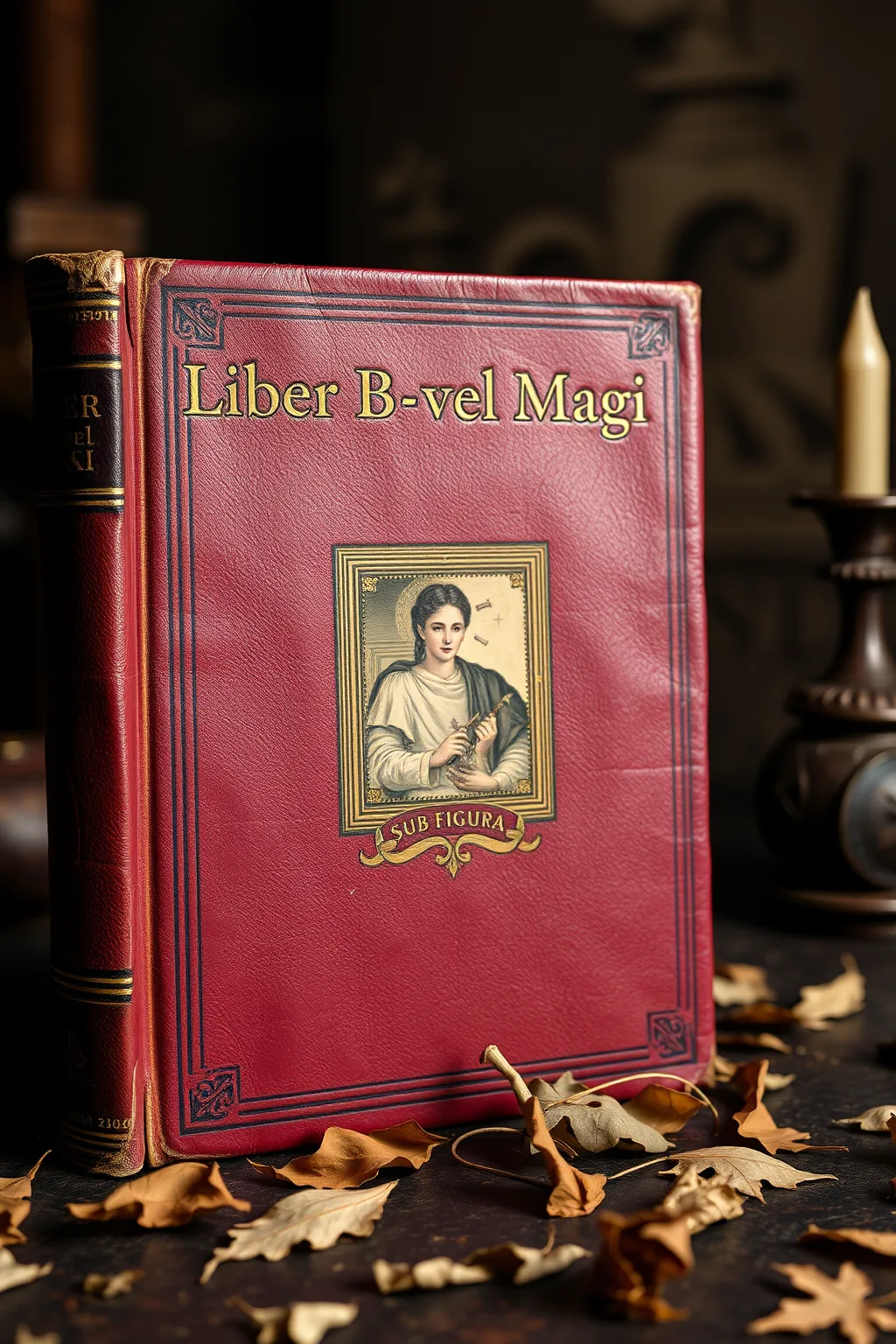
Liber B vel Magi sub Figura I
 82
82

Liber B vel Magi sub Figura I


Silas Hawthorne, Hermetic Studies Editor, states: "*Liber B vel Magi* is a cornerstone text for any serious student of ceremonial magic and occult philosophy. Its brevity belies its immense depth, offering a stark, almost Gnostic, perspective on the ultimate aims of the Magus. The author's assertion that the art is 'but glamour' and the central question of self-destruction challenge conventional notions of power and achievement. This work is not a mere instruction set, but a profound meditation on the nature of consciousness, illusion, and the paradox of attainment. Its strength lies in its uncompromising intellectual rigor and its ability to provoke deep existential inquiry. Highly recommended for advanced practitioners and scholars seeking to understand the radical underpinnings of magical theory."
📝 Description
82
Liber B vel Magi, sub Figura I, details a specific method for initiation into a higher magical grade.
This text, known as Liber B vel Magi, sub Figura I, presents a challenging view of magical practice. It describes the Great Work not as a means to gain power, but as a process of self-overcoming. The book focuses on the Magus confronting their own forces and tools. Its pronouncements lay out principles for a unique art of transformation. This is a text for those who are prepared to examine power, illusion, and the idea of dissolution. It requires deep thought and a readiness to face one's own darker aspects.
The book targets serious students of the occult and philosophers of hidden knowledge. It is for those who aim to move beyond ego limitations. Liber B promises an examination of paradox, where mastering oneself involves letting go of the self.
Liber B vel Magi belongs to the Western esoteric tradition, specifically within the framework of ceremonial magic and occult philosophy. Its structure and content align with texts that detail specific grades and initiatory processes, often found in magical orders. The reference to "sub Figura I" suggests it is part of a larger corpus or system, where different "Figures" might represent distinct teachings or stages. The emphasis on the "Magus" and the "Great Work" places it within a lineage of alchemical and magical thought focused on spiritual transformation and the unification of opposites.
💡 Why Read This Book?
Uncover the paradoxical nature of true magical power, where self-annihilation is the ultimate attainment. This text challenges conventional wisdom, offering a profound philosophical journey for seekers of hidden knowledge. Ideal for advanced students of the occult, philosophers of the esoteric, and practitioners grappling with the deepest questions of consciousness and ego dissolution. Explore the austere beauty of radical self-transcendence.
⭐ Reader Reviews
Honest opinions from readers who have explored this book.
❓ Frequently Asked Questions
What is the primary theme of *Liber B vel Magi*?
The central theme is the paradoxical nature of magical attainment, suggesting that the ultimate goal is not worldly power but the dissolution of the self, challenging traditional notions of mastery and ego.
Who is the author of *Liber B vel Magi*?
The author is presented enigmatically as 'the method which shall have been given unto Him in His Initiation to the Grade,' implying a highly advanced practitioner whose identity is revealed only through esoteric progression.
What does the text mean by 'the art and craft of the Magus but glamour'?
This phrase suggests that the outward manifestations and perceived powers of a Magus are illusory or superficial compared to the profound internal transformation and dissolution of ego that true attainment entails.
Is this book suitable for beginners in occult studies?
While its profound philosophical depth is invaluable, *Liber B vel Magi* is best suited for intermediate to advanced students of esotericism who have a foundational understanding of magical concepts and symbolism.
What is the significance of the number symbolism mentioned (One, twain, four)?
These numbers likely represent fundamental archetypal forces and instruments of the Magus: One (the unified consciousness), twain (duality, forces), and four (elements, weapons of will), all contributing to the illusionary nature of the art.
🔮 Key Themes & Symbolism
The Paradox of Attainment
This theme posits that the true pinnacle of magical endeavor is not the acquisition of external power or knowledge, but a radical internal process of self-negation. The text challenges the common perception of the Magus as a controller, instead presenting attainment as a journey of dissolution, where ego and self are willingly surrendered. This concept is crucial for understanding the advanced philosophical underpinnings of the Great Work, moving beyond superficial notions of occultism towards a deeper, existential transformation. It suggests that the illusion of power is the greatest obstacle to true mastery.
The Nature of Illusion (Glamour)
The work critically examines the concept of 'glamour' within the context of magical practice. It implies that the perceived abilities and outward 'craft' of the Magus can be mere illusion, a veil obscuring the more profound and terrifying work of internal dissolution. This theme encourages practitioners to look beyond the superficial manifestations of power and to question the reality of their own perceptions and the 'reality' they seek to manipulate. It highlights the importance of discerning true essence from ephemeral appearance in both oneself and the cosmos.
The Seven Spirits of Unrighteousness
These 'spirits' or 'vultures' represent fundamental forces or tendencies that, when not properly understood or mastered, lead to the downfall of the Magus. They are presented as inherent challenges within the process of self-annihilation and the Great Work. Understanding these 'vultures' is essential for reading through the treacherous path towards true enlightenment, as they symbolize the ego's desperate attempts to preserve itself and resist the transformative process. Their presence underscores the inherent dangers and the spiritual warfare involved in achieving ultimate liberation.
💬 Memorable Quotes
Direct passages from the work, attributed to the author.
“One is the Magus; twain His forces; four His weapons.”
— This foundational statement expresses the Magus's essence as unified (One), his interaction with the dualistic universe (twain), and the instruments of his will (four), hinting at the underlying structure of magical operation.
“These are the Seven Spirits of Unrighteousness; seven vultures of evil.”
— This identifies potent, destructive forces or tendencies that hinder true magical progress, framing them as obstacles to be overcome or understood on the path to self-annihilation.
“Thus is the art and craft of the Magus but glamour.”
— A radical assertion that external magical displays are illusory, suggesting that true attainment lies in an unseen, internal process of dissolution rather than ostentatious power.
“How shall He destroy Himself?”
— This central, provocative question frames the entire work, posing the ultimate challenge and objective of the Magus: the willing surrender of ego and self for transcendent liberation.
“The method which shall have been given unto Him in His Initiation to the Grade.”
— This enigmatic attribution highlights that the true teachings and methods of the Magus are not publicly revealed but are transmitted through sacred, graded initiatory processes.
🌙 Esoteric Significance
Tradition
This text is deeply rooted in the Western Esoteric Tradition, particularly within the framework of ceremonial magic and advanced Hermeticism. It draws upon concepts found in Gnosticism regarding illusion and the need for gnosis (knowledge) to escape the material world, and carries the alchemical pursuit of transformation, albeit directed towards the dissolution of the self rather than the transmutation of matter. Its radical approach to the Magus's role suggests a highly specialized, possibly solitary, path of initiation.
Symbolism
The text employs potent, minimalist symbolism. 'One' represents primordial unity or the unified consciousness of the Magus. 'Twain' signifies duality – the inherent forces of existence or the Magus's relationship with the cosmos. 'Four' likely refers to the elemental forces or the foundational tools of magical will. The 'Seven Spirits of Unrighteousness' are symbolic representations of internal obstacles or negative archetypes that must be confronted and overcome. The overarching symbol is the Magus himself, a figure of ultimate attainment through self-negation.
Modern Relevance
In an age often characterized by self-aggrandizement and the pursuit of external validation, *Liber B vel Magi* offers a profound counter-narrative. Its emphasis on self-destruction as the ultimate goal challenges contemporary notions of success and personal growth. For modern practitioners, it provides a critical lens through which to examine their own motivations and the true nature of their spiritual aspirations, encouraging a deeper, more authentic engagement with the esoteric path beyond superficial power or ego gratification.
👥 Who Should Read This Book
This text is primarily intended for serious, advanced practitioners of ceremonial magic and students of advanced esoteric philosophy. Scholars interested in the extreme edges of Western esotericism, particularly those exploring the concepts of ego dissolution and radical self-transformation, will find it invaluable. Seekers who are disillusioned with conventional spiritual paths and are ready to confront the most profound existential questions will resonate with its stark message. Practitioners who have moved beyond foundational magical theory and are seeking deeper, more philosophical insights into the nature of attainment will benefit immensely from its challenging perspective.
📜 Historical Context
While *Liber B vel Magi* is presented as a text revealed through initiation, its philosophical underpinnings resonate with and could have emerged from the late 19th and early 20th-century occult revival. This era witnessed a surge of interest in Hermeticism, Kabbalah, Gnosticism, and Eastern mysticism, fueling the development of complex magical systems and esoteric philosophies. Authors like Aleister Crowley, with his emphasis on the True Will and the destruction of the ego, explored similar themes of radical self-transformation. The period was characterized by secretive societies, the reinterpretation of ancient texts, and a quest for hidden knowledge that could unlock human potential and provide an alternative to materialistic paradigms.
📔 Journal Prompts
Reflect on your personal definition of 'magical attainment.' How does it align or diverge with the concept of self-destruction presented in Liber B?
Identify what you perceive as your own 'Seven Spirits of Unrighteousness.' How do these tendencies manifest in your life and practice?
Explore the idea of 'glamour' in your spiritual or magical pursuits. Where might you be mistaking illusion for reality or superficial achievement for true progress?
Consider the 'twain' forces mentioned. How do you perceive and navigate duality in your own consciousness and in the external world?
If the ultimate goal is self-destruction, what does that process truly entail for you, beyond mere physical demise?
🗂️ Glossary
Magus
A title of great honor and power, referring to a highly advanced practitioner of magic, often one who has achieved significant spiritual or existential transformation through the Great Work.
Initiation
A ritualistic process of entry into a grade or level of knowledge within an esoteric order or tradition, involving symbolic ceremonies and the transmission of sacred teachings.
Great Work
The ultimate spiritual endeavor in esoteric traditions, often referring to the attainment of spiritual enlightenment, self-realization, or union with the divine, frequently involving profound transformation.
Glamour
In an esoteric context, refers to illusion, enchantment, or a deceptive appearance that obscures the true nature of reality, often employed by magical forces or arising from the practitioner's own misconceptions.
Self-Destruction
In this context, not literal physical annihilation, but the voluntary dissolution of the ego, false self, and limiting attachments, seen as a necessary step for ultimate spiritual liberation and true attainment.
This book appears in 2 collections
🔮 Readers Also Liked
Browse all →









From the “Secret Societies” Collection
View all →



More Free Freemasonry & Secret Societies Books
View all →