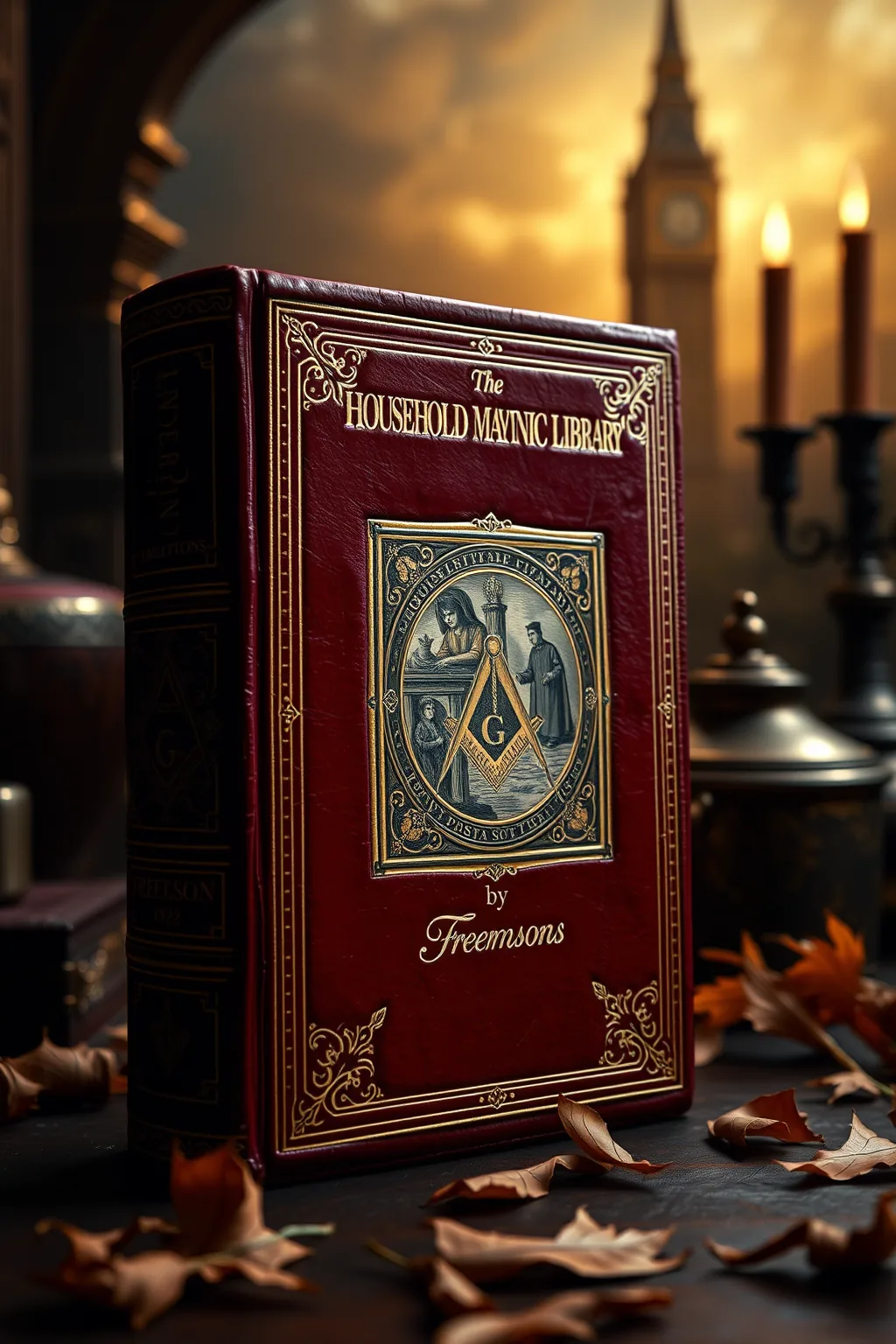
Household Masonic Library Andersons Constitutions Of Freemasons 1923 Macoy NY 1859
 73
73

Household Masonic Library Andersons Constitutions Of Freemasons 1923 Macoy NY 1859

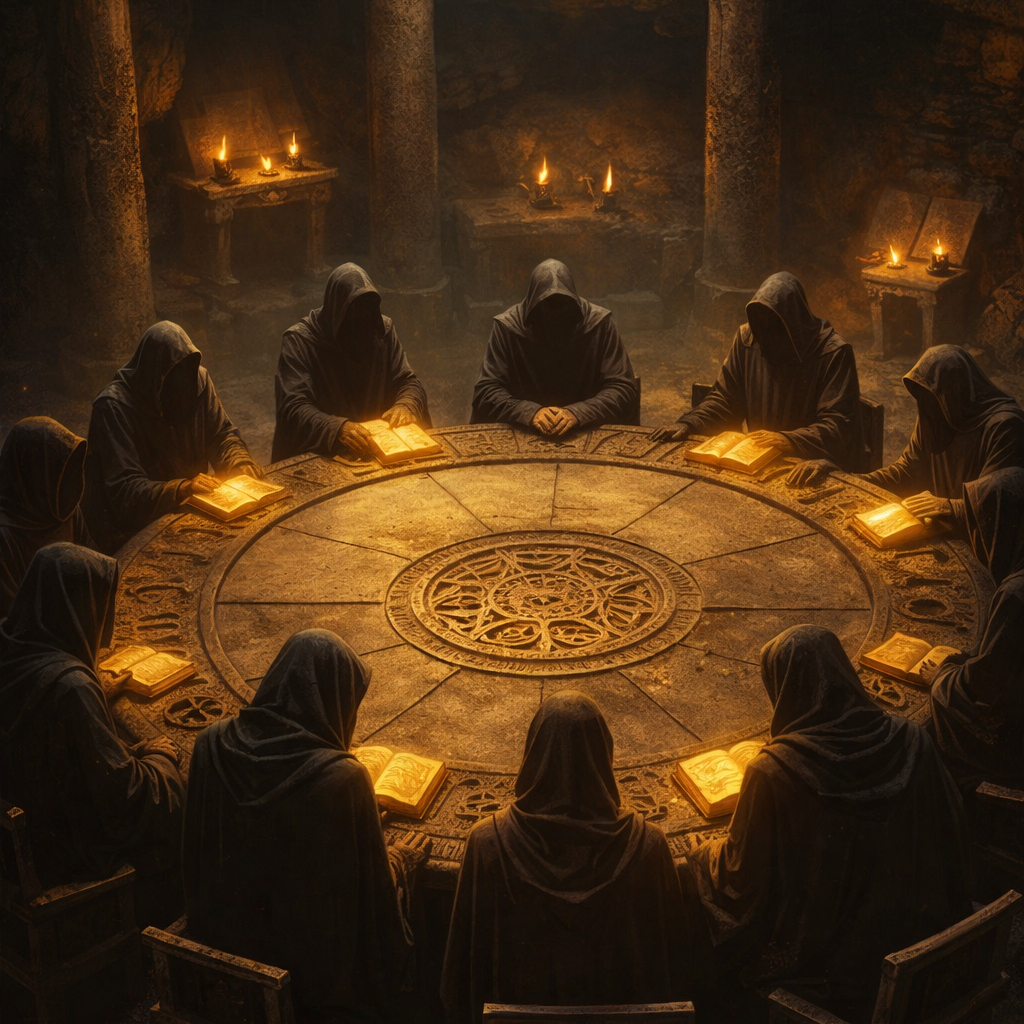

By Balthazar Finch (Senior Critic, Occult Philosophy) — A cornerstone for any serious student of esoteric traditions, 'Anderson's Constitutions' offers an unparalleled glimpse into the foundational myths and regulatory frameworks of Freemasonry. The 1923 Macoy edition faithfully presents these crucial documents, revealing the rich symbolic language and philosophical depth that has captivated minds for centuries. Its strength lies in its direct access to the source material, allowing practitioners and scholars alike to engage with the very essence of Masonic inquiry. This volume is an indispensable resource for understanding the historical evolution and enduring spiritual significance of the Craft, appealing to those who seek authentic knowledge beyond superficial interpretations.
📝 Description
73
Published by Macoy in 1923, this edition of Anderson's Constitutions presents Masonic law and ritual.
This 1923 Macoy edition of Anderson's Constitutions of Freemasons contains the foundational texts of Masonic ritual and law. It goes beyond mere historical record to uncover the philosophical and symbolic dimensions of the Craft. The book details sacred geometry, archaic wisdom, and philosophical discussions central to Masonic thought. It aims to guide Masons in their personal development and moral understanding. The work is structured around ancient mysteries and universal principles, intended for those interested in the deeper aspects of human consciousness. It preserves knowledge transmitted over centuries, offering a perspective on humanity's role in the cosmos and the pursuit of truth. Readers will find a carefully preserved heritage of knowledge within its pages.
Within esoteric traditions, Anderson's Constitutions are significant for codifying Masonic principles. This 1923 edition preserves a version of these texts that influenced later interpretations of Masonic symbolism and philosophy. It connects the practical aspects of Masonic governance with deeper, allegorical meanings often sought by spiritual seekers. The emphasis on geometry and universal principles aligns with broader Hermetic and Neoplatonic ideas found in esoteric studies. It represents an attempt to systematize knowledge related to inner transformation through ritual and symbolic understanding.
💡 Why Read This Book?
Unravel the ancient mysteries and philosophical depth of Freemasonry. This essential text reveals foundational principles, rich symbolism, and esoteric wisdom. Ideal for seekers of hidden knowledge, Masonic scholars, and practitioners aiming to deepen their understanding of the Craft's spiritual journey.
⭐ Reader Reviews
Honest opinions from readers who have explored this book.
❓ Frequently Asked Questions
What is the significance of 'Anderson's Constitutions'?
It's the foundational document outlining the ancient charges and regulations of Freemasonry, crucial for understanding its historical development and philosophical tenets.
Is this book suitable for non-Masons?
Absolutely. It offers a profound look into a significant Western esoteric tradition, making it valuable for anyone interested in history, philosophy, and symbolism.
What kind of symbolism can be found within?
Readers will encounter potent symbols related to architecture, geometry, the natural world, and moral allegory, all designed to instruct and inspire.
What is the historical period this edition represents?
This edition is from 1923, representing a later compilation and presentation of the original 18th-century constitutions, contextualized for a modern audience of the time.
Does this book contain Masonic rituals?
While it lays the groundwork for Masonic principles and history, it primarily focuses on the constitutional and historical aspects rather than explicit ritualistic texts.
🔮 Key Themes & Symbolism
The Genesis of Masonic Law and Morality
This section looks at the historical and philosophical origins of Masonic governance, exploring the ancient charges and regulations that have shaped the fraternity's ethical and moral framework. It examines the transition from operative stonemasonry to speculative philosophy, highlighting how the foundational texts served to codify principles of brotherhood, integrity, and self-improvement. The focus is on understanding the spiritual intent behind these early laws, revealing them as a blueprint for personal transformation and societal harmony, rather than mere rules.
Esoteric Symbolism and Universal Allegory
Discover the collection of symbolism woven throughout Anderson's Constitutions. This theme explores the allegorical meanings embedded within Masonic language, architecture, and the tools of the craft. It unpacks how seemingly simple instructions and historical accounts serve as vehicles for profound metaphysical and spiritual insights. The aim is to reveal how these symbols act as keys to unlocking deeper truths about existence, human potential, and the divine order, guiding the initiate through a process of symbolic education.
The Pursuit of Light and Inner Illumination
Fundamentally, this theme addresses the Masonic quest for 'Light' – a metaphor for knowledge, wisdom, and spiritual awakening. The Constitutions are presented not just as historical documents, but as a guide in this journey of illumination. It examines how the principles outlined within encourage introspection, the development of virtues, and the pursuit of higher understanding. The text serves as a evidence of the enduring human desire to ascend from ignorance to enlightenment, fostering a path of continuous self-discovery.
💬 Memorable Quotes
Direct passages from the work, attributed to the author.
“The ancient charges, a sacred trust.”
— This phrase signifies the enduring importance and spiritual weight carried by the foundational principles and ethical guidelines of Freemasonry.
“From operative hands to speculative minds.”
— Highlights the historical evolution of Freemasonry from practical craftsmanship to a philosophical and spiritual pursuit.
“Geometry's wisdom, the architect's art.”
— Points to the symbolic use of geometry in Freemasonry, representing order, harmony, and the divine principles of creation.
“Brotherhood's light, dispelling the dark.”
— Emphasizes the Masonic ideal of mutual support and shared knowledge as a means of overcoming ignorance and adversity.
“A path of virtue, etched in stone and soul.”
— Connects the physical and symbolic aspects of Masonic teachings to the enduring cultivation of moral character.
🌙 Esoteric Significance
Tradition
This work is intrinsically tied to the Western Esoteric Tradition, specifically within the framework of Freemasonry. It represents a core text that bridges ancient mystery schools and Hermetic philosophies with the organized structure of a fraternal order. Its esoteric significance lies in its role as a repository of symbolic language and allegorical instruction designed to facilitate spiritual growth, moral refinement, and the attainment of higher consciousness.
Symbolism
The Constitutions are rich with symbolism, drawing from operative masonry, biblical narratives, and classical antiquity. Key symbols include the working tools of the craft (square, compasses, plumb line, level), architectural elements (temple, cornerstone), and abstract concepts like light and darkness. These symbols are not merely decorative but serve as mnemonic devices and allegorical keys, guiding the aspirant towards understanding universal principles of order, truth, and self-mastery.
Modern Relevance
Despite its historical origins, Anderson's Constitutions remains profoundly relevant today. It offers a timeless blueprint for ethical living, personal development, and the cultivation of brotherhood in an increasingly fragmented world. For contemporary seekers, it provides a valuable lens through which to examine enduring human questions about purpose, morality, and the nature of reality, serving as a touchstone for those interested in the philosophical underpinnings of Western mystery traditions.
👥 Who Should Read This Book
This volume is essential for Freemasons seeking a deeper understanding of their fraternity's historical and philosophical foundations. It is equally important for scholars of secret societies, comparative religion, and Western esotericism. Aspiring practitioners interested in moral philosophy and symbolic learning will find its allegorical depth useful. Anyone on a personal quest for self-knowledge and spiritual wisdom, drawn to the collection of ancient traditions, will discover useful insights within these pages.
📜 Historical Context
Published in 1923 by Macoy in New York, this edition of Anderson's Constitutions arrives at a time when Freemasonry, while well-established in the Western world, was experiencing both continued growth and evolving interpretations. The early 20th century saw a resurgence of interest in esoteric studies and a desire to connect with historical roots. This edition likely served to reintroduce or reinforce the foundational texts for a new generation of Masons, perhaps with an added emphasis on the philosophical and symbolic dimensions that appealed to the era's spiritual currents. It represents a bridge between the nascent days of speculative Masonry in the 18th century and the more modern, yet still tradition-bound, interpretations of the early 20th century, offering a curated glimpse into the enduring legacy of Masonic thought.
📔 Journal Prompts
Reflect on the meaning of 'ancient charges' in your own life.
How does the concept of 'brotherhood' manifest or challenge your daily interactions?
What 'tools' (symbolic or practical) do you use for your own 'construction' of self?
Consider a time you moved from 'ignorance' to 'light'; what was that process like?
How can the principles of order and harmony, as suggested by geometry, be applied to personal chaos?
🗂️ Glossary
Speculative Masonry
The philosophical and symbolic practice of Freemasonry, as distinct from its operative origins in stoneworking. Focuses on moral and spiritual instruction.
Ancient Charges
The foundational rules and ethical principles historically governing Masonic lodges, outlining duties and conduct for members.
Allegory
A story or narrative with a hidden, symbolic meaning, often used to convey moral or spiritual lessons.
Esoteric
Intended for or likely to be understood by only a small number of people with a specialized knowledge or interest; inner teachings.
Operative Masonry
The historical practice of stonemasons who built cathedrals and other structures, from which speculative Freemasonry evolved.
This book appears in 2 collections
🔮 Readers Also Liked
Browse all →






From the “Secret Societies” Collection
View all →





More Free Freemasonry & Secret Societies Books
View all →