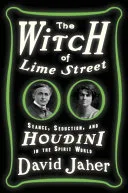
The Witch of Lime Street
 83
83

The Witch of Lime Street
Jaher’s "The Witch of Lime Street" offers a compellingly detailed account of the Houdini-Crandon rivalry, moving beyond simple debunking to explore the era's pervasive hunger for spiritual contact. The book excels in portraying the atmosphere of the 1920s, a time when the veil between the physical and spiritual seemed particularly thin for many grieving souls. A standout element is the exploration of Crandon’s séances, which Jaher presents with a nuanced eye, acknowledging both the potential for trickery and the profound psychological comfort they offered participants. However, the narrative occasionally gets bogged down in the minutiae of séance transcripts, which, while historically accurate, can slow the pacing for readers more interested in the broader cultural impact. The passage detailing Houdini's personal investigations into Crandon's methods, particularly his use of photographic evidence and his public pronouncements, remains a potent illustration of the clash between skepticism and belief. Ultimately, the book serves as a potent reminder of how societal anxieties can shape our perception of the impossible.
📝 Description
83
### What It Is David Jaher's "The Witch of Lime Street" chronicles the fascinating, and often contentious, relationship between the world-renowned magician Harry Houdini and Margery Crandon, a Boston spiritualist who claimed to channel spirits. Published in 2015, the book meticulously reconstructs the events and controversies surrounding Crandon's séances, her alleged psychic abilities, and the skeptical scrutiny she faced, particularly from Houdini himself.
### Who It's For This work is for readers interested in the intersection of historical skepticism and genuine spiritual inquiry, particularly during the early 20th century. It appeals to those fascinated by the lives of iconic figures like Houdini and the often-shadowy world of séances and alleged mediumship. It’s also for anyone curious about the psychological and societal factors that drove people to seek solace in the spirit world following immense global loss.
### Historical Context The narrative unfolds against the backdrop of the 1920s, a decade marked by significant global trauma from World War I and the Spanish Flu pandemic. This era saw a surge in spiritualism as people desperately sought connection with deceased loved ones. Science, meanwhile, was tentatively exploring the fringes of the paranormal, making figures like Crandon both sensational and subjects of intense scientific and public debate.
### Key Concepts The book explores the tension between scientific rationalism and the fervent belief in the supernatural. It examines the methods of spiritualist mediums, the techniques employed by skeptics like Houdini to expose fraud, and the societal desire for evidence of an afterlife. The narrative highlights how personal grief and collective trauma can fuel extraordinary claims and fervent belief systems.
💡 Why Read This Book?
• Gain insight into the specific methods of early 20th-century spiritualism, as detailed in the descriptions of Margery Crandon's séances, and understand how Houdini approached debunking these phenomena. • Understand the historical climate of the 1920s, a period of profound loss after WWI and the Spanish Flu, which fueled a widespread societal yearning for contact with the spirit world. • Explore the complex psychological motivations behind both spiritualist belief and skeptical investigation, as exemplified by the dynamic between Houdini and Crandon.
⭐ Reader Reviews
Honest opinions from readers who have explored this book.
❓ Frequently Asked Questions
Who was the Witch of Lime Street?
The Witch of Lime Street was the pseudonym for Margery Crandon, a prominent Boston spiritualist medium in the early 20th century. She gained significant notoriety for her séances and her eventual public rivalry with magician Harry Houdini.
When was the book "The Witch of Lime Street" first published?
The book "The Witch of Lime Street" by David Jaher was first published on October 6, 2015.
What was the primary conflict between Houdini and the Witch of Lime Street?
The conflict stemmed from Houdini's belief that Margery Crandon was a fraudulent medium. He dedicated considerable effort to exposing her alleged psychic abilities as trickery, while Crandon and her supporters maintained the authenticity of her spiritual communications.
What historical period does the book cover?
The book primarily covers the 1920s, a period marked by the aftermath of World War I and the Spanish Flu pandemic, which saw a rise in spiritualist activities as people sought solace and connection with the deceased.
Did Houdini believe in ghosts or the afterlife?
While Houdini publicly sought to debunk fraudulent mediums, his personal beliefs were complex. He engaged in spiritualist circles and expressed a desire for genuine proof of survival after death, though he remained a staunch critic of fraudulent practices.
What is the significance of Lime Street in the book?
Lime Street in Brookline, Massachusetts, was the location of Margery Crandon's home, where she conducted many of her séances. It became synonymous with her activities and her persona as the 'Witch of Lime Street'.
🔮 Key Themes & Symbolism
Skepticism vs. Belief
The book vividly illustrates the stark divide between fervent belief in the supernatural and rigorous scientific skepticism. It examines how figures like Harry Houdini, armed with logic and investigative techniques, challenged the claims of mediums like Margery Crandon. This tension highlights a recurring dynamic in human history: the struggle to reconcile empirical evidence with profound personal desires for connection beyond the material world, particularly potent in the post-WWI era.
Grief and Spiritualism
"The Witch of Lime Street" places the rise of spiritualism in the context of immense collective trauma. Following the devastating losses of World War I and the Spanish Flu pandemic, millions sought solace through mediums, hoping for contact with departed loved ones. The book explores how this widespread grief created a fertile ground for both genuine spiritual seeking and opportunistic fraud, making the era ripe for sensational cases like Crandon's.
The Nature of Mediumship
The work dissects the phenomenon of mediumship as practiced by Margery Crandon. It delves into the techniques, the alleged manifestations, and the intense scrutiny these practices underwent. By presenting both Crandon's alleged abilities and Houdini's attempts to expose her, Jaher prompts readers to consider the psychological, social, and potentially parapsychological dimensions of channeling and spirit communication.
Public Spectacle and Investigation
The rivalry between Houdini and Crandon was a public spectacle, played out in newspapers, lectures, and private investigations. The book captures how these events became a focal point for discussions about truth, illusion, and the limits of human understanding. It showcases Houdini's calculated approach to public debunking and Crandon's defiant performance, revealing the theatrical elements inherent in both magic and alleged spiritual phenomena.
💬 Memorable Quotes
“The 1920s were an era of fevered yearning for communion with the spirit world.”
— This statement captures the profound societal impact of the early 20th century's devastating wars and pandemics, which created an urgent, widespread desire for contact with those lost, driving interest in spiritualism.
“Houdini saw himself as a crusader against fraudulent spiritualists.”
— This highlights Houdini's self-perceived mission to protect the public from charlatans preying on grief. It frames his intense investigation of mediums like Crandon not just as a personal crusade, but as a public service.
“Margery Crandon claimed to channel spirits, offering comfort to the bereaved.”
— This concisely describes Crandon's role and the primary appeal of her services during a time when many were desperate to connect with deceased loved ones.
“Science stood on the verge of embracing the paranormal.”
— This suggests the period was a pivotal moment where established scientific thought was beginning to tentatively consider, rather than outright dismiss, phenomena related to the supernatural or psychic abilities.
“The intersection of glamour and séances defined the era.”
— This phrase encapsulates the unique cultural milieu of the 1920s, where elements of popular entertainment, societal mourning, and the allure of the occult converged in public consciousness.
🌙 Esoteric Significance
Tradition
While not strictly adhering to a single esoteric lineage, "The Witch of Lime Street" engages with the broader tradition of spiritualism and psychical research prominent in the late 19th and early 20th centuries. This movement, often influenced by Theosophy and mesmerism, sought empirical evidence for phenomena beyond the material world. The work fits within this lineage by documenting the practices and controversies surrounding mediums who claimed direct communication with discarnate entities, a central tenet of many spiritualist circles.
Symbolism
The central symbolic conflict revolves around the veil separating the living from the dead. Crandon's séances aimed to rend this veil, allowing communication and offering tangible proof of survival. Houdini, conversely, sought to expose the 'veil' as a constructed illusion, a trick of stagecraft and deception. The séance room itself becomes a symbolic space—a liminal zone where rational skepticism and fervent spiritual hope are dramatically pitted against each other.
Modern Relevance
The enduring fascination with figures like Houdini and the ongoing debates surrounding mediumship and psychic phenomena demonstrate the work's relevance. Contemporary parapsychology, skepticism movements, and even certain branches of consciousness studies continue to grapple with the questions raised by Crandon's purported abilities and Houdini's relentless debunking. The book serves as a historical case study for understanding the persistence of spiritualist beliefs and the critical methodologies applied to them.
👥 Who Should Read This Book
• Students of early 20th-century American culture and the history of belief, seeking to understand the societal impact of major traumas like WWI on popular movements. • Enthusiasts of magic and illusion, particularly those interested in the historical figure of Harry Houdini and his crusade against fraudulent mediums. • Researchers and readers of spiritualism and psychical research, offering a detailed account of a pivotal controversy within the movement.
📜 Historical Context
David Jaher’s "The Witch of Lime Street" is deeply rooted in the turbulent post-World War I era of the 1920s. This decade was marked by unprecedented loss, fueling a widespread spiritualist movement as people desperately sought solace and proof of an afterlife. Science, while advancing rapidly, was also cautiously probing the boundaries of the unexplained, creating a climate where figures like Margery Crandon, the so-called 'Witch of Lime Street,' could gain immense public attention. Crandon’s séances, purportedly channeling spirits, became a focal point of debate. Harry Houdini, already a global icon, took up the mantle of debunking fraudulent mediums, viewing Crandon as a prime target. His public campaigns against her, and spiritualists in general, often involved dramatic demonstrations and appeals to scientific reason, placing him in direct opposition to the fervent belief systems championed by figures like Sir Arthur Conan Doyle, who was a prominent advocate for spiritualism. The book thus captures a critical juncture where popular culture, profound grief, and nascent scientific inquiry collided.
📔 Journal Prompts
The pervasive yearning for spirit communion following WWI and the Spanish Flu.
Houdini's specific methods for exposing fraudulent mediums.
Margery Crandon's séance phenomena and their reception.
The tension between scientific skepticism and spiritual belief in the 1920s.
The role of public spectacle in the Houdini-Crandon rivalry.
🗂️ Glossary
Spiritualism
A religious movement based on the belief that the spirits of the dead can communicate with the living. Prominent in the 19th and early 20th centuries, it often involved mediums facilitating these communications through séances.
Medium
An individual believed to be able to communicate with the spirits of the dead, often acting as an intermediary in séances to convey messages or manifest phenomena.
Séance
A meeting where spiritualists attempt to communicate with the dead, typically involving a medium, often conducted in low light with participants holding hands.
Debunking
The act of exposing the falseness or hollowness of a myth, idea, or belief. In this context, it refers to Houdini's efforts to reveal spiritualist mediums as frauds.
Psychical Research
The field dedicated to the study of alleged psychic phenomena, such as telepathy, clairvoyance, precognition, and mediumship, often employing scientific methods.
Theosophy
A spiritual movement founded in the late 19th century, seeking to understand the underlying principles of all religions and philosophies, often incorporating elements of Eastern mysticism and occultism.
Fraudulent Medium
A person who pretends to have supernatural powers to communicate with spirits for personal gain, typically using deception and trickery.