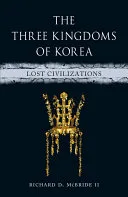
The Three Kingdoms of Korea
 73
73

The Three Kingdoms of Korea
McBride's account of Korea's Three Kingdoms period provides a necessary corrective to the often Eurocentric focus of ancient history surveys. He succeeds admirably in presenting a complex historical landscape with clarity, making the intricate political maneuvering and cultural exchanges of Goguryeo, Baekje, and Silla comprehensible to a broad audience. The work's strength lies in its detailed exposition of how Buddhism and Confucianism were not simply adopted but actively molded by Korean elites to serve their own purposes, a nuanced perspective often overlooked. A minor limitation is the dense prose in certain sections detailing dynastic succession, which occasionally slows the narrative momentum. The discussion surrounding Silla's eventual dominance, particularly its strategic alliances, offers a compelling case study in statecraft. McBride's book is a valuable contribution to understanding a 'lost civilization' that profoundly shaped East Asian history.
📝 Description
73
### What It Is The Three Kingdoms of Korea by Richard D. McBride II offers a comprehensive and accessible historical account of Korea during its formative first millennium CE. This period, often overshadowed, saw the rise and consolidation of three distinct Korean states: Goguryeo, Baekje, and Silla. The book details their political, social, and cultural evolution against the backdrop of regional power struggles and significant foreign influences.
### Who It's For This work is designed for readers with an interest in East Asian history, comparative religion, and the transmission of philosophical ideas across cultures. It caters to those seeking a detailed yet understandable introduction to a pivotal era in Korean history, particularly scholars and students of history, archaeology, and East Asian studies, as well as enthusiasts of ancient civilizations.
### Historical Context The first millennium CE in Korea was a dynamic era marked by the intense competition among the states of Goguryeo, Baekje, and Silla. This period witnessed the adoption and adaptation of Buddhism and Confucianism, imported through interactions with Tang Dynasty China. These philosophical and religious systems were not merely received but actively reshaped to fit the existing Korean socio-political structures, leading to unique cultural syntheses. The eventual unification under the Silla state in the mid-seventh century marked a significant turning point.
### Key Concepts McBride's work illuminates concepts central to the Three Kingdoms period, including the adaptation of Buddhism and Confucianism, the nature of aristocratic governance, and the military and diplomatic strategies employed by the competing states. It explores the distinct cultural identities that emerged in Goguryeo, Baekje, and Silla, and the process by which these distinct entities were eventually integrated into a more unified Korean identity.
💡 Why Read This Book?
• Gain a structured understanding of the Three Kingdoms period (57 BCE–668 CE), learning how distinct states like Goguryeo, Baekje, and Silla developed unique political and cultural identities. • Comprehend the specific ways in which Buddhism and Confucianism were adapted and integrated into Korean society, moving beyond simple reception to active synthesis. • Appreciate the geopolitical landscape of early medieval East Asia, understanding the interactions between Korean kingdoms and Tang Dynasty China in the context of state formation and diplomacy.
⭐ Reader Reviews
Honest opinions from readers who have explored this book.
❓ Frequently Asked Questions
What is the primary historical period covered in The Three Kingdoms of Korea?
The book focuses on the first millennium CE in Korea, specifically detailing the era of the Three Kingdoms: Goguryeo, Baekje, and Silla, culminating in the unification under Silla in the mid-seventh century.
How did foreign influences shape Korean culture during this time?
McBride details the adoption and adaptation of Buddhism and Confucianism from China. These philosophies were integrated into existing Korean social and political structures, leading to unique cultural developments.
What were the main states competing during this era?
The primary states were Goguryeo, Baekje, and Silla. They vied for supremacy and influence across the Korean peninsula throughout the first millennium CE.
Is this book suitable for beginners in Korean history?
Yes, the author aims for accessibility, making it an expansive and understandable introduction for those new to the subject or seeking a clear overview.
What is the significance of the Silla state in this period?
Silla eventually emerged as the dominant state, unifying the peninsula in the mid-seventh century with assistance from the Tang Dynasty, marking a crucial turning point in Korean history.
What intellectual traditions are explored in relation to Korea's Three Kingdoms?
The book extensively discusses the adoption and adaptation of Buddhism and Confucianism, examining their impact on Korean governance, society, and culture.
🔮 Key Themes & Symbolism
Cultural Syncretism
The book highlights how foreign philosophies like Buddhism and Confucianism were not simply imported into Korea but were actively synthesized with indigenous beliefs and practices. This process of adaptation demonstrates a dynamic cultural exchange, where Korean elites selectively integrated new ideas to reinforce their political authority and social structures, creating a unique Korean interpretation of these major East Asian traditions.
State Formation and Diplomacy
McBride examines the intense competition and shifting alliances among Goguryeo, Baekje, and Silla. The narrative focuses on the strategies employed by these states to expand their territories, consolidate power, and navigate complex relationships, particularly with neighboring Chinese dynasties. The eventual unification under Silla serves as a case study in successful statecraft and the impact of external alliances.
The 'Lost Civilization' Aspect
The work positions the Three Kingdoms period as a 'lost civilization' due to its relative obscurity in broader historical narratives. McBride endeavors to illuminate this era, revealing the sophisticated societies, advanced cultural achievements, and significant geopolitical contributions of these ancient Korean realms, thereby reclaiming their place in East Asian history.
Aristocratic Governance
A central theme is the role of the aristocracy in the Three Kingdoms. The book explores how noble families wielded significant power, influenced state policy, and patronized the adoption of new religions and philosophies. The competitive nature of these aristocratic states is presented as a driving force behind their development and eventual consolidation.
💬 Memorable Quotes
“Nobles from this period’s feuding states adopted and adapted Buddhism and Confucianism through interactions with early medieval Chinese dynasties.”
— This statement encapsulates the core thesis regarding cultural transmission. It emphasizes that the reception of foreign ideologies was an active, adaptive process, not passive assimilation, driven by the ruling elite for their own purposes.
“Korea’s Three Kingdoms period is a genuine “lost civilization””
— This framing highlights the book's aim to bring a lesser-known but crucial historical era into sharper focus, presenting its complexities and significance to a wider audience often unaware of its profound impact.
“It was not until the mid-seventh century that the aristocratic Silla state, with the assistance of the mighty Chinese dynasties, achieved unification.”
— This points to a pivotal moment: the unification under Silla. It underscores the crucial role of both internal aristocratic power structures and external alliances, particularly with Tang China, in shaping the political destiny of the peninsula.
“An expansive and accessible introduction to the history of Korea during the first millennium CE.”
— This description sets the expectation for the book's scope and approach. It promises a broad survey that remains understandable, making it suitable for both newcomers and those with some background knowledge of the period.
“ancient realms vied for supremacy during the first millennium CE”
— This phrase vividly conveys the dynamic and often conflict-ridden nature of the Three Kingdoms period, emphasizing the constant struggle for dominance among the emerging Korean states throughout that era.
🌙 Esoteric Significance
Tradition
While not explicitly aligned with a single Western esoteric lineage, The Three Kingdoms of Korea touches upon themes resonant with traditions focused on the transmission and adaptation of foundational spiritual and philosophical systems. The book's exploration of how Buddhism and Confucianism were reinterpreted and integrated into a distinct cultural context parallels esoteric concerns with the universal truths underlying diverse traditions and their manifestation in specific historical settings.
Symbolism
The core symbols explored implicitly revolve around the consolidation of power and the spiritual frameworks supporting it. Buddhism, with its cosmology and monastic orders, offered both spiritual solace and institutional models. Confucianism, emphasizing social hierarchy, filial piety, and governance, provided a blueprint for statecraft and aristocratic order. The very concept of three distinct kingdoms vying for supremacy can be seen as a symbolic representation of inherent dualities and the quest for ultimate unity or balance.
Modern Relevance
Contemporary scholars and practitioners interested in East Asian Buddhism, Confucian thought, and historical statecraft find McBride's work invaluable. It informs discussions on cultural identity formation, the dynamics of religious syncretism, and the enduring influence of early Korean kingdoms on modern Korean culture and identity. Thinkers exploring comparative philosophy and the historical reception of religious ideas often cite this period as a prime example of dynamic cultural adaptation.
👥 Who Should Read This Book
• Students of East Asian history seeking a foundational understanding of Korea's formative centuries, particularly the interactions between distinct kingdoms and neighboring empires. • Comparative religion scholars interested in the adaptation and syncretism of Buddhism and Confucianism in a non-Chinese context, offering insights into religious diffusion. • Readers fascinated by ancient civilizations and the development of sophisticated political and social structures, providing a detailed look at a period often overlooked in global historical narratives.
📜 Historical Context
The first millennium CE in Korea was dominated by the Three Kingdoms period, a dynamic era of intense political and cultural development. The primary states—Goguryeo, Baekje, and Silla—engaged in constant competition for territory and influence, significantly shaping the geopolitical landscape of Northeast Asia. This period saw the crucial introduction and adaptation of Buddhism and Confucianism, primarily through interactions with successive Chinese dynasties, including the powerful Tang Dynasty (618–907 CE). These philosophies were not merely adopted but actively integrated and transformed by Korean elites, contributing to unique societal structures and artistic expressions. The eventual unification of the peninsula under the Silla state in 668 CE, with Tang assistance, marked a significant turning point, laying foundations for future Korean identity. Competing schools of thought regarding the interpretation of these adopted philosophies and their role in governance were implicitly present in the courtly and monastic debates of the time.
📔 Journal Prompts
The adaptation of Buddhism and Confucianism by Korean nobles: How did these philosophies serve aristocratic goals?
Reflect on the concept of a 'lost civilization' and its implications for understanding historical narratives.
Analyze the geopolitical strategies employed by Goguryeo, Baekje, and Silla in their competition for supremacy.
Consider the role of external alliances, such as that between Silla and Tang China, in state unification.
Explore the synthesis of foreign ideas with indigenous Korean culture during the first millennium CE.
🗂️ Glossary
Goguryeo
One of the Three Kingdoms of Korea, existing from 37 BCE to 668 CE. Known for its military strength and territorial expansion across northern Korea and Manchuria.
Baekje
One of the Three Kingdoms of Korea, flourishing from 18 BCE to 660 CE. Located in southwestern Korea, it was known for its maritime trade and cultural exchanges with China and Japan.
Silla
One of the Three Kingdoms of Korea, existing from 57 BCE to 935 CE. Located in southeastern Korea, it eventually unified the peninsula in 668 CE with Tang Chinese assistance.
Buddhism
A religion and philosophy originating in ancient India, introduced to Korea during the Three Kingdoms period. It significantly influenced Korean art, culture, and political thought.
Confucianism
An ethical and philosophical system developed from the teachings of Confucius in ancient China. It heavily influenced Korean governance, social structure, and education during the Three Kingdoms period.
Tang Dynasty
A major imperial dynasty of China that ruled from 618 to 907 CE. Its interactions with the Korean kingdoms, particularly Silla, were crucial in shaping regional politics.
Unification of the Three Kingdoms
The process by which the kingdom of Silla, with aid from the Tang Dynasty, conquered Baekje in 660 CE and Goguryeo in 668 CE, establishing a unified Korean state.