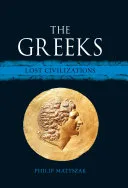
The Greeks
 75
75

The Greeks
Philip Matyszak's "The Greeks" offers a vital corrective to the insular view of Hellenic civilization. The book shines in its meticulous charting of Greek settlements in regions rarely considered in mainstream accounts, such as the documented Greek cities bordering the Himalayas. This geographical expansion is not merely a geographical footnote but a fundamental re-framing of the ancient world's interconnectedness. A limitation, however, lies in the occasional sparseness of detail regarding the *specific* esoteric practices or beliefs within these far-flung communities, a point one wishes Matyszak had elaborated upon when discussing the potential syncretism with local traditions. The passage detailing the cultural exchange in Bactria, for instance, hints at profound spiritual dialogues that remain largely unexplored. Ultimately, "The Greeks" is an essential, if at times frustratingly brief, expansion of our understanding of Hellenic influence.
📝 Description
75
### The Unseen Hellenistic World Philip Matyszak's "The Greeks" dismantles the common perception of Ancient Greece as a geographically confined entity. It reveals a Hellenistic civilization that stretched far beyond the Aegean, establishing significant urban centers and cultural outposts across vast swathes of the ancient world. From the fertile plains of Asia Minor to the rugged foothills of the Himalayas, Greek influence and settlement formed a complex, interconnected network.
### For the Curious Historian and the Esoteric Seeker This volume is designed for readers who find conventional historical narratives too narrow. It appeals to those interested in the Hellenistic period, comparative cultural studies, and the diffusion of ideas across empires. Esoteric practitioners will find connections to ancient mystery traditions and the philosophical underpinnings that informed later occult systems.
### A Wider Ancient Context Matyszak situates Greek civilization not as an isolated phenomenon, but as a dynamic force interacting with established empires like Persia. The book highlights figures such as Herodotus, himself a native of Asia Minor under Persian rule, demonstrating the fluidity of identity and cultural allegiance in antiquity. This wider lens is crucial for understanding the transmission of knowledge and belief systems.
### Concepts of Hellenistic Identity and Expansion The work explores the practicalities of Greek settlement in disparate regions, examining how a shared language and culture facilitated connections across diverse landscapes. It discusses the establishment of cities and the administration of these distant communities, presenting a picture of a civilization that was both culturally distinct and remarkably adaptable to new environments.
💡 Why Read This Book?
• Gain an understanding of the vast geographical reach of Greek civilization, extending to the Himalayas, a scope rarely covered in standard histories. • Discover the lives of lesser-known Greek figures, like Herodotus, born in Asia Minor under the Persian Empire, revealing the complexities of ancient identity. • Explore the cultural and philosophical diffusion across empires, understanding how Greek ideas interacted with diverse civilizations beyond the Mediterranean.
⭐ Reader Reviews
Honest opinions from readers who have explored this book.
❓ Frequently Asked Questions
Where were the furthest eastern Greek settlements located?
Philip Matyszak's "The Greeks" highlights settlements in the foothills of the Himalayas, demonstrating the extensive reach of Hellenistic civilization far beyond its traditional Aegean heartland.
Who was Herodotus in the context of "The Greeks"?
The book identifies Herodotus, often called the 'Father of History', as a native of Asia Minor who was a subject of the Persian Empire, illustrating the spread of Greek culture and identity.
Does "The Greeks" discuss Greek cities in the Middle East?
Yes, the book specifically addresses the presence and significance of Greek civilization and cities established across the Middle East, challenging the narrow perception of its geographical limits.
What is the original publication date of "The Greeks" by Philip Matyszak?
Philip Matyszak's "The Greeks" was first published on May 15, 2018.
What is the main argument of "The Greeks"?
The book's central argument is that Ancient Greek civilization was far more geographically dispersed than commonly understood, with significant communities and cities spread across the Middle East and into Asia.
Are figures like Sappho and Archimedes discussed in "The Greeks"?
Yes, "The Greeks" references figures like Sappho from Lesbos and Archimedes from Syracuse as examples of prominent Greeks whose origins or contexts extended beyond mainland Greece, contributing to the broader Hellenistic world.
🔮 Key Themes & Symbolism
Hellenistic Diaspora
The work redefines Hellenism by focusing on its extensive diaspora. It details how Greek language, culture, and political structures were established and maintained in regions as diverse as Asia Minor, the Middle East, and even the fringes of the Indian subcontinent. This theme challenges the notion of a singular, geographically contained Greek civilization, presenting instead a fluid and expansive cultural network that interacted with indigenous populations and major empires like Persia.
Cultural Syncretism and Identity
Matyszak examines the complex interplay between Greek settlers and local populations. This theme touches upon how Greek identity was negotiated in foreign lands, with figures like Herodotus, born under Persian rule, embodying a hybrid cultural experience. The book implicitly explores the potential for syncretism, where Greek philosophical and religious ideas might have merged with or influenced local beliefs, laying groundwork for later esoteric developments.
The Eastern Frontier of Hellenism
A significant focus is placed on the easternmost reaches of Greek influence, including settlements near the Himalayas. This theme highlights the ambition and reach of Hellenistic expansion, often overlooked in favor of Western achievements. It underscores the practicalities of establishing and maintaining communities far from the Aegean, presenting a fascinating case study in cultural transmission and resilience across vast distances and varied terrains.
Lost Narratives of Antiquity
The book aims to recover narratives of Greeks living outside of Greece, presenting individuals and communities whose stories have been marginalized. This theme champions the idea that understanding the ancient world requires acknowledging its peripheral yet vital components. By bringing these 'lost stories' to light, Matyszak reconstructs a more nuanced and comprehensive picture of Hellenistic civilization and its global impact.
💬 Memorable Quotes
“Greek civilization was spread across the Middle East.”
— This statement, central to the book's thesis, directly challenges conventional geographic assumptions about Ancient Greece, indicating a far wider Hellenistic influence than typically taught.
“There were Greek cities in the foothills of the Himalayas.”
— This remarkable geographical claim underscores the extreme reach of Hellenistic expansion, suggesting a level of cultural diffusion and settlement that extended to the very edges of the known ancient world.
“Herodotus, who was born in Asia Minor as a subject of the Persian Empire.”
— This highlights the complex political and cultural landscape of antiquity, where influential figures could be ethnically Greek yet subjects of non-Greek empires, demonstrating a fluid sense of belonging.
“Compatriots of luminaries like Sappho, the poet from Lesbos; Archimedes, a native of Syracuse; and Herodotus, who was born in Asia Minor.”
— By naming these diverse figures, the author illustrates that prominent individuals in Greek culture hailed from various locations, reinforcing the idea of a widespread Hellenistic identity beyond mainland Greece.
“The earliest pre-historic Greek settlements.”
— This phrase suggests the book delves into the origins and early expansion of Greek settlements, potentially exploring how these distant communities were first established and their initial interactions with local cultures.
🌙 Esoteric Significance
Tradition
While "The Greeks" is primarily a work of historical geography and cultural diffusion, its exploration of Hellenistic settlements in diverse regions touches upon the transmission of philosophical and potentially esoteric ideas. The Hellenistic period itself was a fertile ground for syncretism, blending Greek thought with Eastern mysticism, which heavily influenced later Gnostic and Hermetic traditions. This book provides the geographical and historical context for how these cross-cultural exchanges, vital for esoteric development, could have occurred.
Symbolism
The book's focus on geographical expansion implicitly highlights the symbolism of the 'spreading seed' or the 'cosmopolitan ideal' within Hellenistic thought. The establishment of Greek cities in distant lands can be seen as a manifestation of the desire to impose order (the *polis*) upon chaos, a common motif in ancient cosmologies. Furthermore, the interaction with Eastern traditions hinted at in its geographical scope could involve the symbolism of the 'East' as a source of ancient wisdom, a concept later central to Theosophy and other esoteric lineages.
Modern Relevance
Contemporary esoteric practitioners and scholars interested in comparative mysticism find value in Matyszak's work for understanding the historical roots of syncretic traditions. Thinkers exploring the Hellenistic origins of Gnosticism, Hermeticism, or even early Christian mysticism can draw upon the book's geographical insights to contextualize the movement of ideas and people. Schools like the Golden Dawn or modern interpretations of Hermetic philosophy often acknowledge the Hellenistic synthesis of Greek and Eastern thought, making this historical mapping of that synthesis particularly relevant.
👥 Who Should Read This Book
• Students of ancient history and classical studies seeking to broaden their understanding of Hellenistic civilization beyond its traditional geographic confines. • Readers interested in cultural diffusion and the spread of ideas across ancient empires, particularly those curious about the eastward expansion of Greek influence. • Esoteric practitioners and scholars of comparative religion who want to understand the historical and geographical context for the cross-pollination of Greek philosophy with Eastern mystical traditions.
📜 Historical Context
Philip Matyszak's "The Greeks" was published in 2018, a period when academic and popular interest in the Hellenistic Age continued to grow, often focusing on its philosophical and political innovations. However, this work distinguishes itself by emphasizing the geographical breadth of Hellenistic culture, countering a Eurocentric bias that often confines Ancient Greece to the Aegean. The intellectual currents surrounding its publication included ongoing debates about cultural diffusion and the interconnectedness of ancient societies, particularly in the wake of archaeological discoveries that continually pushed the boundaries of the Hellenistic world eastward. While not directly engaging with a specific competing school of thought, the book implicitly challenges traditional classical scholarship. It matters because it provides a necessary counter-narrative to the insular view of Greek civilization, highlighting its role as a pervasive cultural force across vast territories, interacting with and influencing diverse populations from the Mediterranean to the Indus Valley.
📔 Journal Prompts
The Hellenistic expansion into Asia Minor: how did Greek identity adapt?
Herodotus's position as a Persian subject: implications for ancient loyalties.
The concept of the 'Greek city' in the foothills of the Himalayas: what does this imply about cultural resilience?
Mapping the forgotten Greek settlements: what new historical perspectives emerge?
Sappho, Archimedes, Herodotus: diverse origins within a widespread civilization.
🗂️ Glossary
Hellenistic
Pertaining to the period of ancient Greek history and culture from the death of Alexander the Great (323 BCE) to the rise of the Roman Empire (c. 30 BCE), characterized by the spread of Greek language and culture across a wide area.
Asia Minor
The large peninsula in Western Asia that includes most of modern-day Turkey. Historically, it was a region where Greek culture significantly influenced and interacted with local civilizations.
Persian Empire
A series of imperial dynasties that ruled over a vast territory in Western Asia from the Achaemenid Empire (founded by Cyrus the Great in the 6th century BCE) to the Sasanian Empire (until the 7th century CE).
Diadochi
The successors of Alexander the Great, whose wars and establishment of kingdoms after his death marked the beginning of the Hellenistic period.
Himalayas
The mountain range in Asia separating the plains of the Indian subcontinent from the Tibetan Plateau. The book notes Greek settlements in its foothills.
Polis
The ancient Greek city-state, a fundamental unit of political and social organization, characterized by its own government and citizens.
Syncretism
The amalgamation of different religions, cultures, or schools of thought. In the Hellenistic context, it often refers to the blending of Greek ideas with those of the East.