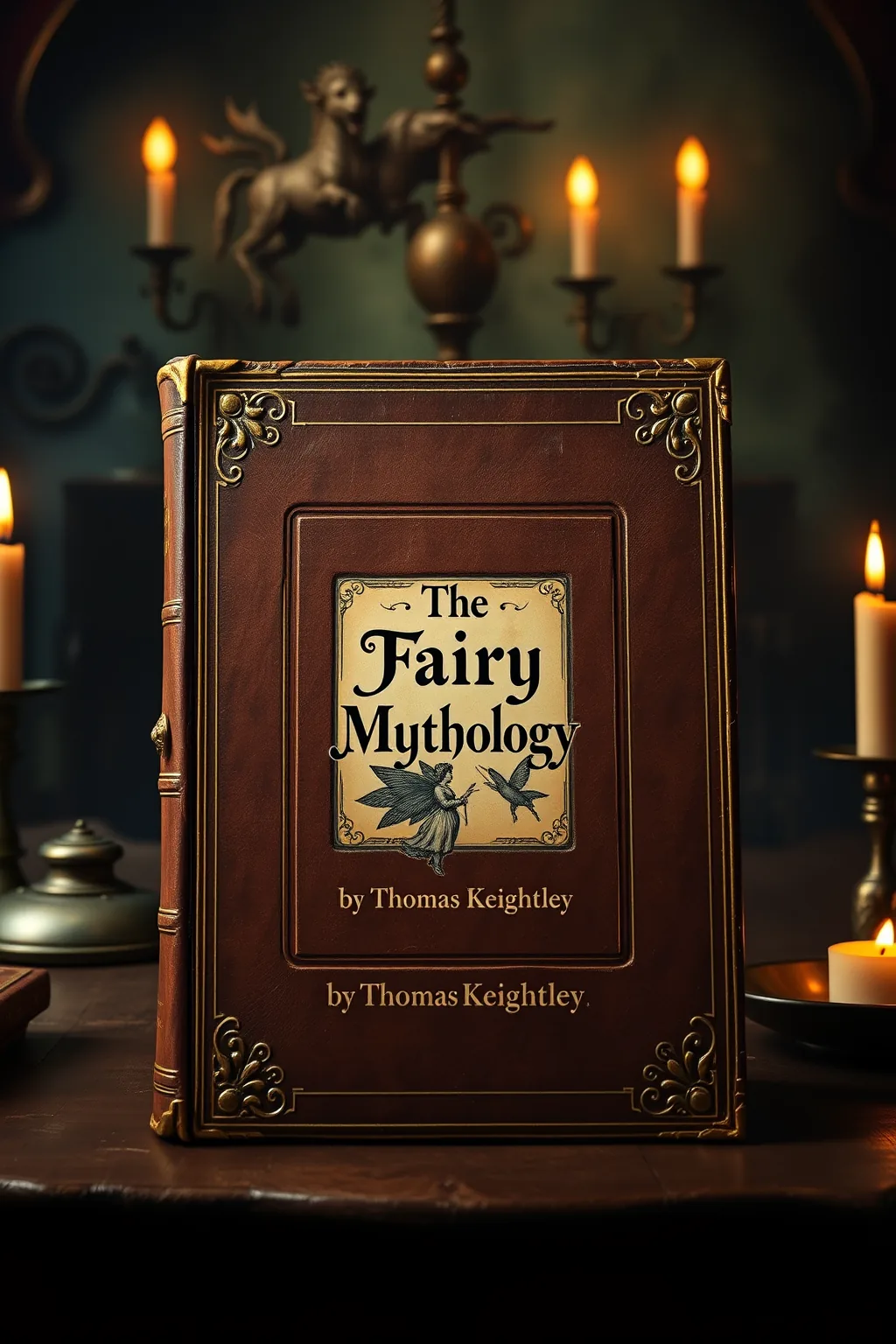
The Fairy Mythology
 80
80

The Fairy Mythology



Ophelia Vance (Mystical Literature Reviewer) — Thomas Keightley's 'The Fairy Mythology' remains an indispensable cornerstone for anyone traversing the liminal spaces of esoteric studies. Published at the dawn of Romanticism's fascination with the numinous, this work stands as a foundational text, offering a comparative tapestry of fairy beliefs from diverse cultural tapestries. Keightley's meticulous scholarship unearths not just stories, but the underlying psychological and spiritual impulses that birthed them. Its strength lies in its systematic approach, cataloging the myriad forms of the Sidhe and kindred spirits, providing invaluable insights into ancient nature worship and pre-Christian cosmologies. This is essential reading for scholars, practitioners, and any soul drawn to the subtle energies of the world.
📝 Description
80
Thomas Keightley's 1828 study, 'The Fairy Mythology,' examines beliefs about supernatural beings across Europe and the East.
First published in 1828, Thomas Keightley's 'The Fairy Mythology' is a historical survey of beliefs and stories concerning fairies and similar supernatural beings. Keightley gathered accounts from various European regions, including Scandinavia, Germany, Ireland, and Scotland, as well as traditions from the East. He did not just collect stories but sought to understand the underlying beliefs that informed them.
The book aims to illuminate the historical presence of these figures in human culture and consciousness. It looks at how these narratives functioned within different societies and over long periods. Keightley's work offers insights into the evolution of folklore and the persistent human fascination with the unseen and the supernatural.
Published in the early 19th century, 'The Fairy Mythology' emerged during a period of renewed interest in folklore and national antiquities, often intertwined with esoteric and Romantic sensibilities. Keightley's work, while grounded in historical collection, touches upon themes that resonate with esoteric traditions concerning the hidden world, elemental beings, and the nature of consciousness. It reflects a broader intellectual current that sought to find deeper meanings in ancient stories and mythologies, often connecting them to psychological or spiritual states.
✍️ Author
Thomas Keightley
Thomas Keightley (1789-1872) was an Irish writer known for his works on mythology and folklore.
💡 Why Read This Book?
For seekers of hidden knowledge and scholars of ancient lore, 'The Fairy Mythology' offers a foundational understanding of Europe's most pervasive supernatural beliefs. It reveals the deep archetypes of the Fae, illuminating their connection to nature, magic, and the human psyche. Ideal for those exploring comparative mythology, occult traditions, or simply yearning to connect with the enchanted past.
⭐ Reader Reviews
Honest opinions from readers who have explored this book.
❓ Frequently Asked Questions
What makes 'The Fairy Mythology' an esoteric text?
Its focus on pre-Christian beliefs, nature spirits, and the symbolism of the unseen world aligns with esoteric traditions that explore hidden knowledge and alternative cosmologies beyond mainstream religious dogma. It delves into the spiritual essence of folklore.
What regions are covered in the book?
The book extensively covers fairy beliefs from Scandinavia, Germany, Ireland, Scotland, and various Eastern traditions, providing a broad comparative perspective on global folklore.
Is this book suitable for beginners interested in folklore?
Yes, it serves as an excellent introduction to the study of fairy lore, offering a comprehensive yet accessible overview of historical beliefs and their cultural significance.
What is the historical significance of this publication?
Published in 1828, it was one of the first systematic attempts to compare and catalogue folk beliefs about fairies during a period of burgeoning Romantic interest in national mythologies and the supernatural.
Does the book offer practical applications for modern practitioners?
While primarily historical and comparative, the deep dive into archetypes and the nature of spirit interactions can offer profound inspiration and insight for practitioners of nature-based or folk magic traditions.
🔮 Key Themes & Symbolism
The Archetype of the Fae
This theme explores the complex nature of fairy beings across European cultures, looking at their roles as guardians of nature, intermediaries between worlds, and embodiments of primal forces. Keightley's work reveals how these entities, often perceived as capricious or benevolent, represent enduring aspects of the human psyche and our relationship with the untamed aspects of existence. It examines their influence on magic, destiny, and the liminal spaces where human and spirit realms intersect, offering a profound lens into humanity's ancient dialogue with the unseen.
Comparative Folklore and Cross-Cultural Symbolism
Keightley's meticulous comparative approach highlights the universal threads woven through disparate cultural mythologies. This theme examines how similar archetypal figures and narratives emerge across vastly different societies, suggesting a shared human consciousness or a collective response to the mysteries of life and death. It underscores the symbolic language of folklore, revealing how tales of fairies serve as vehicles for understanding natural phenomena, social order, and spiritual truths, transcending geographical and temporal boundaries.
The Romantic Fascination with the Supernatural
Emerging during the Romantic era, 'The Fairy Mythology' reflects a profound cultural shift towards valuing emotion, imagination, and the sublime. This theme explores how the book captured and contributed to a burgeoning interest in national heritage, folk traditions, and the mystical dimensions of life, often in reaction to the rationalism of the Enlightenment. It positions Keightley's work as a vital document of its time, showcasing a reawakening of spiritual and imaginative inquiry into the hidden wonders of the world and the lingering power of ancient beliefs.
💬 Memorable Quotes
Direct passages from the work, attributed to the author.
“The old ways still hold power.”
— This highlights the enduring relevance of ancient traditions and beliefs, implying that forgotten knowledge possesses a potent, often untapped, energy.
“They are the elements of creation.”
— This poetic phrase suggests that fairy beings are remnants or manifestations of the fundamental creative forces that shaped the universe.
“Listen to the whispers of the earth.”
— An invitation to attune oneself to the subtle energies and messages emanating from the natural world, often associated with spiritual guidance.
“Beyond the veil, a different truth resides.”
— This speaks to the existence of hidden realities and alternative perspectives that lie beyond ordinary human perception and understanding.
💡 Key Ideas
Editorial paraphrase of the work's core concepts — not direct quotes.
Fairies are everywhere, if you know where to look.
This quote captures the core premise of finding the magical in the mundane, suggesting that the spiritual realm is accessible through a shift in perception and awareness.
🌙 Esoteric Significance
Tradition
This work is deeply rooted in comparative mythology and pre-Christian European spiritual traditions, particularly those focused on nature spirits and animism. It speaks to the Western esoteric tradition's interest in reclaiming ancestral wisdom and understanding the symbolic language of the natural world. The study of fairies connects to elemental magic, fae craft, and the exploration of psychic phenomena, offering a bridge between folklore and the lived experience of the supernatural.
Symbolism
The fairies themselves are potent symbols of the wild, untamed forces of nature, the subconscious mind, and the liminal spaces between worlds. Their diverse forms represent aspects of the elemental spirits, ancestral guardians, and the collective unconscious. Their dwellings in hills, forests, and waters symbolize connection to the earth's sacred geography. The act of encountering them signifies a journey into the hidden aspects of reality and the self, often leading to transformation or revelation.
Modern Relevance
In an increasingly secularized and technologically driven world, 'The Fairy Mythology' offers a vital reminder of humanity's innate connection to the numinous and the natural. It provides a body of archetypes and narratives that resonate with modern seekers exploring themes of ecological spirituality, animism, and the power of imagination. The book's insights into the enduring human need for enchantment and its exploration of the unseen realms remain profoundly relevant for those seeking deeper meaning and connection in their lives.
👥 Who Should Read This Book
This important work is essential for scholars of folklore, mythology, and comparative religion, offering a foundational text for understanding European fairy traditions. Mystical practitioners and seekers of hidden knowledge will find useful insights into elemental spirits, archetypal symbolism, and the ancient connection between humanity and the natural world. Beginners curious about the magical and supernatural will discover a comprehensive and engaging introduction. Those drawn to the Romantic era's fascination with the uncanny and the subconscious will find a rich exploration of these themes.
📜 Historical Context
Published in 1828, Thomas Keightley's 'The Fairy Mythology' emerged from a fertile period of Romanticism, a cultural movement that championed imagination, emotion, and the rediscovery of folk traditions. The early 19th century witnessed a profound re-evaluation of national mythologies and a growing fascination with the pre-Christian past. As industrialization began to reshape the landscape, there was a counter-movement seeking solace and meaning in the ancient, the natural, and the supernatural. Keightley's work was a pioneering effort in this vein, systematically collecting and comparing fairy lore from across Europe at a time when such studies were nascent. It provided a comprehensive framework for understanding these pervasive beliefs, influencing subsequent folklorists and occult scholars, and cementing fairies as a significant subject in the study of comparative mythology and esoteric thought.
📔 Journal Prompts
Reflect on a recurring dream featuring ethereal beings. How does it connect to the descriptions in Keightley's work?
Consider the 'hidden folk' in your local environment. What might they represent symbolically?
How do the tales of fairies challenge modern rationalistic viewpoints? What value can be found in embracing such challenges?
If you were to encounter a fairy, what is the first question you would ask, and why?
Explore the concept of 'otherworldly bargains' presented in fairy lore. What are the modern parallels to such exchanges?
🗂️ Glossary
Sidhe
In Irish folklore, the Sidhe (pronounced 'shee') are supernatural beings, often associated with mounds or hills, who are considered to be the fairy folk or ancient inhabitants of Ireland.
Folklorist
An individual who studies folklore, the traditions, customs, and beliefs of a community or nation, often passed down through oral tradition and practice.
Archetype
A universal, inherited pattern of thought or imagery derived from the past, that is present in the collective unconscious and forms the basis for recurring symbols and myths.
Numinous
Describing an experience of awe, wonder, and even terror when encountering the divine or supernatural, evoking a sense of the sacred and mysterious.
Animism
The belief that all natural objects, phenomena, and the universe itself possess an independent spiritual or sentient reality, often involving the worship of spirits.
This book appears in 4 collections
🔮 Readers Also Liked
Browse all →









More by Thomas Keightley
All books →

![Secret Societies of the Middle Ages [by T. Keightley]](/img/thumb/secret-societies-of-the-middle-ages-by-t-keightley-thomas-keightley-272139.webp)


From the “Transcendental Meditation” Collection
View all →





More Free Esoteric History & Biography Books
View all →