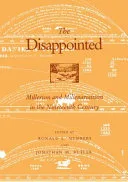
The Disappointed
 76
76

The Disappointed
The Disappointed offers a sober examination of William Miller's prophetic movement, moving beyond hagiography or simple dismissal. Its strength lies in presenting the scholarly discourse surrounding the Millerite phenomenon, particularly its intellectual roots and its lasting impact on American religious landscapes. The inclusion of primary documents in the revised edition provides valuable firsthand material. However, the collection occasionally suffers from a density that might deter the casual reader, with some essays assuming a deep prior knowledge of the theological debates of the era. A particularly compelling section discusses the theological gymnastics required post-1843 to salvage the movement's core tenets, demonstrating intellectual resilience. The work serves as an essential resource for understanding how fervent belief, when unmet, can paradoxically forge enduring institutions. It is a critical study for anyone interested in the birth of American new religious movements.
📝 Description
76
Published in 1984, The Disappointed analyzes William Miller's prediction of Christ's return.
This collection of essays, originally stemming from a 1984 conference, examines William Miller's fervent prediction of Christ's imminent return around 1843. The authors scrutinize the intellectual currents and anticipation that propelled his message, which led to the formation of significant new religious movements. The second edition includes updates and additional documents, offering a more complete view of the subject. The period surrounding Miller's preaching, primarily in the 1830s and 1840s, was marked by widespread religious fervor and social reform movements in the United States. This era, often called the Second Great Awakening, fostered an environment ripe for prophetic pronouncements. Miller's calculations, based on biblical chronology, ignited widespread excitement and apprehension, culminating in the Great Disappointment when the predicted event did not occur. This event did not extinguish the movement; rather, it led to its reinterpretation and the establishment of enduring denominations.
The volume is intended for scholars of American religious history, students of esotericism, and those interested in belief systems that emerge from apocalyptic prophecies. It appeals to readers who study the origins of groups like the Seventh-day Adventists and the broader phenomenon of millennialism. Individuals seeking to understand how specific interpretations of scripture can shape religious movements and social phenomena will find this work particularly relevant.
The book engages with traditions of biblical interpretation focused on end-times prophecy, a significant thread within esoteric thought. It examines how specific calculations and readings of scripture can generate intense social movements and new religious formations. This focus on prophecy, numerology, and the perceived imminent transformation of the world connects it to broader esoteric interests in decoding divine timelines and understanding historical epochs.
💡 Why Read This Book?
• Understand the specific calculations and biblical interpretations William Miller employed, revealing how prophecy can be constructed from textual analysis, a key aspect of scriptural hermeneutics. • Grasp the concept of the 'Great Disappointment' of 1843 and its direct impact on the formation of the Seventh-day Adventist Church and other related movements. • Explore the social and religious climate of the Second Great Awakening, recognizing how Miller's movement was both a product of and a catalyst for intense spiritual and social engagement in antebellum America.
⭐ Reader Reviews
Honest opinions from readers who have explored this book.
❓ Frequently Asked Questions
What was William Miller's main prediction regarding the Second Coming?
William Miller predicted the Second Coming of Christ and the end of the world to occur 'about the year 1843,' based on his interpretation of biblical prophecies.
What is the 'Great Disappointment' mentioned in relation to William Miller?
The 'Great Disappointment' refers to the widespread disillusionment experienced by Miller's followers when the predicted Second Coming of Christ did not occur in 1843 or 1844.
Which major religious movement originated from William Miller's teachings?
The Seventh-day Adventist Church is a prominent religious movement that emerged from the followers of William Miller after the Great Disappointment.
When was the first edition of 'The Disappointed' published?
The first edition of 'The Disappointed' was published in 1993, stemming from a conference held in Vermont in May-June 1984.
What is the significance of the conference that spawned this book?
The conference held in Vermont in 1984 brought together scholars to discuss the thinking and influence of William Miller, laying the groundwork for the essays collected in the book.
Are there any new documents in the second edition of 'The Disappointed'?
Yes, the second edition includes minor textual changes and one important new document, offering an updated perspective on William Miller's movement.
🔮 Key Themes & Symbolism
Apocalyptic Prophecy and Interpretation
The book meticulously examines how William Miller interpreted biblical texts, particularly Daniel and Revelation, to derive a specific date for the end times. This process highlights a common esoteric practice of chronomancy and scriptural decoding to predict future events, revealing the mechanics behind prophetic calculation that fascinated many in the early 19th century.
The Great Disappointment's Aftermath
A central theme is the psychological and theological response to the non-fulfillment of Miller's 1843 prediction. The work details how followers grappled with this crisis, leading to schisms but also to the reinterpretation of prophecies and the eventual formation of enduring denominations like the Seventh-day Adventists, demonstrating resilience in belief systems.
Formation of New Religious Movements
The essays trace the lineage from Miller's movement to subsequent religious groups. It analyzes the factors that contribute to the birth and survival of new religious movements, including shared charismatic leadership, distinct doctrinal interpretations, and communal responses to societal or eschatological crises.
Revivalism and Social Reform
The book situates Millerism within the broader context of the Second Great Awakening and the era's pervasive social reform movements. It explores how religious fervor intertwined with social activism, and how apocalyptic expectations often fueled desires for immediate societal transformation or withdrawal.
💬 Memorable Quotes
“Miller's prediction of the second coming of Christ and the end of the world 'about the year 1843'”
— This phrase encapsulates the core of William Miller's message and the movement it spawned, highlighting the specific eschatological focus that defined his followers and their anticipation.
“The second edition includes minor changes and one important new document.”
— This annotation points to the curated nature of the scholarly work, suggesting that the updated version offers refined analysis and potentially new primary source material for deeper understanding.
“Fostered several new religious movements, including Seventh-day Adventists.”
— This highlights the direct, tangible legacy of Miller's prophecy, identifying a major contemporary religious body whose origins are inextricably linked to his pronouncements and their aftermath.
“The subject is the thinking and influence of William Miller.”
— This statement defines the book's central focus, indicating that the work aims to explore not just Miller's predictions but the intellectual framework and broader impact of his teachings.
“The first edition... grew out of a conference held in Vermont, May-June 1984”
— This provides the genesis of the book, grounding its scholarly origins in a specific academic event and location, underscoring its foundation in collaborative research and discussion.
🌙 Esoteric Significance
Tradition
While not strictly within a codified esoteric lineage like Hermeticism or Kabbalah, William Miller's movement tapped into a long tradition of Christian eschatology and apocalyptic interpretation. This practice of deciphering prophetic timelines from scripture shares roots with historical movements that sought divine revelation through numerology and symbolic reading of sacred texts, aiming for direct knowledge of God's plan.
Symbolism
The primary 'symbol' is the date itself—1843—which became a focal point of intense spiritual focus and calculation, functioning as a temporal icon for divine intervention. The concept of 'cleansing the sanctuary,' derived from Daniel 8:14, also served as a key symbolic interpretation that Millerites used to reframe their disappointment, suggesting a heavenly rather than earthly event.
Modern Relevance
Contemporary studies of new religious movements, millennialism, and the sociology of belief continue to draw upon the Millerite experience. Thinkers exploring the psychology of faith, the dynamics of communal expectation, and the resilience of belief systems in the face of failed prophecy find the Millerite case study invaluable for understanding contemporary phenomena.
👥 Who Should Read This Book
• Scholars of American religious history seeking primary source analysis and historiographical review of the Millerite movement. • Students of esotericism and prophecy interested in the mechanisms of date-setting and the impact of failed eschatological predictions. • Researchers of new religious movements investigating the origins and development of denominations like the Seventh-day Adventists.
📜 Historical Context
The Disappointed emerges from a rich historical milieu in antebellum America, a period characterized by intense religious revivalism known as the Second Great Awakening. This era, spanning roughly the late 18th to mid-19th centuries, saw widespread evangelical fervor, the rise of new denominations, and a flourishing of social reform movements. William Miller's prophetic movement, predicting Christ's return around 1843, gained significant traction within this climate of expectation and spiritual searching. Competing with established religious orthodoxies, Millerism tapped into popular anxieties and hopes. The movement's subsequent 'Great Disappointment' when the prediction failed to materialize was a pivotal event, examined here for its role in schism and the eventual consolidation of groups like the Seventh-day Adventists. Scholars such as David Rowe have since engaged with the complexities of Millerism, placing it within broader studies of American religious history and millennialism.
📔 Journal Prompts
The Millerite interpretation of 1843 as a pivotal prophetic date.
The theological adjustments made by Millerites post-disappointment.
William Miller's specific methods of scriptural interpretation.
The societal factors that contributed to the growth of Millerism.
The legacy of the Millerite movement on subsequent religious groups.
🗂️ Glossary
Millerism
The religious movement originating from the teachings of William Miller, which predicted the Second Coming of Christ around the year 1843.
Second Coming
In Christian theology, the anticipated return of Jesus Christ to Earth to fulfill eschatological prophecies and establish God's kingdom.
Eschatology
The branch of theology concerned with the final events of history, or the ultimate destiny of humanity and the world.
Great Disappointment
The period of disillusionment experienced by Miller's followers when the predicted Second Coming did not occur as expected in 1843-1844.
Seventh-day Adventists
A Christian denomination that emerged from the Millerite movement, emphasizing the observance of the Sabbath on Saturday and belief in the imminent return of Christ.
Apocalypticism
Belief in or the study of an imminent, divine revelation of the end of the world or the establishment of a new age.
Second Great Awakening
A period of intense religious revivalism in the United States during the early to mid-19th century.