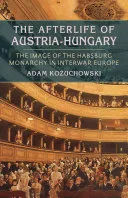
The Afterlife of Austria-Hungary
 72
72

The Afterlife of Austria-Hungary
Kozuchowski's analysis of the post-imperial cult of Austria-Hungary is particularly sharp when dissecting the interwar period's romanticization of the Habsburg realm. The book effectively demonstrates how the empire, despite its documented failings, became a potent symbol for those seeking order or an idealized past. A notable strength is the exploration of how figures like Crown Prince Otto von Habsburg actively engaged in shaping this posthumous narrative. However, the work occasionally feels less concerned with the *causes* of the empire's initial decline and more focused on its subsequent mythologizing. A specific passage detailing the debates surrounding the "Danubian Federation" concept offers a compelling insight into the intellectual currents of the era. The verdict: a vital study for understanding historical memory's malleability.
📝 Description
72
Adam Kozuchowski's 2017 book examines Austria-Hungary's persistent memory after 1918.
Adam Kozuchowski's "The Afterlife of Austria-Hungary" investigates how the Habsburg monarchy retained a presence in collective memory long after its 1918 dissolution. Despite its historical reputation, the empire saw a significant resurgence in popular and intellectual discussion during the interwar period. The book is not a conventional history of the empire itself. Instead, it focuses on its existence after its political end, analyzing how narratives about the dual monarchy were shaped, debated, and used by different groups and ideologies.
Kozuchowski traces the evolution of the empire's image from its collapse after World War I through the turbulent interwar years. He scrutinizes how figures like Crown Prince Otto von Habsburg and various intellectuals engaged with the imperial legacy. The work examines the conceptual frameworks and political motivations behind this post-imperial fascination. It demonstrates how the memory of Austria-Hungary served different agendas, from nationalist goals to pan-European ideas, showing its lasting, though spectral, impact on the 20th century's political and cultural spheres.
While not a spiritualist text in the common sense, this book engages with the concept of an 'afterlife' for a political entity. It explores how the ghost of Austria-Hungary haunted the discourse of the 20th century, much like spiritualists claimed to commune with spirits of the departed. The fascination with the empire's memory, particularly in the interwar years, mirrors the broader cultural interest in spiritualism and the occult during that era, where people sought meaning and connection in the wake of immense societal upheaval and loss. The book analyzes this cultural moment through the lens of historical memory and political symbolism.
💡 Why Read This Book?
• Learn how the assassination of Archduke Franz Ferdinand in 1914 became a historical pivot point, influencing the narrative construction of the fallen Austro-Hungarian Empire in the years that followed. • Understand the specific role of figures like Crown Prince Otto von Habsburg in actively shaping the posthumous image of the monarchy during the interwar period. • Discover how the concept of a "Danubian Federation" was debated and utilized in the interwar years, revealing the complex political and ideological currents surrounding Austria-Hungary's legacy.
⭐ Reader Reviews
Honest opinions from readers who have explored this book.
❓ Frequently Asked Questions
What is the primary focus of "The Afterlife of Austria-Hungary"?
The book examines the persistence and reinvention of the Austro-Hungarian Empire's image and memory in the decades following its collapse in 1918, particularly during the interwar period.
Who was Archduke Franz Ferdinand and why is he mentioned?
Archduke Franz Ferdinand was heir to the Austro-Hungarian throne. His assassination in 1914 is presented as a key event that precipitated World War I and the empire's eventual downfall.
What does the book say about the empire's reputation before its collapse?
Kozuchowski notes that despite historical narratives of decadence and ethnic indifference, the empire enjoyed a renewed popularity in interwar narratives, suggesting a complex and contested legacy.
How did the Austro-Hungarian monarchy end?
The Habsburg monarchy, after nearly four hundred years of rule, was formally expunged following the events of World War I, with the empire officially dissolving by 1918.
What is the significance of the "Danubian Federation" in the book?
The "Danubian Federation" represents one of the interwar concepts that sought to grapple with the legacy of the dissolved empire, illustrating ongoing debates about Central European identity and organization.
Is this a general history of Austria-Hungary?
No, "The Afterlife of Austria-Hungary" is not a comprehensive history of the empire's existence but rather focuses on its representation and symbolic meaning after its dissolution.
🔮 Key Themes & Symbolism
Post-Imperial Nostalgia
The work investigates the surprising surge of positive sentiment and idealized remembrance for the Austro-Hungarian Empire in the interwar years. This nostalgia, often overlooking the empire's actual shortcomings like ethnic indifference, served as a counter-narrative to the perceived chaos and fragmentation of the post-WWI landscape. It provided a sense of continuity and a perceived golden age for those disillusioned with the present, transforming the empire into a potent symbol of order and tradition.
Narrative Construction of Identity
Kozuchowski details how various groups and individuals actively constructed narratives about the Habsburg monarchy to forge new identities in the successor states and beyond. Figures like Crown Prince Otto von Habsburg played a role in this, promoting a vision of the empire that could serve contemporary political and cultural agendas. This highlights how historical memory is not static but a dynamic process shaped by present-day needs and desires.
Symbolic Power of Monarchy
The book explores the enduring symbolic power of monarchy, even after its political demise. The Austro-Hungarian Empire, despite being abolished in 1918, continued to represent a specific set of values—tradition, hierarchy, a certain cosmopolitanism—that resonated with many. This symbolic afterlife allowed the empire to function as a reference point for debates about Central European identity and the future of the continent.
The Specter of Collapse
The dramatic fall of the empire, precipitated by events like the 1914 assassination of Archduke Franz Ferdinand, cast a long shadow. Kozuchowski examines how this collapse became a focal point for understanding the subsequent turmoil of the 20th century. The empire's end served as both a cautionary tale and a historical anchor for understanding the radical transformations reshaping Central Europe.
💬 Memorable Quotes
Direct passages from the work, attributed to the author.
“the empire enjoyed a renewed popularity in interwar narratives”
— This suggests a historical paradox: the very entity that collapsed under internal and external pressures became a subject of idealized fascination shortly thereafter, indicating a complex relationship with the past.
“the Habsburg monarchy was expunged in an instant of history”
— This phrase captures the abruptness and finality of the empire's dissolution, emphasizing the swiftness with which a centuries-old political structure could disappear from the map.
“it remains a crucial point of reference for Central European ide”
— Even after its political end, the Austro-Hungarian Empire continues to inform discussions about identity, politics, and culture in the region, demonstrating its lasting conceptual weight.
“Archduke Franz Ferdinand in 1914 was just one link in a chain of events”
— This frames the assassination not as an isolated incident but as a catalyst within a larger historical process, highlighting the interconnectedness of events leading to WWI and the empire's demise.
“despite tales of decadence, ethnic indifference, and a failure to modernize”
— This acknowledges the commonly cited criticisms of the empire, setting up the subsequent discussion of its surprising post-mortem popularity against these known historical issues.
🌙 Esoteric Significance
Tradition
While not explicitly adhering to a singular esoteric lineage, the work appeals to Hermetic principles of correspondence and the idea that the macrocosm (political structures) reflects the microcosm (collective consciousness and memory). It examines how symbolic remnants of a past political entity continue to exert influence, much like an alchemical residue that shapes future transformations. The focus on the persistence of form beyond physical dissolution aligns with occult ideas about spiritual or energetic imprints.
Symbolism
The recurring motif of the Habsburg double-eagle, a potent dynastic and imperial symbol, represents continuity, tradition, and a supranational ideal. The crown itself, even when detached from a living monarch, signifies authority and a historical narrative. The empire's eventual fragmentation into successor states can be seen through an esoteric lens as a process of dispersal of a unified energetic field, with subsequent attempts at re-aggregation (like the Danubian Federation concept) representing efforts to reclaim that lost unity.
Modern Relevance
Contemporary discussions on national identity, historical revisionism, and the lingering impact of imperial legacies in Central Europe draw directly from the analytical frameworks Kozuchowski employs. Thinkers engaged with post-colonial studies and the critique of nation-state formation find parallels in the Austro-Hungarian experience. Furthermore, fringe historical groups and certain nationalist movements continue to invoke the 'spirit' of the old empire, making Kozuchowski's analysis crucial for understanding these contemporary appropriations of the past.
👥 Who Should Read This Book
• Students of historical memory and cultural studies seeking to understand how defunct political entities are re-imagined and utilized in subsequent eras. • Researchers of Central European history and identity, particularly those interested in the interwar period and the complex legacy of the Habsburg monarchy. • Individuals fascinated by the symbolic power of empires and the ways in which their 'ghosts' continue to influence contemporary political and cultural discourse.
📜 Historical Context
Published in 2014, Adam Kozuchowski's "The Afterlife of Austria-Hungary" engages with a rich historiographical debate that gained momentum in the late 20th century, challenging earlier, often dismissive, assessments of the Habsburg realm. The era of its writing is marked by a broader academic interest in memory studies and the symbolic power of defunct states, particularly in Central and Eastern Europe. The book emerges in dialogue with scholars like Larry Wolff, who explored the "Invention of Europe" and the region's complex identity, and Pieter Judson, who has extensively researched the empire's internal dynamics and its late-stage reforms. Kozuchowski's work implicitly refutes the simplistic narratives that dominated immediately after 1918, which often blamed the empire for the region's instability. The reception of such studies in academic circles has been generally positive, as they offer nuanced perspectives on a period often overshadowed by the cataclysms of the World Wars.
📔 Journal Prompts
The spectral persistence of the Austro-Hungarian Empire.
Interwar narratives surrounding the Habsburg monarchy.
The symbolic weight of the double-eagle emblem.
Crown Prince Otto von Habsburg's role in memory construction.
The concept of a Danubian Federation.
🗂️ Glossary
Dual Monarchy
Refers to the constitutional union of the Empire of Austria and the Kingdom of Hungary, established by the Austro-Hungarian Compromise of 1867, which lasted until 1918.
Interwar Period
The historical span between the end of World War I (1918) and the beginning of World War II (1939), a time of significant political upheaval and cultural change in Europe.
Habsburg Monarchy
The ruling dynasty and the territories it governed, encompassing Austria, Hungary, Bohemia, and various other regions for centuries until its dissolution in 1918.
Successor States
The new nations that emerged from the dissolution of the Austro-Hungarian Empire, such as Austria, Hungary, Czechoslovakia, and parts of Poland, Romania, and Yugoslavia.
Danubian Federation
A proposed political entity encompassing the territories of the former Austro-Hungarian Empire, discussed by various figures and groups during the interwar period as a potential solution to regional instability.
Historical Memory
The collective recollection and interpretation of past events, which is actively shaped and contested by societies and individuals over time.
Archduke Franz Ferdinand
Heir presumptive to the Austro-Hungarian throne whose assassination in Sarajevo on June 28, 1914, is widely considered a primary catalyst for World War I.