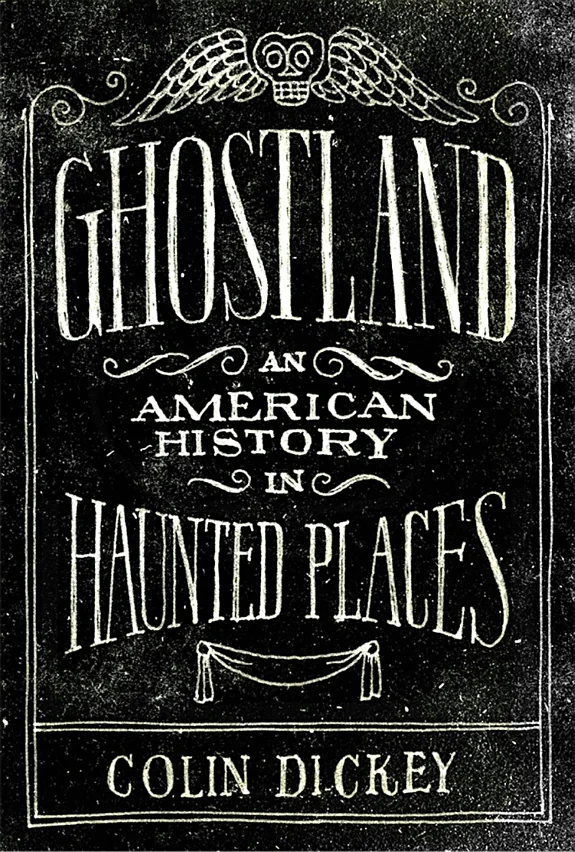
Ghostland
 83
83

Ghostland
Colin Dickey’s "Ghostland" offers a compelling argument that America’s most notorious haunted sites are less about disembodied spirits and more about the spectral residue of national sins. The book excels in its intellectual rigor, treating ghost stories as cultural artifacts ripe for deconstruction. Dickey’s analysis of the Winchester Mystery House, for instance, reveals it not as a product of grief but as a monument to unchecked Gilded Age capitalism and its anxieties.
While the extensive historical research is commendable, the sheer breadth of locations sometimes dilutes the focus, occasionally feeling like a rapid tour rather than a deep immersion. The argument that these hauntings are intrinsically tied to specific American traumas is robust, yet a deeper engagement with the phenomenology of subjective experience might have further enriched the narrative. "Ghostland" is a sharp, insightful examination of how place and memory intertwine, offering a valuable perspective on the persistent echoes of the past.
Read more ↓
It is a significant contribution to understanding how our built environments carry the weight of history.
📝 Description
83
### What It Is Colin Dickey's "Ghostland" is a meticulously researched exploration of America's haunted places, not as spectral encounters, but as manifestations of national anxieties and historical traumas. Dickey frames these sites as narratives, sites where collective memory, both celebrated and suppressed, takes tangible form.
### Who It's For This work appeals to readers interested in cultural history, folklore, and the psychology of place. It is for those who see ghost stories not as supernatural tales, but as a lens through which to examine societal fears, historical injustices, and the lingering impact of the past on the present landscape.
### Historical Context Published in 2016, "Ghostland" emerged during a period of heightened national introspection regarding historical narratives and their enduring consequences. It follows in a tradition of American cultural criticism that seeks to uncover hidden histories, akin to the work of scholars like Greil Marcus or the explorations of American mythos found in authors like Joan Didion.
### Key Concepts The book investigates the concept of the 'haunting' as a metaphor for unresolved historical issues. It examines how certain locations become imbued with spectral significance due to events like slavery, industrial decline, or acts of violence, transforming them into mnemonic devices for collective guilt or forgotten histories.
💡 Why Read This Book?
• Gain a new framework for understanding 'haunted' locations as historical narratives, specifically by examining Dickey's analysis of places like the Stanley Hotel and its connection to tourism and historical myth-making. • Explore how societal anxieties, particularly those surrounding the Gilded Age and industrial decline, are encoded in the folklore of specific American sites, as detailed in chapters focusing on locations linked to economic upheaval. • Understand the concept of 'psychogeography' in practice, seeing how physical spaces can embody collective memory and unresolved historical traumas, exemplified by Dickey's exploration of sites tied to slavery and civil rights struggles.
⭐ Reader Reviews
Honest opinions from readers who have explored this book.
❓ Frequently Asked Questions
What is the main thesis of Colin Dickey's "Ghostland"?
The central argument is that America's most famous haunted places are not primarily about ghosts, but serve as physical manifestations of the nation's unresolved historical traumas, anxieties, and suppressed memories.
Which specific historical periods does "Ghostland" explore?
The book frequently references the Gilded Age, the era of industrialization and significant economic disparity, as well as periods of frontier expansion, slavery, and the Civil Rights Movement.
How does "Ghostland" differ from typical ghost story collections?
Instead of focusing on the supernatural, "Ghostland" uses ghost stories as a lens for cultural criticism, analyzing the historical and psychological underpinnings of why certain places are considered haunted.
What is the significance of the Winchester Mystery House in the book?
Dickey uses the Winchester Mystery House to illustrate how a site can become a symbol of Gilded Age excess, capitalist anxieties, and the lingering presence of wealth and its discontents.
Does "Ghostland" offer proof of ghosts?
No, the book is not concerned with proving or disproving the existence of ghosts. Its focus is on the cultural, historical, and psychological reasons behind the belief in hauntings.
What does Dickey mean by 'haunted places' in an intellectual context?
He uses 'haunted places' to denote locations where significant historical events or societal issues have left an indelible mark, creating a palpable sense of the past that influences present perceptions.
🔮 Key Themes & Symbolism
Haunting as Historical Trauma
Dickey posits that 'haunted' places are sites where significant historical events, particularly those involving violence, injustice, or societal upheaval, leave a psychic imprint. These locations become repositories for collective memory and unresolved issues. For example, he examines how sites associated with slavery or industrial decline become imbued with spectral narratives, serving as a form of historical reckoning that the present landscape cannot ignore. The book argues these hauntings are less about the supernatural and more about the psychological weight of the past.
The Gilded Age and Its Specters
A significant portion of "Ghostland" scrutinizes the Gilded Age (roughly 1870-1900) and its lingering impact on American consciousness. Dickey links the excessive wealth, stark class divisions, and rapid industrialization of this era to the anxieties that manifest in haunted folklore. The Winchester Mystery House, with its labyrinthine architecture born from immense wealth, serves as a prime example of how material excess can generate its own spectral narrative, reflecting the era's unease with capitalism.
Place, Memory, and Narrative
The book explores the intricate relationship between physical locations, collective memory, and the stories we tell about them. Dickey treats ghost stories as a form of vernacular history, offering insights into what a community or nation chooses to remember, forget, or fear. He demonstrates how certain buildings and landscapes become focal points for these narratives, shaping our perception of the past and its continued presence in the 'now'.
The American Psyche and Folklore
Dickey investigates how American identity and its inherent contradictions are reflected in its ghost lore. He connects the prevalence of hauntings in certain regions to specific historical injustices or societal anxieties, such as westward expansion, racial inequality, or economic depression. The folklore of these places, therefore, becomes a crucial element in understanding the broader American psyche and its ongoing struggle with its own history.
💬 Memorable Quotes
“Our haunted places are not about the ghosts themselves, but about what they represent.”
— This encapsulates Dickey's central thesis: the focus should be on the cultural and historical meaning behind ghost stories, not on literal spectral occurrences. It frames hauntings as symbolic expressions of deeper societal issues.
“The Winchester Mystery House is a monument to the American obsession with wealth and its discontents.”
— This highlights Dickey's critical lens on the Gilded Age, using the famous mansion to discuss the psychological and cultural anxieties generated by immense fortunes and unchecked capitalism.
“Ghost stories are a way for us to grapple with the past.”
— This interpretation emphasizes the function of folklore in processing historical events and collective traumas. It suggests that hauntings serve a psychological purpose in confronting difficult aspects of history.
“The landscape itself remembers.”
— This evocative phrase speaks to the idea that places absorb the events that transpire within them, becoming sites where history feels palpably present, influencing our modern experience of those locations.
“Hauntings often attach themselves to sites of profound historical trauma or societal unease.”
— This summarizes the book's argument that the 'haunting' of a place is intrinsically linked to significant, often painful, historical occurrences or deep-seated cultural anxieties that remain unresolved.
🌙 Esoteric Significance
Tradition
While not strictly adhering to a single esoteric lineage, "Ghostland" draws heavily on concepts found within psychogeography and certain branches of Western esotericism that explore the energetic or psychic residue of places. It echoes Gnostic ideas of the material world bearing the marks of past suffering and liberation. The work departs from traditional occultism by focusing on collective, historically-rooted hauntings rather than individual psychic phenomena or spiritual entities, offering a materialist interpretation of 'haunting'.
Symbolism
The book frequently uses architectural symbolism, treating buildings like the Winchester Mystery House not just as structures, but as manifestations of the owner's psyche and historical context. Cemeteries and battlefields are explored as literal embodiments of death and conflict, acting as potent symbols of national memory and unresolved pasts. The concept of 'ruin' itself functions symbolically, representing decay, forgotten histories, and the inexorable passage of time that leaves its mark on the land.
Modern Relevance
Contemporary thinkers and practitioners in fields like critical geography, urban studies, and even certain forms of speculative fiction draw upon Dickey's approach. His work is relevant to discussions around historical trauma, memory studies, and the ethics of place. It informs modern explorations of how environments can retain 'imprints' of past events, influencing contemporary practices that aim to understand or reclaim marginalized histories through engagement with physical locations.
👥 Who Should Read This Book
• Cultural historians and folklore enthusiasts seeking to understand the deeper meanings behind ghost stories and their connection to national identity. • Readers interested in psychogeography and the study of how environments shape human experience and memory. • Those fascinated by American history, particularly the Gilded Age and periods of significant social or economic upheaval, and their lingering cultural impact.
📜 Historical Context
Published in 2016, "Ghostland" arrived during a period where American cultural narratives were undergoing intense scrutiny, particularly concerning race, class, and historical memory. Dickey's work engages with a long tradition of American cultural criticism that seeks to uncover the hidden anxieties beneath the surface of national identity, akin to the critical inquiries of figures like Henry Nash Smith in his examination of the West. The book gained traction amidst growing public discourse on the legacies of slavery and industrialization, making its exploration of how these issues manifest in folklore particularly relevant. Unlike purely academic studies, Dickey’s approach is more accessible, blending scholarly research with a road-trip narrative structure. Its reception highlighted a public appetite for understanding how historical traumas continue to shape the contemporary American landscape, positioning it as a significant contribution to popular cultural history.
📔 Journal Prompts
The spectral narratives attached to the Stanley Hotel, as explored in "Ghostland", reflect specific anxieties of its era. Reflect on how contemporary anxieties might attach themselves to modern public spaces.
Consider the Winchester Mystery House as a monument to Gilded Age excess. How does its architecture embody the psychological landscape of its time?
Dickey connects hauntings to unresolved historical traumas. Identify a historical event in your local area and consider what kind of 'haunting' narrative might emerge from it.
The concept of the landscape 'remembering' is central. How do specific places in your own life hold memories for you, independent of explicit stories?
Analyze the role of the 'ghost' in "Ghostland" as a symbol rather than a literal entity. What societal fears or repressed histories does it represent in the contexts Dickey examines?
🗂️ Glossary
Gilded Age
A period in U.S. history (roughly 1870-1900) characterized by rapid economic growth, industrial expansion, and significant wealth accumulation, alongside severe social inequality and political corruption.
Psychogeography
The study of the specific psychological effects of the geographical environment, on the emotions, thoughts, and behaviors of individuals and groups.
Vernacular History
History as understood and transmitted through local traditions, folklore, and popular accounts, often distinct from official or academic historical narratives.
Mnemonic Device
An object, place, or concept that aids memory; in this context, haunted places serve as physical anchors for collective memory and historical events.
Cultural Artifact
An object produced by a human culture that has historical or symbolic significance, used here to describe ghost stories and haunted places themselves.
Residual Haunting
A type of paranormal phenomenon where a place seems to replay past events or emotions, often understood as an energetic imprint rather than an interactive spirit.
National Anxiety
Widespread fears, concerns, or collective unease within a nation, often related to its history, identity, political stability, or social issues.