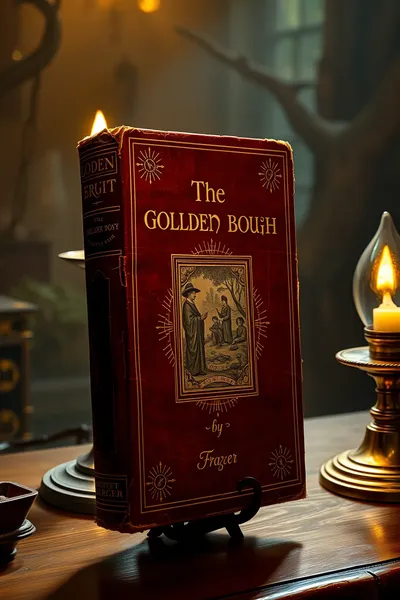
72
72

FUSANG


Isolde Whitaker, Sacred Texts Editor—Charles G. Leland's "Fusang" is a compelling exploration into one of history's most enduring enigmas: early trans-Pacific contact. Leland, with his keen eye for esoteric connections and obscure lore, presents a meticulously researched argument for ancient Chinese voyages to America. The book transcends mere historical speculation, delving into the potential transmission of spiritual knowledge and symbolic understanding. Its strength lies in connecting seemingly disparate threads of evidence, offering a holistic view of human migration and cultural exchange. "Fusang" is an essential read for scholars of ancient history, comparative mythology, and anyone intrigued by the deeper, hidden currents that have shaped our world. It beckons the seeker to look beyond the obvious and embrace the possibility of a richer, more interconnected past.
📝 Description
Embark on a profound journey into the veiled chronicles of pre-Columbian America with Charles G. Leland's "Fusang." This seminal work delves into the tantalizing possibility of ancient Chinese mariners reaching the shores of the New World, not merely as a historical footnote, but as a conduit for esoteric wisdom and forgotten spiritual currents. Leland masterfully weaves together seafaring lore, linguistic clues, and symbolic interpretations to paint a picture of a world far more interconnected than conventional history suggests. Imagine intrepid voyagers guided by celestial patterns and the subtle energies of the ocean, carrying with them ancient philosophies and mystical practices. "Fusang" is for the discerning reader who questions established narratives, who seeks the hidden threads connecting disparate cultures, and who understands that the true history of humanity is often etched in the language of myth and symbol. It is an invitation to explore the profound spiritual landscape that may have existed before the Great Separation, a testament to the enduring quest for knowledge across vast expanses of time and space. Prepare to have your perceptions of global history and ancient consciousness profoundly expanded.
💡 Why Read This Book?
Uncover the lost narratives of ancient global connectivity. "Fusang" offers compelling evidence and esoteric interpretations of pre-Columbian trans-Pacific voyages, challenging conventional history. It's ideal for seekers of hidden knowledge, scholars of ancient civilizations, and practitioners interested in the cross-pollination of spiritual traditions. Read this to expand your understanding of humanity's shared past and the mystical journeys that shaped continents.
⭐ Reader Reviews
Honest opinions from readers who have explored this book.
❓ Frequently Asked Questions
What is the central argument of "Fusang"?
The central argument posits that ancient Chinese mariners, utilizing advanced maritime technology and favorable oceanic currents, successfully navigated the Pacific Ocean to reach the Americas long before European exploration, potentially sharing cultural and esoteric knowledge.
What evidence does Leland present?
Leland draws upon historical accounts of Chinese voyages, linguistic similarities, mythological parallels, and symbolic interpretations found in both Eastern and Western cultures to build his case for pre-Columbian contact.
Who was Charles G. Leland?
Charles G. Leland was a prominent American folklorist, antiquarian, and author known for his interest in esoteric subjects, occultism, and comparative mythology. He was a collector of unusual knowledge and a keen observer of hidden cultural connections.
Is "Fusang" a purely historical text?
While grounded in historical inquiry, "Fusang" is deeply infused with esoteric and symbolic interpretations, exploring the potential spiritual and philosophical exchanges that may have occurred during these ancient voyages. It bridges history with mysticism.
What does the title "Fusang" refer to?
In ancient Chinese mythology, Fusang is a mythical tree located in the east, often associated with the sun and the origin of the world. It also refers to a legendary land, which Leland connects to the Americas in his theory.
🔮 Key Themes & Symbolism
Ancient Trans-Pacific Voyages
This theme explores the audacious possibility of ancient Chinese mariners traversing the vast Pacific Ocean to reach the Americas. It delves into the practicalities of such journeys, considering prevailing winds, ocean currents, and the advanced maritime capabilities of ancient China. Leland meticulously examines historical records and geographical clues, presenting a case that challenges conventional timelines of global exploration and suggests a much earlier, interconnected world. The focus is on the courage, navigational prowess, and perhaps even the spiritual impetus that drove these legendary voyages into the unknown.
Esoteric Knowledge Transmission
Beyond mere physical contact, "Fusang" investigates the potential exchange of profound esoteric knowledge and spiritual traditions between ancient China and the Americas. Leland suggests that these voyages were not just for trade or expansion, but also for the dissemination of philosophical insights, mystical practices, and symbolic languages. The book probes how ancient wisdom might have crossed oceans, influencing mythologies, cosmologies, and the very understanding of consciousness in both hemispheres. It highlights the idea that shared spiritual currents may have existed long before documented cultural exchanges.
Myth, Symbolism, and Hidden History
This theme underscores Leland's approach to uncovering history through the lens of myth, symbolism, and folklore. "Fusang" argues that ancient myths and legends, often dismissed as mere fantasy, contain kernels of historical truth and reveal deeper, hidden connections between cultures. Leland skillfully deciphers symbolic language found in ancient texts and oral traditions, linking them across continents. The book encourages readers to look beyond literal interpretations and engage with the archetypal narratives that shape human understanding, suggesting that the true history of humanity is often encoded in its most profound stories.
💬 Memorable Quotes
“The ocean is a highway, not a barrier.”
— This quote encapsulates the book's central thesis: that vast bodies of water, often perceived as insurmountable obstacles, were in fact navigable routes for ancient peoples, facilitating global connectivity.
“Where history sleeps, myth awakens.”
— This highlights Leland's method of seeking historical truths within mythological narratives, suggesting that ancient stories hold keys to forgotten eras and lost civilizations.
“The East whispers secrets to the West.”
— This evocative phrase points to the potential transfer of esoteric knowledge and philosophical ideas from ancient Eastern civilizations, like China, to the Western hemisphere.
“Stars and currents, the ancient compass.”
— This emphasizes the reliance of ancient mariners on celestial navigation and the natural forces of the ocean, portraying them as sophisticated guides for long-distance travel.
“A forgotten bridge across the silent sea.”
— This poetic line suggests the existence of a lost, historical connection between continents, a pathway that has faded from common memory but remains accessible through dedicated inquiry.
🌙 Esoteric Significance
Tradition
Leland's work draws heavily from comparative mythology and folklore, touching upon elements of ancient Chinese Taoist philosophy and indigenous American spiritual beliefs. It operates within the broader esoteric tradition of seeking hidden truths and interconnectedness between seemingly disparate cultures and belief systems. The exploration of the "Fusang" myth itself suggests an interest in ancient cosmologies and the symbolic representation of the world's origins and its perceived spiritual geography.
Symbolism
Key symbols in "Fusang" include the mythical Fusang tree, representing a gateway between worlds and the source of life or enlightenment, and the vast Pacific Ocean, symbolizing the unconscious, the unknown, and the potential for profound journeys of discovery. Celestial bodies, such as stars and the sun, also feature prominently as ancient navigational tools and cosmic guides. The very idea of the voyage itself becomes a potent symbol for the human quest for knowledge and spiritual awakening.
Modern Relevance
In an age of globalization and renewed interest in indigenous knowledge, "Fusang" resonates deeply. It encourages critical thinking about established historical accounts and opens avenues for exploring the potential for ancient cultural exchange and shared human consciousness. The book's themes of interconnectedness and the enduring power of myth continue to inspire seekers and scholars who believe that understanding our past, including its esoteric dimensions, is crucial for navigating our present and future.
👥 Who Should Read This Book
This work is invaluable for academic scholars of ancient history, archaeology, and comparative mythology seeking to broaden their understanding of pre-Columbian possibilities. Esoteric practitioners and spiritual seekers will find "Fusang" a rich source of inspiration, exploring the transmission of ancient wisdom and the symbolic landscapes of human consciousness. Enthusiasts of hidden history and alternative theories of civilization will be captivated by Leland's meticulous research and compelling arguments. Even beginners curious about the mysteries of the ancient world will find it an engaging and thought-provoking introduction to the idea of a more interconnected global past.
📜 Historical Context
Published in an era of burgeoning interest in comparative mythology, folklore, and fringe historical theories, Charles G. Leland's "Fusang" emerged during a period when scholars and enthusiasts were actively questioning established historical narratives. The late 19th and early 20th centuries saw a surge in research into ancient civilizations, pre-Columbian contact, and the potential for widespread cultural diffusion long before the Age of Exploration. Leland, a prolific folklorist and antiquarian, was at the forefront of this intellectual movement, seeking to uncover hidden connections and challenge Eurocentric views of history. His work on "Fusang" reflects a broader fascination with the East and its ancient wisdom, as well as a desire to illuminate the often-overlooked achievements of non-European cultures in seafaring and intellectual pursuits. The book stands as a testament to the era's adventurous spirit in historical inquiry.
📔 Journal Prompts
Reflect on the concept of the 'ocean as a highway.' How does this idea change your perception of historical exploration and cultural exchange?
Consider the role of myth and legend in preserving historical or spiritual truths. What myths from your own culture might hold hidden meanings?
If ancient Chinese mariners did reach America, what forms of esoteric knowledge might they have shared? Imagine the potential spiritual and philosophical dialogues.
How do celestial bodies and natural phenomena function as 'compasses' in both a literal and metaphorical sense for human journeys?
Explore the idea of "Fusang" as a symbol for a lost connection or forgotten wisdom. What aspects of forgotten knowledge do you feel are most relevant today?
🗂️ Glossary
Pre-Columbian
Referring to the period in the Americas before the arrival of Christopher Columbus in 1492, a time when indigenous civilizations flourished independently.
Esoteric
Intended for or likely to be understood by only a small number of people with a specialized knowledge or interest; relating to mysterious or secret knowledge.
Circumnavigation
The act of sailing or traveling all the way around something, especially the world. In this context, referring to voyages across the Pacific.
Mythology
A collection of myths, especially one belonging to a particular religious or cultural tradition. Often contains symbolic representations of historical events or spiritual beliefs.
Maritime
Relating to the sea, especially concerning navigation, shipping, and naval affairs. Indicates advanced seafaring capabilities.