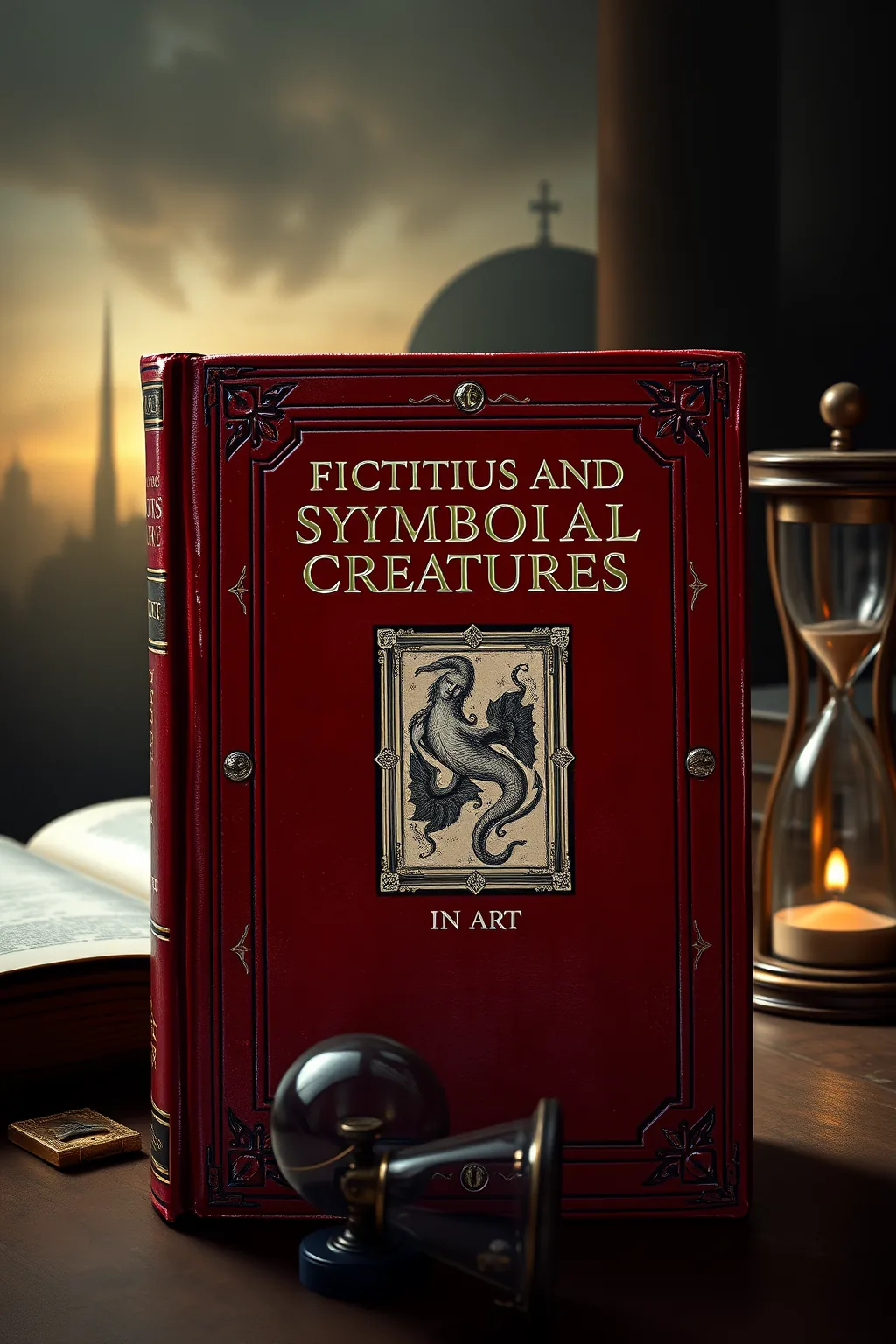
Fictitious and Symbolic Creatures in Art
 79
79

Fictitious and Symbolic Creatures in Art


Aurelia Blackwood (Occult Philosophy Critic) — John Vinycomb's "Fictitious and Symbolic Creatures in Art" is an indispensable tome for any serious student of esoteric symbolism and ancient iconography. Vinycomb masterfully excavates the layered meanings behind legendary beasts, revealing their deep roots in heraldry, folklore, and alchemical traditions. His scholarly yet accessible prose illuminates how these creatures functioned as potent archetypes, embodying primal forces and spiritual concepts. This work is particularly valuable for its detailed examination of visual representations, offering profound insights into the collective unconscious. It's a foundational text for understanding the visual language of magic and mysticism throughout history, essential for practitioners and scholars alike seeking to decode the hidden narratives within art.
📝 Description
79
John Vinycomb's 1906 study examines the symbolic meaning of creatures in art.
Published in 1906, John Vinycomb's "Fictitious and Symbolic Creatures in Art" examines the visual language of mythical beasts as they appear across history and art. Vinycomb, known for his work in heraldry, interprets these figures not just as subjects of legend, but as carriers of meaning within the human psyche and spiritual thought. The book analyzes specific examples, such as the Phoenix, Mermaid, and Dragon, to understand how they functioned as allegories for cosmic order, human experience, and the divine.
Vinycomb's work seeks to reveal the underlying esoteric currents within art and folklore. It positions these fantastical creatures as integral to understanding ancient philosophies and the archetypal patterns that influence collective human understanding. The book functions as a guide to the symbolic vocabulary of past eras, appealing to those interested in arcane knowledge and mystical traditions.
This book emerged from a period when the study of symbolism was intertwined with occult and esoteric traditions. Vinycomb's approach reflects a turn towards understanding art and myth not merely as historical artifacts, but as expressions of deeper psychological and spiritual realities. It aligns with contemporary interests in comparative mythology, alchemy, and the symbolic systems found in Hermeticism and other mystical philosophies. The work positions itself as a decoder of visual codes that were believed to hold hidden truths about the cosmos and human consciousness.
✍️ Author
John Vinycomb
John Vinycomb (July 4, 1833 - January 27, 1928) was an English engraver, illuminator, and heraldic designer. He worked for Marcus Ward & Co.
💡 Why Read This Book?
Uncover the hidden symbolism of legendary beasts that have captivated humanity for centuries. 'Fictitious and Symbolic Creatures in Art' offers a profound exploration of dragons, phoenixes, and mermaids as conduits of ancient wisdom and esoteric knowledge. Ideal for seekers, scholars, and practitioners of occult arts, this book provides a rich understanding of how art reflects our deepest myths and spiritual aspirations, revealing the universal archetypes that connect us to the past.
⭐ Reader Reviews
Honest opinions from readers who have explored this book.
❓ Frequently Asked Questions
What is the primary focus of this book?
The book meticulously examines the origins, symbolism, and artistic depiction of legendary and emblematic creatures like dragons, phoenixes, and mermaids, particularly as they appear in British art, heraldry, and folklore.
Who was John Vinycomb?
John Vinycomb was a respected heraldic artist and antiquarian, whose expertise lends considerable authority and detail to his scholarly explorations of symbolic creatures.
What kind of creatures are discussed?
The book delves into a wide array of mythical beings, including dragons, hydras, phoenixes, mermaids, angels, griffins, and other fantastical or emblematic beasts found in art and legend.
Is this book suitable for beginners in esoteric studies?
While scholarly, the rich descriptions and deep dives into symbolism make it accessible and highly rewarding for beginners interested in the esoteric underpinnings of art and mythology.
What historical period does the book primarily cover?
Published in 1906, the book draws on centuries of artistic and folkloric traditions, with a strong emphasis on medieval and early modern European representations.
🔮 Key Themes & Symbolism
Archetypal Symbolism of Mythical Beasts
This theme explores the profound archetypal significance of creatures such as the dragon, phoenix, and mermaid. Vinycomb explores how these beings, across cultures and eras, embody fundamental human experiences, spiritual aspirations, and cosmological understandings. They serve as potent metaphors for forces of nature, psychological states, and divine principles, offering a visual language to comprehend the ineffable. The book reveals how artists and storytellers utilized these symbolic forms to convey complex philosophical and spiritual ideas, making them enduring carriers of wisdom.
Heraldry as a System of Esoteric Communication
Vinycomb highlights heraldry not just as a system of identification, but as a collection of symbolic communication laden with esoteric meaning. The creatures featured on coats of arms are not arbitrary; they represent virtues, lineage, power, and spiritual allegiances. This section illuminates how heraldic beasts functioned as visual keys, unlocking layers of meaning for those initiated into their symbolic grammar. It underscores the historical use of art and design to convey hidden knowledge and philosophical concepts, particularly within aristocratic and scholarly circles.
The Interplay of Folklore, Art, and Metaphysical Beliefs
This theme examines the symbiotic relationship between folklore, artistic expression, and underlying metaphysical beliefs. Vinycomb demonstrates how legends and myths provided the raw material for artistic creation, while artistic representations, in turn, solidified and propagated these beliefs. The book illustrates how creatures of fiction served as conduits for exploring the unknown, the divine, and the human condition, reflecting the prevailing spiritual and philosophical currents of their times. It's a study in how imagination shapes our understanding of reality and the sacred.
💬 Memorable Quotes
Direct passages from the work, attributed to the author.
“The phoenix rises anew from its own ashes, a proof of eternal cycles.”
— This speaks to the phoenix as a symbol of immortality, spiritual renewal, and the cyclical nature of existence, a core concept in many mystical philosophies.
“Mermaids beckon from the depths, guardians of hidden wisdom and perilous allure.”
— Here, the mermaid represents the allure of the unknown, the subconscious, and the potential dangers and profound knowledge found within the depths of mystery.
“Angels, messengers of the divine, adorn sacred spaces with their celestial forms.”
— This highlights the role of angelic beings as conduits between the earthly and divine realms, their imagery serving as a reminder of spiritual presence and guidance.
“Each beast carries a sigil of forgotten lore, waiting to be deciphered.”
— This emphasizes the book's purpose: to unlock the hidden meanings and ancient knowledge embedded within the imagery of these fantastical creatures.
💡 Key Ideas
Editorial paraphrase of the work's core concepts — not direct quotes.
The dragon, a creature of fire and earth, embodies both destruction and regeneration.
This quote suggests the dualistic nature of the dragon archetype, representing primal forces capable of both annihilation and rebirth, a common theme in esoteric traditions.
🌙 Esoteric Significance
Tradition
This work deeply engages with the Western esoteric tradition, drawing connections to Hermeticism, alchemy, and classical mythology. It treats mythical creatures not merely as decorative elements but as potent symbols representing fundamental forces, psychological states, and stages of spiritual development. Vinycomb's approach aligns with the idea that art itself can be a vehicle for occult knowledge, with each beast acting as a hieroglyph or sigil carrying layered meanings for the initiated.
Symbolism
The core symbolism revolves around the archetypal meanings of creatures: the Dragon as primal power and transformation, the Phoenix as resurrection and immortality, the Mermaid as the allure of the subconscious and the feminine divine, and Angels as celestial messengers. These symbols are explored through their visual representation in art and heraldry, revealing their function as mnemonic devices and keys to understanding cosmic principles and human nature.
Modern Relevance
In an era often characterized by materialism, Vinycomb's work offers a vital connection to the symbolic and imaginative dimensions of human experience. It provides a framework for understanding how ancient myths and archetypes continue to resonate in contemporary art, literature, and psychology. For practitioners, it offers a rich source of symbolic imagery for meditation, ritual, and creative expression, reminding us that the 'fictitious' creatures are powerful manifestations of enduring truths about ourselves and the universe.
👥 Who Should Read This Book
This book is a treasure for several audiences. For **esoteric scholars** and **occult practitioners**, it's an indispensable reference for understanding the symbolic language of mythical beasts in art and heraldry, offering insights into ancient wisdom traditions. **Art historians** and **students of folklore** will find a meticulously researched examination of iconography and its cultural roots. **Seekers of deeper meaning** and **myth enthusiasts** will be captivated by the exploration of universal archetypes and the hidden narratives within legendary creatures. Even **beginners** to esoteric studies will find Vinycomb's rich prose and detailed analyses an engaging and informative introduction to the symbolic power of imagination.
📜 Historical Context
Published in 1906, 'Fictitious and Symbolic Creatures in Art' emerged during a period of intense interest in folklore, mythology, and the occult within the late Victorian and Edwardian eras. This was a time when scholars and artists were actively re-examining ancient traditions, seeking spiritual depth and symbolic meaning in a rapidly modernizing world. The Arts and Crafts movement, Symbolism, and the burgeoning interest in psychical research all contributed to an environment where the study of mythical beasts and their symbolic resonance was both academically valid and popularly embraced. Vinycomb's work stands as a product of this intellectual climate, meticulously cataloging and interpreting the visual language of the fantastical, bridging the gap between historical art, folklore, and nascent esoteric thought, offering a scholarly yet mystically inclined perspective on enduring human fascination with the wondrous.
📔 Journal Prompts
Reflect on a creature from this book that appeals to your own inner symbolic landscape. What qualities does it embody for you?
How have depictions of dragons, phoenixes, or mermaids evolved in modern media compared to the historical examples in Vinycomb's work?
Consider a personal challenge or transformation you have undergone. Can you relate it to the symbolism of a creature discussed in the book?
Explore the concept of 'heraldry' as a symbolic language in your own life. What symbols or images represent key aspects of your identity or journey?
Imagine creating your own symbolic creature. What would it look like, and what esoteric meaning would it carry?
🗂️ Glossary
Heraldry
A system of designing and displaying coats of arms and other insignia, often used to identify individuals, families, or organizations, and deeply embedded with symbolic meaning.
Archetype
A universal, inherited pattern of thought or imagery derived from the experience of the race and present in the individual unconscious, often embodied in mythical figures or symbols.
Iconography
The visual images and symbols used in a work of art or the study or interpretation of these.
Allegory
The interpretation of a text or image as symbolic, typically conveying a moral or political message where characters and events represent abstract ideas.
Esoteric
Intended for or likely to be understood by only a small number of people with a specialized knowledge or interest; relating to or characteristic of the occult.
This book appears in 2 collections
🔮 Readers Also Liked
Browse all →









From the “Transcendental Meditation” Collection
View all →


More Free Esoteric History & Biography Books
View all →