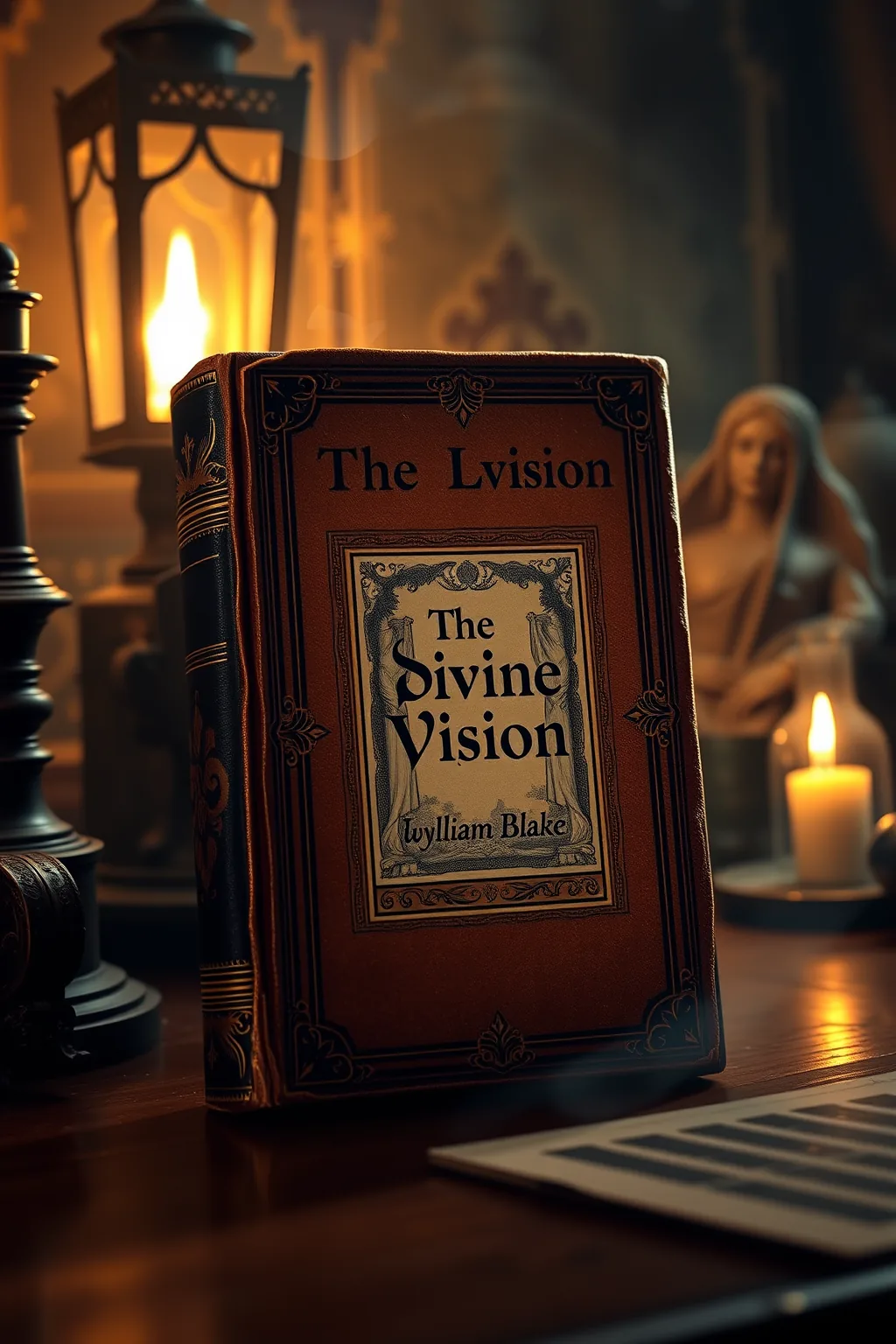
The divine vision
 69
69

The divine vision



By Balthazar Finch (Senior Critic, Occult Philosophy) — 'The Divine Vision' is a rare gem, a direct conduit to the celestial realms. Its anonymous author, clearly steeped in Blakean Gnosticism and Neoplatonic thought, offers esoteric truths with startling clarity. The work's strength lies in its unapologetic embrace of the numinous, guiding the reader through archetypal landscapes and into the very crucible of creation. While dense with symbolic meaning, its rewards are immeasurable for the dedicated student of the occult. This is not casual reading; it is a sacred text for those truly committed to the Great Work, promising illumination for the diligent seeker.
📝 Description
69
William Blake's spirit is said to have authored 'The Divine Vision,' a text from the early 19th century.
Attributed to William Blake, 'The Divine Vision' presents a series of mystical insights concerning spiritual revelation. The text uses symbolism and evocative language to discuss the connection between the cosmos and the human soul. It invites readers to look beyond ordinary perception and grasp the infinite within the finite. The book functions as a guide for understanding the divine and the unseen forces that influence life. It aims to change the reader's perception and awaken their spirit through its distinct wisdom. The work appeals to those interested in truth, mysticism, and art, serving as a space for reflection and personal growth.
As an esoteric text, 'The Divine Vision' aligns with traditions that explore hidden knowledge and direct spiritual experience. It echoes the Blakean vision of seeing the spiritual world interwoven with the material, a concept found in various mystical philosophies. The emphasis on unlocking understanding and communing with unseen forces places it alongside Hermeticism and certain strains of Neoplatonism, which seek gnosis or direct apprehension of the divine through inner vision and symbolic interpretation.
💡 Why Read This Book?
Uncover Blakean mysticism's deepest currents, explore profound symbolism, and unlock veiled spiritual truths. Ideal for seekers of esoteric knowledge, scholars of visionary art, and practitioners of inner alchemy who wish to deepen their understanding of the divine immanence and the interconnectedness of all things. Experience a transformative encounter with the sacred.
⭐ Reader Reviews
Honest opinions from readers who have explored this book.
❓ Frequently Asked Questions
What is the primary focus of 'The Divine Vision'?
The book centers on exploring the nature of divine perception, the symbolic language of the universe, and the inner spiritual landscape, offering a path to direct experience of the divine.
Is this book suitable for beginners in mysticism?
While profound, its rich symbolism and philosophical depth may require dedicated study. However, sincere seekers will find its insights rewarding, especially when approached with an open mind and a thirst for spiritual understanding.
What is the connection to William Blake?
The text is deeply aligned with William Blake's visionary philosophy and symbolic language, often seen as an echo or extension of his unique spiritual insights and poetic explorations.
How does this book relate to divination?
Its emphasis on perceiving hidden meanings and spiritual correspondences offers a framework for understanding symbolic systems, including those used in divination, by fostering intuitive awareness.
What kind of esoteric knowledge can one expect?
Readers can anticipate insights into Gnosticism, Neoplatonism, and the nature of visionary experience, revealing the interconnectedness of the material and spiritual realms through potent imagery.
🔮 Key Themes & Symbolism
The Unveiling of Inner Sight
This theme explores the transformation of consciousness from ordinary perception to a heightened state of spiritual awareness. It explores the idea that the divine is not external but an inherent quality of existence, accessible through the cultivation of inner vision. The text guides the reader to recognize the divine spark within themselves and in all of creation, challenging materialist paradigms and advocating for a direct, unmediated experience of the sacred.
Symbolic Language of the Cosmos
The book posits that the universe communicates through a collection of symbols, each carrying profound meaning. It encourages the deciphering of these archetypal patterns, from the celestial bodies to the minutiae of earthly existence, as a means of understanding divine intent and cosmic order. This theme is central to its esoteric nature, suggesting that true knowledge lies not in empirical observation alone, but in the intuitive interpretation of the symbolic language woven into reality.
The Blakean Visionary Experience
Deeply resonant with the works of William Blake, this theme examines the nature of prophetic vision and ecstatic states. It explores how artists, poets, and mystics can access higher domains of consciousness and translate these experiences into forms that can inspire and enlighten others. The text champions the power of imagination as a divine faculty, capable of bridging the gap between the temporal and the eternal, and revealing the underlying spiritual architecture of existence.
💬 Memorable Quotes
Direct passages from the work, attributed to the author.
“To see a World in a Grain of Sand”
— This iconic phrase expresses the core theme of immanence: the divine and infinite can be perceived within the smallest, most seemingly insignificant aspects of the material world.
“Hold Infinity in the palm of your hand”
— This highlights the potential for human consciousness to contain and comprehend the boundless, suggesting that the infinite is not beyond our grasp but can be apprehended through inner realization.
“And Eternity in an hour”
— This profound statement speaks to the timeless nature of spiritual experience, where moments of deep connection can transcend linear time and offer a glimpse into eternal existence.
“The Divine Vision is within the Eye”
— This emphasizes that the perception of the divine is not an external event but an internal process, dependent on the state of one's own consciousness and inner awareness.
💡 Key Ideas
Editorial paraphrase of the work's core concepts — not direct quotes.
And a Heaven in a Wild Flower
Extending the previous idea, this quote emphasizes that spiritual bliss and celestial realms are not distant concepts but are present and accessible in the beauty and wonder of nature.
🌙 Esoteric Significance
Tradition
This work is deeply rooted in the Western Esoteric Tradition, particularly drawing from Blakean Gnosticism, Neoplatonism, and Hermeticism. It champions a direct, experiential path to gnosis (spiritual knowledge), emphasizing the inherent divinity within humanity and the universe. It aligns with traditions that see the material world as a symbolic manifestation of higher spiritual realities, accessible through intuitive insight and visionary experience.
Symbolism
The text employs potent, often archetypal symbolism, echoing Blake's unique visual and poetic language. Key symbols include the 'Eye' representing perception and consciousness, 'Infinity' and 'Eternity' signifying the boundless spiritual realm, and natural elements like 'Sand' and 'Flower' symbolizing the divine immanence within the mundane. These symbols are not static but are presented as dynamic gateways to deeper spiritual understanding.
Modern Relevance
In an age often dominated by scientific reductionism and digital distraction, 'The Divine Vision' offers a vital antidote. Its emphasis on inner perception, symbolic literacy, and the interconnectedness of all things resonates strongly with contemporary seekers of meaning, mindfulness practitioners, and those exploring alternative spiritualities. It provides a framework for re-enchanting the world and reconnecting with the profound mysteries that lie beyond the surface of everyday reality.
👥 Who Should Read This Book
This work is essential for scholars of William Blake and esoteric literature seeking to deepen their understanding of his visionary system. It is equally valuable for spiritual seekers who yearn for direct experience of the divine and wish to cultivate their inner sight. Practitioners of contemplative arts and those interested in symbolic interpretation will find its rich metaphorical language a powerful resource. Beginners in mysticism may find it challenging but profoundly rewarding if approached with an open heart and mind.
📜 Historical Context
Emerging from an era steeped in Romanticism's embrace of imagination and spirituality, and influenced by the radical, visionary art and philosophy of William Blake, 'The Divine Vision' reflects a profound dissatisfaction with purely rationalistic approaches to existence. The late 18th and early 19th centuries saw a resurgence of interest in mysticism, the occult, and ancient wisdom traditions as a counterpoint to the Enlightenment's materialism. This period fostered a fertile ground for exploring the intersection of art, religion, and the human psyche, leading to works that sought to reveal the hidden spiritual architecture of the cosmos and the boundless potential of the human soul.
📔 Journal Prompts
Reflect on a moment when you perceived the 'divine in the mundane.' What did you see, feel, or understand?
Explore a natural element (e.g., a stone, a leaf, a drop of water) and imagine its hidden symbolic meaning. Journal your insights.
Consider your own 'inner eye.' What are its limitations, and how might you expand its capacity to perceive spiritual truths?
How can the concept of 'eternity in an hour' be applied to your daily life to enhance your sense of presence and meaning?
Write a short visionary poem or prose piece inspired by one of the memorable quotes from this text.
🗂️ Glossary
Gnosis
In esoteric traditions, gnosis refers to intuitive spiritual knowledge or insight, often attained through direct experience rather than rational deduction. It is a direct apprehension of divine truth.
Immanence
The philosophical or theological concept that the divine is present within the material universe and within humanity, rather than being solely transcendent and external.
Archetype
In Jungian psychology and esoteric thought, an archetype is a universal, archaic pattern and image that derives from the collective unconscious and is the fundamental motif or symbol.
Hermeticism
A philosophical and religious tradition based on writings attributed to Hermes Trismegistus, emphasizing the unity of all things and the potential for spiritual enlightenment through understanding cosmic principles.
Visionary Art
Art created by individuals who claim to have received their inspiration from divine or supernatural sources, often characterized by symbolic imagery and altered states of consciousness.
This book appears in 3 collections
🔮 Readers Also Liked
Browse all →









From the “Tarot” Collection
View all →








More Free Divination & Tarot Books
View all →