Tarot dictionary and compendium

 79
79

Tarot dictionary and compendium
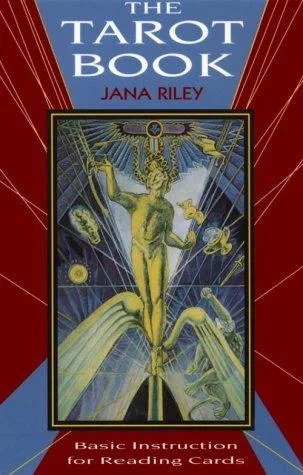
Jana Riley's 'Tarot Dictionary and Compendium,' first released in 1995, attempts to codify the vast symbolic language of the Tarot into a structured, accessible format. Its primary strength lies in its methodical approach; the book functions as an actual dictionary, breaking down each card's meanings into components like keywords, symbolism, and divinatory interpretations. This analytical framework is particularly helpful for those seeking to build a robust understanding beyond rote memorization. However, the work occasionally suffers from a certain dryness. While thorough, the presentation can feel less like an invitation to explore and more like a reference manual. A notable section, for instance, meticulously details the astrological correspondences for each Pip card, which is invaluable for serious study but might overwhelm beginners. Ultimately, Riley offers a valuable, if somewhat academic, resource for dedicated Tarot scholars seeking comprehensive definitions.
📝 Description
79
### What It Is 'Tarot Dictionary and Compendium' by Jana Riley is a systematic exploration of the Tarot, presenting its cards not as isolated images but as components of a larger symbolic language. Published initially in 1995, the work aims to provide a structured reference for understanding the intricate meanings and correspondences associated with each card of the Major and Minor Arcana.
### Who It's For This compendium is designed for serious students of Tarot who seek a deeper, more analytical approach than introductory guides. It is suitable for practitioners who want to move beyond intuitive readings and engage with the historical, symbolic, and divinatory traditions that inform the Tarot. Those interested in occult symbolism and esoteric alphabets will find value here.
### Historical Context Emerging in the mid-1990s, a period of renewed interest in esoteric studies and alternative spirituality, Riley's work offered a structured alternative to more mystical or purely psychological interpretations of the Tarot that were prevalent. It provided a reference point for a generation exploring Jungian archetypes alongside older Hermetic traditions, amidst a growing popularization of Tarot outside of traditional occult circles. The book positioned itself as a scholarly resource.
### Key Concepts The compendium focuses on the inherent symbolism within each Tarot card, linking them to numerology, astrology, and Qabalah. It treats the Tarot deck as a complete system, where the progression from the Fool to the World mirrors a spiritual or psychological journey. Riley's approach emphasizes the dictionary-like nature of the cards, suggesting that each possesses a core set of meanings and associations that can be systematically learned and applied.
💡 Why Read This Book?
• Gain a structured understanding of Tarot card meanings, moving beyond simple keywords by examining specific symbolic elements like the imagery of the Swords in the Minor Arcana, as detailed in Riley's systematic breakdowns. • Learn the foundational numerological and astrological associations for each card, a core tenet of the Tarot's esoteric framework, as presented in the compendium's detailed appendices. • Develop a more analytical reading practice by referencing the historical esoteric correspondences and divinatory interpretations laid out for each card, mirroring the book's 1995 publication context.
⭐ Reader Reviews
Honest opinions from readers who have explored this book.
❓ Frequently Asked Questions
When was Jana Riley's 'Tarot Dictionary and Compendium' first published?
Jana Riley's 'Tarot Dictionary and Compendium' was first published in 1995, offering a structured approach to Tarot symbolism during a period of increased interest in esoteric studies.
What is the primary focus of 'Tarot Dictionary and Compendium'?
The primary focus is to systematically explore and define the meanings and symbolic correspondences of each Tarot card, treating the deck as a unified symbolic language.
Who would benefit most from reading this book?
Serious students of Tarot, practitioners seeking analytical depth, and those interested in occult symbolism and esoteric alphabets would benefit most from this reference work.
Does the book cover both Major and Minor Arcana?
Yes, the book provides detailed explorations of both the Major and Minor Arcana, ensuring comprehensive coverage of the entire Tarot deck.
What kind of esoteric traditions does the book reference?
The book references traditions including numerology and astrology, linking Tarot cards to these established esoteric systems for deeper interpretation.
Is 'Tarot Dictionary and Compendium' suitable for absolute beginners?
While comprehensive, its systematic and analytical approach might be more suited for those with some foundational Tarot knowledge, rather than absolute beginners seeking a gentle introduction.
🔮 Key Themes & Symbolism
Card Symbolism as Language
Riley posits that each Tarot card functions as a word or phrase within a larger esoteric alphabet. The book systematically decodes these symbols, linking visual elements to core meanings and divinatory applications. For instance, the interpretation of the Five of Swords moves beyond simple conflict to explore the specific nuances of its imagery within a broader symbolic context. This approach treats the deck as a coherent, learnable language.
Numerological and Astrological Correspondences
A central theme is the integration of Tarot with established esoteric systems. The compendium meticulously details the numerical values of each card and their corresponding astrological signs and planets. This framework allows for a more sophisticated interpretation, suggesting that the Tarot's wisdom is interwoven with ancient systems of understanding the cosmos and human experience.
The Tarot as a Systemic Journey
The work emphasizes the interconnectedness of the Tarot cards, particularly the progression through the Major Arcana from the Fool to the World. This sequence is presented not as a random collection of archetypes but as a symbolic map of spiritual or psychological development. Understanding this systemic flow is key to grasping the full depth of the Tarot's message.
Divinatory Applications and Interpretation
Beyond pure symbolism, Riley offers practical guidance on divinatory applications. The dictionary format provides distinct interpretations for upright and reversed positions, as well as potential meanings in various spreads. This section highlights how the systematic understanding of each card's core meaning translates into actionable insights for predictive or introspective readings.
💬 Memorable Quotes
“The Tarot is a symbolic alphabet, each card a letter or word.”
— This highlights the book's core premise: that the Tarot is not merely a collection of images but a structured language with discernible meanings and grammar, intended to be systematically learned.
“Understanding the numerological essence of a card deepens its divinatory potential.”
— This points to the integration of numerology as a foundational interpretive tool, suggesting that numerical values provide a crucial layer of meaning beyond visual symbolism.
“The Minor Arcana mirror the unfolding of mundane affairs through elemental forces.”
— This interpretation emphasizes the connection between the suit symbols (Wands, Cups, Swords, Pentacles) and their respective elements, framing the Minor Arcana as representations of everyday experiences and challenges.
“Each card's symbolism provides a key to its astrological resonance.”
— This underscores the book's commitment to linking Tarot imagery directly with astrological correspondences, suggesting that the visual cues on a card are intended to reflect celestial influences.
“The Fool's journey is the blueprint for all subsequent card interpretations.”
— This suggests that the archetypal path of the Fool serves as a foundational narrative or developmental model upon which the meanings of all other cards are built.
🌙 Esoteric Significance
Tradition
This work firmly situates itself within the Western Esoteric tradition, particularly drawing upon Hermeticism and Qabalah, which have long informed Tarot studies. It seeks to synthesize the symbolic language of the Tarot with established esoteric frameworks, treating it as a coherent system rather than a collection of disparate symbols. The book functions as a bridge between arcane knowledge and practical application, aiming to demystify complex symbolic relationships.
Symbolism
Key symbols explored include the elemental suits of the Minor Arcana (Wands for Fire, Cups for Water, Swords for Air, Pentacles for Earth) and their associated meanings in representing different facets of human experience. The progression of the Fool's Journey through the Major Arcana is another central motif, symbolizing spiritual evolution and the unfolding of consciousness, linking it to concepts of initiation and self-discovery.
Modern Relevance
Contemporary Tarot practitioners and occult scholars continue to reference Riley's structured approach for its clarity and comprehensive nature. It serves as a foundational text for those seeking to understand the historical esoteric underpinnings of Tarot, influencing modern interpretations that blend traditional symbolism with psychological depth and contemporary spiritual inquiries. Its methodical nature appeals to those building a robust personal system of divination.
👥 Who Should Read This Book
• Students of Western Esotericism seeking to understand the Tarot's place within Hermetic and Qabalistic traditions, benefiting from the book's detailed correspondences. • Dedicated Tarot practitioners aiming to move beyond intuitive readings to a more analytical and systematic understanding of card meanings and interrelationships. • Comparative religion scholars or cultural historians interested in the evolution of divination systems and symbolic languages in the late 20th century.
📜 Historical Context
Jana Riley's 'Tarot Dictionary and Compendium,' published in 1995, arrived during a surge of interest in New Age spirituality and esoteric studies, often referred to as the 'occult revival' of the late 20th century. This period saw a proliferation of Tarot books, many focusing on psychological archetypes inspired by figures like Carl Jung or on more intuitive, less structured approaches. Riley's work distinguished itself by offering a highly structured, almost academic compendium, emphasizing traditional correspondences with numerology and astrology. It provided a counterpoint to more mystical or purely psychological interpretations, aligning more with earlier occult traditions explored by figures like A.E. Waite in his 1910 'The Pictorial Key to the Tarot.' The book's systematic approach aimed to solidify the Tarot's place as a serious tool for divination and self-understanding, amidst a broader cultural exploration of alternative belief systems.
📔 Journal Prompts
The symbolism of the Swords suit and its relation to conflict.
Numerological significance of the number seven across the Tarot.
The Fool's journey as a metaphor for personal growth.
Astrological associations of the Court Cards.
How the elemental correspondences inform readings.
🗂️ Glossary
Major Arcana
The set of 22 trump cards in a Tarot deck, often representing significant life events, archetypal figures, and spiritual lessons in a reading.
Minor Arcana
The set of 56 cards divided into four suits (Wands, Cups, Swords, Pentacles), typically representing everyday situations, challenges, and circumstances.
Qabalah
An esoteric system of Jewish mysticism that provides a framework for understanding the divine and the structure of the universe, often applied to Tarot interpretation.
Hermeticism
A philosophical and religious tradition based on the purported teachings of Hermes Trismegistus, emphasizing spiritual ascent and the interconnectedness of the cosmos, influential in Western esotericism.
Correspondences
The symbolic links or associations between different elements within an esoteric system, such as between Tarot cards, planets, astrological signs, and numbers.
Divination
The practice of seeking knowledge of the future or the unknown by supernatural means, in this context, through the interpretation of Tarot cards.
Archetype
A universal, archaic symbol or motif that recurs in the literature, art, and mythology of various cultures, often embodied by figures in the Major Arcana.