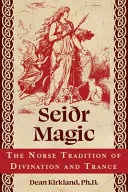
Seiðr Magic
 73
73

Seiðr Magic
Dean Kirkland's 'Seiðr Magic' arrives as a welcome, if sometimes dense, manual for those drawn to the esoteric practices of Norse shamanism. Rather than rehashing well-trodden mythological narratives, Kirkland focuses on the mechanics of seiðr itself. The section detailing the construction and consecration of a seiðr staff is particularly robust, offering concrete steps for replicating these ancient tools. However, the work occasionally strains under the weight of its own ambition, attempting to codify a practice that, by its very nature, thrives on fluidity and personal gnosis. The chapter on navigating the Nine Realms, while informative, could benefit from more varied experiential accounts or interpretations to illustrate the subjective nature of these journeys. Despite this, Kirkland provides a valuable resource for serious students of historical magic, offering a tangible pathway into a complex and often misunderstood tradition. It is a serious attempt to reconstruct and teach a potent form of shamanic sorcery.
📝 Description
73
### What Seiðr Magic Is Seiðr Magic presents a practical methodology for engaging with the ancient Norse shamanic practice of seiðr. It moves beyond theoretical discussion to offer actionable techniques for practitioners. The work details methods for achieving altered states of consciousness essential for seiðr work, often termed 'seiðr trance.' It guides readers through the conceptual framework of journeying within the Nine Realms, a core element of Norse cosmology, and outlines the types of deities and spirits one might encounter during these journeys.
### Who Seiðr Magic Is For This book is intended for those with a serious interest in reconstructivist Norse paganism, shamanism, or historical magical practices. It assumes a foundational understanding of Norse mythology and cosmology, though it does provide context for the spirits and realms encountered. It is particularly suited for individuals seeking to move beyond academic study into direct experiential practice, offering tools and techniques for those who wish to actively engage with the seiðr tradition.
### Historical Context of Seiðr Seiðr is an ancient Germanic magical practice, often associated with Norse shamanism, that predates the widespread influence of Christianity in Scandinavia. Archaeological evidence, such as the Oseberg burial ship's contents and the depiction of figures with ritualistic staffs, suggests its presence from the early Germanic Iron Age. The Eddas, particularly the Poetic Edda's 'Völuspá,' describe seiðr practitioners (völur) who could see the future and influence fate. The practice faced suppression with the Christianization of Scandinavia, making its reconstruction and practice a modern endeavor rooted in interpreting historical and mythological sources.
### Key Concepts Explored The book emphasizes practical application of seiðr. Central to this are the techniques for inducing trance, the mechanics of spirit-work and journeying through the Nine Realms, and the identification of various Norse spiritual entities. It also covers the physical accoutrements of seiðr, including the creation and empowerment of ritual tools like the seiðr staff and hood. Furthermore, it details specific magical applications such as divination, fate-weaving, healing, the use of protective vocalizations, and soul retrieval, all within the Norse framework.
💡 Why Read This Book?
• Learn specific techniques for inducing seiðr trance states, moving beyond theoretical understanding to practical application as detailed in the book's methodology. • Discover how to craft and empower essential seiðr tools, such as the seiðr staff and hood, based on the practical guidance provided in the text. • Explore Norse divination methods and techniques for altering fate, gaining specific skills that can be applied to personal spiritual or divinatory practices.
⭐ Reader Reviews
Honest opinions from readers who have explored this book.
❓ Frequently Asked Questions
What are the primary tools used in seiðr magic as described by Dean Kirkland?
The book details the use of specific tools such as the seiðr staff and the seiðr hood. Kirkland provides instructions on how to create, empower, and maintain these implements for effective practice.
Can beginners practice seiðr magic using this book?
While the book offers practical techniques, it assumes a foundational understanding of Norse mythology. Beginners are advised to familiarize themselves with Norse cosmology before engaging with the more advanced practices outlined.
What are the Nine Realms in Norse cosmology and how does seiðr magic interact with them?
The Nine Realms form the Norse cosmos, and seiðr involves journeying through them. Kirkland explains the conceptual framework for such journeys and the types of spirits and deities one might encounter across these distinct planes of existence.
Does the book cover divination and fate manipulation within seiðr?
Yes, 'Seiðr Magic' details Norse divination methods and techniques for altering or influencing fate. It also covers healing, protective songs, and soul retrieval practices rooted in the seiðr tradition.
When was 'Seiðr Magic' first published?
The book 'Seiðr Magic' by Dean Kirkland was first published on April 9, 2024.
What is the difference between rune magic and seiðr?
While both are Norse magical traditions, rune magic often focuses on inscriptions and symbolic power, whereas seiðr is primarily a shamanic practice involving trance, spirit journeying, and prophecy, as explored in Kirkland's work.
🔮 Key Themes & Symbolism
Trance and Spirit Journeying
The core of seiðr practice lies in achieving altered states of consciousness for spiritual exploration. Kirkland details methods for inducing these trance states, often referred to as 'seiðr trance,' enabling practitioners to journey through the Nine Realms. This involves navigating different spiritual landscapes and interacting with the various deities and spirits that inhabit these planes, forming a fundamental aspect of Norse shamanic work.
Ritual Tools and Empowerment
The book emphasizes the importance of material components in seiðr. It provides practical instructions for the creation and consecration of key ritual implements, most notably the seiðr staff and hood. These tools are not merely symbolic but are described as conduits for magical energy and aids in focusing intent during practice, requiring specific methods for empowerment and ongoing care.
Fate, Divination, and Healing
Seiðr encompasses a broad spectrum of magical applications aimed at influencing life's course. Kirkland explores ancient Norse methods of divination used to perceive future possibilities and discusses techniques for subtly altering or weaving fate. The work also delves into healing practices and the use of protective songs, offering a holistic approach to spiritual and physical well-being within the seiðr paradigm.
Norse Cosmology and Spirit Encounters
Understanding the Nine Realms is crucial for any seiðr practitioner. The book outlines the structure of the Norse cosmos and provides guidance on the nature of the various gods and spirits one might encounter during spiritual journeys. This includes insights into interacting with these entities respectfully and effectively, drawing directly from the mythological and folkloric sources of the Norse tradition.
💬 Memorable Quotes
“Techniques used to achieve trance in seiðr”
— This highlights the practical, methodological focus of the book, emphasizing the 'how-to' of entering altered states rather than just theoretical discussion.
“Journeying in the Nine Realms”
— This points to the cosmological framework of the practice, indicating that the book guides readers through navigating the distinct spiritual planes of Norse tradition.
“The tools of seiðr, such as the seiðr staff and hood”
— This emphasizes the tangible, physical aspects of the practice, suggesting the book provides instruction on crafting and utilizing specific ritual implements.
“Norse divination methods, ways to alter fate”
— This indicates the book covers practices related to prophecy and influencing destiny, key elements within many shamanic and magical systems.
“Practice of Norse soul retrieval”
— This points to a specific, advanced shamanic technique focused on restoring a fractured or lost aspect of the self, rooted in the Norse tradition.
🌙 Esoteric Significance
Tradition
This work aligns with the growing field of Esoteric Reconstructionism, specifically focusing on Norse shamanism. It departs from earlier, more syncretic or ideologically driven approaches to Germanic magic. By emphasizing practical application and drawing directly from mythological and archeological interpretations, it seeks to revive and make accessible the specific shamanic currents within the broader Northern European esoteric traditions.
Symbolism
Key symbols include the seiðr staff, often depicted as a long rod, potentially signifying a connection to the world tree Yggdrasil or a conduit for channeling spiritual energies. The hood, frequently mentioned in historical accounts, serves to obscure the practitioner's vision, aiding in the detachment from the physical world and facilitating inward focus for spirit journeys. These elements are crucial for mediating between the mundane and the sacred realms.
Modern Relevance
Contemporary practitioners of Ásatrú, Heathenry, and various forms of Norse shamanism draw heavily on texts like this for practical guidance. Thinkers and groups focused on animism, spirit-work, and the revival of indigenous European spiritual practices find resonance in Kirkland's detailed methodologies for engaging with Norse cosmology and its associated spiritual entities.
👥 Who Should Read This Book
• Aspiring practitioners of Norse shamanism seeking a structured approach to seiðr techniques, including trance induction and spirit journeying. • Students of comparative religion and historical magical practices interested in the specific methodologies of seiðr beyond mythological accounts. • Individuals engaged in reconstructivist paganism looking for practical guidance on ritual tools, divination, and healing within a Norse framework.
📜 Historical Context
Seiðr Magic emerges in a contemporary landscape where interest in Norse paganism and shamanic practices has seen a significant resurgence, particularly from the late 20th century onwards. This revival is partly a reaction against earlier, often sensationalized, interpretations of Norse magic and a desire for more authentic, reconstructivist approaches. The work situates itself within this lineage, drawing upon interpretations of early medieval sources like the Poetic Edda and the Prose Edda. While figures like Guido von List and the Ariosophical movement in the early 20th century engaged with Norse themes, often with problematic ideological underpinnings, modern scholarship and practice, like Kirkland's, aim for a more grounded, historical methodology. The suppression of seiðr during the Christianization of Scandinavia, a process largely complete by the 12th century, meant that much of its practice was lost or went underground, making modern reconstruction efforts a critical endeavor for practitioners today.
📔 Journal Prompts
The seiðr staff: conceptualize its form and purpose in your own practice.
Reflect on the Nine Realms: which holds the most immediate spiritual resonance for you and why?
Consider the concept of fate-weaving: how might you apply this to a current life challenge?
Analyze the role of protective songs: what traditional or personal verses could serve this function?
Explore the idea of soul retrieval: what aspects of yourself feel fragmented or lost?
🗂️ Glossary
Seiðr
An ancient Norse practice often described as shamanic, involving prophecy, spirit journeying, and influencing fate through altered states of consciousness.
Nine Realms
The distinct cosmological planes of existence in Norse mythology, connected by the world tree Yggdrasil. These include Midgard (Earth), Asgard (home of the Aesir), and others.
Seiðr Staff
A ritual implement used by seiðr practitioners, believed to aid in trance induction, spirit communication, and channeling magical energies.
Völva
A female practitioner of seiðr, often a seeress or prophetess, who held significant spiritual and social standing in pre-Christian Norse society.
Galdr
A type of magical song or incantation in Old Norse tradition, often used for protection, healing, or other magical effects.
Soul Retrieval
A shamanic healing technique aimed at recovering lost or fragmented parts of the soul or psyche, believed to be a practice within seiðr.
Norns
Female beings in Norse mythology who weave the fate of gods and humans, representing the concept of destiny and time.