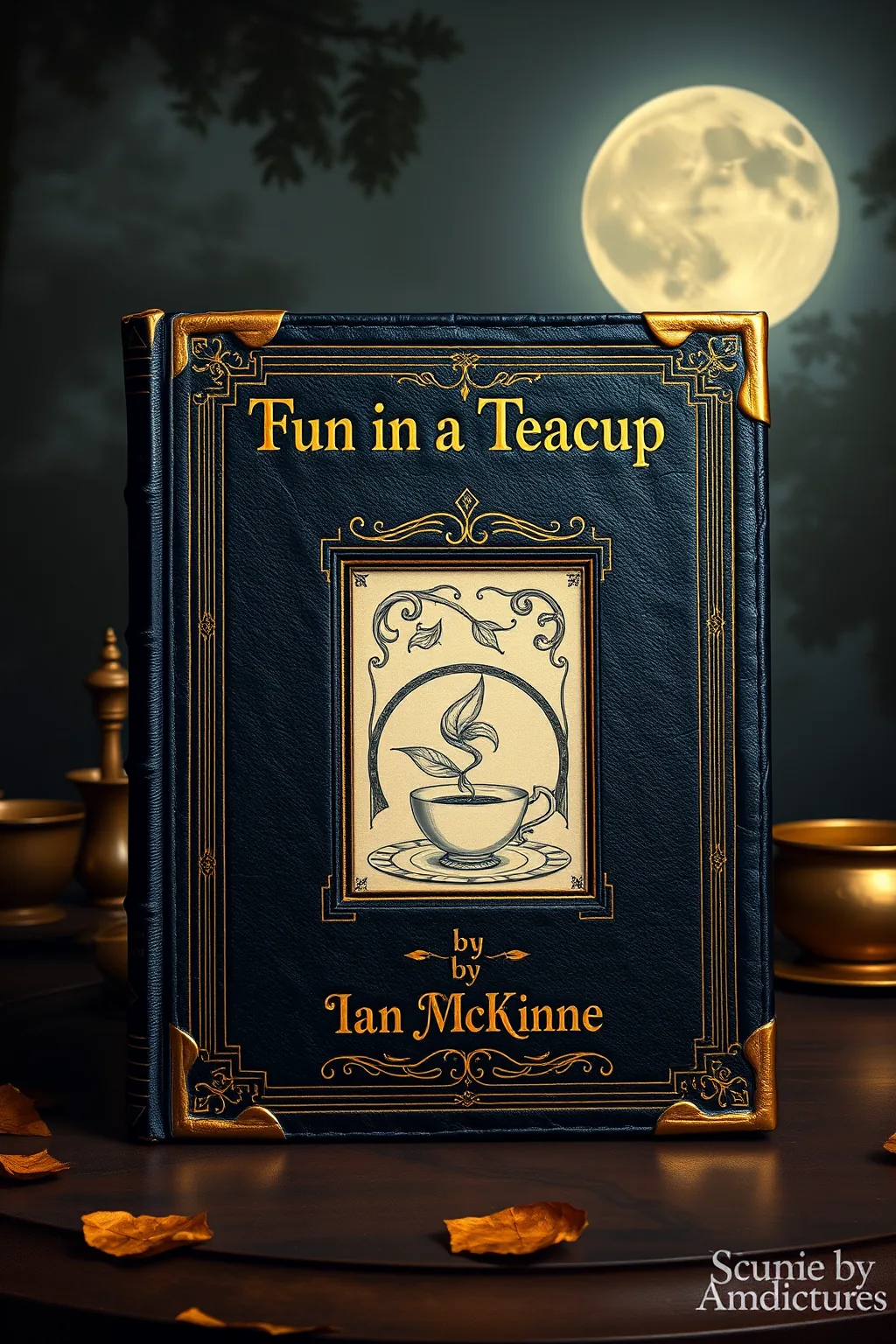
Fun in a teacup
 61
61

Fun in a teacup



Aurelia Blackwood (Occult Philosophy Critic) — Ian McKinnie's 'Fun in a Teacup' is a delightful yet profound exploration of tasseography. McKinnie eschews sensationalism, instead offering a deeply insightful and respectfully presented guide to reading tea leaves. His approach bridges ancient traditions with accessible modern practice, revealing the intricate symbolic language that underpins this gentle form of divination. The book excels in its clarity and the depth of its interpretations, making it an invaluable resource for both neophytes and seasoned practitioners of occult arts. It’s a testament to the power of observation and intuition, reminding us that profound wisdom can be found in the simplest of rituals. A must-read for those drawn to the subtle arts.
📝 Description
61
Ian McKinnie's 'Fun in a Teacup' (2002) deciphers the symbolism of tea leaves for divination.
Ian McKinnie's 'Fun in a Teacup' examines tasseography, the practice of reading fortunes in tea leaves. The book details how to interpret the patterns left behind after drinking tea, turning a common ritual into a method for divination. McKinnie explains the symbolic language found in the residue, suggesting these markings can offer insights into fate and destiny.
Beyond simple fortune telling, the work encourages a deeper connection to intuition and universal whispers. It links the everyday act of sharing tea with older traditions of symbolic interpretation. The text guides readers to see beyond the literal, to understand the messages embedded in the remnants of a shared drink. This approach is for those interested in esoteric knowledge and finding guidance within ordinary moments, viewing life's progression through a philosophical lens.
This book sits within the broader tradition of divination practices that utilize natural or everyday objects for scrying. Like other forms of augury, such as scrying with water or interpreting bird flight, tasseography relies on finding meaning in random patterns. It connects to a long history of seeking guidance from the cosmos through seemingly mundane means, drawing parallels to older symbolic systems where patterns in nature or created objects were believed to hold divine messages.
💡 Why Read This Book?
Delve into the captivating world of tasseography and unlock the ancient art of reading tea leaves. 'Fun in a Teacup' offers a unique perspective on divination, blending mystical symbolism with practical guidance. Ideal for seekers of hidden knowledge, practitioners of esoteric arts, and anyone curious about finding profound meaning in everyday rituals. Discover the subtle language of fate whispered by the leaves and deepen your intuitive connection to the universe.
⭐ Reader Reviews
Honest opinions from readers who have explored this book.
❓ Frequently Asked Questions
What is tasseography?
Tasseography, or tasseomancy, is the art of divination by interpreting patterns formed by tea leaves, coffee grounds, or wine sediments. It's an ancient practice believed to reveal insights into past, present, and future events.
Is this book suitable for beginners?
Absolutely. Ian McKinnie's approach is designed to be accessible, making 'Fun in a Teacup' an excellent starting point for those new to divination and tea leaf reading.
What kind of tea is best for reading?
Loose-leaf tea, particularly black tea, is traditionally preferred as it produces more distinct leaf patterns. However, the focus is on interpretation, so any tea can be used with practice and intuition.
How long does it take to learn?
Like any esoteric art, mastery takes practice. This book provides the foundational knowledge, but consistent engagement with the process will hone your skills and deepen your understanding.
Can I use this for personal guidance?
Yes. Tasseography is a powerful tool for introspection and self-discovery. The patterns can offer clarity on personal challenges, relationships, and life path decisions.
🔮 Key Themes & Symbolism
The Language of Symbols
This book examines the rich, symbolic language inherent in the patterns left by tea leaves. It explores how common shapes, figures, and forms can represent archetypal energies, personal aspirations, and karmic influences. Readers are guided to develop their own intuitive vocabulary, understanding that symbols are not fixed but fluid, responding to the querent's energy and the context of the reading. The emphasis is on perceiving these glyphs not as rigid predictions, but as gentle nudges from the subconscious and the wider energetic field, encouraging deeper self-reflection and understanding of life's intricate collection.
Ritual as Gateway
McKinnie highlights the transformative power of ritual in divination. The act of preparing, pouring, and observing the tea becomes a sacred space, a deliberate pause from the mundane that opens the mind to subtler perceptions. This section explores how intention, mindfulness, and a focused state of being are crucial elements in creating a receptive vessel for intuitive insights. The simple act of sharing tea, often a social connector, is elevated into a profound spiritual practice, demonstrating how everyday actions can become profound gateways to inner wisdom and connection with the unseen realms.
Intuition and the Everyday
'Fun in a Teacup' champions the development of innate psychic abilities through accessible practices. It argues that intuition is not a rare gift but a skill that can be cultivated by paying attention to the subtle cues and synchronicities that permeate our daily lives. By engaging with tea leaf divination, readers are encouraged to trust their inner knowing and to recognize the profound wisdom that can arise from seemingly simple activities. The book empowers individuals to find guidance and insight not just in formal divinatory systems, but in the very fabric of their existence.
💬 Memorable Quotes
Direct passages from the work, attributed to the author.
“Every swirl, a story; every drop, a destiny.”
— This evocative phrase captures the essence of tea leaf reading as a narrative art. It suggests that each formation within the cup holds a piece of a larger story, a potential future, or a reflection of present circumstances, inviting interpretation and contemplation.
“The cup becomes a mirror to the unseen.”
— This powerful metaphor illustrates how the patterns of tea leaves, once interpreted, can reflect hidden aspects of oneself, one's situation, or the surrounding energetic landscape, acting as a tool for self-discovery and clarity.
💡 Key Ideas
Editorial paraphrase of the work's core concepts — not direct quotes.
The leaves whisper secrets of the soul, if we but learn to listen.
This quote emphasizes the core tenet of tasseography: that the patterns in tea leaves are not random, but carry meaningful messages about our inner lives and destinies. It highlights the importance of developing intuition and receptivity to understand these subtle communications.
In the residue of comfort, the seeds of wisdom are sown.
This quote connects the act of drinking tea, often associated with relaxation and comfort, to the profound process of gaining wisdom. It suggests that moments of peace and stillness are fertile ground for spiritual growth and intuitive understanding.
Divination is not to foretell the inevitable, but to illuminate the possible.
This quote reframes the purpose of divination, moving away from fatalism towards empowerment. It suggests that the insights gained from tea leaves serve to broaden our understanding of choices and potentials, rather than dictating a fixed future.
🌙 Esoteric Significance
Tradition
Tasseography finds its roots in ancient divination practices, drawing parallels to similar forms of scrying and pattern interpretation found in various cultures. While not tied to a single rigid tradition, it aligns closely with hermetic principles of correspondence and the belief that macrocosmic patterns are reflected in microcosmic forms. It shares common ground with cartomancy and other symbolic systems used in Western Esotericism for introspection and guidance, emphasizing the intuitive perception of hidden meanings.
Symbolism
The symbolism in tasseography is vast and often personal, though common archetypes exist. Shapes can represent animals, objects, people, or abstract forms, each carrying potential meanings related to journeys, relationships, challenges, or opportunities. The position of symbols within the cup—near the rim, sides, or base—can also denote timing or significance. McKinnie guides readers to understand these symbols not as rigid pronouncements, but as dynamic indicators of energetic flows and potential outcomes.
Modern Relevance
In a world often characterized by rapid change and information overload, tasseography offers a grounded, mindful practice that encourages slow observation and intuitive reflection. Its modern relevance lies in its ability to foster a deeper connection to oneself and to the subtle energies of life. As a gentle, accessible form of divination, it empowers individuals to navigate uncertainty, enhance self-awareness, and find personal meaning in the everyday, serving as a valuable tool for psychological and spiritual well-being.
👥 Who Should Read This Book
This useful text is a treasure for a diverse audience. For the absolute beginner curious about divinatory arts, 'Fun in a Teacup' provides a clear, gentle, and encouraging introduction to reading tea leaves. Scholars of esoteric traditions will appreciate McKinnie's nuanced exploration of symbolic language and ritualistic practice. Seekers of personal insight and spiritual growth will find a powerful tool for introspection and self-discovery. Experienced practitioners of tarot or other divination methods may discover new perspectives and a complementary technique to enrich their practice, deepening their intuitive abilities and connection to subtle energies.
📜 Historical Context
Tasseography, or fortune-telling by tea leaves, emerged as a popular practice in the 18th century, particularly in Europe, coinciding with the growing trade and cultural fascination with tea. As tea drinking became a widespread social ritual, so too did the practice of interpreting the leftover leaves. This era, marked by a burgeoning interest in spiritualism, mesmerism, and various forms of esoteric knowledge, provided fertile ground for divination techniques to flourish. The Enlightenment's rationalism coexisted with a deep-seated human desire to understand the unknown and to seek guidance beyond empirical evidence. Tasseography, with its accessible nature and connection to a common domestic practice, resonated with a broad spectrum of society, from aristocratic drawing rooms to humble kitchens, becoming a beloved method for peering into the mysteries of fate and fortune.
📔 Journal Prompts
After reading a cup, what dominant symbols appeared, and what is your immediate intuitive association with them?
How did the act of preparing and drinking the tea influence your state of mind before you began reading the leaves?
Describe a symbol you saw that felt particularly personal or resonant. What aspect of your current life might it relate to?
If you were to offer advice based on the patterns in the cup, what would be the core message?
Reflect on the difference between seeing a 'prediction' in the leaves versus an 'insight' or 'potential'.
🗂️ Glossary
Tasseography
The art or practice of divining the future by interpreting the patterns formed by tea leaves or coffee grounds in a cup.
Tasseomancy
An alternative term for tasseography, emphasizing the divinatory aspect of the practice.
Querent
The person for whom a divination reading is performed; the individual seeking insight.
Symbolism
The use of symbols to represent ideas or qualities, particularly in the context of interpreting patterns in tea leaves.
Intuition
The ability to understand something immediately, without the need for conscious reasoning; a gut feeling or inner knowing.
This book appears in 1 collection
🔮 Readers Also Liked
Browse all →






From the “Tea Leaf Reading” Collection
View all →




More Free Divination & Tarot Books
View all →