I Ching Readings
 62
62

I Ching Readings



By Aurelia Blackwood (Occult Philosophy Critic) — Wu Wei’s 'I Ching Readings' is a masterful exposition of the Book of Changes, offering a rare blend of scholarly depth and esoteric intuition. The case studies presented are not mere examples, but potent initiations into the symbolic language of the Yi Jing, revealing its profound philosophical underpinnings. Wu Wei navigates the complex hexagrams with a clarity that speaks to a deep communion with this ancient oracle. This book is an indispensable resource for those seeking to move beyond superficial divination and engage with the Yi Jing as a living system of cosmic wisdom. Essential for advanced practitioners and serious students of esoteric traditions.
📝 Description
62
Embark on a profound journey into the heart of ancient wisdom with 'I Ching Readings' by the enigmatic Wu Wei. This meticulously curated collection transcends mere fortune-telling, unveiling the subtle currents of destiny woven into the very fabric of existence. Delve into the profound symbolism of the Yi Jing, the venerable Book of Changes, as Wu Wei illuminates its cryptic hexagrams through insightful case studies. Each reading serves as a portal, revealing hidden patterns, cosmic correspondences, and the perennial truths that govern the ebb and flow of life. Designed for the earnest seeker, the seasoned practitioner, and the curious scholar alike, this work offers a unique lens through which to understand the interconnectedness of all things and the dynamic dance of transformation. Experience the mystical resonance of a divination system that has guided sages and emperors for millennia, offering not just answers, but a pathway to deeper self-awareness and spiritual insight. Uncover the secrets of the universe, one hexagram at a time, and find your place within the grand cosmic tapestry.
✍️ Author
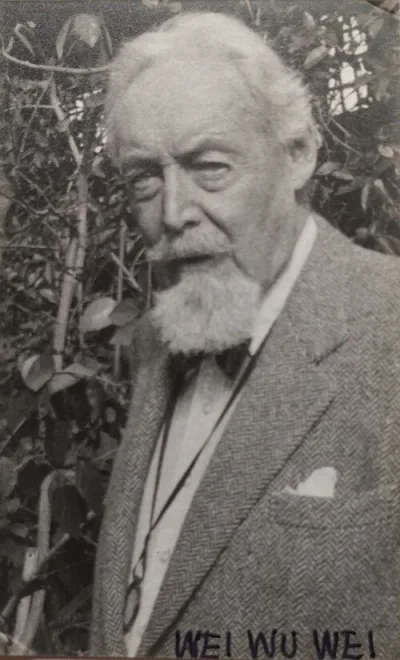
Wu Wei
Terence James Stannus Gray (14 September 1895 – 5 January 1986) was a theatre producer who created the Cambridge Festival Theatre as an experimental theatre in Cambridge. He produced over 100 plays there between 1926 and 1933. Later in life, under the pen n…
💡 Why Read This Book?
Unravel the profound wisdom of the Yi Jing through practical case studies, moving beyond simplistic interpretations to grasp its deeper symbolic language. 'I Ching Readings' is for dedicated seekers, scholars of ancient divination, and practitioners who wish to deepen their understanding of cosmic patterns and personal transformation. Discover how the Book of Changes can serve as a powerful tool for self-discovery and enlightened decision-making.
⭐ Reader Reviews
Honest opinions from readers who have explored this book.
❓ Frequently Asked Questions
What is the Yi Jing (Book of Changes)?
The Yi Jing, or Book of Changes, is an ancient Chinese divination text and philosophical classic, considered one of the oldest of the Chinese classics. It uses a system of 64 hexagrams, each composed of six lines, to represent fundamental principles of change and cosmic order.
How does Wu Wei present the I Ching?
Wu Wei presents the I Ching through insightful case studies, demonstrating how to interpret the hexagrams in practical, real-world scenarios. This approach bridges the gap between theoretical understanding and applied divination, making the wisdom accessible.
Who is the ideal reader for this book?
The ideal reader is someone drawn to ancient wisdom, seeking deeper insights into life’s challenges, and interested in the philosophical and spiritual dimensions of divination. It caters to both beginners curious about the I Ching and experienced practitioners.
Is this book just about fortune-telling?
No, while it utilizes divination, the book emphasizes the philosophical and symbolic aspects of the I Ching, offering guidance for self-understanding, personal growth, and navigating life's complexities with wisdom and insight.
What makes these readings 'esoteric'?
The esoteric nature lies in the exploration of hidden correspondences, subtle energies, and the deeper spiritual meanings embedded within the I Ching's symbolism, connecting the individual to universal principles.
🔮 Key Themes & Symbolism
The Dynamic Nature of Change
At its core, the I Ching, as illuminated by Wu Wei, is a profound exploration of perpetual transformation. The 64 hexagrams represent the ceaseless flux of existence, illustrating that nothing is static. This theme encourages acceptance of impermanence, understanding that challenges are transient and opportunities arise from shifting circumstances. By studying these dynamic patterns, readers are guided to harmonize with the natural flow of life, embracing change not as a threat, but as the fundamental engine of growth and evolution. Wu Wei’s case studies vividly demonstrate how recognizing these shifts can lead to more aligned and effective actions.
Symbolic Language of the Universe
The Yi Jing operates through a rich tapestry of symbols, from the elemental lines to the complex hexagrams. Wu Wei masterfully deciphers this potent symbolic language, revealing how the natural world mirrors the human experience and the cosmic order. Each symbol carries layers of meaning, offering insights into archetypal forces, psychological states, and spiritual potentials. Understanding this symbolic resonance allows the reader to perceive the interconnectedness of all phenomena, fostering a deeper appreciation for the intricate web of existence and the profound messages embedded within the universe.
Wisdom as a Guide for Action
Beyond mere prediction, the I Ching, through Wu Wei’s interpretations, serves as a practical guide for navigating life with wisdom and discernment. The hexagrams offer counsel on the appropriate course of action based on the prevailing circumstances, emphasizing timing, attitude, and ethical considerations. This theme highlights the I Ching not as a deterministic oracle, but as a source of profound strategic intelligence and moral guidance. Readers learn to consult the oracle for clarity, to understand potential outcomes, and to make choices that align with the greater cosmic flow, fostering personal empowerment and enlightened living.
💬 Memorable Quotes
“The hexagrams are not pronouncements, but whispers of possibility.”
— This quote emphasizes the interpretive and fluid nature of I Ching readings, suggesting they offer potential pathways rather than fixed destinies.
“In stillness, the universe reveals its patterns.”
— This highlights the importance of meditative practice and inner quietude for perceiving the subtle workings of the cosmos as depicted in the I Ching.
“To understand change is to master oneself.”
— This speaks to the transformative power of the I Ching, suggesting that grasping its principles leads to profound self-awareness and control.
“Each line is a breath in the cycle of becoming.”
— This poetic interpretation underscores the incremental and organic nature of change represented by the individual lines within the hexagrams.
“The oracle reflects the soul's deepest inquiries.”
— This points to the I Ching's capacity to act as a mirror, revealing the user's own inner questions and aspirations through its readings.
🌙 Esoteric Significance
Tradition
The I Ching is deeply rooted in the ancient Chinese esoteric tradition, particularly Taoism and its emphasis on the natural order (Tao) and the principle of balance (Yin and Yang). It represents a sophisticated system of cosmic divination, seeking to align human actions with universal principles. Its esoteric dimension lies in its intricate symbolic system and its application as a tool for spiritual insight, self-cultivation, and understanding the subtle energies that govern existence.
Symbolism
The core symbolism of the I Ching revolves around the interplay of Yin (passive, feminine, dark, receptive) and Yang (active, masculine, light, creative) energies, represented by broken and solid lines respectively. These combine to form 64 hexagrams, each a unique archetypal situation or process. The trigrams (three-line combinations) represent fundamental elements like Heaven, Earth, Water, Fire, and so on. Wu Wei’s work illuminates how these symbols are not static but dynamic representations of the cosmic dance of transformation.
Modern Relevance
In the modern era, the I Ching remains remarkably relevant as a profound tool for psychological exploration, strategic decision-making, and spiritual guidance. Its emphasis on adaptability, understanding cycles, and acting in harmony with natural forces offers a counterpoint to the often chaotic and fragmented nature of contemporary life. Wu Wei's approach helps bridge the ancient wisdom of the Yi Jing with contemporary challenges, empowering individuals to navigate uncertainty with greater clarity, resilience, and a deeper connection to universal truths.
👥 Who Should Read This Book
This comprehensive exploration of the I Ching is invaluable for several distinct audiences. **Beginners** will find Wu Wei's case studies an accessible and engaging entry point into this complex system, demystifying its core concepts. **Scholars of comparative religion and philosophy** will appreciate the depth of interpretation and the exploration of its historical and cultural significance. **Spiritual seekers** will discover a profound oracle for self-reflection, personal growth, and understanding life's unfolding journey. **Practitioners of divination and esoteric arts** will find a rich resource for deepening their understanding of the Yi Jing's symbolic language and its application in nuanced readings.
📜 Historical Context
The I Ching, or Book of Changes, boasts a lineage stretching back over three millennia, originating in ancient China. Its development is intertwined with the evolution of Chinese philosophy, cosmology, and divination practices. Initially, it likely served practical purposes for predicting weather and agricultural outcomes, gradually evolving into a sophisticated philosophical text influenced by Taoism and Confucianism. During the Zhou Dynasty, scholars began to systematically interpret and expand upon its core principles, solidifying its structure and adding commentary. Over centuries, it has been revered by emperors, scholars, mystics, and commoners alike, influencing art, literature, medicine, and military strategy. Its enduring appeal lies in its timeless exploration of change, balance, and the interconnectedness of human experience with the natural world, making it a cornerstone of East Asian thought and a global esoteric treasure.
📔 Journal Prompts
Reflect on a recent situation where you felt resistance to change. How might a specific hexagram from the I Ching offer a new perspective?
Consider the concept of 'Wu Wei' (non-action or effortless action) in relation to a current challenge. How can you apply this principle more effectively?
What is a recurring pattern or theme in your life? How might the symbolism of the I Ching help you understand its root causes?
If you were to consult the I Ching on your spiritual path, what question would you ask, and what do you anticipate the hexagram might reveal?
How can the dynamic interplay of Yin and Yang, as represented in the I Ching, help you find balance in your personal relationships or professional life?
🗂️ Glossary
Hexagram
A symbol in the I Ching composed of six stacked lines, either solid (Yang) or broken (Yin). Each of the 64 hexagrams represents a specific situation, process, or archetypal theme.
Trigram
A symbol composed of three lines, either solid or broken. There are eight trigrams, representing fundamental elements and concepts such as Heaven, Earth, Water, and Fire.
Yi Jing
The Chinese name for the Book of Changes, an ancient text considered a classic of Chinese philosophy and divination.
Wu Wei
A Taoist concept often translated as 'non-action' or 'effortless action.' It signifies acting in accordance with the natural flow of the Tao, without forced effort or resistance.
Yang
The active, masculine, light, and creative principle in Taoist philosophy, typically represented by a solid line in the I Ching.