I-Ching Haiku
 61
61

I-Ching Haiku



Silas Hawthorne, Hermetic Studies Editor: Troy Hogan's 'I-Ching Haiku' is a remarkable achievement, offering a profoundly spiritual and accessible entry point into the venerable Book of Changes. Hogan elegantly bridges the ancient complexities of the I-Ching with the concise artistry of haiku, revealing the deep philosophical currents within each hexagram. This work is not merely a collection of poems; it is a contemplative tool, a whispered oracle that invites introspection and personal revelation. The author's intuitive grasp of esoteric symbolism shines through, making the profound accessible. Essential for practitioners and seekers of hidden wisdom.
📝 Description
61
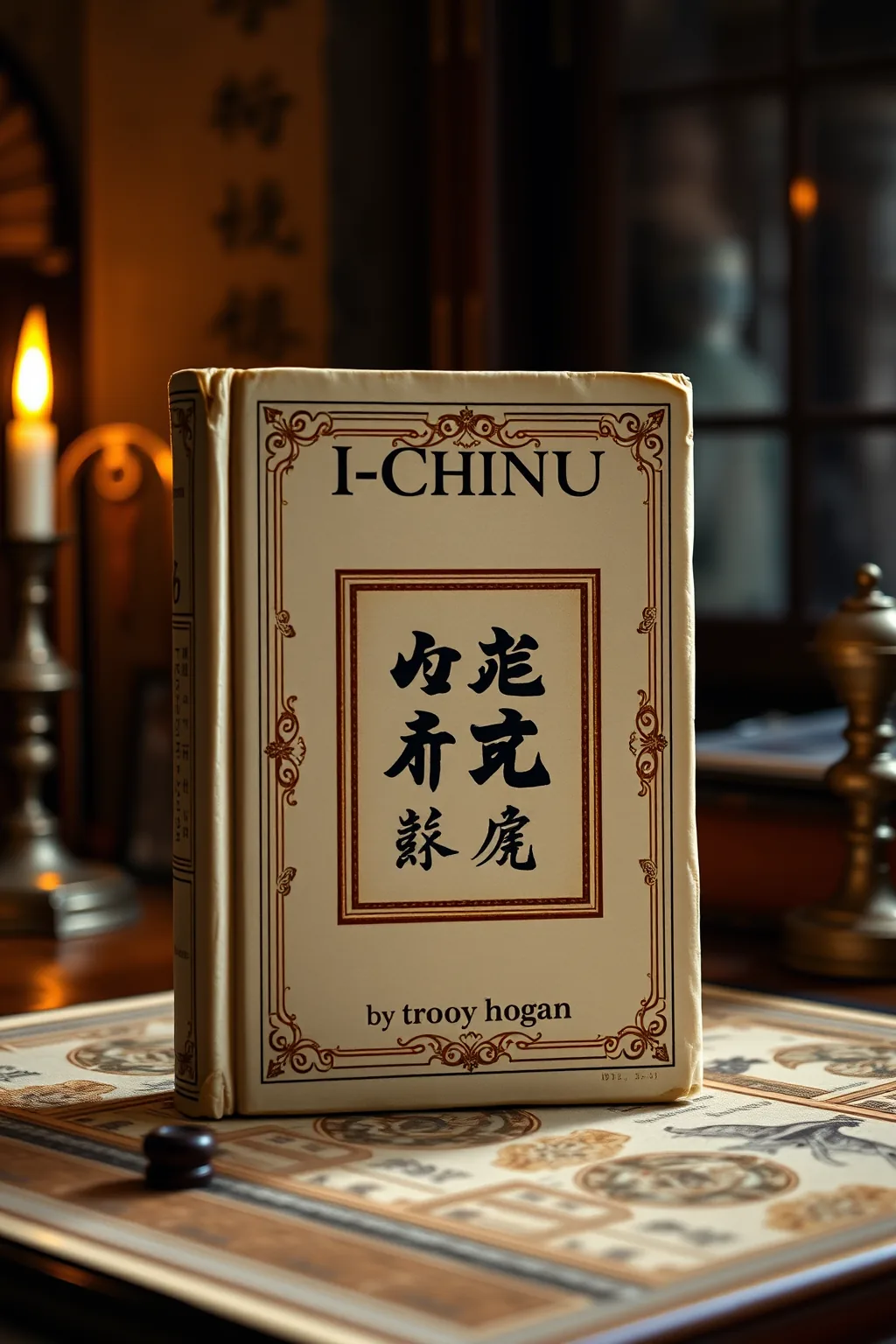
Troy Hogan's 'I-Ching Haiku' (2017) presents the ancient Chinese oracle through 5-7-5 verse.
This book translates the 64 hexagrams of the I-Ching into the concise form of haiku. Troy Hogan crafted each poem to capture the essence of the hexagram's meaning and associated imagery. The goal is to make the I-Ching's philosophy accessible through a minimalist poetic structure.
Hogan's approach aims to distill complex ideas about change, fate, and interconnectedness into short, evocative verses. The haiku format encourages a focused contemplation of each oracle's message. Readers encounter the cyclical nature of existence and the subtle shifts in cosmic order through these brief poems. The book is structured around the hexagrams, with each poem acting as a miniature oracle.
The I-Ching is one of the oldest Chinese classical texts, a foundational work in Taoism and Chinese philosophy. Its divination system, based on 64 hexagrams formed by combinations of broken and unbroken lines, has been used for millennia to understand the patterns of change in the cosmos and human affairs. This book engages with that tradition by reinterpreting the hexagrams' symbolic language and predictive insights through the specific poetic form of Japanese haiku. It bridges two distinct cultural and philosophical traditions, seeking to convey the I-Ching's wisdom in a condensed, modern format.
💡 Why Read This Book?
Discover the ancient wisdom of the I-Ching through the concise beauty of haiku. This book offers a unique, meditative approach to divination, perfect for seekers, practitioners, and scholars of esoteric traditions. Uncover hidden meanings, cultivate intuition, and gain profound insights into the flow of change and destiny in just a few evocative lines. It's an accessible yet deep exploration of universal truths.
⭐ Reader Reviews
Honest opinions from readers who have explored this book.
❓ Frequently Asked Questions
What is the I-Ching?
The I-Ching, or Book of Changes, is an ancient Chinese divination text and philosophical classic, revered for its profound insights into the patterns of the universe and the nature of change.
How does haiku enhance the I-Ching experience?
The brevity and evocative nature of haiku distill the essence of each I-Ching hexagram, making its wisdom more accessible and conducive to immediate contemplation and intuitive understanding.
Who is troy hogan?
troy hogan is an author and visionary who specializes in synthesizing ancient esoteric traditions with modern artistic expression, creating works that bridge the mystical and the accessible.
Is this book suitable for beginners?
Yes, 'I-Ching Haiku' is an excellent starting point for those new to the I-Ching, offering an intuitive and less intimidating introduction to its core concepts through poetic verse.
Can this book be used for practical divination?
Absolutely. Each haiku serves as a concise oracle, capable of providing guidance and reflection when contemplated in conjunction with a question or situation.
🔮 Key Themes & Symbolism
The Dance of Change
The I-Ching fundamentally explores the perpetual flux of existence. 'I-Ching Haiku' captures this essence, illustrating how all things are in a state of transformation, from the smallest atom to the grandest celestial cycles. The haiku format, with its inherent movement and impermanence, perfectly mirrors this core tenet, inviting readers to embrace fluidity and adapt to life's inevitable shifts. It's a profound reminder that resistance to change is futile, while acceptance leads to harmony.
Cosmic Harmony and Synchronicity
This work looks at the interconnectedness of the universe, where seemingly disparate events are woven together by unseen threads of synchronicity. The haiku poems act as focal points, revealing the subtle patterns and divine order that govern our reality. By meditating on these verses, readers can attune themselves to the cosmic rhythm, fostering a sense of belonging and understanding that their individual journey is part of a larger, meaningful collection.
Inner Illumination and Self-Discovery
Beyond external observation, 'I-Ching Haiku' serves as a potent mirror for the soul. Each poem offers a unique perspective, a gentle nudge towards introspection and the uncovering of one's own inner truths. The conciseness of the haiku encourages deep contemplation, allowing the reader to connect with their intuition and discover latent wisdom. It's a path to self-understanding, revealing the archetypal energies at play within the human psyche.
💬 Memorable Quotes
Direct passages from the work, attributed to the author.
“Stillness in the storm, Wisdom blooms in quietude, Inner peace is found.”
— This haiku speaks to the power of inner stillness amidst external chaos. It suggests that true understanding and tranquility are not found in struggle, but in cultivating a quiet, observant mind.
“River flows onward, Ever changing, yet the same, Life's persistent stream.”
— This verse reflects the I-Ching's concept of constant change. The river, though its waters are always new, remains a river, symbolizing the continuous nature of existence and identity.
“Seeds of fortune sown, Nurtured by the thoughtful mind, Future harvest bright.”
— This emphasizes the role of intention and mindful action in shaping one's destiny. Our present thoughts and deeds are the seeds that will determine our future outcomes.
“Shadows start to fade, Dawn breaks on a new horizon, Hope begins to rise.”
— A message of optimism and renewal. It signifies the end of difficult periods and the emergence of brighter possibilities, often following a period of darkness or challenge.
“Listen to the wind, Whispers of what is to come, Guidance soft and low.”
— This encourages paying attention to subtle signs and intuitive nudges. The 'wind' represents external and internal messages that can offer direction and foresight.
🌙 Esoteric Significance
Tradition
The I-Ching is a foundational text within Taoist and Confucian philosophical traditions, but its esoteric dimensions are deeply interwoven with Chinese mystical practices, including alchemy and meditation. It's viewed as a cosmic blueprint, a map of universal forces and their interplay, offering insights into the Tao and the underlying order of reality. Its symbolic language speaks to broader hermetic principles of correspondence and the microcosm/macrocosm relationship.
Symbolism
Central to the I-Ching's esoteric power are its 64 hexagrams, each composed of six lines, either broken (yin) or solid (yang). These lines represent fundamental dualities (feminine/masculine, passive/active, earth/heaven) and their dynamic interactions. The trigrams (three-line combinations) are further building blocks, representing natural forces like Heaven, Earth, Thunder, and Water. The imagery and associated judgments within each hexagram offer profound symbolic keys to understanding archetypal situations and human conditions.
Modern Relevance
In contemporary times, the I-Ching continues to be a vital tool for spiritual seekers and practitioners. Its emphasis on adaptability, understanding cycles, and finding balance resonates deeply in a rapidly changing world. 'I-Ching Haiku' makes this ancient wisdom more accessible, offering a meditative practice for navigating personal challenges, fostering intuition, and deepening one's connection to the subtle energies of existence. It provides a framework for conscious decision-making and personal growth.
👥 Who Should Read This Book
This volume is a treasure for a diverse audience. **Beginners** seeking an intuitive entry into the I-Ching will find the haiku format remarkably approachable. **Spiritual Seekers** craving deeper self-understanding and connection to universal wisdom will be drawn to its contemplative nature. **Occult Practitioners** and **Tarot Enthusiasts** will appreciate the symbolic depth and divinatory applications, finding new layers of insight. **Scholars of Mysticism** will value its unique synthesis of ancient philosophy and poetic art. Ultimately, anyone yearning for clarity, guidance, and a more profound engagement with the flow of life will find profound value within these pages.
📜 Historical Context
The I-Ching, or Book of Changes, boasts a lineage stretching back over three millennia, originating in ancient China. Its foundational texts are attributed to legendary figures like Fu Xi and King Wen, with profound philosophical elaborations by Confucius and his disciples. For centuries, it served as a core part of Chinese imperial governance, scholarly pursuits, and everyday divination. Its influence permeated East Asian culture, impacting philosophy, art, medicine, and strategic thinking. The development of the hexagram system, its symbolic imagery, and the accompanying commentaries represent a sophisticated cosmological and psychological framework. The I-Ching's enduring appeal lies in its ability to address universal human experiences of change, duality, and the search for meaning, making it a timeless source of wisdom.
📔 Journal Prompts
Reflect on a recent moment of change and how a specific hexagram's essence, as captured in a haiku, might have described it.
Consider a current challenge and draw a haiku from this collection. What subtle message does it offer for navigating this situation?
Meditate on the concept of yin and yang as presented in the haiku. How do these energies manifest in your daily life?
Choose a haiku that resonates deeply with you. Write your own interpretation of its meaning and its personal significance.
Explore the idea of 'listening to the wind' as presented in one of the haiku. What 'whispers' of guidance have you recently overlooked?
🗂️ Glossary
I-Ching
An ancient Chinese divination text and philosophical classic, also known as the Book of Changes. It is revered for its insights into the patterns of the universe and the nature of change.
Haiku
A traditional Japanese form of poetry consisting of three phrases composed of 17 syllables in a 5, 7, 5 pattern, often focusing on nature and evoking imagery.
Hexagram
A figure composed of six stacked horizontal lines, where each line is either solid (yang) or broken (yin). There are 64 possible hexagrams in the I-Ching, each representing a fundamental situation or archetype.
Yang
In I-Ching philosophy, the active, masculine, light, and creative principle, represented by a solid line (—).
Yin
In I-Ching philosophy, the passive, feminine, dark, and receptive principle, represented by a broken line (- -).
This book appears in 3 collections
🔮 Readers Also Liked
Browse all →









From the “Tarot” Collection
View all →







More Free Divination & Tarot Books
View all →