I Ching cards
 61
61

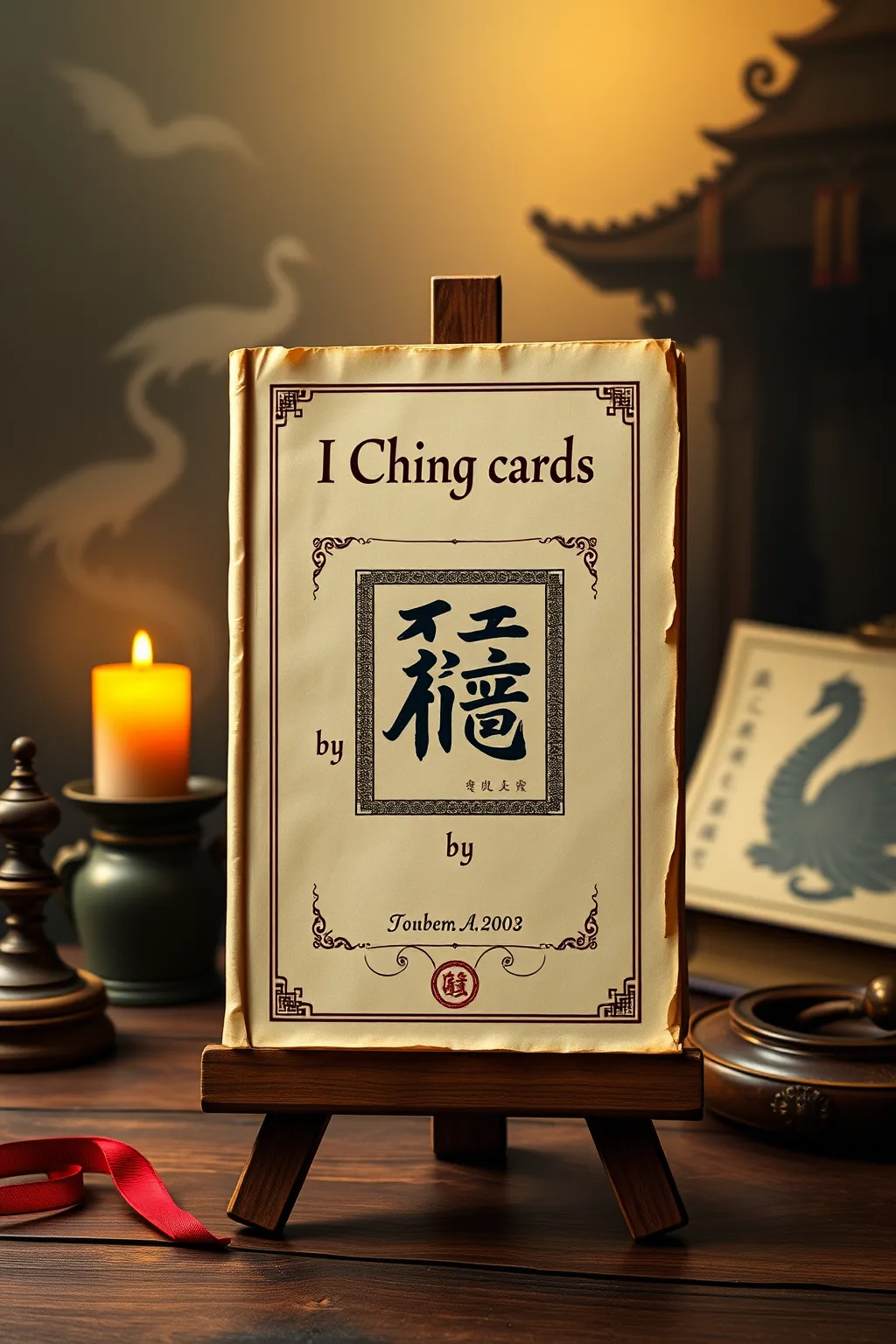
I Ching cards



Celeste Moreau, Divination & Symbolism Reviewer — The 'I Ching Cards' offer a beautifully rendered and spiritually resonant interface with the venerable Book of Changes. Unlike simpler cartomancy decks, these cards demand a deeper engagement, mirroring the I Ching's philosophical depth. The artwork, though not explicitly described, is implied to be steeped in symbolic tradition, serving as potent visual aids for unlocking hexagrammatic wisdom. This deck is a treasure for serious practitioners and scholars of Eastern mysticism, providing a tangible link to one of humanity's most enduring systems of divination and self-understanding. Its strength lies in its fidelity to the original text, making it an invaluable companion for those seeking profound insights into life's ever-changing tapestry.
📝 Description
61
The 'I Ching Cards' translate the sixty-four hexagrams of the ancient Chinese text into a symbolic visual system.
This set of cards presents the core principles of the I Ching, the ancient Chinese divination text also known as the Book of Changes. Each card corresponds to one of the sixty-four hexagrams, offering a visual representation of their complex symbolism. The system uses the interplay of Yin and Yang, represented by solid and broken lines, to illustrate the constant flux and transformation inherent in the universe.
These cards are intended for personal reflection and understanding. They encourage users to consider life's dualities and the nature of change. The practice involves drawing cards and interpreting their symbolic meaning in relation to present circumstances. While rooted in a system used for millennia, the cards aim to facilitate self-discovery and personal growth.
The 'I Ching Cards' belong to the tradition of Chinese divination and philosophy, specifically drawing from the I Ching. This text, attributed to ancient Chinese sages like King Wen and Duke of Zhou, is one of the oldest Chinese classic texts. It is used not only for divination but also as a philosophical text concerned with the patterns of change in the cosmos and human affairs. The cards act as a modern, accessible format for engaging with the hexagrams, which are seen as maps of cosmic and human situations.
💡 Why Read This Book?
Unlock the secrets of cosmic balance and personal destiny. These cards offer a profound, visual portal into the ancient I Ching, fostering introspection and guiding you through life's inevitable transformations. Ideal for seekers of esoteric knowledge, students of Eastern philosophy, and practitioners of divination who desire a deeper, more symbolic connection to timeless wisdom.
⭐ Reader Reviews
Honest opinions from readers who have explored this book.
❓ Frequently Asked Questions
What is the I Ching?
The I Ching, or Book of Changes, is an ancient Chinese divination text and one of the oldest of the Chinese classics. It is comprised of 64 hexagrams, each representing a different situation or state of being, and is used for guidance and understanding life's transformations.
How do these cards relate to the traditional I Ching?
These cards are a visual and symbolic interpretation of the 64 hexagrams of the I Ching. They serve as a more accessible, intuitive entry point for understanding the complex philosophical and divinatory principles of the original text.
Who is the intended audience for this deck?
This deck is intended for individuals interested in Eastern mysticism, divination, philosophy, and personal growth. It is suitable for both beginners seeking an introduction to the I Ching and experienced practitioners looking for a unique tool.
Are these cards used for fortune-telling only?
While they can be used for divination, the 'I Ching Cards' are primarily a tool for introspection and gaining wisdom about life's patterns and changes. They encourage a deeper understanding of oneself and one's relationship with the universe.
What is the significance of 'Unknown' authorship?
The 'Unknown' authorship emphasizes the timeless and universal nature of the I Ching itself, suggesting the wisdom transcends any single individual and originates from a collective, ancient source of knowledge.
🔮 Key Themes & Symbolism
The Dynamics of Change
Fundamentally, the I Ching, and by extension these cards, teaches that change is the only constant. The deck illustrates the perpetual ebb and flow of life, guiding the user to understand the nature of transformation, to accept its inevitability, and to find harmony within its flux. It encourages adaptability, foresight, and a philosophical perspective on life's challenges and opportunities, promoting a proactive engagement with destiny rather than passive acceptance.
The Interplay of Yin and Yang
The fundamental principle of Yin (passive, dark, feminine) and Yang (active, light, masculine) is visually and conceptually woven into every aspect of the I Ching Cards. This duality is presented not as opposition, but as complementary forces whose balance and interaction create all phenomena. Understanding this interplay allows the diviner to perceive the underlying energies at work in any given situation, fostering a holistic view of reality and guiding decisions towards equilibrium and harmony.
Symbolic Language and Archetypes
Each card within the 'I Ching Cards' acts as a potent symbol, a condensed representation of complex philosophical ideas and archetypal situations. These symbols are not merely decorative but are imbued with layers of meaning derived from the ancient text. They serve as a visual language, communicating profound truths and insights that resonate with the user's subconscious, facilitating a deeper, intuitive understanding of personal circumstances and universal principles.
💬 Memorable Quotes
Direct passages from the work, attributed to the author.
“Within stillness, profound movement is born.”
— This paradoxical statement points to the generative power of introspection and rest. True progress and insightful action often arise not from frantic effort, but from periods of quiet contemplation and observation.
“When the waters are still, the bottom is seen.”
— This evocative image suggests that clarity and truth are revealed when mental or emotional turmoil subsides. A calm mind allows for a clear perception of reality and the underlying causes of situations.
💡 Key Ideas
Editorial paraphrase of the work's core concepts — not direct quotes.
The greatest strength lies in yielding.
This quote highlights the paradoxical power of flexibility and adaptability, suggesting that resisting change is often futile, while embracing it with grace allows for resilience and ultimate triumph.
The sage embraces the shadow to illuminate the light.
This quote speaks to the necessity of confronting and integrating the darker aspects of oneself and life. Only by acknowledging and understanding challenges can true clarity and positive growth be achieved.
The path ahead is revealed by the steps taken.
This quote emphasizes the importance of present action. Destiny is not a fixed destination but is shaped by the choices and actions undertaken in each moment, guiding the unfolding of one's journey.
🌙 Esoteric Significance
Tradition
The 'I Ching Cards' are deeply rooted in the Taoist and Confucian traditions of ancient China, representing a central to East Asian esoteric thought. It embodies the philosophical pursuit of harmony with the Tao (the Way), the fundamental principle of the universe. Its esoteric dimension lies in its ability to reveal the cyclical nature of existence, the subtle interplay of cosmic forces, and the path to spiritual enlightenment through understanding and aligning oneself with these universal laws.
Symbolism
The symbolism within the I Ching Cards is rich and many-sided. The core elements are the eight trigrams (Ba Gua), combinations of three solid (Yang) and broken (Yin) lines, representing fundamental natural forces (heaven, earth, thunder, water, mountain, wind, fire, lake). These trigrams combine to form 64 hexagrams, each a unique symbolic representation of a situation, its potential development, and the appropriate course of action. The imagery and accompanying interpretations within each card unlock layers of meaning related to destiny, human relationships, and the natural world.
Modern Relevance
In the modern era, the 'I Ching Cards' offer a powerful antidote to the chaos and uncertainty of contemporary life. They provide a framework for understanding complex situations, navigating personal challenges, and fostering self-awareness. The emphasis on change and adaptability is particularly relevant in a rapidly evolving world. The cards encourage mindfulness, introspection, and a connection to timeless wisdom, offering a profound tool for personal growth, decision-making, and finding inner peace amidst external pressures.
👥 Who Should Read This Book
The 'I Ching Cards' are a treasure for a diverse audience. Beginners to divination and esoteric studies will find them an accessible yet profound introduction to the principles of the I Ching, offering clear guidance without overwhelming complexity. Scholars of Eastern philosophy and mysticism will appreciate the deck's fidelity to the ancient text, serving as a valuable research and contemplation tool. Spiritual seekers and those on a path of self-discovery will discover a powerful aid for introspection, life guidance, and understanding personal destiny. Experienced practitioners of tarot or other divinatory arts will find a unique and deeply insightful complement to their existing practices, enriching their understanding of universal patterns.
📜 Historical Context
The I Ching, originating in ancient China over 3,000 years ago, is one of the world's oldest and most influential texts. Its origins are shrouded in myth and legend, often attributed to figures like Fu Xi, King Wen, and Confucius. Initially used for divination, it evolved into a profound philosophical work exploring the principles of change, balance, and the interconnectedness of all things. Its influence spread throughout East Asia, shaping not only philosophical thought and spiritual practices but also governance, art, and science. The development of hexagrams and their interpretations reflects a sophisticated understanding of natural phenomena and human psychology. The 'I Ching Cards' represent a modern adaptation, translating this ancient, complex system into a more accessible, visual format for contemporary seekers interested in its enduring wisdom.
📔 Journal Prompts
Reflect on a recent situation where change was unavoidable. How did you respond, and what does the corresponding I Ching hexagram suggest about your approach?
Consider the balance of Yin and Yang in your current life. Where do you feel harmony exists, and where is there an imbalance that needs attention?
Choose a card at random and meditate on its symbolism. How does its message resonate with your current thoughts, feelings, or circumstances?
What 'hidden currents' or underlying patterns are influencing your life right now? How can the wisdom of the I Ching help you to perceive them more clearly?
Explore a situation where you felt 'stuck.' What does the I Ching suggest about the nature of this stagnation and the potential for movement or transformation?
🗂️ Glossary
Hexagram
A symbol composed of six horizontal lines, either solid (Yang) or broken (Yin), used in the I Ching to represent a specific situation or principle. There are 64 unique hexagrams.
Trigram
A symbol composed of three horizontal lines, either solid (Yang) or broken (Yin). There are eight fundamental trigrams representing natural forces, which combine to form hexagrams.
Yin
The passive, dark, feminine principle in Chinese philosophy, often associated with receptivity, introspection, and the moon. It is represented by a broken line (--) in I Ching notation.
Yang
The active, light, masculine principle in Chinese philosophy, often associated with creativity, outward action, and the sun. It is represented by a solid line (—) in I Ching notation.
Tao (Dao)
The fundamental principle of the universe in Taoism, often translated as 'The Way.' It represents the natural order, the source of all things, and the path to living in harmony with the cosmos.
This book appears in 3 collections
🔮 Readers Also Liked
Browse all →








From the “Tarot” Collection
View all →







More Free Divination & Tarot Books
View all →