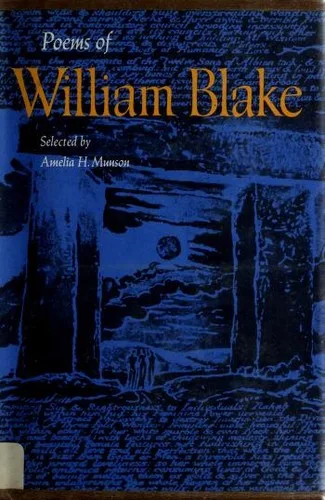
Auguries of Innocence and Other Lyric Poems
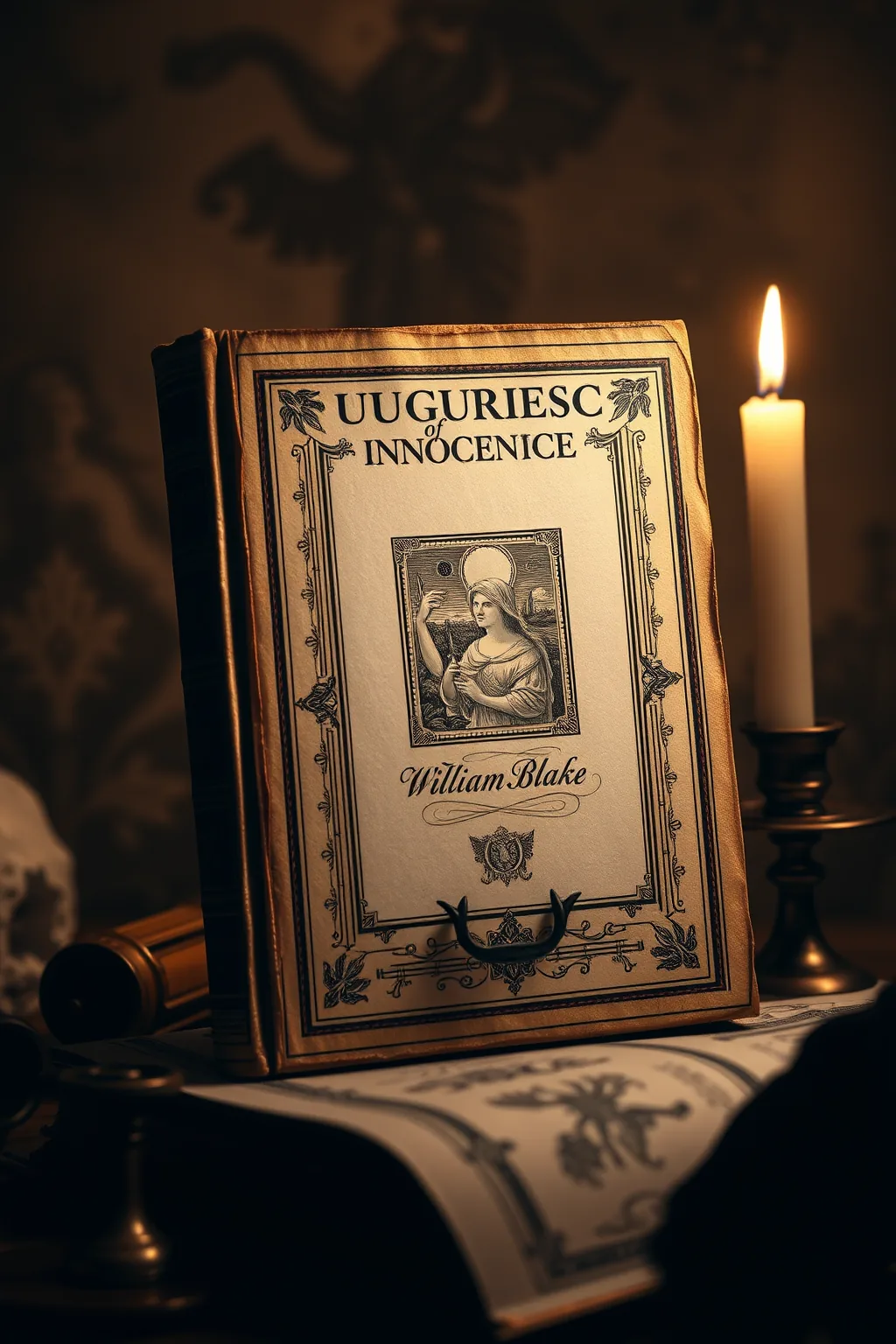
 61
61

Auguries of Innocence and Other Lyric Poems



Lorelei Sage (Contemplative Literature Editor) — William Blake's 'Auguries of Innocence' is an indispensable cornerstone for any serious exploration of English mystical poetry. This collection transcends mere verse, offering profound glimpses into the esoteric underpinnings of existence. Blake's unique ability to synthesize spiritual prophecy with searing social commentary remains potent. The 'Auguries' themselves are a powerful testament to his visionary genius, presenting complex metaphysical concepts with striking simplicity and arresting imagery. For practitioners and scholars of the occult and mystical traditions, this volume is an essential text, revealing the interconnectedness of all creation and the divine potential within humanity. Its strengths lie in its raw, unadulterated vision and its enduring challenge to conventional thought. This is not light reading, but a deeply rewarding engagement for the dedicated student of the arcane.
📝 Description
61
Embark on a visionary odyssey with William Blake's 'Auguries of Innocence and Other Lyric Poems,' a profound collection that pierces the veil of mundane reality to reveal the incandescent truths of the cosmos. Blake, a seer of unparalleled vision, invites readers into a universe where the infinite resides within the smallest grain of sand and eternity unfolds in the space of an hour. This work is not merely poetry; it is an alchemical distillation of spiritual insight, a map to the hidden architecture of the soul, and a testament to the divine spark that animates all existence. Through potent, resonant imagery, Blake deciphers the secret language of nature, charting the intricate dance between the material and the spiritual. His verses are potent incantations, designed to awaken the slumbering mystic within, offering a profound contemplation on perception, morality, and the interconnectedness of all things. For the seeker of hidden knowledge, the student of esoteric philosophy, or any soul yearning for a deeper understanding of existence, this collection serves as a luminous guide through the labyrinth of consciousness, illuminating the path toward spiritual liberation and profound self-discovery. Prepare to have your perception irrevocably altered as Blake's celestial whispers reveal the universe as a sacred text waiting to be read.
✍️ Author
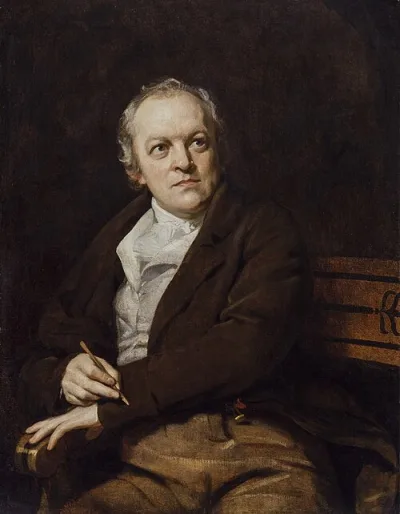
William Blake
William Blake (28 November 1757 – 12 August 1827) was an English poet, painter and printmaker. Largely unrecognised during his life, Blake has become a seminal figure in the history of the poetry and visual art of the Romantic Age.
💡 Why Read This Book?
This collection is essential for understanding the roots of Western esoteric thought as expressed through poetry. It offers profound insights into divine perception, the interconnectedness of all things, and the hidden spiritual truths within the mundane. Ideal for seekers of cosmic wisdom, scholars of mysticism, and practitioners looking to deepen their intuitive understanding of universal laws. Blake's verses act as keys to unlocking deeper layers of consciousness.
⭐ Reader Reviews
Honest opinions from readers who have explored this book.
❓ Frequently Asked Questions
What are 'Auguries of Innocence'?
'Auguries of Innocence' is a prophetic poem by William Blake, renowned for its profound spiritual insights and cryptic pronouncements on the nature of existence, morality, and the divine interconnectedness of all things.
Is this book suitable for beginners in mysticism?
Yes, while Blake's work is profound, it is also remarkably accessible in its imagery. It serves as an excellent entry point for beginners curious about mystical concepts, offering a poetic and evocative introduction to esoteric philosophy.
What is the primary esoteric tradition Blake draws upon?
Blake's work is deeply influenced by Gnosticism, Christian mysticism, and Hermeticism, blended with his own unique visionary experiences and critiques of established religious and social institutions.
How does Blake's work relate to divination?
Blake's 'Auguries' can be seen as a form of poetic divination, offering insights into universal truths and potential futures by interpreting the symbols and patterns he perceives in the natural and spiritual worlds.
What makes Blake's poetry 'esoteric'?
Blake's poetry is considered esoteric due to its exploration of hidden spiritual realities, its use of symbolic language that requires interpretation, and its direct communication of ecstatic mystical experiences, often challenging orthodox religious doctrines.
🔮 Key Themes & Symbolism
The Infinite Within the Finite
Blake masterfully illustrates the concept that the boundless divine and the infinite universe are not external but reside within every individual and every element of creation. He famously posits that to 'see a World in a Grain of Sand' is to comprehend the totality of existence through a single, focused perception. This theme challenges the reader to transcend material limitations and recognize the sacredness inherent in the smallest, most overlooked aspects of reality. It's an invitation to unlock profound cosmic understanding through an altered state of consciousness and an appreciation for the interconnected tapestry of life, where every particle holds the echo of the All.
Moral Vision and Spiritual Perception
A central tenet of Blake's work is the inseparable link between moral understanding and true spiritual perception. He argues that a corrupted or limited worldview—often imposed by societal norms or dogmatic religion—blinds individuals to divine realities. Blake champions an innocent, uncorrupted vision as the key to accessing higher truths and understanding the fundamental goodness and interconnectedness of all beings. His poetry serves as a call to purify the senses and the mind, urging readers to embrace empathy, love, and a fierce independence of thought to discern the spiritual essence underlying all phenomena, thereby achieving a more authentic and enlightened moral compass.
The Interconnectedness of All Creation
Blake's poetry is a vibrant testament to the profound interconnectedness that binds every atom of the universe. He perceived a divine unity underlying the apparent diversity of existence, where the fate of one is inextricably linked to the fate of all. From the smallest insect to the grandest celestial body, all share in the same divine spark and participate in a cosmic dance of reciprocal influence. This theme encourages a holistic worldview, urging readers to cultivate a sense of universal responsibility and compassion, recognizing that harm to one part of the whole is ultimately harm to oneself and the divine fabric of reality.
💬 Memorable Quotes
“To see a World in a Grain of Sand”
— This iconic line suggests that profound cosmic truths and the entirety of existence can be perceived and understood by focusing intensely on the smallest, seemingly insignificant element.
“And a Heaven in a Wild Flower”
— Echoing the first, this phrase highlights how divine beauty and spiritual realms are not distant or abstract but readily accessible within the natural world, if one possesses the right perception.
“Hold Infinity in the palm of your hand”
— This encapsulates Blake's belief that the infinite, the eternal, and the boundless can be grasped and experienced through direct, intuitive insight, rather than through logical deduction or external observation.
“And Eternity in an hour”
— Suggests that the experience of timelessness and the eternal nature of the soul can be apprehended within the fleeting moments of our earthly existence, emphasizing the power of present awareness.
“For everything that lives is Holy”
— A radical assertion of divine immanence, this line posits that all life, in its very essence, is sacred and imbued with divine spirit, challenging any hierarchy that separates the 'holy' from the 'profane'.
🌙 Esoteric Significance
Tradition
Blake's work draws deeply from Christian esotericism, Gnosticism, and Hermetic philosophy, reinterpreting their tenets through his unique visionary lens. He sought to reveal the 'divine imagination' within humanity, aligning with mystical traditions that emphasize direct spiritual experience over dogma. His emphasis on symbolic language and the interconnectedness of all things echoes Hermetic principles like 'As Above, So Below,' while his critique of institutional religion and his focus on inner spiritual liberation align with Gnostic ideals.
Symbolism
Blake employs a rich tapestry of symbolism, transforming mundane objects and natural phenomena into potent spiritual metaphors. The 'Grain of Sand,' 'Wild Flower,' and 'Fly' represent the microcosm containing the macrocosm, revealing the divine within the ordinary. Animals often carry moral or spiritual weight (e.g., the 'Tyger' as fierce divine power). Light and darkness symbolize spiritual illumination versus ignorance. His visionary figures and mythological characters represent archetypal forces of creation and destruction, urging a deeper understanding of the soul's journey and the cosmic order.
Modern Relevance
In an era often characterized by materialism and fragmentation, Blake's message of universal interconnectedness and the inherent divinity within all beings remains profoundly relevant. His call for a visionary perception, urging us to see beyond superficial appearances, offers a potent antidote to spiritual apathy and disconnection. 'Auguries of Innocence' continues to inspire those seeking a deeper, more holistic understanding of life, encouraging mindfulness, empathy, and the recognition of the sacred in everyday existence, making it a vital text for contemporary spiritual exploration.
👥 Who Should Read This Book
This collection is a treasure for the ardent seeker of spiritual truths and the scholar of esoteric traditions. Beginners in mysticism will find Blake's vivid imagery an accessible gateway into profound concepts, while experienced practitioners will discover new depths of meaning and confirmation of their intuitive insights. Academics studying Romanticism, comparative religion, or philosophy will find rich material for analysis. Ultimately, anyone yearning to perceive the world with heightened awareness, to understand the intricate web of existence, and to explore the boundless potential of the human spirit will be profoundly moved and enlightened by Blake's singular vision.
📜 Historical Context
William Blake (1757-1827) penned 'Auguries of Innocence' around 1803, though it remained unpublished during his lifetime. This period in Britain was marked by immense social upheaval, the Enlightenment's lingering influence, and the burgeoning Romantic movement, which emphasized emotion, imagination, and individualism. Blake was a unique figure, often working outside established artistic and literary circles. His visionary experiences and radical interpretations of Christianity set him apart. The late 18th and early 19th centuries also saw a growing interest in occultism, mysticism, and esoteric philosophies, providing a fertile, albeit often marginalized, intellectual landscape for Blake's radical ideas. His critique of industrialization, societal corruption, and oppressive religious dogma resonated with a counter-cultural spirit, making his work both timely and timeless.
📔 Journal Prompts
Reflect on a 'Grain of Sand' in your life that holds immense significance or symbolizes a larger truth for you. Explore this connection in your journal.
What does 'Eternity in an hour' mean to your personal experience? Describe a moment where you felt timelessness.
Identify a common object or creature that you often overlook. Write about its 'Holy' essence and its place in the cosmic order.
Blake speaks of 'mind-forg'd manacles.' What are some societal or personal beliefs that limit your spiritual perception?
How can you cultivate a more 'innocent' or uncorrupted vision in your daily interactions and perceptions?
🗂️ Glossary
Augury
A sign or omen, typically interpreted as predicting future events. In Blake's context, it refers to profound spiritual insights derived from observing the world.
Innocence
In Blake's philosophy, not mere childish naivety, but a state of pure, uncorrupted perception, free from the limitations of reason and societal conditioning, allowing direct access to divine truth.
Visionary
One who experiences or claims to experience supernatural or divine revelations; a poet or artist whose work is characterized by profound imagination and spiritual insight.
Macrocosm
The universe considered as a whole; the great world. In esoteric thought, it is often mirrored by the microcosm.
Microcosm
The human being or individual considered as a miniature representation of the universe (macrocosm).