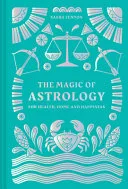
The Magic of Astrology
 76
76

The Magic of Astrology
Sasha Fenton’s The Magic of Astrology attempts to bridge the gap between popular sun-sign astrology and more intricate chart interpretation. The book’s strength lies in its clear explanations of the twelve houses, particularly how they map onto distinct life arenas. For instance, the discussion of Cancerian traits and their manifestation within the fourth house offers a nuanced perspective beyond simple emotional descriptors. However, the work sometimes leans into archetypal descriptions that, while familiar, could benefit from more rigorous exploration of how these archetypes manifest in diverse psychological profiles. The section on planetary aspects, while present, feels somewhat condensed given their crucial role in chart dynamics. Fenton’s writing is generally accessible, making it a useful primer for the curious, though seasoned astrologers might find it lacks deeper analytical depth. It serves as a solid introduction to the language of the cosmos.
📝 Description
76
Sasha Fenton's 2021 book, The Magic of Astrology, explains astrological principles beyond simple horoscopes.
This book examines the connection between celestial bodies and human personality. Fenton details the zodiac, planets, houses, and aspects, giving readers tools to interpret natal charts. It acts as a practical guide for understanding the energies that shape lives, relationships, and potential paths. Fenton presents astrology as a symbolic language for self-awareness, not a predetermined fate.
The work is for anyone curious about astrological influence, whether new to the subject or seeking to deepen existing knowledge. Readers interested in personality traits, relationship dynamics, and life challenges through astrology will find value. Fenton’s approach demystifies complex astrological ideas, making them relevant to everyday decisions like career choices and emotional patterns.
The Magic of Astrology is situated within the Western astrological tradition, which has roots in ancient Babylonian and Greek practices. Modern astrology, developing significantly through figures like Dane Rudhyar and Liz Greene, integrates psychological and symbolic interpretation. Fenton's book offers a structured, contemporary perspective on this evolving system, reflecting a renewed public interest in astrology during the late 20th and early 21st centuries.
💡 Why Read This Book?
• Gain practical insights into your unique personality and relationship dynamics by understanding the specific archetypes of the twelve zodiac signs, as detailed in Fenton's exploration of each sign's core motivations. • Learn to interpret the twelve houses of the astrological chart, a key concept that maps celestial energies onto concrete life areas like career and home, providing a framework for self-assessment. • Develop a more nuanced understanding of astrological interactions by examining planetary aspects, moving beyond simplistic interpretations to grasp how different energies within a natal chart communicate.
⭐ Reader Reviews
Honest opinions from readers who have explored this book.
❓ Frequently Asked Questions
What is the significance of the twelve houses in astrology according to The Magic of Astrology?
The Magic of Astrology explains the twelve houses as distinct sectors of life experience. From the ascendant (first house) representing self to the midheaven (tenth house) signifying career, each house provides a framework for understanding how astrological energies manifest in practical life situations.
Does The Magic of Astrology by Sasha Fenton discuss planetary aspects?
Yes, the book covers planetary aspects, which are the geometric relationships between planets in a natal chart. Fenton explains how these connections indicate the dynamic interplay and integration of different energies within an individual's psyche and life.
Who would benefit most from reading The Magic of Astrology?
Individuals curious about astrology, particularly those seeking to understand their own personality, relationships, and life path through a symbolic lens, will find this book beneficial. It's suitable for beginners and those with some prior interest.
When was The Magic of Astrology first published?
The Magic of Astrology by Sasha Fenton was first published on June 3, 2021, reflecting a contemporary approach to astrological studies.
How does the book explain the twelve zodiac signs?
Fenton's book details each of the twelve zodiac signs, exploring their core archetypal energies, motivations, and how these characteristics manifest in individuals. It moves beyond superficial traits to discuss deeper psychological patterns associated with each sign.
Is The Magic of Astrology a deterministic book?
No, the book frames astrology as a symbolic language for self-awareness and personal growth, rather than a deterministic system. It suggests that understanding astrological influences can empower individuals to make conscious choices.
🔮 Key Themes & Symbolism
Zodiacal Archetypes
The book examines the twelve zodiac signs as fundamental archetypes, each representing distinct patterns of energy, motivation, and expression. Fenton explores Aries' pioneering spirit, Taurus' grounded sensuality, Gemini's communicative duality, and Cancer's nurturing instincts. Understanding these archetypes allows readers to identify their own core characteristics and those of others, providing a symbolic map for navigating personality dynamics and interrelationships. This theme moves beyond simplistic horoscopes to explore the deeper psychological underpinnings of each sign.
Planetary Energies
Central to the work is the concept of planets as potent forces influencing human experience. Fenton explains how Mercury governs communication, Venus dictates matters of love and aesthetics, and Mars drives action and assertion. Each planet's position and relationship in a natal chart are presented as indicators of how these energies are integrated or expressed in an individual's life. The book aims to explain the 'magic' by illustrating how celestial mechanics translate into psychological and behavioral patterns.
The Twelve Houses
The twelve houses are presented as the stage upon which the astrological drama unfolds. The book meticulously outlines each house, from the personal area of the first house (the self) to the public sphere of the tenth house (career and reputation), and the collective unconscious of the twelfth house. Understanding the houses helps readers contextualize the influence of signs and planets, revealing how cosmic energies are likely to manifest in specific areas of their lives, offering practical guidance for life planning and self-understanding.
Astrological Aspects
The interplay between planets is illuminated through the concept of astrological aspects. Fenton explains how harmonious aspects (like trines and sextiles) suggest ease and integration, while challenging aspects (like squares and oppositions) indicate tension and areas for growth. These relationships are crucial for a holistic chart interpretation, revealing the dynamics and potential conflicts or synergies within an individual's psyche. The book guides readers to see these connections not as fate, but as opportunities for conscious development.
💬 Memorable Quotes
Direct passages from the work, attributed to the author.
“Are you an emotional Scorpio who needs to pour out your latest drama to your friends and relatives?”
— This opening question immediately engages the reader by referencing a commonly perceived, though potentially stereotypical, trait of Scorpio, inviting personal identification and curiosity about astrological correlations.
“Perhaps you’re an uptight Capricorn who keeps all your feeling to yourself?”
— This phrasing highlights a contrasting personality type, again using a recognizable archetype (Capricorn) to draw the reader in and demonstrate how astrology purports to explain diverse human behaviors.
“Whatever your characteristics are, The Magic of Astrology will help explain the unexplainable in your life”
— This statement presents the book as a tool for understanding life's mysteries and personal idiosyncrasies through an astrological framework, promising clarity and insight into otherwise baffling personal experiences.
“give advice on your relationships, careers and much, much more.”
— This promises practical application of astrological knowledge, suggesting the book offers tangible guidance for key life areas, thereby positioning it as a useful resource beyond theoretical exploration.
“Since the dawn of humanity, we have always looked up to the stars fo”
— This fragment implies a deep, ancient connection between humanity and the cosmos, positioning astrology as a primordial form of inquiry and a practice with profound historical roots, lending it gravitas.
🌙 Esoteric Significance
Tradition
This work aligns with the Western Esoteric Tradition, specifically the modern psychological branch of astrology that developed significantly in the 20th century. It departs from purely predictive or fatalistic ancient forms, emphasizing the natal chart as a map of potential and psychological archetypes. It appeals to Hermetic principles of 'As Above, So Below,' viewing celestial patterns as symbolic reflections of terrestrial life and human consciousness, rather than direct causal agents.
Symbolism
Key symbols include the twelve zodiac signs, representing fundamental archetypes of human experience and personality (e.g., the fiery Arian impulse, the earthy Taurean stability). Planets serve as symbols of dynamic psychic functions (e.g., Mercury for intellect, Venus for attraction). The twelve houses symbolize distinct areas of life, from the self (1st House) to the subconscious (12th House), providing a structured framework for interpreting the symbolic language of a natal chart.
Modern Relevance
Contemporary practitioners of self-help, life coaching, and therapeutic astrology draw upon the principles articulated in works like Fenton's. The focus on archetypal psychology and personal empowerment aligns with current trends in mindfulness and conscious living. Thinkers and communities exploring Jungian psychology, archetypal studies, and the integration of spiritual perspectives into modern life find value in astrology's symbolic framework for self-discovery.
👥 Who Should Read This Book
• Beginners seeking a clear introduction to astrological concepts like zodiac signs, planets, and houses, who want to understand the foundational language for personal insight. • Individuals interested in relationship dynamics, who wish to explore how astrological compatibility and interplays between different signs and planets might influence connections. • Those exploring personal development and self-awareness, looking for a symbolic system to better understand their innate traits, challenges, and potential life paths.
📜 Historical Context
The Magic of Astrology emerges within a modern resurgence of interest in esoteric practices, particularly astrology, which gained significant traction in the late 20th century. This period saw figures like Dane Rudhyar and Liz Greene popularize psychological astrology, shifting focus from predictive determinism to self-understanding and personal growth. Fenton’s work builds on this foundation, offering a structured approach to natal chart interpretation. While astrology has ancient roots in Babylonian and Hellenistic traditions, its modern iteration is often contrasted with the rise of empirical science and secularism. Despite this, the publication in 2021 places it in an era where online communities and renewed interest in spirituality have fostered a diverse astrological landscape, with works like this contributing to accessible, contemporary explorations of the subject.
📔 Journal Prompts
Reflect on the core archetypal energy of your Sun sign as described in the text.
Analyze the symbolic meaning of the planet ruling your Ascendant within your natal chart.
Consider how the challenges presented by a specific astrological aspect (e.g., a square) might manifest in your daily life.
Map the twelve houses onto your current life circumstances, noting which areas feel most activated by celestial influences.
Explore the potential expression of your Moon sign's emotional needs within the context of a specific house.
🗂️ Glossary
Ascendant (Rising Sign)
The zodiac sign that was rising on the eastern horizon at the moment of birth. It symbolizes the outward personality, how one appears to others, and the initial approach to life.
Natal Chart
A personalized astrological chart or diagram representing the positions of the Sun, Moon, planets, and other celestial bodies at the exact time and place of a person's birth.
Planetary Aspects
The angular relationships between planets in a natal chart, which are believed to indicate how different energies and functions within the psyche interact, creating harmony or tension.
Zodiac Signs
The twelve divisions of the ecliptic, each spanning 30 degrees, named after constellations. They represent archetypal energies and personality characteristics.
Houses
The twelve divisions of the astrological chart, each representing a different sphere of life experience, from personal identity and relationships to career and spirituality.
Midheaven (MC)
The highest point in the natal chart, representing career, public image, and life direction. It is the cusp of the 10th House.
Sun Sign
The zodiac sign in which the Sun was located at the time of birth. It represents the core identity, ego, and life force.