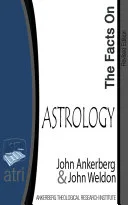
The Facts on Astrology
 81
81

The Facts on Astrology
Ankerberg and Weldon's 2011 publication, 'The Facts on Astrology,' offers a direct challenge to the ubiquity of astrological belief. The authors’ approach is decidedly critical, aiming to dismantle the perceived authority of horoscopes and celestial influence. One notable strength is the book's persistent questioning of how astrological claims intersect with governmental and scientific spheres, a less commonly explored angle. However, the work's reliance on a specific theological framework, primarily biblical interpretation, may limit its appeal to those outside that tradition. The examination of astrology's alleged dangers, particularly its occult connections, is presented with conviction. Ultimately, 'The Facts on Astrology' serves as a pointed refutation for the religiously or empirically minded seeking to understand criticisms of the practice.
📝 Description
81
Published in 1991, 'The Facts on Astrology' scrutinizes celestial claims about human lives and events.
This 1991 work by John Ankerberg and John Weldon examines the core claims of astrology, questioning the asserted connection between stars and earthly happenings. The authors investigate the belief systems and methods that support astrological practices and how these ideas affect various parts of society, including government, personal faith, and daily choices. They look at how astrological interpretations became widely accepted and used in decision-making and general social patterns.
The book also addresses the potential dangers of astrological engagement. It looks into the occult elements of astrology and considers how it fits with religious teachings and ethical standards. The authors highlight the personal effects that can result from practicing astrology. They build their argument against astrology using biblical texts, scientific reasoning, and logical thought, aiming to offer different viewpoints based on theology and empirical study.
This book approaches astrology from a critical perspective, positioning itself against traditions that attribute causal power to celestial bodies. It engages with the historical and cultural presence of astrology, a practice found in various forms across ancient civilizations and modern spiritual movements. Rather than exploring astrological symbolism or practice as a path to esoteric knowledge, it analyzes its claims through a lens of religious doctrine and scientific empiricism, seeking to demonstrate its incompatibility with established theological and rational frameworks.
💡 Why Read This Book?
• Understand the specific biblical objections to astrology, as detailed in its examination of scriptural passages, offering a unique theological critique not found in secular analyses. • Learn about the historical claims of astrological influence in government and industry, providing concrete examples of its societal penetration discussed in the book's societal impact sections. • Assess the occult aspects of astrology through the authors' critical lens, gaining a perspective on potential spiritual dangers outlined by Ankerberg and Weldon.
⭐ Reader Reviews
Honest opinions from readers who have explored this book.
❓ Frequently Asked Questions
What is the primary argument against astrology presented in 'The Facts on Astrology'?
The book's primary argument against astrology centers on its alleged incompatibility with biblical teachings and scientific principles. Ankerberg and Weldon contend that astrological claims lack empirical support and are rooted in occult practices, posing spiritual dangers.
When was 'The Facts on Astrology' first published?
The book 'The Facts on Astrology' by John Ankerberg and John Weldon was first published on May 3, 2011.
Does the book discuss the influence of astrology on governments?
Yes, the book explicitly examines the influence of astrology throughout government, questioning its impact on decision-making and policy, as mentioned in its detailed analysis of societal structures.
What does the book say about the scientific validity of astrology?
The authors critically assess astrology's claims against scientific reasoning, arguing that it lacks empirical evidence and contradicts established scientific understanding of celestial bodies and their effects.
Who are the authors of 'The Facts on Astrology'?
The authors are John Ankerberg and John Weldon, known for their critical examination of various popular beliefs and practices from a biblical perspective.
What are the perceived dangers of astrology according to the book?
The book highlights potential dangers, including spiritual deception, reliance on occult forces, and deviation from biblical truth. It emphasizes the personal consequences that may arise from engaging with astrological practices.
🔮 Key Themes & Symbolism
Biblical Condemnation
A central theme is the book's assertion that astrology is explicitly forbidden in biblical scripture. The authors meticulously cite passages, particularly from the Old Testament, which they interpret as direct condemnations of divination and celestial worship. This theme frames astrology not merely as a pseudoscience but as a spiritual transgression, influencing their assessment of its occult dimensions and personal dangers.
Scientific Skepticism
The work systematically contrasts astrological assertions with scientific principles. It questions the physical mechanisms by which distant stars and planets could influence individual lives and events. This theme highlights the authors' commitment to empirical evidence and rational inquiry, positioning astrology as lacking in verifiable, testable phenomena and thus unscientific.
Societal Pervasiveness
Ankerberg and Weldon explore the widespread presence of astrological beliefs and practices across various societal domains. They detail how astrology has infiltrated government, industry, education, and even religious communities, presenting it as a pervasive cultural force that warrants critical examination due to its potential for deception and misdirection.
Occult Origins
The book examines the historical and spiritual roots of astrology, linking it to occult traditions and practices. This theme is crucial for understanding the authors' perspective on the inherent dangers of astrology, portraying it as a gateway to forbidden spiritual knowledge or influence, distinct from benign forms of self-reflection.
💬 Memorable Quotes
Direct passages from the work, attributed to the author.
“What the Bible science & common sense tell us about astrology.”
— This expresses the book's multi-pronged approach to debunking astrology, asserting that three distinct domains—religious scripture, empirical study, and rational thought—all converge to reveal its falsehoods and dangers.
“Astrology's influence is felt throughout government industry the sciences education the church & the home.”
— This statement highlights the authors' concern over the pervasive reach of astrological beliefs, suggesting its influence extends far beyond individual practitioners into fundamental societal structures and institutions.
“Do the heavens really influence life on earth?”
— This question directly challenges the core premise of astrology, setting the stage for the book's critical examination of celestial determinism and its purported effects on human existence and events.
“What are the dangers of astrology?”
— This query signals the book's intent to explore the negative consequences associated with astrological practices, focusing on spiritual, psychological, and potentially societal risks.
“What does the Bible have to say about astrology?”
— This question underscores the theological foundation of the authors' critique, emphasizing their reliance on scriptural interpretation as a primary means to evaluate and condemn astrological beliefs and practices.
🌙 Esoteric Significance
Tradition
This work is situated outside of any esoteric tradition, acting instead as a critical external examination. It addresses esoteric subjects like astrology from a perspective that fundamentally rejects their premises, particularly from a conservative Christian apologetic viewpoint. It does not seek to interpret or expand esoteric lineages but rather to dismantle them by contrasting them with biblical doctrine and scientific reasoning.
Symbolism
While the book focuses on critiquing astrology, it implicitly engages with symbols through its discussion of celestial bodies (planets, stars) and their supposed meanings in astrological charts. These symbols are presented not as carriers of spiritual significance within an esoteric framework, but as elements of a deceptive system. The authors’ focus is on exposing the alleged occult origins of these symbolic interpretations rather than exploring their traditional esoteric meanings.
Modern Relevance
Despite its critical stance, the book remains relevant today for individuals seeking to understand the arguments against astrology, particularly from a religious or skeptical viewpoint. It informs discussions within comparative religion studies and the sociology of belief systems, offering a specific theological counterpoint to contemporary practices that often integrate astrology into wellness, therapy, or self-discovery movements.
👥 Who Should Read This Book
• Individuals concerned about the spiritual or ethical implications of astrology, seeking a theological and common-sense critique based on biblical principles. • Skeptics and researchers interested in understanding the arguments used to debunk astrological claims, particularly from a viewpoint that prioritizes empirical evidence and rational analysis. • Students of comparative religion or apologetics exploring how various belief systems, including astrology, are critically examined and refuted from specific doctrinal perspectives.
📜 Historical Context
Published in 2011, 'The Facts on Astrology' emerged during a period where New Age spirituality and alternative belief systems continued to hold sway, despite increasing skepticism in some academic circles. The early 21st century saw a resurgence of interest in astrology, often integrated into broader wellness and self-help movements. This book stands in direct opposition to such trends, aligning with a long-standing tradition of apologetic literature that critiques occult practices from a conservative Christian perspective. Contemporaries like the late Harold Camping, who also gained notoriety for his eschatological predictions, shared a similar zeal for challenging popular beliefs based on scriptural interpretation. While specific reception events for this particular work are not widely documented, it fits within a broader discourse where figures like Carl Sagan had already popularized scientific critiques of astrology decades prior, representing a competing school of thought focused on empirical validation.
📔 Journal Prompts
Astrology's influence in government: assessing its purported impact.
The biblical perspective on celestial divination: personal reflection.
Common sense arguments against astrological determinism.
Evaluating the occult connections presented in the book.
The balance between celestial observation and astrological interpretation.
🗂️ Glossary
Astrology
A practice that claims to divine information about human affairs and terrestrial events by the relative positions of celestial bodies. The book critiques its validity and origins.
Occult
Practices and phenomena considered secret, hidden, or supernatural, often associated with magic, sorcery, or esoteric knowledge. The book links astrology to these domains.
Divination
The practice of seeking knowledge of the future or the unknown by supernatural means. Astrology is presented as a form of divination.
Celestial Bodies
Natural objects in space, such as stars, planets, and moons. In astrology, their positions and movements are believed to influence human lives.
Biblical Scripture
The collection of sacred texts considered by Christians to be divinely inspired. The authors use scripture to argue against astrology.
Common Sense
Good sense or judgment in practical matters. The book uses this as a standard to evaluate astrological claims.
Empirical Evidence
Information acquired through observation and experimentation. The book argues astrology lacks this.