Medical Astrology
 75
75

Medical Astrology
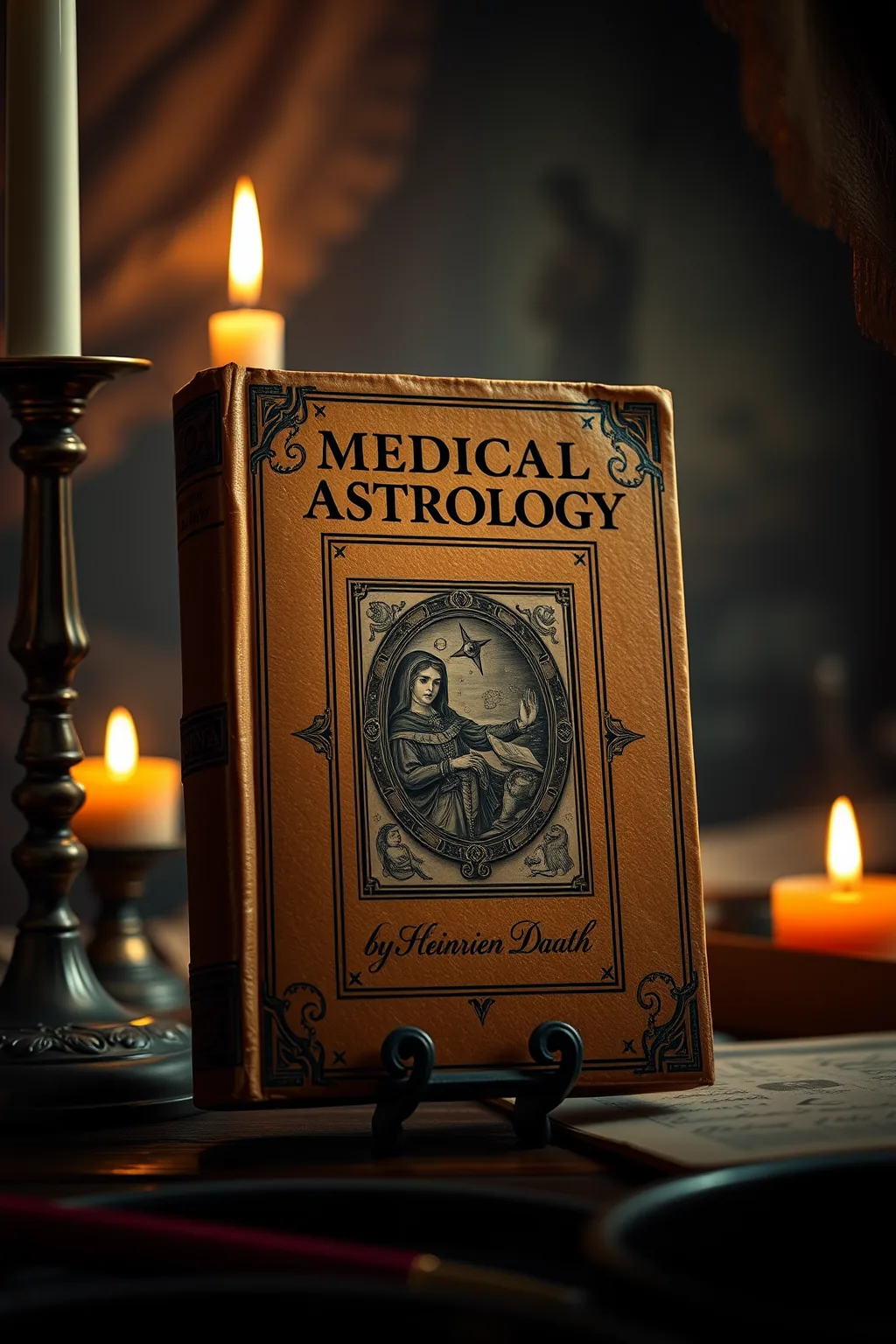
Heinrich Daath's *Medical Astrology* attempts a level of anatomical and physiological specificity in its astrological correspondences that is rarely encountered. The assertion, for example, that the nasal bones are co-ruled by Scorpio, alongside Aries' general dominion over the head, demonstrates the work's ambition to map the body with exceptional precision. This granular approach is its greatest strength, offering practitioners a more nuanced diagnostic tool than many general astrological texts provide. However, the book's density and reliance on a specific, highly detailed system of rulerships could present a significant learning curve for those not already well-versed in esoteric anatomy. The diagram illustrating the urinary tract's division between Libra and Scorpio, while helpful, underscores the intricate symbolic logic at play, which requires dedicated study to fully grasp. It is a dense, demanding, but potentially rewarding resource for the dedicated student of astrological medicine.
📝 Description
75
Heinrich Daath's 2013 book maps planetary and zodiacal influences to specific human tissues and circulatory pathways.
Medical Astrology by Heinrich Daath details the connections between celestial bodies and human physiology. The book moves past simple astrological correspondences to offer a structured way to understand the body's systems from an esoteric viewpoint. It carefully outlines how planets and zodiac signs influence broad anatomical areas as well as finer details like bones, muscles, arteries, and veins. Daath uses modern terminology to make complex concepts understandable.
This work is for dedicated students of medical astrology, practitioners aiming to improve their diagnostic skills, and esoteric scholars interested in the historical and symbolic links between the cosmos and the human body. It suits those who value detailed analysis and are prepared to work with advanced astrological principles applied to health. Readers with a background in Western esotericism will find its method especially useful.
Published in 2013, Daath's work connects to a long history of astrological medicine, from ancient Mesopotamia and Hellenistic Greece to Renaissance figures like Nicholas Culpeper. The early 21st century saw a renewed interest in esoteric subjects, and Daath's book fits within this period of re-engagement with occult sciences. This time also included scholarly work examining astrology's impact on medicine, distinct from popular self-help approaches.
💡 Why Read This Book?
• Gain a highly detailed understanding of astrological correspondences, learning how specific celestial bodies and zodiacal signs are linked to finer anatomical structures like arteries and veins, a depth not found in generalized astrological guides. • Explore the integration of Vedic astrological principles with Western medical astrology, offering a comparative framework for understanding cosmic influences on health that broadens traditional perspectives. • Discover sophisticated rulership assignments, such as the co-rulership of nasal bones by Scorpio, providing advanced diagnostic insights for practitioners and scholars interested in esoteric anatomy.
⭐ Reader Reviews
Honest opinions from readers who have explored this book.
❓ Frequently Asked Questions
What makes Heinrich Daath's Medical Astrology different from other medical astrology books?
Daath's work distinguishes itself through an exceptionally granular approach, assigning rulerships not only to organs but also to specific tissues, bones, muscles, arteries, and veins, often detailing subtle divisions of influence not found in simpler texts.
Does Medical Astrology include references to non-Western astrological traditions?
Yes, the book integrates references to Vedic principles alongside its primary focus on Western medical astrology, offering a more comprehensive and comparative perspective on the subject.
What level of astrological knowledge is required to understand this book?
While the terminology is modern, the sophisticated nature of the concepts and the detailed mapping of rulerships suggest that a foundational understanding of Western astrology and its symbolic language would be beneficial.
Are there visual aids in Medical Astrology to help explain complex concepts?
The book includes helpful diagrams, such as one that clarifies the subtle division of the urinary tract's astrological rulership between Libra and Scorpio.
When was Medical Astrology first published?
Heinrich Daath's *Medical Astrology* was first published in March 2013.
Who is the intended audience for this detailed medical astrology text?
The book is aimed at serious students of medical astrology, practitioners seeking advanced diagnostic tools, and esoteric scholars interested in the detailed correlation between the cosmos and human anatomy.
🔮 Key Themes & Symbolism
Granular Anatomical Rulerships
This work moves beyond generalized astrological correspondences, meticulously mapping zodiacal and planetary influences onto highly specific anatomical structures. It details rulerships for individual bones, muscles, arteries, and veins, offering a level of precision that allows for a more nuanced interpretation of health conditions. For instance, the text explores the subtle division of the urinary tract's dominion between Libra and Scorpio, presenting a complex yet systematic approach to esoteric anatomy that challenges conventional astrological mapping.
Integration of Astrological Systems
Daath's *Medical Astrology* synthesizes elements from both Western and Vedic astrological traditions. This comparative approach enriches the understanding of how different cultural and philosophical frameworks interpret the relationship between the cosmos and human physiology. By referencing Vedic principles, the book provides a broader context for astrological medicine, suggesting universal patterns that transcend specific cultural interpretations and enhancing the depth of the presented correlations.
Modern Terminology in Esoteric Practice
A notable feature of this book is its adoption of modern terminology to describe complex esoteric concepts. This facilitates greater accessibility for contemporary students and practitioners, bridging the gap between ancient wisdom and modern understanding. By using contemporary language to discuss intricate subjects like the co-rulership of nasal bones by Scorpio, Daath ensures the work remains relevant and comprehensible to a 21st-century audience engaged with occult sciences.
Subtle Divisions of Influence
The text emphasizes the intricate and often subtle divisions of astrological influence over the human body. It posits that specific areas, tissues, and systems are governed by a complex interplay of celestial factors, moving beyond simple one-to-one correlations. This detailed mapping illustrates a sophisticated understanding of the body as a microcosm reflecting macrocosmic order, where even minor anatomical features possess distinct astrological signatures.
💬 Memorable Quotes
Direct passages from the work, attributed to the author.
“The head is ruled by Aries, but the nasal bones are co-ruled by Scorpio.”
— This highlights the book's meticulous approach, demonstrating that astrological rulerships extend beyond broad anatomical regions to specific, finer structures within the body, requiring a deeper level of study.
“A helpful diagram explains the subtle division of the urinary tract between Libra and Scorpio.”
— This reference points to the book's commitment to detailed visualization of complex astrological correspondences, illustrating how specific bodily systems are understood through a nuanced interplay of zodiacal influences.
“Rulerships are given not only for areas of the body and its organs, but also for bones, muscles, arteries and veins.”
— This underscores the comprehensive scope of Daath's work, presenting an astrological system that accounts for the full spectrum of human anatomy, from macro to micro levels.
“Terminology in the book is modern.”
— This indicates the author's intent to make advanced esoteric concepts accessible to contemporary readers, using current language to explain ancient principles of medical astrology.
“There are references to Vedic principles.”
— This suggests a comparative and integrated approach to astrological medicine, drawing from multiple traditions to provide a richer and more holistic understanding of celestial influences on health.
🌙 Esoteric Significance
Tradition
This work is firmly rooted in the Western esoteric tradition, specifically within the lineage of medical astrology that was integral to Hermetic and Renaissance medical thought. It expands upon the established correspondences found in classical and medieval texts by offering a more detailed and systematic mapping of the human body. While not explicitly Kabbalistic or Gnostic, its emphasis on the microcosm reflecting the macrocosm aligns with core Hermetic principles, viewing the body as a divine instrument governed by celestial laws.
Symbolism
The book's primary symbolism lies in the mapping of celestial bodies and zodiacal signs onto anatomical structures. The zodiac itself, a band of twelve divisions, symbolizes the cyclical nature of life and the differentiated forces that govern existence. Specific planetary and sign rulerships, such as Aries over the head or Scorpio's complex dominion, act as symbolic keys, unlocking the understanding of how cosmic energies manifest as physical form and function within the human microcosm.
Modern Relevance
Contemporary practitioners of Western esotericism, particularly those focused on astrological medicine and Hermetic studies, draw upon Daath's work for its detailed anatomical correspondences. It informs modern astrological consultations, health-focused spiritual practices, and comparative studies within occult traditions. Thinkers and schools that emphasize the deep connection between the human body and the cosmos, often seeking to revive or refine older esoteric systems, find valuable material in its systematic approach to astrological physiology.
👥 Who Should Read This Book
['• Advanced students of Western esotericism seeking to deepen their understanding of astrological medicine and its intricate anatomical correlations.', '• Astrologers and practitioners interested in developing more precise diagnostic tools by exploring detailed rulerships of organs, bones, and vascular systems.', '• Scholars of the history of medicine and occult sciences looking for detailed, systematic approaches to historical astrological medical theories presented with modern terminology.']
📜 Historical Context
Heinrich Daath's *Medical Astrology*, published in March 2013, emerged during a period of significant renewed interest in esoteric subjects and traditionalist approaches to spirituality and knowledge. The early 21st century saw a growing academic and popular engagement with Hermeticism, Kabbalah, and other occult sciences, often through the lens of comparative religion or historical studies. While popular astrology often focused on personality, works like Daath's contributed to a more rigorous, systematized revival of older forms of astrological practice, including medical astrology, which had been a prominent feature of European medicine until the 17th century. This revival stood in contrast to the more psychologically or therapeutically oriented astrology that had become dominant. Scholars of the period, such as Nicholas Campion, were actively documenting and analyzing the history of astrology, providing a critical framework within which new works engaging with these traditions could be situated and debated.
📔 Journal Prompts
The specific co-rulership of nasal bones by Scorpio and Aries.
Daath's detailed mapping of the urinary tract's division between Libra and Scorpio.
The application of modern terminology to complex astrological anatomy.
Vedic principles integrated into Western medical astrology.
Rulerships assigned to specific arteries and veins.
🗂️ Glossary
Medical Astrology
A branch of astrology concerned with the relationship between celestial bodies and human health, focusing on diagnosis, prognosis, and treatment through astrological interpretation.
Rulerships
In astrology, the assignment of specific planets or zodiacal signs to govern particular body parts, organs, diseases, or functions, indicating their energetic influence.
Zodiacal Signs
The twelve divisions of the ecliptic (Aries, Taurus, Gemini, Cancer, Leo, Virgo, Libra, Scorpio, Sagittarius, Capricorn, Aquarius, Pisces), each associated with distinct energies and influences on the human body and psyche.
Vedic Principles
Concepts and methodologies derived from Vedic astrology (Jyotish), an ancient Indian system that shares some roots with Western astrology but possesses unique interpretive frameworks and techniques.
Anatomical Correspondences
The symbolic links established between specific parts of the human body (organs, bones, tissues) and celestial bodies or zodiacal signs within astrological systems.
Esoteric Anatomy
The study of the human body's structure and function through non-physical or symbolic lenses, often incorporating astrological, energetic, or spiritual principles beyond conventional scientific understanding.
Microcosm/Macrocosm
The Hermetic principle that the human being (microcosm) is a reflection or smaller model of the universe (macrocosm), implying that universal laws and structures are mirrored within the individual.