Bygone Beliefs
 83
83

Bygone Beliefs
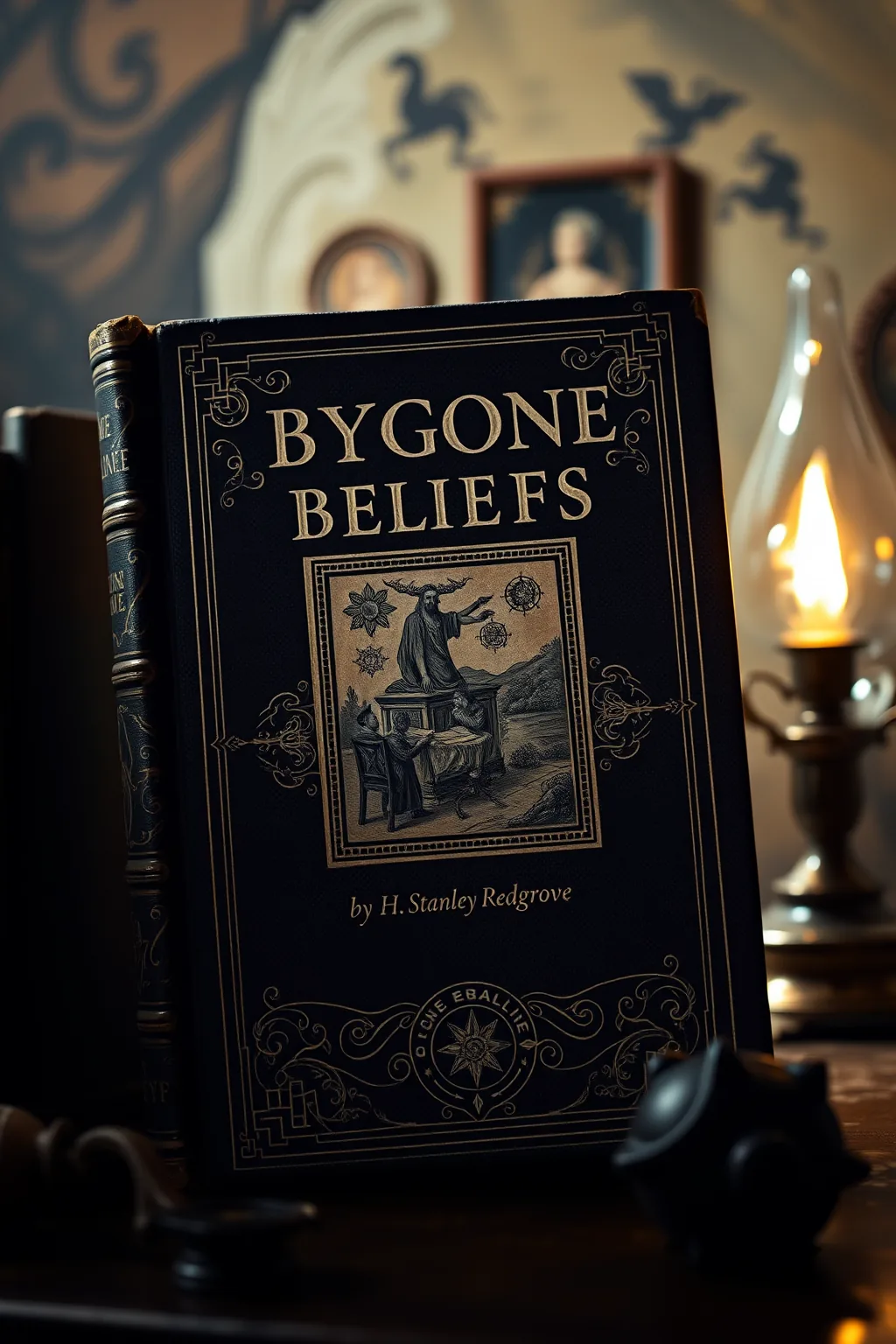
H. Stanley Redgrove's Bygone Beliefs, from 1920, offers a fascinating, if somewhat dated, psychological lens on historical beliefs. Redgrove possesses a keen eye for the enduring patterns of human conviction, particularly how ancient anxieties and desires manifest in seemingly novel creeds. The strength of the work lies in its attempt to psychoanalyze belief itself, moving beyond mere historical description. However, the prose can occasionally feel dense, and the early 20th-century psychological frameworks, while pioneering for their time, require a modern reader to contextualize. Redgrove's discussion of 'psychic survivals' and their connection to the collective unconscious is particularly compelling, illustrating how seemingly irrational beliefs hold a potent psychological truth. It is a valuable document for understanding the intellectual currents of its era, revealing a mind grappling with the nascent psychological sciences and their application to the esoteric.
This book provides a unique perspective on the evolution of human conviction.
📝 Description
83
H. Stanley Redgrove's 1920 book Bygone Beliefs analyzes the historical and psychological roots of esoteric convictions.
Published in 1920, Bygone Beliefs by H. Stanley Redgrove is a historical and psychological examination of belief systems, especially those related to the esoteric and occult. Redgrove, a writer known for his work on psychical research, treats his subjects with a mix of academic rigor and thoughtful consideration. The book investigates how societal shifts and individual psychology influence religious, magical, and philosophical beliefs across various periods.
This work is more than just a list of forgotten doctrines; it is an analysis of the persistent human drive for meaning and explanation. It is aimed at readers interested in the history of ideas, the development of consciousness, and the origins of modern esoteric thought. Students of psychology, anthropology, and comparative religion will find its approach to belief formation especially pertinent. Those curious about the intellectual climate of the early 20th century, a time of significant interest in spiritualism and the occult, will appreciate Redgrove's placement of these subjects within their historical setting. The book appeals to both the academic researcher and the general reader seeking a deeper grasp of human belief.
Bygone Beliefs appeared in 1920, a period of intense engagement with psychical research and occult studies in Britain, particularly following World War I. Redgrove was active in this milieu, interacting with individuals and concepts prevalent in groups like the Hermetic Order of the Golden Dawn. However, his work often distinguished itself through its focus on psychological interpretation. This era also saw the rise of psychoanalysis, and Redgrove's writings show an early consideration of psychological explanations for phenomena once attributed solely to supernatural causes.
💡 Why Read This Book?
• Gain insight into Redgrove's theory of 'psychic survivals,' understanding how seemingly archaic beliefs reflect persistent psychological needs, a concept he detailed in his analyses of early 20th-century occultism. • Explore Redgrove's early 20th-century psychological approach to belief systems, offering a contrast to purely historical or theological interpretations prevalent before the widespread influence of figures like Freud. • Understand the intellectual climate of 1920, a period of intense interest in psychical research and the occult, as Redgrove positions his work within this burgeoning field.
⭐ Reader Reviews
Honest opinions from readers who have explored this book.
❓ Frequently Asked Questions
What is the historical period covered by Bygone Beliefs?
Bygone Beliefs, published in 1920, examines beliefs that were considered archaic or unusual at the time of its writing, often drawing examples from ancient history, folklore, and early modern esoteric practices.
What is H. Stanley Redgrove's primary approach in Bygone Beliefs?
Redgrove primarily employs a psychological and analytical approach, seeking to understand the underlying human needs and mental processes that give rise to various belief systems, rather than simply cataloging them.
Does Bygone Beliefs discuss modern occultism?
While primarily focused on historical and 'bygone' beliefs, the work provides context for understanding the roots of modern occultism by examining the psychological drivers that continue to influence such movements.
Is Bygone Beliefs considered a primary source for early 20th-century occult studies?
Yes, it is considered a valuable primary source offering insight into the intellectual discussions and psychological interpretations of esoteric phenomena during the early 20th century.
What makes Redgrove's perspective unique compared to other writers of his time?
Redgrove's emphasis on psychological causality for belief, particularly his exploration of 'psychic survivals,' distinguished his work from purely historical or theological accounts common in the early 1900s.
Can Bygone Beliefs be used for understanding comparative religion?
Certainly. The book's examination of shared psychological underpinnings across diverse belief systems provides a unique angle for comparative religious studies, focusing on the 'why' of belief.
🔮 Key Themes & Symbolism
Psychology of Belief
Redgrove meticulously dissects the human psyche's role in constructing and maintaining belief systems. He posits that many 'bygone' or seemingly irrational beliefs are not random but arise from fundamental psychological needs for meaning, order, and connection. His work explores how these needs manifest across cultures and epochs, suggesting that an understanding of the mind is crucial to comprehending the persistence of esoteric and religious ideas. The book examines how collective anxieties and desires can shape the acceptance of specific doctrines or practices, linking individual psychology to broader societal trends in belief formation.
Esoteric Survival
A central concept in Bygone Beliefs is the idea of 'psychic survivals' – the persistence of ancient ideas, symbols, and practices within later societies. Redgrove investigates how these remnants of older belief systems continue to exert influence, often unconsciously, on contemporary thought and behavior. He argues that these survivals are not mere anachronisms but reveal enduring patterns of human consciousness and the deep-seated archetypes that continue to shape our understanding of the world. This theme connects historical esoteric traditions to the underlying psychological structures that give them their power.
Evolution of Thought
The book traces the trajectory of human thought, particularly concerning the esoteric and the supernatural, from ancient times through the early 20th century. Redgrove analyzes how societal shifts, scientific advancements, and evolving philosophical frameworks interact with and transform existing belief systems. He explores the transition from mythic thinking to more rationalistic approaches, and how elements of the former often re-emerge in new guises. This evolutionary perspective highlights the dynamic nature of belief and its constant adaptation to changing human understanding and experience.
Ritual and Symbol
Redgrove examines the potent role of ritual and symbolism in the establishment and perpetuation of belief. He suggests that rituals provide a framework for experiencing and internalizing abstract concepts, while symbols serve as condensed representations of complex psychological and spiritual truths. The work explores how these elements function to solidify group identity and transmit cultural knowledge, often tapping into primal emotional responses. By analyzing the structure and function of rituals and symbols in bygone belief systems, Redgrove illuminates their enduring power in shaping human consciousness.
💬 Memorable Quotes
Direct passages from the work, attributed to the author.
“The history of human belief is largely the history of the human mind seeking to understand its environment and itself.”
— This statement captures Redgrove's core thesis: that beliefs, especially esoteric ones, are not arbitrary but are deeply rooted in the mind's intrinsic drive for comprehension and meaning-making.
“What appears as a superstitious practice today may reveal a profound psychological truth from an earlier era.”
— This highlights Redgrove's concept of 'psychic survivals,' suggesting that antiquated customs hold keys to understanding enduring aspects of the human psyche that transcend historical periods.
“Symbols act as bridges, connecting the conscious intellect to the deeper, often unconscious, currents of human experience.”
— This interpretation emphasizes the function of symbolism in Redgrove's framework, illustrating how signs and images can access layers of consciousness beyond rational thought, linking the personal to the archetypal.
“The persistence of certain ideas across millennia speaks to their deep resonance with fundamental human needs.”
— Redgrove points to the enduring power of specific concepts, suggesting that their longevity is not accidental but stems from their ability to satisfy essential psychological and spiritual requirements inherent in the human condition.
“Understanding the 'why' behind a belief is often more crucial than cataloging its superficial forms.”
— This underlines Redgrove's analytical method, prioritizing the psychological and evolutionary origins of beliefs over a mere historical listing, seeking the underlying causes of conviction.
🌙 Esoteric Significance
Tradition
Redgrove's work occupies a unique space, drawing from but also critiquing various esoteric traditions. While he addresses topics relevant to Hermeticism and occult philosophy prevalent in his time, his primary lineage is that of early 20th-century psychical research and analytical psychology. He seeks to provide a psychological framework for understanding the persistence of esoteric ideas, rather than advocating for a specific magical system. His approach can be seen as an attempt to reconcile the emerging scientific understanding of the mind with the enduring power of myth, ritual, and esoteric belief.
Symbolism
Key symbols explored implicitly or explicitly in Bygone Beliefs often relate to ancient archetypes and their psychological manifestations. For instance, the recurring motif of the serpent, found across numerous mythologies, can be interpreted as representing primal energies, transformation, or hidden knowledge. Similarly, symbols of light and darkness, or celestial bodies, are examined not just for their astronomical significance but for their deep psychological resonance, representing consciousness and the unconscious, or divine order and chaos.
Modern Relevance
Contemporary thinkers in Jungian psychology, archetypal studies, and certain branches of comparative religion continue to find value in Redgrove's exploration of the psychological underpinnings of belief. His work on 'psychic survivals' appeals to modern discussions on cultural memory and the persistence of archetypal patterns. Scholars studying the history of occultism and psychical research also reference Bygone Beliefs as a crucial document from a key era, illustrating early attempts to apply psychological theory to esoteric phenomena.
👥 Who Should Read This Book
• Students of early 20th-century intellectual history: Those interested in the period between the Victorian era and the mid-century will find Redgrove's analysis of occultism and psychology useful. • Psychologically inclined researchers of religion and myth: Readers seeking to understand the mental and emotional drivers behind belief systems, beyond purely historical or theological explanations, will benefit. • Practitioners and historians of esoteric traditions: Individuals curious about the historical roots and psychological foundations of practices found in Hermeticism, spiritualism, and other occult paths will find valuable context.
📜 Historical Context
Bygone Beliefs emerged in 1920, a period of intense intellectual ferment and societal upheaval following World War I. The era was marked by a widespread fascination with psychical research, spiritualism, and the occult, fueled by a desire for meaning in the face of unprecedented loss. H. Stanley Redgrove was an active participant in this milieu, though his approach often distinguished itself through a psychological and analytical lens. He engaged with the burgeoning field of psychoanalysis, exploring how concepts like the unconscious mind could explain phenomena previously attributed solely to the supernatural. Contemporaries like Aleister Crowley were also exploring esoteric paths, but Redgrove's focus remained on the historical and psychological roots of belief itself. The book reflects a transition from purely descriptive accounts of magic and religion to attempts at understanding the mental architecture that supported such systems, placing it within the broader intellectual current of early modern psychology and anthropology.
📔 Journal Prompts
The concept of 'psychic survivals' in Redgrove's analysis.
Redgrove's interpretation of a specific ancient symbol or ritual.
The relationship between collective consciousness and individual belief.
How the psychological needs described by Redgrove manifest in contemporary society.
The evolution of a particular belief system discussed in the book.
🗂️ Glossary
Psychic Survivals
A concept used by Redgrove to describe the persistence of ancient ideas, practices, or beliefs in societies long after their original context has passed, suggesting they fulfill enduring psychological needs.
Collective Consciousness
The shared beliefs, ideas, attitudes, and knowledge that are common to a social group or society. Redgrove explores how this influences individual belief.
Archetype
In psychology, particularly Jungian theory, a primordial image, pattern of thought, or symbol that is universally present in the individual's unconscious psyche, derived from the collective unconscious.
Mythopoeic
Relating to the creation of myths or the interpretation of myths. Redgrove examines how mythic thinking shapes belief systems.
Animism
The belief that objects, places, and creatures all possess a distinct spiritual essence, often attributed to the souls of the dead or nature spirits. Redgrove discusses this as a foundational belief.
Esotericism
Belief systems and practices that are concerned with the inner, spiritual life and that are usually intended for or understood by only a small number of people with specialized knowledge.
Vestigial Beliefs
Similar to psychic survivals, these are beliefs or practices that remain from earlier stages of cultural or psychological development, often out of their original context but still holding psychological weight.
🔮 Readers Also Liked
Browse all →









More by H. Stanley Redgrove
All books →




More Free Alchemy & Hermeticism Books
View all →