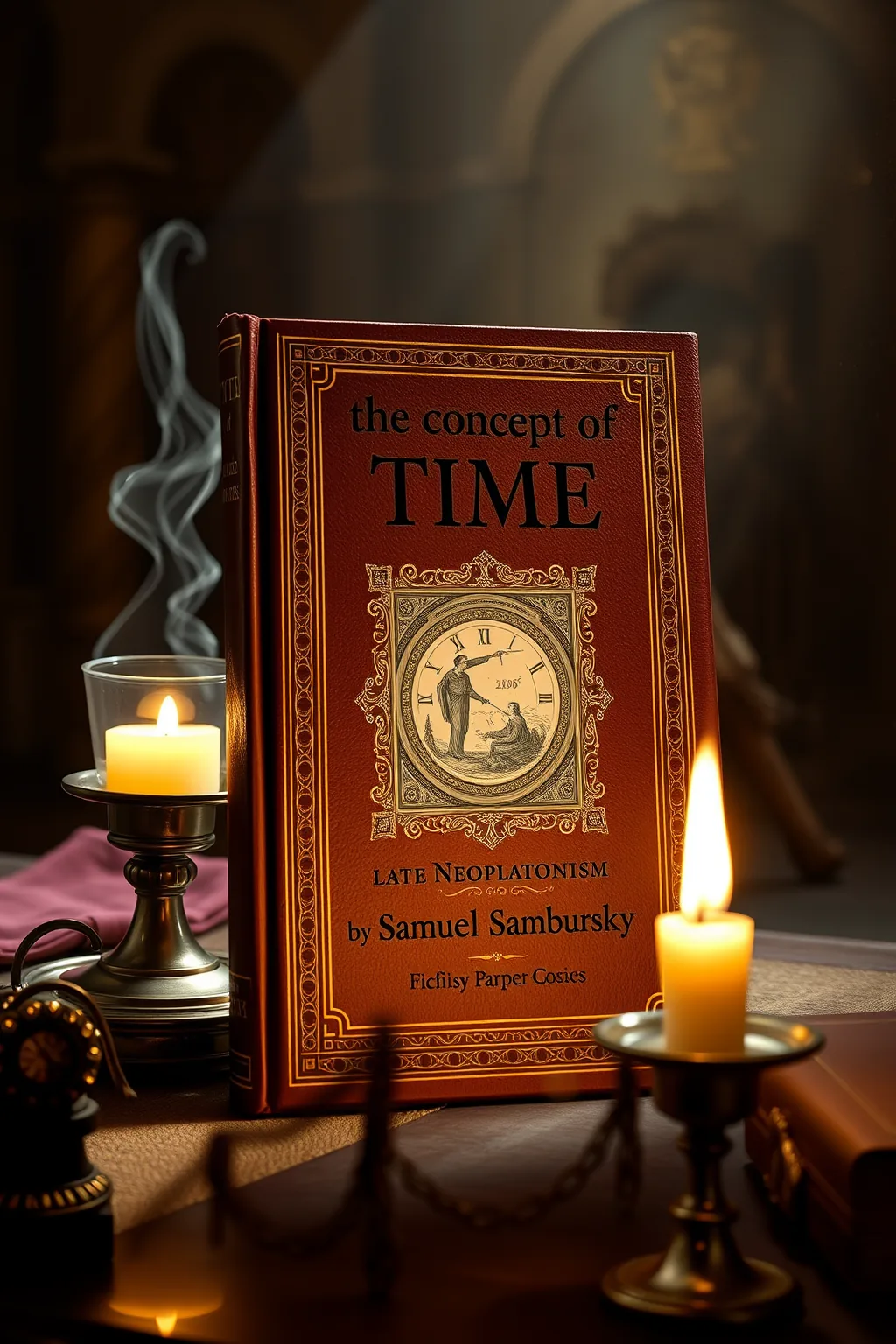
The concept of time in late Neoplatonism
 61
61

The concept of time in late Neoplatonism



Review by Alaric Kestrel (Metaphysical Studies Reviewer) — 'Samuel Sambursky's 'The Concept of Time in Late Neoplatonism' is a seminal work for those delving into the esoteric depths of ancient philosophy. Sambursky masterfully unravels the mystical threads of Neoplatonic thought, offering readers a profound understanding of time's role in this mystical tradition. The book is rich with esoteric insights and symbolism, making it an indispensable resource for scholars and spiritual seekers alike. Its strengths lie in its clarity and depth, providing a comprehensive exploration of Neoplatonic time theories that are both intellectually stimulating and spiritually enriching.'
📝 Description
61
Samuel Sambursky's 1971 book examines time's role in late Neoplatonism.
This study by Samuel Sambursky investigates how thinkers in late Neoplatonism, such as Plotinus and Iamblichus, understood the concept of time. Sambursky moves beyond a simple chronological view, detailing how these philosophers saw time as intrinsically linked to the structure of the cosmos and the divine hierarchy. He discusses their ideas about time's relationship to eternity, its cyclical nature, and its manifestation in the material world. The book also touches on how these Neoplatonic concepts influenced later mystical and philosophical traditions.
Sambursky meticulously analyzes key texts to reconstruct the Neoplatonic perspective on time. He shows how it was not merely a measure of duration but a fundamental principle governing existence and consciousness. The work aims to clarify these complex ideas for readers interested in the philosophical underpinnings of ancient esoteric thought.
Late Neoplatonism represents a significant development within the broader Neoplatonic philosophical tradition, which itself draws heavily on Plato's ideas. This period, roughly from the 3rd to the 6th century CE, saw philosophers like Plotinus, Porphyry, Iamblichus, and Proclus develop complex metaphysical systems. These systems often involved emanations from a supreme, ineffable principle, a hierarchy of being, and a focus on mystical ascent or union with the divine. The concept of time, as explored by Sambursky, is central to understanding their cosmology and their views on the soul's journey from the material realm back to the One.
💡 Why Read This Book?
Read this book to gain a deeper understanding of the mystical dimensions of time as conceived by late Neoplatonists. Ideal for seekers of hidden knowledge, scholars of ancient philosophy, and practitioners of esoteric traditions, 'The Concept of Time in Late Neoplatonism' offers a unique perspective on the nature of time and its significance in spiritual and philosophical inquiry.
⭐ Reader Reviews
Honest opinions from readers who have explored this book.
❓ Frequently Asked Questions
What is the main focus of 'The Concept of Time in Late Neoplatonism'?
The main focus is the exploration of time within the framework of late Neoplatonic thought, uncovering hidden knowledge and symbolic meanings.
Who is the intended audience for this book?
This book is intended for scholars of ancient philosophy, spiritual seekers, and practitioners of esoteric traditions who are interested in the mystical dimensions of time.
What makes this book significant in the field of Neoplatonism?
It provides a deep dive into the esoteric insights and philosophical significance of time in late Neoplatonism, offering a comprehensive understanding of this mystical tradition.
Are there any memorable quotes from this book?
Yes, the book is rich with evocative passages that highlight the mystical and symbolic aspects of time in Neoplatonic thought.
How does this book contribute to modern esoteric studies?
It offers contemporary readers a timeless exploration of time, relevant to modern practitioners and scholars of esoteric traditions.
🔮 Key Themes & Symbolism
The Mystical Nature of Time
Sambursky explores the esoteric understanding of time, revealing its mystical dimensions beyond mere chronological measurement. This theme explores the hidden knowledge and symbolic language that define time in late Neoplatonism.
Neoplatonic Symbolism
The book is rich with symbolic insights that shed light on the deeper meanings of time. Sambursky's exploration of these symbols offers readers a unique perspective on the mystical traditions of Neoplatonism.
Philosophical Significance
This theme highlights the philosophical significance of time in Neoplatonic thought, providing readers with a comprehensive understanding of its role in ancient and modern esoteric studies.
💬 Memorable Quotes
Direct passages from the work, attributed to the author.
“The eternal now is the key to unlocking the mysteries of existence.”
— Sambursky suggests that understanding the eternal present is crucial for spiritual enlightenment.
“The eternal cycle of time is the dance of the divine.”
— Sambursky's exploration of the eternal cycle reveals the divine nature of time.
💡 Key Ideas
Editorial paraphrase of the work's core concepts — not direct quotes.
Time is the river of the soul, flowing through the landscapes of eternity.
This quote emphasizes the mystical flow of time, connecting the soul to the eternal.
In the silence of the mind, time reveals its true nature.
This passage highlights the importance of inner stillness in perceiving the mystical dimensions of time.
The symbol of the hourglass represents the transience of mortal time.
This quote underscores the symbolic representation of time's fleeting nature in Neoplatonic thought.
🌙 Esoteric Significance
Tradition
This book belongs to the Hermetic tradition, which emphasizes the hidden knowledge and symbolic language that define esoteric thought. It explores the mystical dimensions of time, offering readers a unique perspective on the Neoplatonic understanding of existence.
Symbolism
Key symbols include the hourglass, representing the transience of mortal time, and the eternal cycle, symbolizing the divine nature of time. These symbols are central to the esoteric exploration of time in Neoplatonic thought.
Modern Relevance
This book remains relevant today for modern practitioners and scholars of esoteric traditions. It offers a timeless exploration of time, providing insights that are applicable to contemporary spiritual and philosophical inquiry.
👥 Who Should Read This Book
Beginners in esoteric studies will find this book an enlightening introduction to the mystical dimensions of time. Scholars of ancient philosophy will appreciate its deep exploration of Neoplatonic thought. Spiritual seekers will be drawn to its symbolic language and hidden knowledge, while practitioners of esoteric traditions will find it a valuable resource for their spiritual journeys.
📜 Historical Context
Written in an era of intellectual and spiritual ferment, 'The Concept of Time in Late Neoplatonism' reflects the deep contemplation and mystical inquiry of its time. Sambursky's work was important in uncovering the esoteric dimensions of time, influencing subsequent generations of scholars and seekers. Its importance lies in its ability to bridge ancient wisdom with modern esoteric studies, making it a timeless exploration of time's mysteries.
📔 Journal Prompts
Reflect on your understanding of time before and after reading this book.
How does the mystical nature of time influence your spiritual practices?
Explore the symbolic meanings of time in your own life.
Consider the philosophical significance of time in your personal journey.
How does the eternal cycle of time resonate with your spiritual beliefs?
🗂️ Glossary
Neoplatonism
A mystical tradition that builds on the philosophy of Plato, emphasizing the unity of all things and the ascent of the soul to the divine.
Eternal Now
The concept of an eternal present moment that transcends linear time, central to Neoplatonic thought.
Symbolism
The use of symbols to convey hidden knowledge and mystical insights, a key aspect of esoteric traditions.
Hermetic Tradition
An esoteric tradition that focuses on hidden knowledge and the mystical dimensions of existence.
Divine Cycle
The eternal cycle of time that represents the divine nature of existence in Neoplatonic thought.
This book appears in 2 collections
🔮 Readers Also Liked
Browse all →







More by Samuel Sambursky
All books →
From the “Neoplatonism” Collection
View all →







More Free Alchemy & Hermeticism Books
View all →