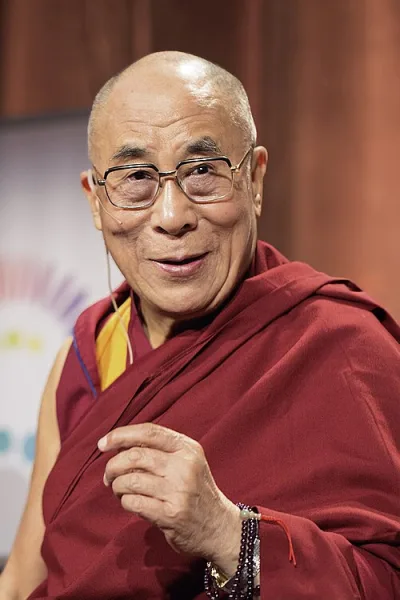
The 14th Dalai Lama, Tenzin Gyatso, is the spiritual leader of Tibetan Buddhism, recognized as a Bodhisattva.
The 14th Dalai Lama, born Lhamo Thondup in 1935, is the highest spiritual leader of Tibetan Buddhism. He is believed to be an emanation of Avalokiteśvara, the Bodhisattva of Compassion. Before 1959, he was the spiritual and temporal leader of Tibet, later heading the Tibetan government in exile from India. He was selected as the reincarnation of the 13th Dalai Lama in 1937 and formally recognized in 1939. His birth family were farmers in the Amdo region. The selection process involved visions and tests, including identifying objects belonging to his predecessor. His early life was influenced by the political landscape of the time, with the region under the control of Chinese warlords.
Recognition and Early Life
Born Lhamo Thondup in 1935 to a farming family in Taktser, Amdo, the individual who would become the 14th Dalai Lama was identified as the reincarnation of the 13th Dalai Lama in 1937. The search involved interpreting omens, visions at the sacred lake Lhamo La-tso, and guidance from the Panchen Lama. A key part of the recognition involved tests where the child correctly identified possessions of the previous Dalai Lama. His family, though farming and horse trading, spoke a dialect of Chinese, not Tibetan. The region of Amdo was under the control of the Ma clique warlord Ma Bufang, who ruled Qinghai province.
Spiritual and Political Leadership
Central to the Dalai Lama's role is the belief that he is a living Bodhisattva, an emanation of Avalokiteśvara, the Bodhisattva of Compassion. Known by various honorifics such as Gyalwa Rinpoche and Kundun, he leads the Gelug school of Tibetan Buddhism. He assumed temporal duties in 1950 and led Tibet until his exile in 1959 following the Tibetan uprising. He established the Tibetan government in exile in India, which later relocated to Dharamshala. In 2011, he stepped down as political head to allow for a democratic government.
Advocacy and Global Engagement
The Dalai Lama advocates for the welfare of Tibetans and promotes a peaceful resolution with China through the Middle Way Approach, aiming to preserve Tibetan culture and identity while acknowledging Chinese sovereignty. He has traveled extensively, sharing teachings on Mahayana and Vajrayana Buddhism, including Kalachakra initiations. His engagements span diverse subjects like religion and science, interfaith dialogue, and various social issues. Since 2018, his travel has been limited to India, with international audiences reached via webcasts. He was awarded the Nobel Peace Prize in 1989 and recognized for his contributions to global peace.
Books by
3 free public domain books · Read online or download