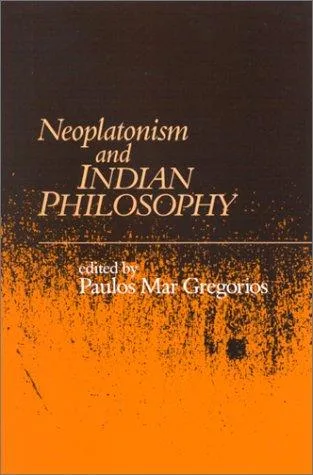
Paulos Mar Gregorios
The Coonan Cross Oath was a 1653 declaration by Saint Thomas Christians in India rejecting Jesuit and Portuguese authority, leading to a schism.
The Coonan Cross Oath, also known as the Great Oath of Bent Cross, was a pivotal event on January 3, 1653, in Mattancherry, India. A significant portion of the Saint Thomas Christian community took this public pledge to defy the authority of the Jesuits and the Latin Catholic hierarchy, as well as to reject Portuguese control over both religious and secular affairs. This action stemmed from years of resistance to the Portuguese attempts to impose Latin Catholic practices and governance on their ancient traditions, notably enforced at the 1599 Synod of Diamper.
The immediate catalyst for the oath was the arrest and subsequent mysterious disappearance of Ahatallah, a Syrian Orthodox archbishop whom the community viewed as a potential leader to restore their traditional ways. The Portuguese authorities, fearing his influence, captured him, fueling further discontent. The oath, led by Anjilimoottil Itty Thommen Kathanar, was a direct response to the perceived threat of cultural and religious erasure under Portuguese rule. This led to a division within the community, establishing separate factions and impacting the lineage of the Church.
Background of Resistance
For centuries, the Saint Thomas Christians of Malabar maintained communion with the Church of the East, looking to its Catholicos-Patriarch for spiritual leadership. While bishops from the Middle East provided spiritual guidance, the local administration was managed by an indigenous Archdeacon, who served as the community's primary leader. However, with the rise of Portuguese power in India, Jesuit missionaries and other clergy began efforts to impose Latin Catholic practices and governance on these ancient traditions. This culminated in the 1599 Synod of Diamper, orchestrated by Archbishop Aleixo de Menezes, which formally placed the Saint Thomas Christians under the jurisdiction of the Latin Archdiocese of Goa. This move was seen as an infringement on their autonomy, sparking resentment and a desire to reclaim their independence.
The Role of Ahatallah and the Oath
The arrival of Syrian Orthodox Archbishop Ahatallah in India in 1652 became a focal point for the community's resistance. Regarded by many as a figure who could help restore their traditional practices, Ahatallah was apprehended by the Jesuits. His subsequent disappearance, under Portuguese control, intensified the dissatisfaction with the Latin Church's dominance. Despite attempts by the community to verify his identity and secure his release, Portuguese authorities and Jesuit priests obstructed these efforts. Rumors of his death spread, further galvanizing the Saint Thomas Christians. This situation directly precipitated the Coonan Cross Oath in 1653, a mass public declaration against foreign ecclesiastical and secular control.
The Coonan Cross Oath and its Aftermath
On January 3, 1653, Archdeacon Thomas and community representatives gathered at Mattancherry to take the Coonan Cross Oath. Standing before a granite cross, they swore allegiance to never submit to Portuguese authority. The oath was taken publicly with lighted candles, and due to the large number of participants who could not all touch the cross simultaneously, many held onto ropes tied to it, causing it to bend slightly—hence the name 'Oath of the Bent Cross.' This act effectively severed the 54-year Portuguese Padroado supremacy over the community. Following the oath, a significant schism occurred within the Saint Thomas Christians, dividing them into factions like the Pazhayakuttukar and Puthankuttukar, whose lineages evolved into various modern churches.
Key Ideas
- Rejection of foreign ecclesiastical and secular authority
- Preservation of indigenous religious traditions against Latinization
- The role of leadership and symbolic acts in community resistance
- Schism and the formation of distinct church factions
Notable Quotes
“In case the patriarch cannot be produced, he having been killed by the Paulists [Jesuits], let any other person of the four religious orders come here by order of the supreme pontiff, a man who knows Syriac, and can teach us in our offices, except the Paulists, whom we do not at all desire, because they are enemies of us and of the church; with that exception let anybody come, and we are ready to obey without hesitation.”
Books by Paulos Mar Gregorios
2 free public domain books · Read online or download