Omar Khayyam
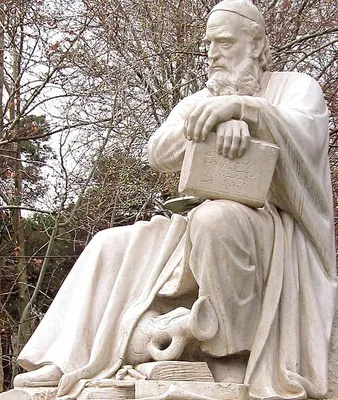
Omar Khayyam was a Persian polymath renowned for his mathematical work, astronomical calculations, and philosophical insights, alongside his famous poetry.
Omar Khayyam, born in Nishapur, Iran in 1048, was a prominent Persian figure excelling in mathematics, astronomy, philosophy, and literature. He lived during the Seljuk era and made significant contributions that extended far beyond his native land.
In mathematics, Khayyam provided a general solution for cubic equations using geometric methods involving conic sections, a method later associated with Descartes. He also explored the parallel axiom, developing concepts that foreshadowed non-Euclidean geometry. His astronomical work included precise calculations of the solar year and the design of the Jalali calendar, a highly accurate solar calendar that influenced subsequent calendrical systems.
While celebrated for his scientific and mathematical achievements during his lifetime, Omar Khayyam also gained enduring fame for his poetry, particularly his quatrains (rubāʿiyāt). These verses, popularized in the West through Edward FitzGerald's translation, have captivated readers for centuries.
Mathematical Innovations
Omar Khayyam was a distinguished mathematician whose work addressed fundamental mathematical problems. He is credited with developing a general geometric solution for cubic equations, employing the intersection of conic sections, a method that predates similar approaches by later mathematicians. Khayyam's rigorous adherence to geometric principles, including the rule of homogeneity, marked his approach. His investigations into Euclid's parallel axiom were particularly groundbreaking. He analyzed the possibilities of acute, obtuse, and right angles in relation to the axiom, a line of inquiry that significantly contributed to the later development of non-Euclidean geometries. His treatise on algebra, completed around 1079, is a key work in this field.
Astronomical Achievements and Calendrical Reform
As an astronomer, Omar Khayyam demonstrated remarkable precision. He was instrumental in calculating the length of the solar year with exceptional accuracy, a feat achieved through meticulous observation. This work led to his design of the Jalali calendar, a sophisticated solar calendar notable for its precise 33-year intercalation cycle. This calendar proved to be highly stable and accurate, forming the basis for the Persian calendar still in use today. Khayyam's involvement in revising the calendar included leading a team of scientists at an observatory established in Isfahan, commissioned by Sultan Malik-Shah I.
Philosophical and Literary Legacy
Beyond his scientific pursuits, Omar Khayyam was also a philosopher and poet. His philosophical inquiries touched upon cosmological doctrines and the nature of numbers and ratios, contributing to theoretical discussions on irrational numbers. While his philosophical writings are less widely known than his poetry, they reveal a deep engagement with intellectual currents of his time. His poetic legacy, primarily in the form of quatrains known as rubāʿiyāt, achieved immense popularity, especially after its translation into English by Edward FitzGerald in the 19th century, solidifying his status as a literary figure.
Key Ideas
- General geometric solution for cubic equations
- Exploration of Euclid's parallel axiom leading to non-Euclidean geometry concepts
- Precise solar year calculation
- Design of the Jalali calendar
Books by Omar Khayyam
3 free public domain books · Read online or download